
Quick Answer: Which Mechanical Pencil Lead Size Is Right for You?
Finding the perfect writing experience with a mechanical pencil depends entirely on your writing style, hand pressure, and the tasks you perform daily. There is no single “best” size that suits everyone. Instead, the optimal choice is a balance between line precision and physical durability. The 0.5mm size serves as the versatile standard for general use, while 0.3mm is engineered for ultra-fine detail, and 0.7mm is built for heavy-handed writers who prefer bold lines.
To find your ideal match, consider this direct decision framework:
- Choose 0.3mm if you require ultra-fine, highly precise lines for detailed technical drawing, complex mathematical equations, or very small handwriting. This size is ideal for fitting maximum information into tight margins or small planner grids.
- Choose 0.5mm if you want a reliable all-rounder for daily note-taking, general journaling, and standard drafting. It offers the most balanced combination of line fineness, break resistance, and general availability.
- Choose 0.7mm if you apply heavy downward pressure when writing, frequently snap thinner leads, or prefer bold, highly visible lines for quick sketching and broad notes. It is highly forgiving for fast, high-pressure writing.
Before purchasing refills, always verify the technical specifications of your mechanical pencil body. Lead sizes are not cross-compatible; a pencil designed for a 0.5mm lead cannot accept 0.3mm or 0.7mm refills without jamming or failing to feed.
Products mentioned in this guide
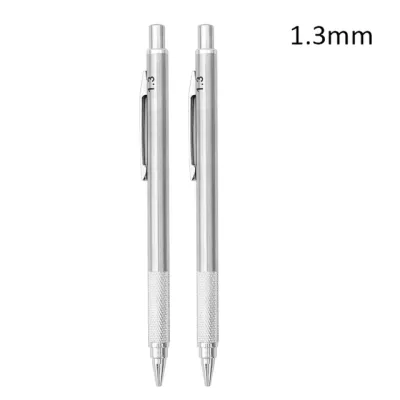
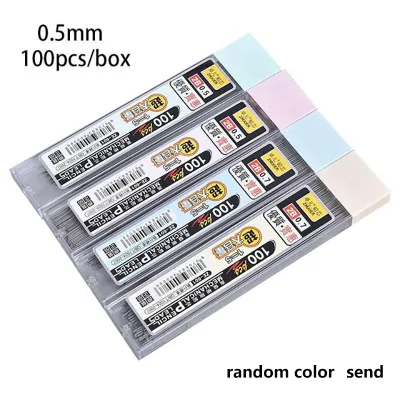
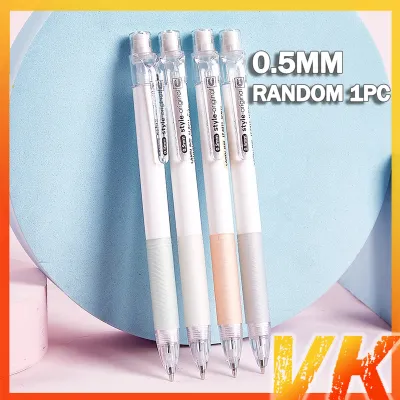
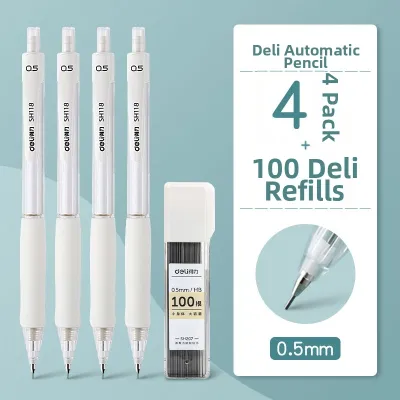
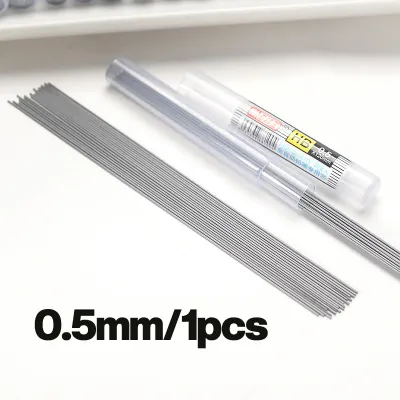
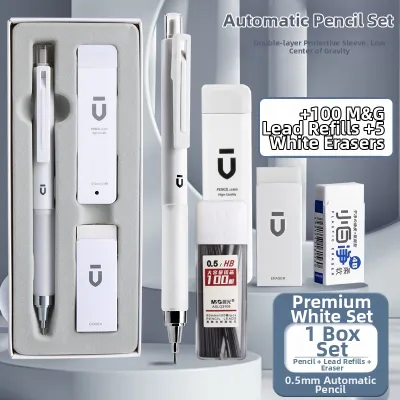
Prices are valid at publication and may change. Please refer to the product page for the latest price.
0.3mm vs 0.5mm vs 0.7mm: Core Characteristics and Trade-offs
Each lead diameter alters the physical dynamics of writing. Understanding how these sizes behave under pressure helps you choose the right tool for your specific environment, whether you are working in a air-conditioned office or taking notes in a humid classroom.

0.3mm Lead: Precision and Detail
The 0.3mm lead is the specialist of the mechanical pencil family, designed specifically to produce extremely fine, consistent lines without the need for sharpening. Because the tip is incredibly narrow, it allows writers and artists to execute intricate layouts, tiny subscripts, and highly detailed schematics with absolute clarity. It is particularly popular among engineering students and planners who must squeeze complex information into compact spaces.
However, this extreme precision comes with a significant trade-off in structural strength. The thin cross-section makes 0.3mm lead highly fragile and prone to snapping under lateral force. It requires a disciplined, light hand and a vertical writing angle. Writers who tend to rush, scribble aggressively, or press firmly against the paper will find themselves constantly breaking the lead, leading to frustration and wasted graphite.
0.5mm Lead: The Versatile Standard
The 0.5mm lead is the undisputed industry standard, filling the shelves of school supply stores and office cabinets worldwide. This size represents the optimal middle ground, offering a line that is thin enough for neat, legible handwriting on standard ruled paper while maintaining sufficient physical strength to withstand normal writing pressure. It is the default choice for students, administrative professionals, and casual journal writers.
Because of its immense popularity, finding 0.5mm refills is incredibly easy, with options ranging from budget-friendly local packs to premium imported brands. It is compatible with almost every standard mechanical pencil model on the market. For those who do not have highly specialized drafting or heavy-duty writing needs, the 0.5mm size provides a reliable, hassle-free daily writing experience.
0.7mm Lead: Durability and Boldness
The 0.7mm lead is built for durability, prioritizing structural strength and line visibility over micro-precision. With a thicker physical profile, it resists snapping even when subjected to heavy downward pressure or rapid, continuous strokes. This makes it an excellent option for fast-paced environments, such as taking quick phone messages, brainstorming on unlined paper, or sketching out rough conceptual designs.
While the added thickness prevents annoying breakages, it does produce a much broader line. If you have very small, compact handwriting, a 0.7mm line can cause letters like “e” and “a” to fill in and look like solid blocks. Additionally, because it deposits more graphite onto the paper, it carries a higher risk of smudging, especially if you drag your hand across the page while writing or work in highly humid conditions.
How Lead Size Affects Line Quality and Break Resistance
To understand why different lead sizes feel so distinct, it helps to look at the physical mechanics of how graphite interacts with paper. The diameter of the lead directly influences line consistency, structural limits, and cleanliness.
Line Quality and Consistency
While mechanical pencils eliminate the need for a traditional sharpener, they are still subject to physical wear. As you write, the tip of the lead gradually wears down at an angle. With a thin 0.3mm lead, this wear is barely noticeable because the line remains exceptionally thin regardless of the angle.
With a thicker 0.7mm lead, however, writing continuously in one position can create a flat, chisel-like edge on the tip. This flat spot results in a line that suddenly becomes wider and fuzzier when you rotate the pencil. To maintain a consistent line width with a 0.7mm lead, you must occasionally rotate the pencil in your hand, or use a specialized mechanical pencil equipped with an internal auto-rotation mechanism that spins the lead slightly with every lift.
Break Resistance and Pressure Tolerance
The relationship between lead diameter and break resistance is governed by physics. A 0.7mm lead has more than double the cross-sectional area of a 0.3mm lead, allowing it to distribute downward and lateral forces much more effectively.
If you have a heavy hand or write at a low, slanted angle, a 0.3mm lead will snap almost instantly because the lateral tension exceeds its physical limits. A 0.5mm lead offers moderate tolerance, but still requires some mindfulness. The 0.7mm lead provides a highly forgiving buffer, making it the practical choice for children learning to control their writing pressure, as well as adults who write with intense, rapid strokes.
Smudging and Graphite Deposit
Every time you write, the mechanical pencil leaves behind tiny particles of graphite held together by clay. A thicker lead diameter naturally deposits a larger volume of these particles onto the paper surface.
In tropical, humid climates like the Philippines, paper fibers absorb ambient moisture from the air, making them slightly soft and receptive to graphite transfer. When you write with a 0.7mm lead, the heavy deposit of graphite sits loosely on the humid paper. If you are left-handed, or if you frequently run your hand over your notes, this excess graphite will easily smudge across the page, leaving dark streaks on your paper and grey stains on your palm. A 0.3mm or 0.5mm lead deposits far less material, resulting in cleaner pages under humid conditions.
| Lead Size | Line Width | Break Resistance | Pressure Tolerance | Best Suited For |
|---|---|---|---|---|
| 0.3mm | Ultra-Fine (Hairline) | Low (Very Fragile) | Low (Requires light touch) | Technical drafting, micro-journaling, complex math |
| 0.5mm | Fine (Standard) | Moderate (Balanced) | Medium (Standard writing) | General note-taking, schoolwork, everyday office tasks |
| 0.7mm | Medium-Bold (Thick) | High (Very Durable) | High (Withstands heavy pressure) | Fast writing, sketching, heavy-handed users, children |
Matching Lead Size to Your Writing and Drawing Tasks
Selecting the right lead size is not just about personal comfort; it is also about matching the tool to the specific paper, layout, and task at hand.
Daily Note-Taking and Journaling
For standard ruled notebooks, which typically feature line spacings of 6mm (medium ruled) or 7mm (wide ruled), 0.5mm is the ideal companion. It allows you to write comfortably within the lines without your words looking cramped or overlapping.
If you prefer writing on unlined paper, blank journals, or large sketchpads, the 0.7mm lead shines. Its bolder line provides excellent visual contrast against a completely blank white page, making your thoughts and quick layouts stand out clearly. It is also highly suited for quick brainstorming sessions where speed is more important than neatness.
Technical Drafting and Mathematics
When working on complex mathematical equations, chemical formulas, or engineering schematics, precision is paramount. A single misplaced line or an illegible subscript can ruin an entire calculation.
Here, the 0.3mm lead is highly advantageous. It allows you to write tiny numbers, exponents, and variables inside small fraction bars or complex symbols without the lines running together. If you find the 0.3mm too fragile for your writing speed, a high-quality 0.5mm pencil is the next best alternative, providing clean lines with slightly better durability.
Sketching and Shading
For artists and designers, a mechanical pencil is a vital tool for preliminary layouts and detailed pencil drawings. The 0.7mm size is excellent for laying down quick, expressive gesture lines and blocking out shapes, as the thicker lead covers more surface area and allows for varied line weights based on hand pressure.
If you need to shade small areas, the 0.7mm lead makes the process faster and smoother. However, when it comes to rendering fine textures, facial details, or sharp highlights, switching to a 0.3mm or 0.5mm pencil is necessary to achieve the required level of control and sharpness.
Standardized Tests and Scantrons
For major exams, such as college entrance tests or professional licensure examinations in the Philippines, students are routinely required to shade optical mark recognition (OMR) sheets, commonly known as Scantrons. These exams typically specify a dark lead grade, such as No. 2 or HB/2B, to ensure the machine scanners can read the marks.
While a 0.5mm pencil can be used for this task, shading the circles with a thin tip can be time-consuming and may tear the thin exam paper if you press too hard. A 0.7mm pencil with 2B lead is highly efficient for standardized tests, as the wider tip fills the circular bubbles quickly and smoothly with fewer strokes, reducing the risk of puncturing the paper.
Beyond Diameter: How Lead Grade and Paper Affect the Experience
While lead diameter determines the width of your line, the overall writing experience is also heavily influenced by the hardness of the lead and the texture of the paper you use.
Lead Grades (HB, B, 2B, H)
Mechanical pencil lead is made from a mixture of graphite and a binding clay. The ratio of these ingredients determines the lead grade, which dictates how dark, soft, or hard the lead is:
- H Grades (Hard): Contain more clay and less graphite. They produce light, precise lines and wear down very slowly, but they can feel scratchy on the page and are more brittle in thin sizes.
- HB Grade (Hard/Black): The standard middle ground. It offers a balanced level of darkness and hardness, making it the most common grade for school and office work.
- B and 2B Grades (Black/Soft): Contain more graphite and less clay. They write with a buttery smooth feel and produce dark, highly visible lines. A 0.5mm 2B lead will write much smoother and darker than a 0.5mm HB lead, though it will wear down faster and smudge more easily.
Paper Texture and Tooth
The texture of your paper, often referred to as its “tooth,” acts like a microscopic abrasive against the pencil lead. Rough, fibrous paper wears down graphite rapidly and can easily catch the sharp tip of a 0.3mm lead, causing it to snap. Smooth, high-density paper allows thin leads to glide effortlessly without catching.
Additionally, high ambient humidity can soften paper fibers, increasing the friction between the pencil tip and the page. If you are working in a non-airconditioned room during the rainy season, you may notice your lead wearing down faster and feeling slightly “draggy.” Opting for a slightly harder lead grade (like HB) or a slightly thicker lead diameter (like 0.5mm instead of 0.3mm) can help counteract this humid environment.
Checking Compatibility
Before purchasing refills, always inspect your mechanical pencil’s barrel or clip. Manufacturers print the exact required lead size directly on the pencil body (e.g., “0.5” or “0.7”). Never attempt to force a mismatched lead size into your pencil.
Keep your refill tubes tightly closed and stored in a dry place. Exposure to extreme moisture or physical shock inside a pencil case can weaken the lead structures before they are even loaded into the pencil, leading to premature breakage during use.
Frequently Asked Questions (FAQ)
Can I use 0.5mm lead in a 0.7mm mechanical pencil?
No, you cannot use 0.5mm lead in a 0.7mm mechanical pencil. The internal clutch mechanism of a 0.7mm pencil is designed specifically to grip a 0.7mm diameter lead. If you insert a thinner 0.5mm lead, the clutch will not be able to hold it securely, causing the lead to slide completely out of the tip or slip backward into the chamber when you attempt to write. Always match the lead refill size exactly to the labeled specification on your pencil.
Why does my 0.5mm lead keep breaking even when I write lightly?
If your 0.5mm lead breaks frequently despite a light writing touch, check how far you are extending the lead. Extending more than 1 to 2 clicks (about 1mm to 1.5mm of visible lead) exposes too much of the fragile graphite to bending forces.
Additionally, verify the lead grade you are using; harder grades like H or cheap, low-quality generic leads can be highly brittle and snap easily. Finally, inspect the metal sleeve at the tip of your mechanical pencil. If the pencil was previously dropped, the tip may be slightly bent or cracked, creating uneven pressure that shears the lead as it feeds through.

Community discussion
Share your experience or ask a question. Comments are reviewed before publication.