
Finding the perfect writing instrument often comes down to the smallest measurements. If you are looking to upgrade your daily writing setup, choosing the right lead size for your micanical pencil is the single most important decision you will make. The three most common diameters—0.3mm, 0.5mm, and 0.7mm—each offer a completely different tactile experience, line quality, and level of durability. Choosing between them is not a matter of finding an objective winner, but rather finding the size that aligns with your hand pressure, writing style, and daily tasks.
Quick Answer: Which Lead Size Should You Choose?
To make an immediate decision, you can use a straightforward framework based on your primary writing habits and physical mechanics. The ideal lead size is highly subjective and depends on how much pressure you apply to the page and what you are writing. Use this quick decision guide to identify your match:
- Choose 0.3mm if you have very small, precise handwriting, write complex mathematical formulas, perform detailed technical drawing, or use compact planners with narrow grids.
- Choose 0.5mm if you want the ultimate versatile standard. This size is the default choice for everyday note-taking, journaling, and general school or office work, balancing clean lines with decent durability.
- Choose 0.7mm if you are a heavy-handed writer who frequently snaps thinner leads, prefer bold and highly visible lines, or use your pencil for quick sketching, layout drafts, and shading.
While 0.5mm serves as the industry standard, the best option for you depends entirely on your physical writing mechanics and primary tasks. There is no objective quality hierarchy among these sizes; a mechanical pencil is only as good as its compatibility with your unique hand and writing style.
Products mentioned in this guide
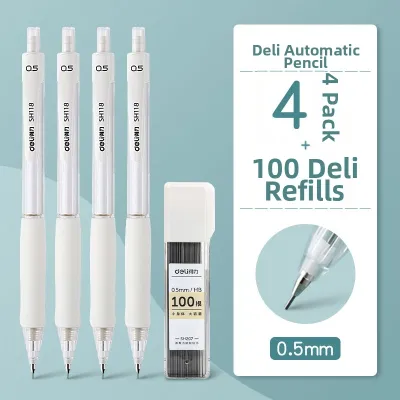
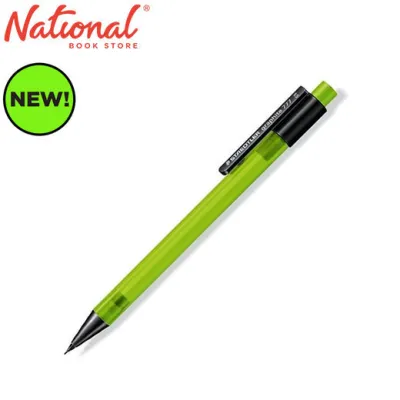
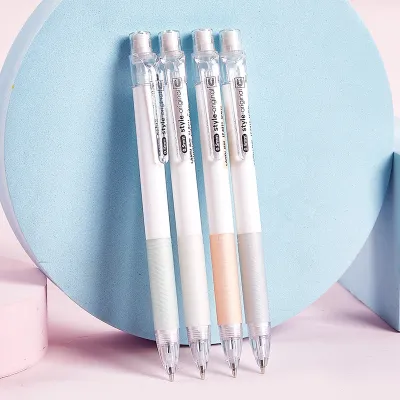
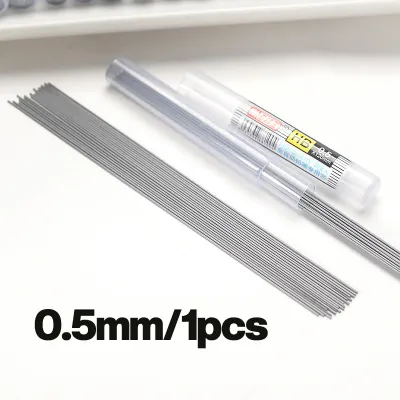
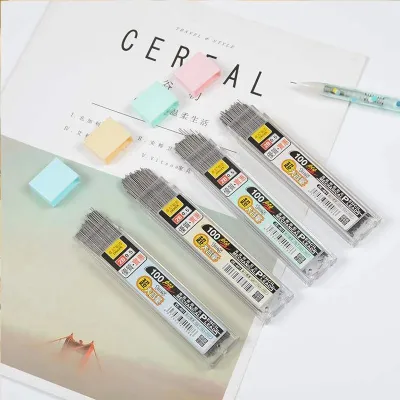
Prices are valid at publication and may change. Please refer to the product page for the latest price.
Comparing the Options: 0.3mm, 0.5mm, and 0.7mm Lead
To understand which lead diameter fits your routine, it is essential to analyze the physical characteristics, structural strengths, and inherent limitations of each option. The physical diameter of the graphite determines how it interacts with the paper fibers, how quickly it wears down, and how much lateral force it can withstand before breaking.

0.3mm Lead: Precision and Fine Details
The 0.3mm lead size is engineered for extreme precision, producing an incredibly thin, crisp line that remains consistent without needing frequent rotation. This ultra-fine profile is highly favored by engineering students, architects, and artists who require absolute accuracy for technical drawing, intricate diagrams, or complex mathematical equations. If you regularly write in the margins of textbooks or fill out dense, small-grid planners, the 0.3mm diameter ensures your characters remain distinct and legible.
However, this precision comes with a major trade-off: high fragility. Because the graphite core is so thin, it has minimal structural integrity and is highly prone to snapping under heavy downward or lateral pressure. It requires a light, disciplined hand and performs poorly on rough, high-friction paper. If you tend to write quickly or press down firmly when stressed, a 0.3mm lead can become highly frustrating as it breaks repeatedly.
0.5mm Lead: The Versatile Standard
The 0.5mm lead is the undisputed standard in the stationery world, offering an exceptional balance between line fineness and structural durability. It is thin enough to produce clean, legible script for standard college-ruled notebooks, yet thick enough to withstand normal writing pressure without constant breaking. This versatility makes it the default recommendation for general note-taking, journaling, exam preparation, and office tasks.
Because of its popularity, finding 0.5mm refills and compatible pencils is incredibly easy in almost any local bookstore or office supply shop. It serves as an excellent starting point for anyone transitioning from traditional wooden pencils to mechanical models. While it may not offer the absolute microscopic precision of a 0.3mm lead or the rugged break-resistance of a 0.7mm lead, it handles about ninety percent of everyday writing tasks with ease.
0.7mm Lead: Durability and Bold Lines
For those who find themselves constantly snapping thinner leads, the 0.7mm diameter provides a rugged, highly break-resistant writing experience. The thicker graphite core distributes writing pressure over a larger surface area, allowing heavy-handed writers to express themselves freely without the fear of sudden breaks. It produces a distinctly bold, dark, and smooth stroke that is highly visible from a distance.
This broader line profile makes 0.7mm lead ideal for quick brainstorming sessions, rough sketching, and drafting bold outlines. It is also highly suitable for individuals with larger, more expansive handwriting styles where thin lines might look faint or lost on the page. The primary trade-off is that the lead wears down more quickly into a flat spot, requiring you to rotate the pencil more frequently to maintain a consistent line width, and it can easily crowd small writing spaces.
How to Match Lead Size to Your Micanical Pencil Writing Habits
Selecting the right diameter is not just about comparing specifications; it requires a realistic assessment of your personal physical mechanics and the environments in which you write. Your handwriting style, hand pressure, and even the quality of the paper you use will heavily influence how a specific lead size performs in your micanical pencil.
Handwriting Size and Applied Pressure
Your physical writing mechanics are the most critical factors in determining lead compatibility. If you naturally apply heavy downward pressure when writing, a thin 0.3mm or even a standard 0.5mm lead will frequently snap, leading to constant interruptions and wasted graphite. For heavy-handed writers, transitioning to a 0.7mm lead is often a necessary adjustment that immediately resolves breakage issues and allows for a smoother, uninterrupted flow of thought.
Handwriting size also dictates how legible your writing will remain over long sessions. If you have large, looping handwriting, using a thin 0.3mm lead can make your writing look faint, spindly, and visually unbalanced on the page. Conversely, if you have a small, cramped, or highly detailed handwriting style, using a thick 0.7mm lead will cause the loops of letters like ‘e’, ‘a’, and ‘g’ to fill in with graphite, rendering your notes messy and virtually unreadable. Matching the scale of your letters to the width of your lead ensures optimal legibility.
Primary Use Case and Paper Quality
The specific tasks you perform daily should guide your final choice. Professional drafting, architectural planning, and filling out tiny boxes in personal planners demand the surgical precision of a 0.3mm lead. In contrast, rapid-fire lecture note-taking, creative brainstorming, and quick sketching benefit from the speed, smoothness, and reliable durability of a 0.7mm lead.
Furthermore, the paper medium you write on plays a massive role in lead performance. In the Philippines, high tropical humidity can cause paper fibers in standard notebooks, intermediate pads, or exam sheets to absorb moisture from the air. This dampness softens the paper and increases surface friction. On soft, humid paper, a sharp, thin 0.3mm lead can easily catch, tear the page, or snap instantly. If you frequently write on standard local school papers or rough, recycled sheets under humid conditions, sizing up to a more forgiving 0.5mm or 0.7mm lead provides a much smoother, scratch-free writing experience.
The Role of Lead Hardness in Your Final Choice
Many writers mistakenly blame their lead’s diameter for performance issues that are actually caused by the graphite’s hardness grade. To optimize your writing experience, you must understand how lead diameter and lead hardness interact. While the diameter strictly controls the physical width of the line and the structural break resistance, the hardness grade—ranging from hard and light (H, 2H) to soft and dark (B, 2B, 4B)—controls the darkness, smoothness, smudging tendencies, and wear rate of the graphite.
In the warm, humid climate of the Philippines, paper is more prone to moisture absorption, which can exacerbate smudging. If you use a thick 0.7mm lead, the wider surface area deposits more graphite on the page. If you pair a 0.7mm diameter with a very soft, dark grade like 2B, the result can be excessive smudging, especially for left-handed writers whose hands drag across the text. To counter this, pairing a harder, cleaner grade like HB or H with your 0.7mm pencil keeps your work neat and smudge-free while retaining break resistance.
Conversely, if you prefer the ultra-fine lines of a 0.3mm lead but find that it feels too scratchy or writes too faintly, you can offset these limitations by choosing a softer grade like B or 2B. The softer graphite glides more smoothly over paper fibers, reducing the scratchy sensation and allowing you to produce a dark, highly visible line with minimal downward pressure. This smart pairing protects the fragile 0.3mm lead from snapping while ensuring your fine writing remains bold and legible.
Final Verdict: Building Your Ideal Mechanical Pencil Setup
To build your perfect writing setup, use this step-by-step checklist to match your needs to the correct lead size:
- Select 0.3mm if your writing is microscopic, you do detailed technical work, you have a very light touch, and you write on smooth, high-quality paper.
- Select 0.5mm if you need a reliable all-rounder for school or office work, write with moderate pressure, and want easily accessible refills.
- Select 0.7mm if you write with heavy pressure, have large handwriting, prioritize break resistance, or need a pencil for quick sketching and bold layouts.
Before committing to a bulk purchase of a specific pencil model or a large pack of refills, it is highly recommended to perform a simple, hands-on test. Purchase a single, affordable mechanical pencil in your target size along with a small multi-pack of lead refills in different hardness grades (such as HB and 2B). Test this combination on the exact notebooks, planner pages, or exam pads you use daily. Pay close attention to how smoothly the lead glides, whether it tears or catches on the paper, and how often it snaps under your natural writing pressure. This physical trial is the most reliable way to verify your perfect setup before investing in premium stationery.
Frequently Asked Questions (FAQ)
Can I use 0.5mm lead in a 0.7mm mechanical pencil?
No, you cannot mix different lead sizes. The internal clutch mechanism of a mechanical pencil is precision-engineered to grip a very specific lead diameter. If you attempt to feed a 0.5mm lead into a 0.7mm pencil, the lead will be too thin for the metal or plastic clutch to grab; it will simply slip straight through the tip and fall out. Conversely, attempting to force a thicker 0.7mm lead into a 0.5mm pencil will jam the mechanism, potentially damaging the internal sleeve and ruining the pencil. Always ensure your lead refills match the exact millimeter specification printed on your pencil’s barrel.
Does a thicker lead size produce a darker line?
No, a thicker lead size does not produce a darker line. The darkness and opacity of the line are determined entirely by the graphite’s hardness grade, not its physical diameter. An HB grade lead will produce the same medium-grey shade whether it is 0.3mm, 0.5mm, or 0.7mm. While a 0.7mm line can appear visually bolder or more prominent on the page simply because the stroke is wider, the actual pigment darkness remains identical to a thinner lead of the same grade. If you want a darker, blacker line, you should select a softer grade like B, 2B, or 4B rather than changing your lead diameter.

Community discussion
Share your experience or ask a question. Comments are reviewed before publication.