
Choosing a suitable mechanical pencil lead size is the key to achieving a comfortable, smudge-free, and efficient writing experience. For most everyday tasks, a 0.5mm lead serves as a balanced middle ground, offering a clean line that fits standard ruled paper without breaking too easily. If your work demands intricate details, complex mathematical formulas, or writing in extremely tight margins, a 0.3mm lead provides the fine precision you need. On the other hand, if you write with heavy hand pressure, take rapid notes during lectures, or prefer a bold, smooth glide across the page, a 0.7mm lead is a highly reliable option to prevent constant snapping.
In tropical environments like the Philippines, where high humidity can soften paper fibers and make pages more susceptible to tearing, your choice of lead size becomes even more critical. A lead that is too thin can easily slice through damp paper, while a lead that is too thick might smudge when your hands get warm during long writing sessions. By understanding how lead diameter, writing pressure, and paper quality interact, you can select a suitable mechanical pencil setup to keep your notes clean, legible, and professional.
Understanding the Trade-offs: Line Precision vs. Break Resistance
The diameter of a mechanical pencil lead directly dictates both the visual weight of your writing and the physical durability of the tip. A smaller diameter, such as 0.3mm, produces a thin, crisp line that allows you to fit a large amount of information into a small space. However, because the cross-sectional area of a 0.3mm lead is significantly smaller than that of its thicker counterparts, it has a much lower threshold for physical stress. Under the same downward writing pressure, a thinner lead will snap far more quickly than a thicker one.
Products mentioned in this guide
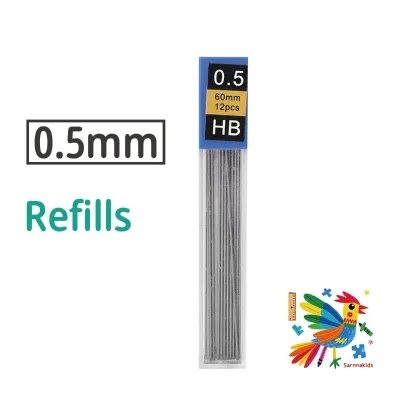
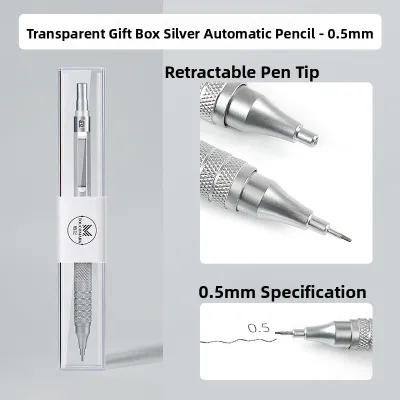
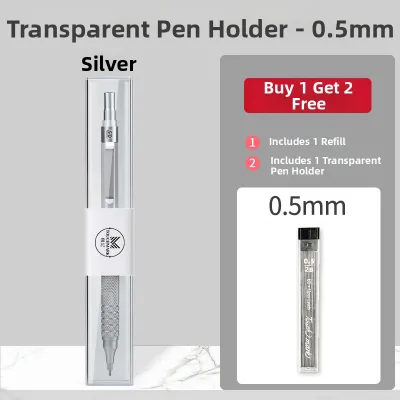
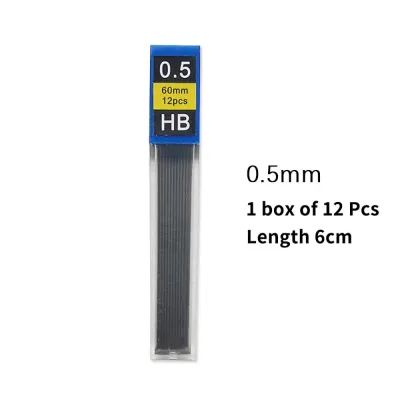
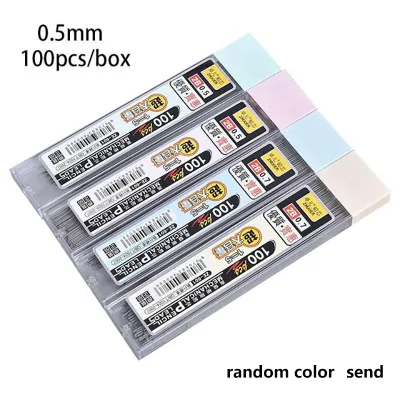
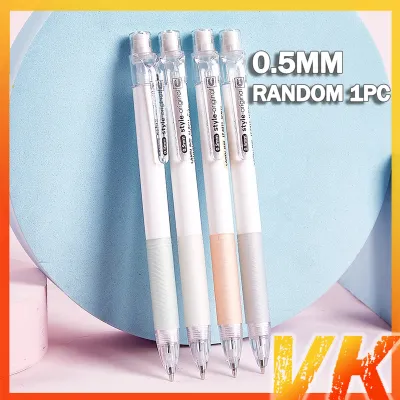
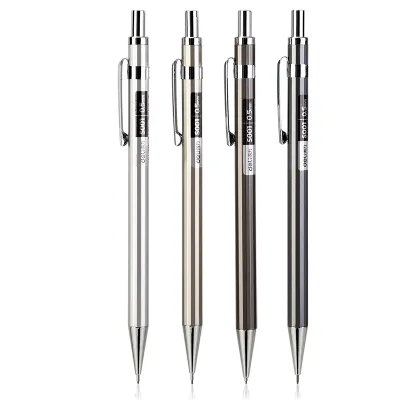
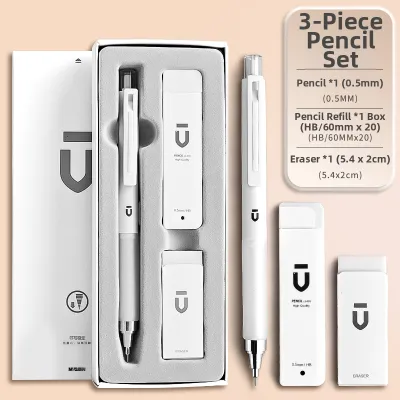
Prices are valid at publication and may change. Please refer to the product page for the latest price.
As lead diameter increases to 0.5mm and 0.7mm, the structural integrity of the graphite rod rises. A 0.7mm lead can withstand substantial downward and lateral force, making it highly forgiving for fast, heavy-handed writers. The trade-off is that the resulting line is much wider, which can cause letters to merge together if you have small, compact handwriting. On standard ruled paper with 6mm or 8mm line spacing, a bold 0.7mm line can quickly make your pages look crowded and difficult to read.
Replacement lead availability is another practical factor to consider before committing to a specific size. Standard stationery stores and local office supply shops almost always carry an abundant stock of 0.5mm and 0.7mm refills in various hardness grades. In contrast, 0.3mm refills can be harder to find outside of specialized art supply stores or online marketplaces. They also typically come in smaller quantities per tube, meaning you may need to plan your purchases more carefully to avoid running out of lead during crucial exams or project deadlines.
0.3mm Lead: Evaluating Precision and Detail Work
A 0.3mm mechanical pencil is a specialized tool designed for tasks that require high precision. It is a common choice for artists working on intricate graphite illustrations, draftsmen rendering fine architectural details, and students solving complex multi-line mathematical equations. If you frequently find yourself writing tiny annotations in the margins of textbooks or filling out compact planners, the fine line of a 0.3mm lead helps ensure that every character remains legible.

The writing feel of a 0.3mm lead is distinctively tactile, often described as feedback-heavy or slightly scratchy. Because the point is so sharp, it acts like a needle, transmitting the exact texture of the paper directly to your hand. This high sensitivity means you will feel every bump and fiber in the paper. If you prefer a glassy, effortless glide, this size may feel too abrasive, especially on lower-quality or highly textured paper surfaces.
The primary limitation of the 0.3mm size is its fragility. It requires a disciplined, light writing touch and a consistent vertical angle to prevent the lead from snapping. If you tend to write quickly, press hard when stressed, or extend the lead too far out of the pencil’s metal sleeve, you will likely find yourself dealing with constant breakages. For this reason, 0.3mm pencils are best reserved for controlled, deliberate work rather than rapid, high-pressure note-taking.
0.5mm Lead: Assessing the Everyday Standard
The 0.5mm mechanical pencil is widely considered the industry standard for a reason: it offers a highly balanced writing experience that suits the vast majority of users. It is versatile enough to handle standard university note-taking, daily journaling, and general office documentation. The line it produces is thin enough to keep medium-to-small handwriting neat and legible, yet thick enough to remain highly visible from a comfortable reading distance.
In terms of writing feel, 0.5mm lead strikes an excellent compromise between feedback and smoothness. It glides across standard notebook paper with minimal resistance, yet still provides enough tactile control to prevent your hand from slipping. This balance makes it a comfortable tool for long writing sessions, such as essay drafting or extended exams, where hand fatigue can quickly become an issue.
However, the 0.5mm standard is not without its limitations. For users who naturally apply heavy downward force when they write, a 0.5mm lead can still snap with annoying frequency. Additionally, while it is excellent for general use, it may not provide the extreme detail required for highly technical engineering drawings, nor will it deliver the bold, expressive lines that some sketch artists prefer for quick gesture drawings.
0.7mm Lead: Checking Durability and Smoothness
If you constantly find yourself snapping 0.5mm leads, upgrading to a 0.7mm mechanical pencil is often a highly effective solution. This size is engineered for durability and smooth performance, making it suitable for rapid brainstorming sessions, quick sketching, and heavy-handed writing. The thicker lead tip distributes writing pressure over a larger surface area, allowing you to write quickly and forcefully without the constant interruption of a broken point.
The writing experience with a 0.7mm lead is exceptionally smooth, offering a buttery glide with very little friction. This makes it highly comfortable for writing on rougher, cheaper paper surfaces, such as newsprint or standard exam sheets, where thinner leads would catch and tear the fibers. The resulting line is bold, dark, and highly visible, which is excellent for creating clear headings, filling out forms, or producing easy-to-read shorthand notes.
The main drawback of the 0.7mm size is its lack of precision for small-scale work. If your handwriting is naturally compact, the bold lines can cause letters like “e,” “a,” and “o” to fill in, turning your notes into illegible smudges. It is also poorly suited for detailed architectural sketches or complex mathematical formulas that require cramming multiple subscripts and superscripts into a single line of text.
How to Choose the Right Lead Size for Your Workflow
Selecting the right lead size comes down to analyzing your personal writing habits, your typical environment, and the specific tasks you perform daily. To make an informed decision, consider the following practical guidelines:
- Choose 0.3mm if: You have exceptionally small, neat handwriting, require high precision for technical drawing or math, and naturally maintain a very light, delicate touch when writing.
- Choose 0.5mm if: You need a reliable, versatile pencil for general note-taking, journaling, and office work, and your handwriting is of average size.
- Choose 0.7mm if: You write with heavy hand pressure, take notes at high speeds, prefer a bold and smooth line, or frequently work on rough, low-quality paper.
Before purchasing replacement lead, it is vital to verify the specifications of your mechanical pencil body. Mechanical pencils are precision instruments designed to work with one specific lead diameter. A pencil body built for 0.5mm lead cannot accommodate 0.3mm or 0.7mm leads. Always check the barrel of your pencil or the manufacturer’s packaging to confirm the exact size required before buying refills.
Adjusting for Lead Hardness and Paper Texture
While lead diameter plays a massive role in your writing experience, it is only one part of the equation. The hardness grade of the graphite also significantly influences line darkness, smoothness, and break resistance. Standard lead is typically graded as HB, which offers a balanced mix of darkness and hardness. If you find that your 0.5mm lead breaks too often, switching to a harder grade like H or 2H can increase durability, though the line will appear lighter. Conversely, if you want a darker, smoother line without moving to a thicker lead size, switching to a softer grade like B or 2B can provide that rich contrast, though it will smudge more easily in humid conditions.
Paper texture, or “tooth,” also dictates how your pencil performs. Highly textured, toothy paper wears down graphite rapidly and can cause thin 0.3mm leads to feel excessively scratchy or catch on the fibers. For rougher paper, a thicker 0.7mm lead or a softer graphite grade is highly recommended to maintain a smooth glide. For ultra-smooth, coated papers, a thinner 0.5mm or 0.3mm lead can perform beautifully without the risk of catching, allowing you to appreciate the full precision of the fine tip.
Finally, checking your pencil manufacturer’s guidelines regarding compatible lead grades and refill procedures is recommended. Using low-quality, non-standard leads can introduce structural inconsistencies that lead to internal clogging. Ensuring that you use high-quality, matching refills will keep the internal clutch mechanism of your mechanical pencil operating smoothly for years to come.
Frequently Asked Questions (FAQ)
Can I use 0.5mm lead in a 0.7mm mechanical pencil?
No, you cannot use 0.5mm lead in a 0.7mm mechanical pencil. The internal clutch mechanism of a mechanical pencil is precisely machined to grip and advance a specific lead diameter. If you insert a 0.5mm lead into a 0.7mm pencil, the clutch will not be able to grip the thin lead securely. As a result, the lead will simply slip out of the tip when you try to write, or it will slide back inside the chamber under the slightest pressure. It is important to match your lead diameter exactly to the size printed on your pencil’s body.
Why does my 0.5mm lead keep breaking even when I write lightly?
If your 0.5mm lead breaks frequently despite a light writing touch, the issue is likely caused by a damaged internal clutch, low-quality lead, or an incorrect lead extension. If you extend the lead too far out of the protective metal sleeve, the lack of lateral support will cause it to snap under normal writing angles. Additionally, low-quality replacement leads often suffer from internal structural flaws and air pockets, making them highly brittle. Try using high-quality refills from reputable stationery brands, and ensure you only extend the lead by one or two clicks (about 1mm to 2mm) beyond the metal tip.
Community discussion
Share your experience or ask a question. Comments are reviewed before publication.