
Choosing the right mechanical pencil is more than a matter of aesthetic preference; it is a decision that directly shapes your daily writing comfort, speed, and legibility. For students, engineers, artists, and office professionals alike, the debate between the two most common lead sizes—0.5mm and 0.7mm—comes down to a balance of precision, durability, and tactile feedback. There is no single universal option that excels in every scenario, as the ideal choice depends on your natural handwriting size, the pressure you apply when writing, and the specific tasks you perform.
Generally, a 0.5mm mechanical pencil serves as the standard for individuals with small, compact handwriting, as well as those performing detailed mathematical calculations, technical drawing, or fine-line sketching. The ultra-fine tip allows for extreme precision in confined spaces. Conversely, a 0.7mm mechanical pencil is the superior tool for fast, continuous note-taking, those with larger or more expressive handwriting styles, and heavy-handed writers who frequently experience the frustration of snapping thinner leads. Understanding how these physical dimensions interact with your paper and writing habits is the key to finding your perfect stationery match.
Line Thickness and Precision: Detail vs. Boldness
The most immediate difference between a 0.5mm and a 0.7mm lead is the visual impact of the line left on the page. A 0.5mm lead produces a crisp, thin line that is highly suited for detailed work. When writing in tight spaces, such as the narrow margins of a textbook, compact grid planners, or complex scientific formulas containing subscripts and superscripts, the 0.5mm tip ensures that every character remains distinct and legible. It allows you to maximize the information density on a single sheet of paper without your writing turning into an illegible cluster of graphite.
Products mentioned in this guide
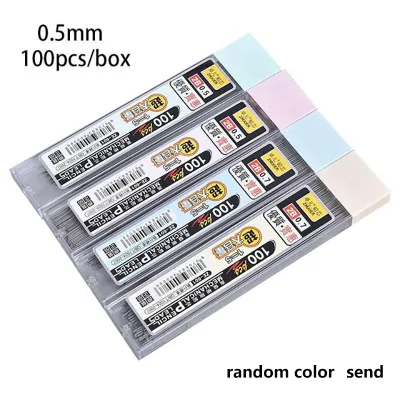
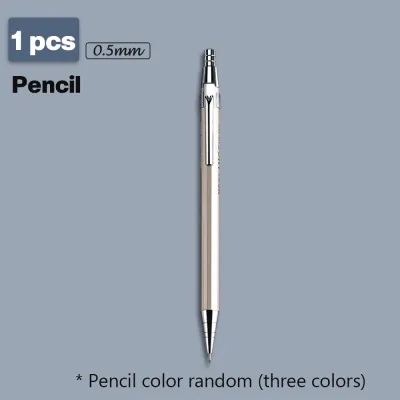
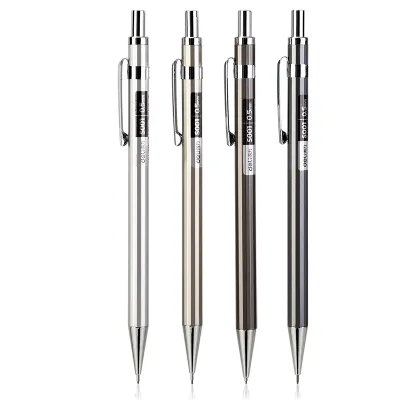
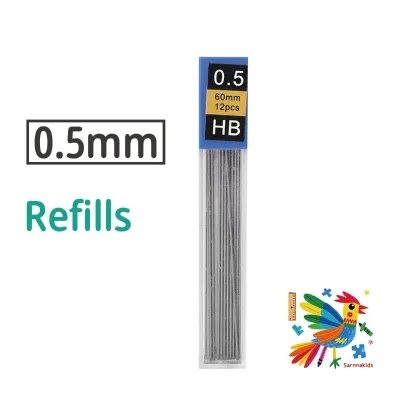
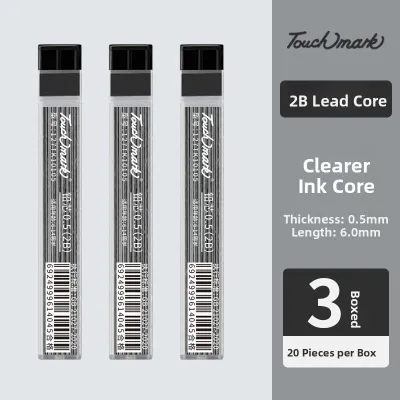
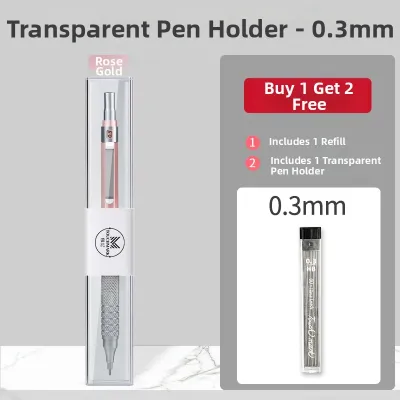
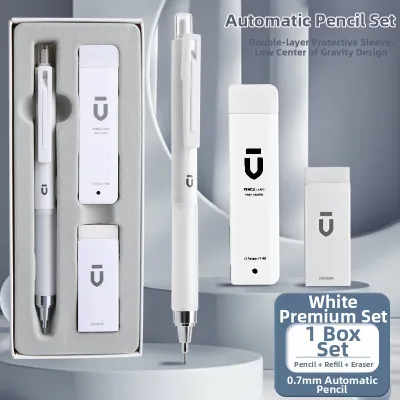
Prices are valid at publication and may change. Please refer to the product page for the latest price.
On the other hand, a 0.7mm lead delivers a bolder, highly visible line that stands out clearly on the page. This added thickness improves readability from a distance, making it excellent for general note-taking, brainstorming sessions, and quick conceptual sketches. The broader tip is also highly efficient at filling in space, which is why many standardized test-takers and students prefer it for shading multiple-choice bubbles on answer sheets. The bold stroke gives the writing a strong visual presence and a sense of authority that thin lines sometimes lack.
To achieve the best results, you must match your natural handwriting scale to the appropriate lead size. If you have large, sweeping handwriting and attempt to use a 0.5mm pencil, the thin lines can make your letters look sparse, faint, and visually unbalanced on the page. Conversely, if you have tiny, compact handwriting and use a 0.7mm pencil, the loops of letters like “e,” “a,” and “g” will frequently fill in with graphite, causing your words to blur together. Selecting a size that complements your natural script ensures clean, legible work.
Breakage Resistance: Which Size Survives Heavy Hands?
Lead breakage is one of the most common frustrations when using a mechanical pencil. The structural durability of a lead is directly tied to its physical dimensions. From a mechanical standpoint, a thicker cylinder distributes downward and lateral writing forces over a larger surface area. Because a 0.7mm lead has nearly double the cross-sectional area of a 0.5mm lead, it is inherently much stronger and more resilient under pressure.

For writers who naturally apply heavy downward pressure, write at a steep angle, or tend to extend too much lead from the protective sleeve, a 0.5mm lead can feel incredibly fragile. It is prone to snapping under sudden shifts in pressure, which can disrupt your train of thought during a fast lecture or a timed exam. This vulnerability requires a lighter, more controlled grip and a conscious effort to keep the lead extension to a minimum—typically no more than two clicks of the pencil cap.
Choosing a 0.7mm pencil offers a highly forgiving writing experience for heavy-handed individuals. The structural integrity of the thicker lead allows you to write rapidly and assertively without the constant interruption of snapping tips, clearing internal jams, or feeding new lead. In tropical climates like the Philippines, where high relative humidity can sometimes soften paper fibers and increase surface friction, the extra durability of a 0.7mm lead provides a reliable safeguard against tearing the page or breaking the point.
Writing Feel and Smoothness on Paper
The tactile sensation of writing—often described as feedback—varies significantly between these two lead sizes. When you write with a 0.5mm mechanical pencil, the pressure of your hand is concentrated onto a very small point. This concentration of force results in a higher level of friction, which translates to a slightly “scratchy” or “toothy” feel on standard paper. While some writers dislike this sensation, many prefer it because the high tactile feedback provides a greater sense of control and precision over their pen strokes.
In contrast, a 0.7mm lead offers a remarkably smooth, almost “buttery” glide across the page. Because the wider tip distributes the writing pressure over a larger area, it rides smoothly over the microscopic fibers of the paper rather than catching on them. This low-friction experience reduces hand fatigue during long writing sessions, making it highly comfortable for transcribing lectures, journaling, or drafting long-form essays.
Your typical paper quality also plays a major role in this interaction. To determine the best fit for your daily routine, perform an easy visual and physical check on the paper you use most frequently:
- Smooth, high-GSM paper: Both sizes perform exceptionally well, but 0.5mm feels noticeably smoother here than on cheap paper.
- Rough, low-quality, or low-GSM paper: A 0.5mm tip can dig into the loose fibers, causing skipping, scratchiness, or tiny tears. A 0.7mm lead will glide over these imperfections far more gracefully.
- Damp or humid paper: If your notebooks have absorbed environmental moisture, a 0.5mm lead may scrape the soft surface, while a 0.7mm lead will slide without gouging the page.
Best Use Cases for 0.5mm and 0.7mm Leads
To help you decide which lead size fits your daily routine, it is useful to look at how their physical characteristics translate into specific academic, professional, and creative tasks.
When to Choose 0.5mm
- STEM Fields and Mathematics: Fitting complex equations, fractions, and subscripts into neat rows requires the surgical precision of a 0.5mm tip.
- Technical Drawing and Architecture: When drawing geometric diagrams, schematics, or fine architectural details, millimeter accuracy is essential.
- Compact Journaling and Planners: If you use pocket-sized notebooks or planners with tight grid layouts (such as 3mm or 5mm grids), 0.5mm allows you to write legibly within the tiny boxes.
- Fine Art Detailing: Artists rely on 0.5mm pencils for rendering individual hairs, crisp outlines, and intricate cross-hatching patterns.
When to Choose 0.7mm
- Rapid Lecture Note-Taking: When speed is your top priority, the smooth glide and break-resistance of 0.7mm keep your hand moving without interruption.
- Standardized Testing and Board Exams: For exams that require shading answer sheets, a 0.7mm lead fills the bubbles much faster than a thin tip, saving precious seconds.
- Creative Brainstorming and Sketching: The bolder line is excellent for loose, expressive layouts, quick mind maps, and rough conceptual drawings.
- Daily Office Tasks: For signing documents, writing quick reminders, or taking phone messages, the robust nature of 0.7mm is incredibly convenient.
How Lead Grade (HB, B, 2B) Changes the Experience
It is a common misconception that lead size is the only factor governing line darkness and writing smoothness. In reality, lead size exists in a matrix with graphite grades. Mechanical pencil leads are made from a mixture of graphite and a binding agent. The ratio of these ingredients determines the hardness and darkness of the lead, ranging from hard, light grades (such as H or 2H) to soft, dark grades (such as B, 2B, or 4B), with HB serving as the balanced medium.
By understanding this relationship, you can customize your writing experience to get the best of both worlds. For example, if you love the precision of a 0.5mm pencil but find it too scratchy or light, you can load it with a softer 2B lead. The softer graphite will glide much more smoothly and produce a darker, bolder line, effectively mimicking some of the benefits of a thicker lead without sacrificing the fine tip. However, keep in mind that softer leads wear down faster, meaning you will need to click the pencil more frequently, and they are more prone to smudging.
Conversely, if you prefer the break-resistance of a 0.7mm pencil but find that your notes smudge too easily, you can opt for a harder HB lead. This combination provides a clean, highly durable line that resists smearing, which is especially useful for left-handed writers whose hands drag across the paper as they write. Balancing your choice of lead size with the correct graphite grade allows you to fine-tune your mechanical pencil to your exact preferences.
Advanced Pencil Features That Bridge the Gap
Modern stationery design has introduced several innovative mechanisms that help mitigate the inherent drawbacks of both lead sizes, allowing writers to enjoy precision and durability simultaneously.
- Cushion and Shock-Absorbing Tips: Many premium mechanical pencils feature built-in spring mechanisms in the tip. When you apply excessive downward or angled pressure, the internal spring allows the lead to retract slightly into the sleeve. This shock-absorption system significantly reduces breakage, allowing heavy-handed writers to use a 0.5mm pencil comfortably.
- Auto-Rotating Lead Mechanisms: A common issue with mechanical pencils is the "chisel edge"—as you write, one side of the lead wears down, creating a flat, angled tip that produces thick, inconsistent lines and snaps easily. Specialized pencils feature internal gears that rotate the lead by a fraction of a degree every time you lift the pencil from the paper. This keeps the 0.5mm tip perfectly conical and sharp at all times.
- Sliding Sleeves and Lead Guards: Some models utilize a metal guide pipe that fully encloses the lead, sliding back gradually as you write. Because the lead is never directly exposed to lateral pressure, it is virtually impossible to break, even when using ultra-thin leads like 0.5mm or even 0.3mm.
How to Choose the Right Mechanical Pencil for You
To finalize your decision, take a moment to evaluate your personal writing profile against the following criteria.
Choose a 0.5mm mechanical pencil if:
- Your handwriting is naturally small, neat, or compact.
- You work extensively with numbers, formulas, or detailed drawings.
- You have a light, relaxed grip and apply minimal pressure to the page.
- You primarily write on high-quality, smooth paper or in narrow-ruled notebooks.
Choose a 0.7mm mechanical pencil if:
- Your handwriting is large, bold, or fast-paced.
- You frequently break thinner leads or find yourself writing under high-stress, rapid conditions.
- You prioritize a smooth, effortless glide over microscopic detail.
- You need a versatile tool for general writing, sketching, and shading test sheets.
Before making a final purchase, always verify two critical technical constraints. First, if you are preparing for a specific professional licensure exam or standardized test, check the official guidelines; some testing authorities mandate specific pencil types or lead grades for their optical character recognition (OCR) scanners. Second, remember that mechanical pencil bodies are designed with fixed internal metal clutches. A 0.5mm pencil body cannot accept 0.7mm lead refills, and vice versa. Always ensure you purchase the exact matching refill size for your specific pencil model.
Standard mechanical pencils in the market range from budget-friendly everyday options (around ₱50 to ₱150) to premium, heavy-duty drafting models (ranging from ₱300 to over ₱1,000). Investing in a quality pencil body that matches your preferred lead size and hand ergonomics will provide you with a reliable, comfortable writing companion for years to to come.
Frequently Asked Questions (FAQ)
Can I use 0.5mm lead in a 0.7mm mechanical pencil?
No, lead sizes are not cross-compatible. The internal clutch mechanism of a mechanical pencil is precisely machined to grip a specific lead diameter. If you put 0.5mm lead into a 0.7mm pencil, the lead will simply slip through the clutch and fall out of the tip. Conversely, a 0.7mm lead is too thick to enter the chamber or tip of a 0.5mm pencil and will cause a severe internal jam.
Is 0.5mm or 0.7mm better for shading multiple-choice answer sheets?
A 0.7mm mechanical pencil is significantly better for shading multiple-choice answer sheets. The wider tip covers more surface area with each stroke, allowing you to fill in the bubbles quickly and evenly. Additionally, using a softer lead grade like 2B in a 0.7mm pencil ensures a dark, solid mark that optical scanners can read easily, while minimizing the risk of tearing the thin exam paper.
Which lead size is better for drawing and sketching?
Both sizes are highly valued by artists, but they serve different purposes in a creative workflow. A 0.5mm mechanical pencil is ideal for fine details, clean outlines, technical layouts, and precise cross-hatching. A 0.7mm mechanical pencil is preferred for loose gesture drawings, initial concept sketches, and laying down broader areas of shadow and value.
Community discussion
Share your experience or ask a question. Comments are reviewed before publication.