
Choosing the right mechanical pencil is more than a matter of aesthetic preference; it directly impacts your writing endurance, neatness, and daily comfort. The debate between the two most popular lead sizes—0.7mm and 0.5mm—centers on a balance of physical durability and line precision. While both sizes have dedicated followings among students, artists, and professionals, finding the perfect match requires looking closely at how your hand moves and the paper you use.
Quick Answer: 0.7mm vs 0.5mm Lead Sizes
Neither lead size is universally superior. The ideal choice depends on your physical writing grip, hand pressure, and the specific tasks you perform daily.
A 0.7mm mechanical pencil is best for heavy-handed writers, rapid note-taking, and general everyday use. Its thicker diameter provides excellent break resistance and a smoother glide across various paper types.
Products mentioned in this guide
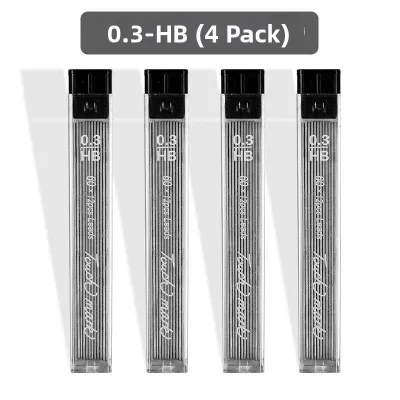
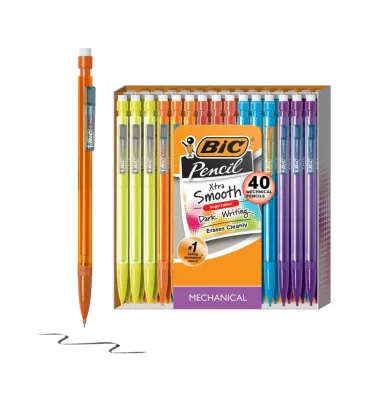
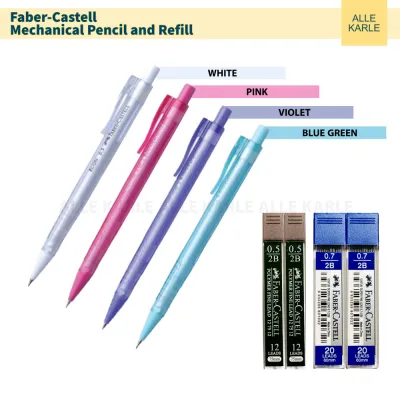
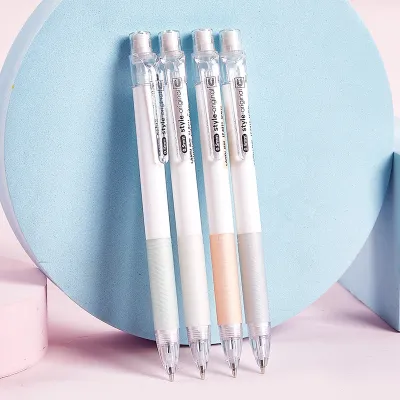
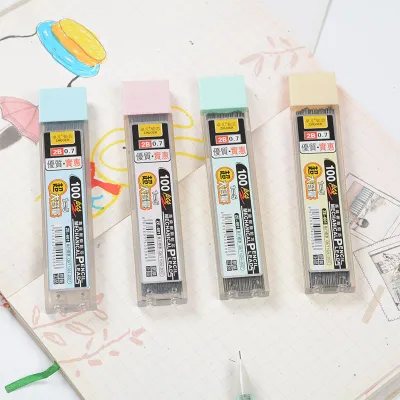
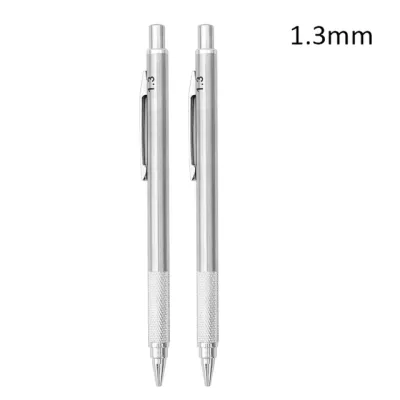
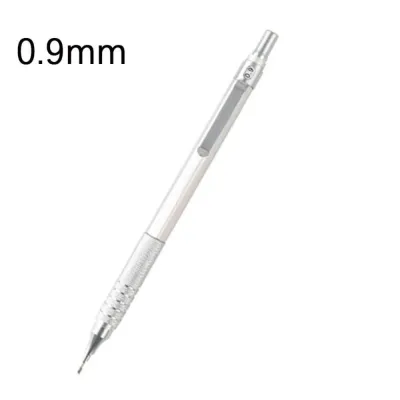
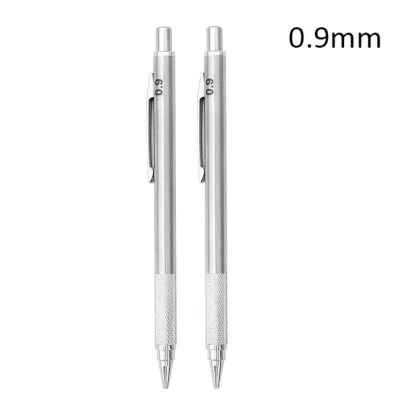
Prices are valid at publication and may change. Please refer to the product page for the latest price.
Conversely, a 0.5mm mechanical pencil is the optimal choice for high-precision tasks, small or compact handwriting, and detailed technical drawing. It produces crisp, clean lines that fit easily into tight spaces, though it requires a lighter touch to prevent lead breakage.
Core Differences in Line Quality and Writing Feel
The physical output of a mechanical pencil is determined by how the lead tip meets the paper. The 0.2mm difference between a 0.7mm and a 0.5mm lead may seem minuscule, but it dramatically alters the line width, visual contrast, and tactile feedback you experience while writing.

Line Width and Visibility (0.7mm)
A 0.7mm lead produces a bold, highly visible line that stands out clearly on standard lined paper. This thickness is highly forgiving on low-to-medium-grade paper, such as standard 70gsm copy paper or school notebooks. Because the surface area of a 0.7mm lead is larger, it distributes your writing pressure over a wider space. This reduces the localized friction between the graphite and the paper fibers, resulting in a smooth, almost gliding sensation.
The bolder line of a 0.7mm pencil is highly readable from a distance, making it excellent for quick brainstorming sessions, collaborative editing, or lecture notes that you need to scan rapidly later. However, because the lead is thicker, it wears down into a flat, angled surface (often called a chisel edge) more quickly. To maintain a consistent line, you must periodically rotate the pencil in your hand, or accept that your lines will naturally thicken as you write.
Precision and Detail (0.5mm)
A 0.5mm lead delivers a thin, needle-sharp line that excels at rendering intricate details. It provides a high level of tactile feedback, meaning you can feel the texture, or “tooth,” of the paper more distinctly as you write. This feedback offers a sense of control that is highly valued by technical illustrators, architects, and those with exceptionally small, neat handwriting.
With a 0.5mm tip, there is virtually no line-width variation caused by the lead wearing down, as the point remains relatively sharp throughout its use. This allows you to write complex mathematical formulas, annotate tight textbook margins, or fill out compact planner grids without your characters merging into illegible graphite smudges. The trade-off is that on rough or low-quality paper, a 0.5mm lead can feel slightly scratchy, as the fine tip can catch on uneven paper fibers.
Durability and Breakage Resistance
One of the most common frustrations when using a mechanical pencil is the constant snapping of lead. Understanding the relationship between lead thickness, physical stress, and paper friction can help you minimize these interruptions.
Writing Pressure and Lead Strength
The structural integrity of pencil lead is governed by its cross-sectional area. Simple geometry reveals that a 0.7mm lead has nearly double the cross-sectional area of a 0.5mm lead. This geometric difference makes the 0.7mm lead significantly more robust and capable of withstanding heavy vertical and lateral writing pressure.
If you naturally grip your pencil tightly or press down hard on the page, a 0.5mm lead will likely snap repeatedly under your hand. Using a 0.5mm pencil successfully requires a disciplined, light grip and a shallow writing angle. For younger students who are still developing their fine motor skills, or for professionals who write in fast-paced, high-stress environments, the structural strength of a 0.7mm lead offers a much more reliable and frustration-free experience.
Paper Texture and Friction
The paper you write on plays a crucial role in lead durability, especially in tropical climates where environmental factors come into play. In high-humidity environments, paper fibers absorb moisture from the air, making them softer, more pliable, and more prone to swelling. This increased moisture content raises the physical friction between the pencil lead and the paper surface.
When a sharp 0.5mm lead passes over damp or highly textured paper, it acts almost like a tiny plow, digging into the softened fibers. This sudden resistance often causes the lead to snap at the sleeve. A 0.7mm lead, with its rounded tip and wider footprint, rides over these softened, humidified fibers with minimal resistance. This makes 0.7mm pencils far more reliable for outdoor use, non-air-conditioned classrooms, or when using budget-grade paper that is sensitive to humidity.
Best Use Cases for Each Lead Size
Matching the physical properties of your mechanical pencil to your daily routine ensures maximum efficiency and comfort. Both sizes excel in distinct professional and academic environments.
When to Choose a 0.7mm Mechanical Pencil
The 0.7mm mechanical pencil is the workhorse of the stationery world, designed for speed, durability, and general utility. It is highly recommended for:
- Rapid Note-Taking: College students and professionals who must write quickly during lectures or meetings benefit from the continuous, unbroken flow of a thicker lead.
- Heavy-Handed Writers: If your hand tires quickly or you notice that you regularly break standard wooden pencils, the added support of a 0.7mm lead will match your natural physical habits.
- Active Environments: For field workers, construction site managers, or nurses who write on clipboards while standing, the stability of a 0.7mm lead prevents snapping when writing on unstable surfaces.
- General Mathematics and Calculations: When solving long equations where quick erasing and rewriting are common, the bolder lines are easier to track visually across the page.
When to Choose a 0.5mm Mechanical Pencil
The 0.5mm mechanical pencil is a precision instrument, favored by those who treat writing and drawing as an exercise in exactness. It is the ideal choice for:
- Technical Drafting and Architecture: Creating clean, exact lines, hatching, and detailed schematics requires the absolute consistency of a 0.5mm tip.
- Compact Planners and Journals: If you use small-grid planners or pocket diaries, a 0.5mm pencil allows you to write multiple lines of legible text within a single tiny box.
- Marginalia and Annotations: Reading textbooks or literature often requires squeezing notes into narrow margins. The fine point of a 0.5mm lead keeps these annotations clean and readable.
- Detailed Shading and Fine Art: Artists use the sharp point of a 0.5mm pencil to render fine textures, individual hair strands, and delicate gradients in graphite drawings.
Quick Comparison Table
To help you make a rapid, informed decision, the table below summarizes the physical behavior and ideal conditions for both lead sizes based on standard graphite and clutch mechanics.
| Feature | 0.5mm Lead | 0.7mm Lead |
|---|---|---|
| Line Width | Fine, sharp, and highly consistent | Bold, dark, and highly visible |
| Break Resistance | Low; requires a light, controlled touch | High; tolerates heavy writing pressure |
| Writing Feel | Crisp with distinct paper feedback | Smooth, gliding, and low-friction |
| Paper Compatibility | Best on smooth, high-density, dry paper | Excellent on rough, low-grade, or damp paper |
| Ideal Writing Pressure | Light to moderate | Moderate to heavy |
| Best For | Technical drawing, small planners, margins | Rapid note-taking, general writing, heavy hands |
| Erasing Cleanliness | Highly clean; leaves minimal ghosting | Good; may leave slight shadows if pressed hard |
How to Choose the Right Mechanical Pencil for You
Before purchasing your next mechanical pencil or stocking up on lead refills, run through this simple conditional framework to identify your writing profile:
- Choose 0.7mm if: You frequently snap 0.5mm leads, you write quickly without looking at your hand pressure, you primarily use standard or low-cost copy paper, or you prefer a dark, bold line that is easy to read from a distance.
- Choose 0.5mm if: Your handwriting is naturally small or compact, you need to write in tight spaces, you perform technical drawing or precise sketching, or you have a light, relaxed grip that rarely breaks pencil leads.
- Verify first if: You are preparing for standardized national examinations or professional board exams. Many automated optical mark recognition (OMR) scanners require specific lead grades (usually HB or 2B) and may have strict guidelines regarding line thickness for shading answer sheets.
Additionally, keep in mind that writing smoothness, smudging, and erasability are not determined by lead diameter alone; they depend heavily on the combination of your lead’s hardness grade (such as HB, B, or 2B), the polymer formulation of the lead brand, and the texture of your paper. If you are unsure, perform a simple trial: write a few test lines on your favorite notebook, rub the text with your finger to check for smudging, and use a high-quality vinyl eraser to verify how cleanly the lines disappear.
Frequently Asked Questions (FAQ)
Can I use 0.7mm lead in a 0.5mm mechanical pencil?
No. You must never attempt to load 0.7mm lead into a 0.5mm mechanical pencil, or vice versa. The internal clutch mechanism, the lead transport tube, and the metal tip sleeve (guide pipe) are engineered to incredibly tight tolerances designed specifically for one exact lead diameter. Forcing a thicker 0.7mm lead into a 0.5mm pencil will instantly jam the feed mechanism, snap the lead internally, and potentially ruin the pencil permanently. Conversely, putting 0.5mm lead into a 0.7mm pencil will cause the lead to slip through the clutch jaws and fall out completely.
Which lead size is better for standardized tests?
You should always consult the official instruction manual for your specific examination. Generally, both 0.5mm and 0.7mm leads are acceptable for modern optical mark recognition (OMR) scanners, provided you use the correct darkness grade, which is typically HB or No. 2. However, a 0.7mm lead is often preferred by exam-takers because its wider tip allows you to shade the circular answer bubbles much faster and with fewer strokes. If you choose 0.5mm, take extra care not to press too hard, as the sharp tip can accidentally tear or puncture the thin exam sheet.
Do 0.7mm leads smudge more than 0.5mm leads?
Smudging is primarily a function of the lead’s graphite grade (for example, soft 2B leads smudge far more easily than hard HB leads) and the paper’s absorption rate rather than the lead’s diameter. However, because a 0.7mm lead deposits a wider path of graphite on the page, there is physically more loose powder on the paper surface. On very smooth, non-porous paper, this extra graphite can take longer to settle, which means left-handed writers may notice slightly more hand-smudging when using a 0.7mm pencil compared to a 0.5mm pencil.
Community discussion
Share your experience or ask a question. Comments are reviewed before publication.