
Choosing the right refillable notebook system is a balance between your writing habits, how often you reorganize your notes, and the availability of paper refills. If you want a structured planner that accommodates standard accessories and archival storage, a 6-hole binder is your best option. For students and professionals who write extensive daily notes and need a stable, high-capacity writing surface in standard sizes like A5 or B5, a 26-hole binder offers superior page stability. If your workflow demands ultimate modularity—allowing you to snap pages in and out instantly without opening a noisy metal mechanism—a disc-bound notebook is the ideal choice. Before committing to any system, it is essential to verify that the paper sizes, hole configurations, and refill options align with your local stationery ecosystem.
Structural Differences: 26-Hole, 6-Hole, and Disc-Bound
To understand which system fits your daily routine, you must first look at how they are physically constructed. The mechanical differences dictate not only how the notebook feels in your hand but also how securely it holds your pages during transport.
The 6-hole mechanism is the traditional backbone of personal organizers and planners. It features two groups of three metal or plastic rings mounted on a rigid spine. To add or remove pages, you must physically pull the rings apart—either by pressing levers at the top and bottom of the spine or by pulling the rings themselves. The wide spacing between the two ring clusters leaves a large gap in the middle, which is often used to accommodate standard planner layouts and specialized inserts.
Products mentioned in this guide
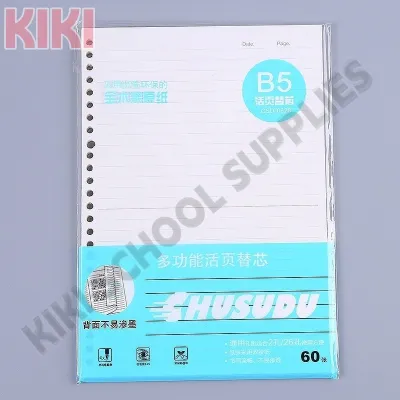
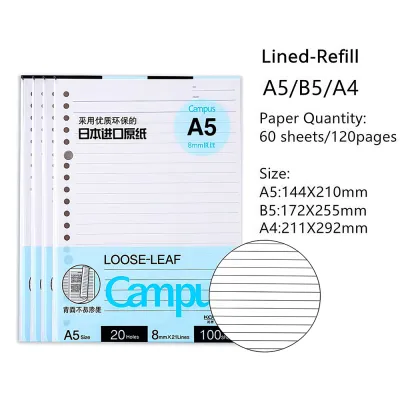
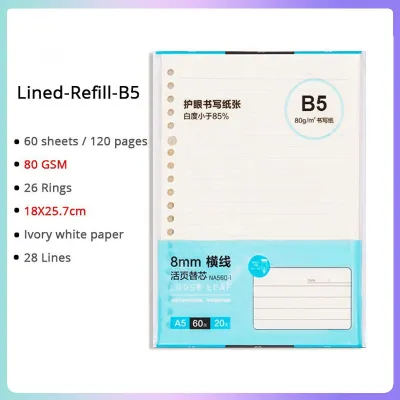
Prices are valid at publication and may change. Please refer to the product page for the latest price.
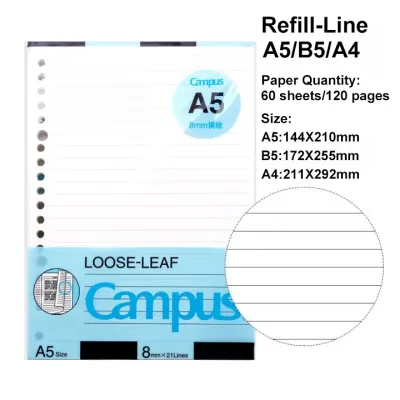
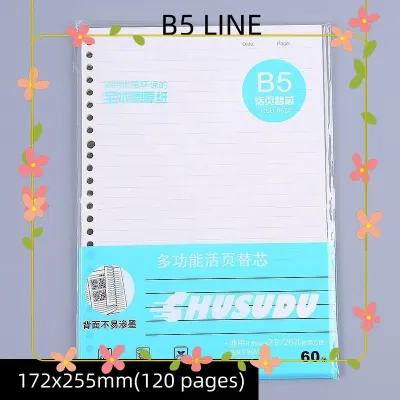
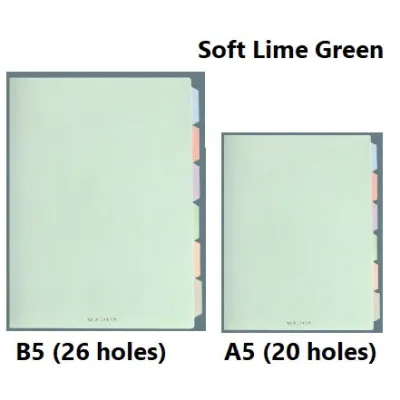
The 26-hole mechanism (typically used for B5 paper, alongside its 20-hole counterpart for A5) uses a high-density ring configuration. These rings are spaced closely together, usually at a standard 9.5mm pitch. Because the rings are so close, the physical stress of turning pages is distributed evenly across the entire edge of the paper. This design prevents the holes from tearing under heavy use. The binding mechanism itself can range from a slim, flexible plastic spine that opens with a slide zipper to a heavy-duty metal binder.
The disc-bound mechanism does away with traditional rings and central spines entirely. Instead, it relies on a series of individual, unlinked circular discs with raised outer rims. The paper used in these notebooks is punched with unique, mushroom-shaped slots along the binding edge. These slots snap directly onto the rims of the discs. Because there is no locking mechanism to open or close, you can add, remove, or rearrange pages simply by pulling them away from the discs or pressing them back down onto the rims.
Comparing Flexibility, Capacity, and Page Replacement
Evaluating how these systems perform in daily use requires looking at three core performance metrics: how easily you can swap pages, how much paper the notebook can hold, and how flexible the overall layout is.

Page Replacement Ease The disc-bound system is the leader in page replacement speed. Because the pages are held by friction and the shape of the mushroom punches, you can grab a single sheet of paper and pull it straight out of the notebook in a single motion. Inserting a new page is just as fast; you align the punched edge with the discs and press down with your fingers. In contrast, both 6-hole and 26-hole systems require you to open the entire ring mechanism to insert or remove a single page. This process requires two hands, makes a distinct snapping sound, and can interrupt your focus during a meeting or lecture.
Capacity Limits When it comes to maximum capacity, ring binders and disc-bound systems handle limits differently. A 6-hole or 26-hole binder has a fixed capacity determined by the physical diameter of its rings. If a binder is rated for 100 sheets, attempting to squeeze in 120 sheets will cause the pages to catch on the rings, leading to tears and difficulty closing the cover. Disc-bound systems offer unique scalability. If your notebook is getting too thick, you do not need to buy a whole new binder; you simply purchase a larger set of discs and transfer your existing covers and pages onto them. However, very large discs can make the notebook bulky and less comfortable to write on when folded back.
Layout Flexibility If you like to mix different types of paper—such as blank sheets for sketching, dotted sheets for bullet journaling, and thick cardstock for dividers—all three systems allow for customization. However, the 6-hole system benefits from a massive global ecosystem of pre-made inserts, including calendars, budget trackers, and plastic pockets. The 26-hole system is highly favored for clean, continuous writing because the closely spaced rings do not get in the way of your hand as much as the larger, wider rings of a 6-hole binder. Disc-bound systems offer the unique ability to fold the notebook completely flat (360 degrees), which is highly convenient when writing on a small desk or on the go.
Durability and Long-Term Maintenance Checks
A refillable notebook is an investment meant to last for years, but its lifespan depends heavily on the durability of its binding mechanism and how well it withstands daily wear.
Ring Alignment and Snapping Mechanisms For 6-hole and 26-hole binders, the most critical point of failure is the ring alignment. Over time, the spring tension in the spine can weaken, or the rings can become bent from being squeezed inside a packed bag. If the rings do not align perfectly when closed, even a tiny gap of less than a millimeter will catch the paper holes as you turn the pages, causing frustrating tears. Before purchasing, test the snapping mechanism several times to ensure the rings close tightly with a crisp, solid click and no visible gaps.
Disc Stability and Page Retention Disc-bound systems face a different set of durability challenges. Because the pages are held in place by the paper’s mushroom-shaped stems, the quality of the paper is paramount. In tropical climates with high humidity, such as the Philippines, paper naturally absorbs moisture from the air, making it softer and more pliable. When the paper loses its stiffness, the mushroom stems can easily warp, slip off the discs, or tear when you turn pages quickly. To prevent this, you must use heavier paper weights—ideally 100 gsm or higher—and avoid overloading the discs beyond their comfortable capacity.
Cover and Spine Protection The cover of your notebook acts as the first line of defense for the binding mechanism. For 6-hole and 26-hole systems, look for rigid covers made of thick polypropylene or reinforced cardboard that extend past the edges of the rings to prevent them from taking direct impacts. For disc-bound systems, flexible plastic or heavy leather covers are ideal because they protect the outer edges of the discs from being chipped or cracked if the notebook is dropped.
Paper Ecosystem and Refill Availability
Before choosing a system, you must consider how easy and cost-effective it will be to keep your notebook filled with fresh paper over time.
Standardization and Spacing The 6-hole system is highly standardized, but you must still pay close attention to dimensions. An “A5 6-hole” refill from one brand will almost always fit an A5 6-hole binder from another, but “Personal” or “Pocket” sizes can have varying hole spacings depending on the manufacturer. The 26-hole system is governed by Japanese Industrial Standards (JIS) for B5 paper, meaning any standard 26-hole B5 paper will fit any 26-hole B5 binder perfectly. This high level of standardization makes it easy to buy high-quality, fountain-pen-friendly paper refills in bulk.
Disc-Bound Compatibility Disc-bound systems are the least standardized of the three. Different brands use slightly different shapes for their mushroom punches, varying the depth of the neck and the width of the head. If you punch your own paper using an aftermarket punch, you must verify that the punch’s blade profile matches the specific discs you are using. A mismatch can cause the pages to bind, stick, or fall out easily.
Sourcing Refills In the local market, 6-hole planner refills and standard 26-hole B5 loose-leaf paper are relatively easy to find in major stationery stores and online marketplaces. Disc-bound refills and specialized mushroom punches are more niche, often requiring you to source them from specialized online stationery sellers. If you do not want to rely on pre-punched refills, investing in a dedicated hole punch for your chosen system is highly recommended, though a high-quality multi-hole or mushroom punch can represent a significant upfront cost (often ranging from ₱500 to ₱2,000).
Final Decision Framework
To make your final choice, use this structured decision framework to match your daily workflow with the physical realities of each system.
Map Your Primary Goal
- Choose the 6-Hole System if your primary goal is structured planning, journaling, or creating a highly customized personal organizer with pre-made templates, pockets, and dividers.
- Choose the 26-Hole System if you are a student, researcher, or professional who takes high-volume, linear notes and needs a stable, durable notebook that feels like a traditional book but allows for page reorganization.
- Choose the Disc-Bound System if you manage multiple projects simultaneously, need to constantly rearrange pages, or want the ability to fold your notebook completely flat while writing on the go.
Cross-Check Your Tools and Environment Before buying, assess your printing and punching needs. If you prefer to print your own custom layouts on standard office paper, a 6-hole or disc-bound punch is essential. If you prefer to buy ready-to-use, ultra-smooth paper, the 26-hole B5 ecosystem offers some of the best writing paper available.
Evaluate the Long-Term Commitment Consider the ongoing cost of refills. If you write dozens of pages a day, a proprietary disc-bound system might become expensive if refills are scarce or costly in your local area. A 26-hole system using standardized loose-leaf paper often provides the most economical path for high-volume writers.
Frequently Asked Questions (FAQ)
Can I punch standard paper to fit these refillable notebooks?
Yes, you can punch standard paper to fit any of these systems, but you must use a specialized punch designed specifically for that format. Standard office 2-hole or 3-hole punches will not work.
For a 6-hole system, adjustable 6-hole punches are widely available and allow you to punch standard A5 or personal-sized paper easily. For a 26-hole system, you will need a heavy-duty multi-hole punch (often called a 30-hole/26-hole punch) that uses a sliding guide to ensure perfect hole alignment along the entire edge of B5 or A5 paper. For a disc-bound system, you must use a specialized mushroom punch.
When punching your own paper, keep these three critical factors in mind:
- Paper Weight: Standard 70 gsm copy paper is often too thin, especially for disc-bound systems where the pages are pulled frequently. Opt for 80 gsm to 100 gsm paper to ensure the punched edges do not tear under tension.
- Margin Alignment: Multi-hole and mushroom punches require precise paper alignment. A slight misalignment of even half a millimeter can cause the paper to jam in the binder or sit crookedly.
- Margin Loss: Because these systems punch holes close to the edge of the paper, you must ensure your printed text or writing has a wide enough margin (typically at least 10mm to 15mm) so that the punch does not cut into your notes.
Community discussion
Share your experience or ask a question. Comments are reviewed before publication.