
Choosing between 3×5 and 4×6 index cards comes down to balancing writing space against portability. The classic 3×5-inch card is the standard for quick, highly portable study aids, while the larger 4×6-inch card offers a significantly expanded canvas for detailed notes, recipes, and structured diagrams. In the tropical climate of the Philippines, where high humidity can affect paper stiffness and ink drying times, selecting the right card size and paper weight is essential for creating durable, long-lasting study tools.
Compare Writing Space and Portability
To understand which size fits your workflow, it helps to look at the physical dimensions and how they translate to usable writing area. A standard 3×5 index card measures 3 by 5 inches (approximately 7.6 by 12.7 centimeters), providing a total surface area of 15 square inches. In contrast, a 4×6 index card measures 4 by 6 inches (approximately 10.2 by 15.2 centimeters), which yields 24 square inches of space. This means the 4×6 format gives you a 60% increase in writing area, allowing for much more detailed information density.
Portability is where the smaller 3×5 card excels. It easily slips into a standard uniform pocket, a pencil case, or a small pouch, making it highly convenient for quick review sessions during a daily commute on the LRT or jeepney. The 4×6 card, while still relatively compact, is too large for most pockets and requires a dedicated folder, envelope, or a larger bag compartment to prevent the corners from bending and fraying.
Products mentioned in this guide
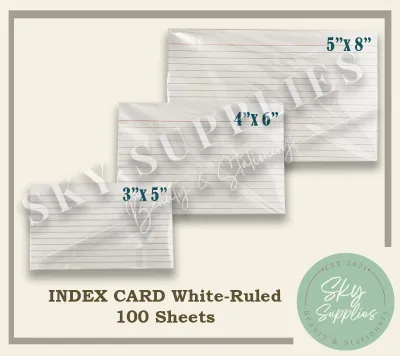
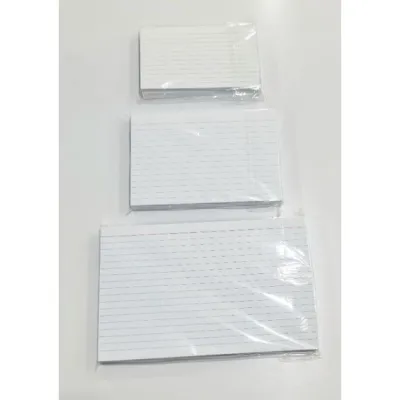
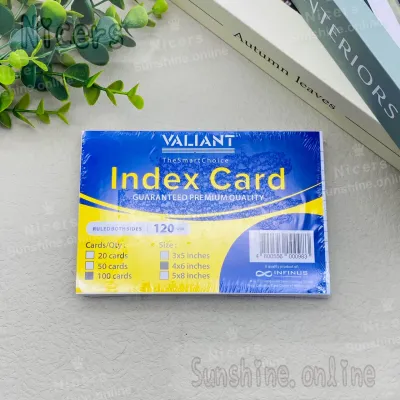
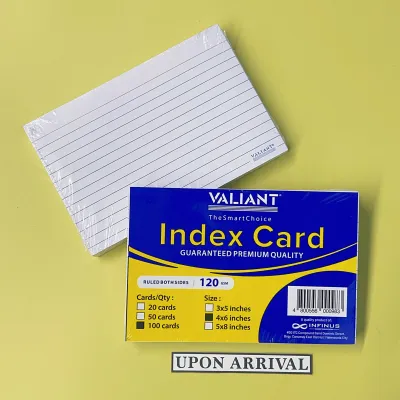
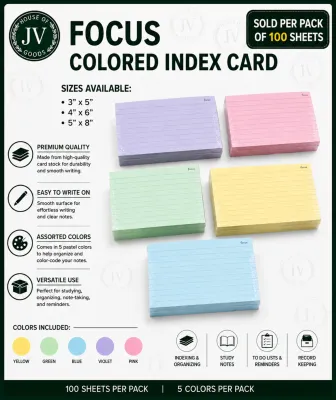
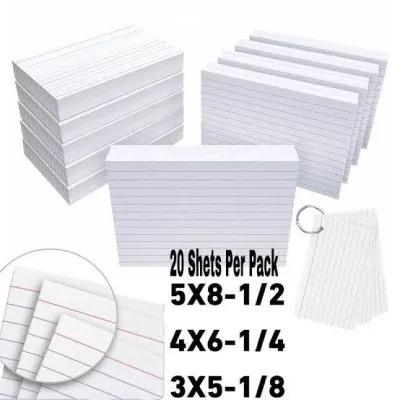
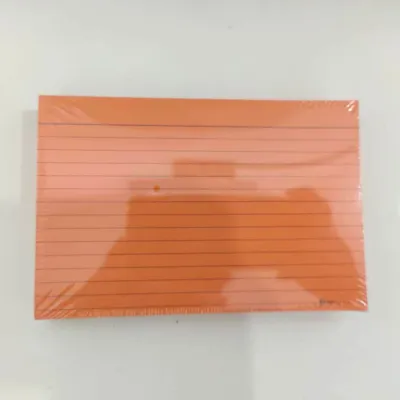
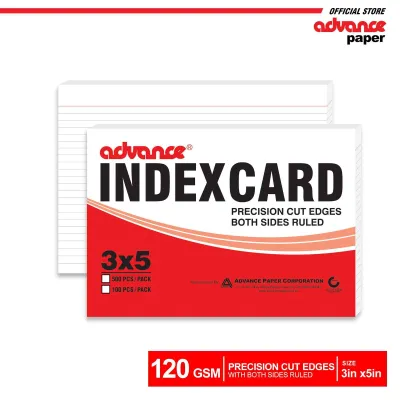
Prices are valid at publication and may change. Please refer to the product page for the latest price.
Your handwriting size and preferred writing instruments also dictate which card size will feel more comfortable. If you naturally write in small, neat print and prefer fine-tip gel pens (such as 0.38mm or 0.5mm), you can pack an impressive amount of information onto a 3×5 card without it feeling cluttered. However, if you have larger, expressive handwriting or prefer using medium-point ballpoints, broad highlighters, or felt-tip markers, the 4×6 card prevents your notes from turning into an illegible, crowded smudge.
Because index cards are made from various paper blends, their smoothness, bleed resistance, and drying speed can vary wildly. Before committing to a large study session, perform a simple trial: write a few words with your preferred gel pen or highlighter, then wait five seconds to check for smudging. In humid tropical environments, ink drying times can double, making fast-drying ink or ballpoint pens a safer choice for left-handed writers.
| Feature | 3×5 Index Cards | 4×6 Index Cards |
|---|---|---|
| Dimensions | 3 x 5 inches (approx. 7.6 x 12.7 cm) | 4 x 6 inches (approx. 10.2 x 15.2 cm) |
| Surface Area | 15 square inches | 24 square inches |
| Portability | High (fits in pockets, pencil cases) | Moderate (requires folders or larger bags) |
| Best Pen Match | Fine-tip gel pens (0.38mm to 0.5mm) | Medium gel pens, highlighters, markers |
| Typical Capacity | Single terms, formulas, quick prompts | Detailed outlines, recipes, diagrams |
Best Scenarios for 3×5 Index Cards
The 3×5 index card is the undisputed champion for active recall and high-volume memorization systems. Its compact size forces you to be concise, which is a fundamental principle of effective flashcard creation. It is the ideal format for vocabulary building, where you write a single word on the front and its definition on the back, or for memorizing historical dates, medical terminology, and legal definitions.

For students preparing for major exams, such as college entrance tests or professional board exams, managing a high volume of cards is a major consideration. A system of five hundred 3×5 cards is incredibly compact, fitting neatly into a small desktop box that takes up minimal study space. The smaller physical footprint also allows for rapid flipping and shuffling, which keeps your study sessions fast-paced and engaging.
Additionally, 3×5 cards are perfect for quick reference lists that you need to access frequently throughout the day. You can jot down daily to-do lists, shopping lists, or keyboard shortcuts and keep them right next to your computer keyboard. Because they are inexpensive and widely available in local bookstores, you can use them freely for temporary notes without feeling like you are wasting premium stationery.
Best Scenarios for 4×6 Index Cards
When your study material requires context, structure, and visual hierarchy, the 4×6 index card is the superior choice. The extra vertical and horizontal space allows you to write comprehensive study summaries, complete with bulleted lists, step-by-step processes, and short paragraphs. This makes them highly effective for subjects like history, literature, or biology, where facts cannot easily be reduced to a single-word answer.
Visual learners will find the 4×6 format much more accommodating for diagrams, flowcharts, and mind maps. You can easily sketch a chemical structure, a physiological pathway, or a software logic flow while still leaving enough room for explanatory labels. The larger canvas also makes it easier to implement color-coding systems, allowing you to use highlighters, colored gel pens, and sticky flags without covering up your actual text.
Beyond academic studying, the 4×6 card is a classic standard for domestic and professional organization. It is the traditional size for recipe cards, offering enough room to list ingredients in one column and step-by-step cooking instructions in another. In professional settings, they serve as excellent presentation cue cards; the larger size is easier to hold steady in your hand while speaking, and it allows you to write in a larger font that is easy to read at a glance from a podium.
Verify Storage and Accessory Compatibility
Before purchasing a large pack of index cards, it is crucial to verify how they will integrate with your existing storage and organization systems. Standard index card boxes, plastic filing cases, and desktop organizers are manufactured to fit specific dimensions. A 4×6 card will not fit into a 3×5 storage box, while 3×5 cards stored in a 4×6 box will slide around, making it difficult to keep them organized with dividers.
You should also consider how you plan to bind or carry your cards. If you prefer spiral-bound index card notebooks or cards pre-punched for metal rings, check the availability of these specific formats in your preferred size. While 3×5 ring-bound cards are highly common and easy to find, finding matching accessories for 4×6 cards can sometimes require more effort or specialized online searching.
In the Philippines, local stationery shops and online marketplaces offer a wide variety of index cards, but availability can vary by size and ruling type. Standard ruled 3×5 cards are incredibly common and budget-friendly, often sold in packs starting around ₱30 to ₱100. If you require specialized options, such as grid-ruled (graph) cards, heavy cardstock, or pastel colors, you may need to browse larger online office supply stores to find the exact specifications you need.
Furthermore, the local tropical climate is an important factor to keep in mind when choosing storage accessories. High relative humidity can soften paper fibers over time, causing loose cards to warp or absorb moisture. Storing your index cards in airtight plastic containers or using heavy-duty plastic dividers rather than simple cardboard boxes will help protect your notes from humidity, ensuring they remain crisp and easy to handle for months.
Final Selection Framework
To make your final decision, evaluate your specific study habits, writing style, and storage preferences using this conditional framework.
Choose 3×5 index cards if:
- Your primary goal is active recall, vocabulary building, or memorizing simple Q&A pairs.
- You need to carry your cards in your pocket, pencil case, or small bag for on-the-go study sessions.
- You write with a fine-tip pen and naturally have small, neat handwriting.
- You plan to create a high-volume system of hundreds of cards that must remain compact.
Choose 4×6 index cards if:
- You need to write detailed summaries, multi-step processes, or complex outlines.
- Your study method relies on visual aids, such as diagrams, flowcharts, or mind maps.
- You have larger handwriting or prefer using broad pens and multiple highlighters.
- You plan to use the cards for recipes, presentation cue cards, or project tracking.
Verify first if:
- Your existing storage boxes, binders, or plastic dividers match the card size you plan to buy.
- You intend to print directly onto the cards, as you must ensure your printer's paper tray can accommodate the dimensions.
- The paper weight (gsm) is thick enough to resist bleed-through from your favorite gel pens or highlighters, which you can easily test by running a quick ink trial on a single card.
Frequently Asked Questions (FAQ)
Can I print directly on 3×5 and 4×6 index cards?
Yes, you can print directly on both sizes, provided your printer supports custom paper dimensions. Most modern inkjet and laser printers feature adjustable paper guides in the feed tray that can slide inward to securely hold a 3×5 or 4×6 card. Before printing, you must access your printer settings or word processor and set the paper size to match the exact dimensions of your cards. To prevent paper jams, avoid feeding cards with perforated edges, spiral bindings, or exceptionally thick cardstock through standard home printers. It is highly recommended to perform a test print with a single blank card to check the alignment and ensure the ink dries quickly without smudging.
Are there other standard index card sizes I should consider?
Yes, if neither 3×5 nor 4×6 fits your needs, you might consider 5×8 index cards, which offer a massive canvas almost equivalent to a small notebook page. This larger size is excellent for highly detailed lecture summaries, extensive presentation outlines, or comprehensive project logs. On the other end of the spectrum, you can find micro-sized cards, often measuring 2×3 inches, which typically come pre-punched on a metal ring for maximum portability. Keep in mind that these alternative sizes are less common, so you should verify the availability of matching storage boxes, dividers, and protective cases in local stationery shops before committing to them.
Community discussion
Share your experience or ask a question. Comments are reviewed before publication.