
Selecting the right paper weight for your daily printing tasks is a balancing act between cost efficiency and document quality. The choice between 70 GSM and 80 GSM A4 bond paper ultimately depends on your specific printing volume, budget, and whether you require double-sided printing. While 70 GSM serves as an economical, lightweight option ideal for high-volume internal drafts, 80 GSM provides the necessary thickness, opacity, and structural stiffness required for professional, double-sided documents and high-speed office copiers.
In tropical climates like the Philippines, environmental factors such as high humidity play a critical role in how paper behaves inside a printer. Thinner paper tends to absorb moisture more rapidly, which can lead to frequent paper jams and curling. Understanding the physical and mechanical differences between these two common paper weights will help you optimize your office budget, protect your printing equipment, and ensure your printed materials look clean and professional.
Understanding Paper Weight: What 70 GSM and 80 GSM Actually Mean
To make an informed purchasing decision, it is essential to understand what paper weight specifications represent. The term GSM stands for “Grams per Square Meter,” which is the standard metric unit used globally to measure the density and weight of paper. It does not measure the thickness of a single sheet directly, but rather the weight of a sheet of that paper if it were cut to exactly one square meter in size.
Products mentioned in this guide
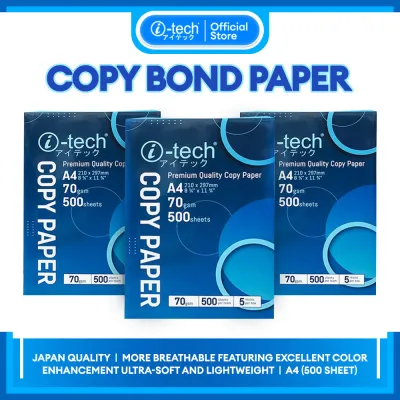
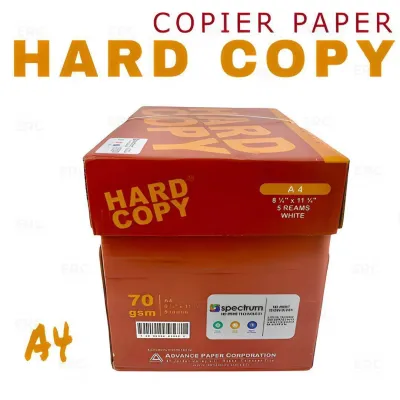
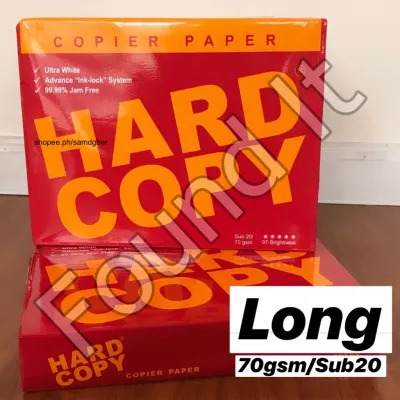
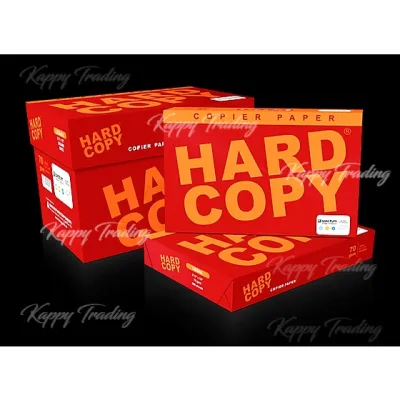
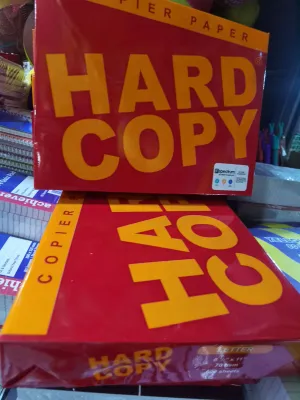
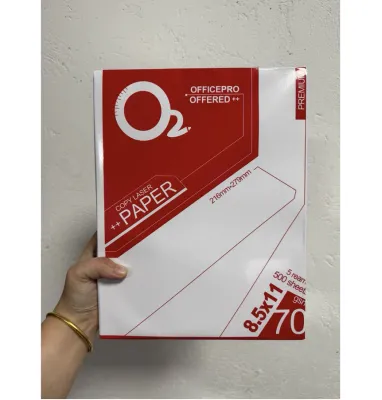
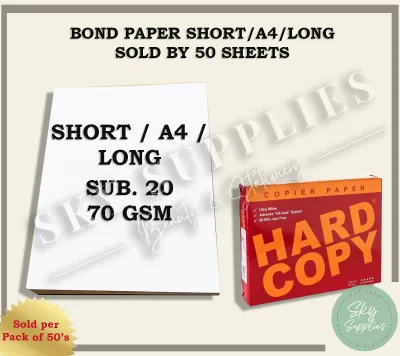
Prices are valid at publication and may change. Please refer to the product page for the latest price.
When applied to the standard A4 dimensions of 210 millimeters by 297 millimeters, this weight difference translates directly to the physical thickness, stiffness, and tactile feel of each individual sheet. An A4 sheet of 80 GSM paper is physically thicker and more rigid than a sheet of 70 GSM paper. When you hold them side by side, the 80 GSM sheet feels sturdier and resists bending, whereas the 70 GSM sheet feels noticeably floppier and more delicate.
It is a common misconception that a higher GSM automatically guarantees a brighter or smoother sheet of paper. In reality, optical properties such as brightness, whiteness, and surface finish are entirely separate manufacturing specifications. Brightness refers to how much blue light the paper reflects, while whiteness measures the reflection of all wavelengths of light across the visible spectrum. A premium 70 GSM paper can easily feature a higher brightness rating and a smoother surface finish than a budget-grade 80 GSM paper. Therefore, you must always verify these optical specifications on the product packaging rather than assuming weight dictates visual quality.
Print Quality, Opacity, and Equipment Compatibility
The physical differences between 70 GSM and 80 GSM paper directly impact how they interact with office machinery, ink, and toner. Printer compatibility is one of the most critical factors to consider, especially when operating high-speed copiers or older printing equipment. High-speed printers rely on precise vacuum or roller feed mechanisms to pull single sheets from the paper tray. Because 70 GSM paper is thinner and more flexible, it is more susceptible to multi-sheet pulling, where the rollers accidentally grab two or more sheets simultaneously. This issue is severely compounded in humid environments, where the lightweight fibers absorb moisture and cling together, resulting in frustrating paper jams. The added stiffness of 80 GSM paper provides the structural integrity needed to feed smoothly through high-speed rollers without bending or misfeeding.

Opacity is another major differentiator that affects print quality, particularly for double-sided (duplex) printing. Opacity refers to how impervious the paper is to light transmission. Because 70 GSM paper is thinner, it has lower opacity, which leads to a phenomenon known as “show-through” or “bleed-through.” When you print text or graphics on one side of a 70 GSM sheet, the shadow of the print is clearly visible from the reverse side. This makes double-sided printing highly impractical and unprofessional. In contrast, 80 GSM paper offers significantly higher opacity, allowing you to print on both sides of the sheet with minimal show-through, ensuring that your documents remain clean, legible, and professional.
Ink and toner absorption also vary based on paper weight. When using inkjet printers, wet ink is sprayed directly onto the paper surface. Thinner 70 GSM paper struggles to absorb heavy ink saturation without warping, wrinkling, or curling as the moisture dries. This is particularly problematic when printing documents with large colored graphics, charts, or bold headings. The denser fiber structure of 80 GSM paper handles wet ink and high-temperature laser toner fusion much more effectively, maintaining a flat, crisp profile even under heavy coverage.
Before purchasing paper in bulk, it is highly recommended to consult your specific printer manufacturer’s user manual. Most printer manuals outline the recommended paper weight limits for the standard input tray, manual feed slot, and duplex unit. Operating outside these recommended specifications can accelerate wear on your printer’s pickup rollers and heating elements.
Evaluating Cost and Usage Volume
When managing school, home, or office supplies, evaluating the financial trade-offs between these two paper weights is essential for long-term budget efficiency. On any retail shelf or online marketplace, you will observe a consistent relative price difference between 70 GSM and 80 GSM paper. A ream of 70 GSM paper is always the more economical option, typically costing noticeably less than its 80 GSM counterpart from the same brand.
To determine which weight offers the best value, you should establish a cost-per-page framework based on your monthly printing volume and the intended lifespan of your documents. If your office prints thousands of pages of temporary, single-sided documents every month—such as daily shipping labels, internal draft memos, system logs, or preliminary school worksheets—the price difference per ream quickly accumulates. By choosing 70 GSM for these high-volume, short-lived documents, you can save hundreds of pesos (₱) over the course of a year without sacrificing any operational utility.
Conversely, the premium cost of 80 GSM paper is fully justified when the document’s presentation, durability, and professional impression are paramount. Legal contracts, external business proposals, official certificates, resume printouts, and client-facing presentations demand the tactile weight and premium feel that only 80 GSM or heavier paper can provide. A flimsy, semi-transparent 70 GSM sheet can subtly undermine the perceived value of a business proposal or official document. Furthermore, because 80 GSM paper is more durable, it is the superior choice for archival purposes or documents that will be handled frequently by multiple people over an extended period.
Decision Framework: Choosing the Right A4 Bond Paper
To finalize your purchasing decision, you can use a simple decision framework that matches your specific daily printing requirements to the correct paper weight.
You should choose 70 GSM A4 bond paper if your primary goal is to maximize budget efficiency for high-volume, single-sided printing. It is the ideal choice for printing internal drafts, temporary worksheets, daily receipts, and high-volume school modules where document longevity and double-sided readability are not required.
You should choose 80 GSM A4 bond paper if you frequently print double-sided documents, require a professional and premium feel for client-facing materials, or operate high-speed office copiers that are prone to jamming with thinner paper. It is also the preferred choice for documents that require heavy ink coverage, such as color charts, diagrams, and official correspondence.
Before making a bulk purchase, always verify your specific printing environment and equipment settings. If you are using specialized inkjet printers, printing high-resolution photographs, or requiring archival-grade preservation, you may need to check for specialized paper coatings or acid-free certifications on the packaging rather than relying solely on the GSM rating.
Frequently Asked Questions (FAQ)
Can I mix 70 GSM and 80 GSM paper in the same printer tray?
Mixing different paper weights within a single printer tray is highly discouraged. Printer feed mechanisms and pickup rollers rely on consistent friction and paper thickness to pull one sheet at a time. When you mix 70 GSM and 80 GSM sheets in the same stack, the variation in thickness and surface friction confuses the rollers. This often results in multi-page pulls, where the printer feeds a thin sheet and a thick sheet simultaneously, or causes the paper to misalign and jam inside the feed path. To ensure consistent printing results and prevent unnecessary wear on your equipment, always load your paper tray with a single, uniform paper weight. If you need to switch weights, empty the tray completely before loading the new ream.
Does a higher GSM mean the paper is brighter or whiter?
No, a higher GSM does not mean the paper is brighter or whiter. GSM is strictly a measure of physical weight and density, whereas brightness and whiteness are optical properties determined by the chemical bleaching process and the addition of optical brightening agents during manufacturing. A premium 70 GSM paper from a reputable manufacturer can have a brightness rating of 98% or higher, making it appear significantly whiter and brighter than a budget-grade 80 GSM paper that may only have a 90% brightness rating. When shopping for paper, do not assume that a heavier sheet will look cleaner or more vibrant. Instead, look for the specific brightness or whiteness percentage printed on the packaging label to ensure it meets your visual standards.
Community discussion
Share your experience or ask a question. Comments are reviewed before publication.