
Quick Answer: Which GSM Should You Choose?
When purchasing a 1 ream A4 bond paper package, your choice of paper weight directly impacts print quality, printer reliability, and your overall budget. Selecting the right Grams per Square Meter (GSM) depends entirely on your specific printing tasks and how the finished document will be handled.
- Choose 70 GSM for high-volume, single-sided drafts, school worksheets, and internal office memos where keeping the cost per ream in ₱ is your absolute priority.
- Choose 80 GSM for standard daily printing, student assignments, official correspondence, and reliable double-sided documents with minimal show-through.
- Choose 100 GSM for premium presentations, certificates, resumes, and heavy color printing where high opacity, stiffness, and durability matter.
Before purchasing heavier reams, always verify your printer’s manual to confirm the maximum supported paper thickness and avoid feed issues.
Understanding Paper Weight: What Does GSM Mean for Your Prints?
To make an informed decision when buying a 1 ream A4 bond paper pack, it is essential to understand what paper weight actually measures. GSM stands for Grams per Square Meter, which is the standard metric unit used globally to determine the density and weight of paper. This measurement is calculated by weighing a single sheet of paper that measures exactly one square meter, regardless of the actual physical dimensions of the cut sheet you use.
Products mentioned in this guide
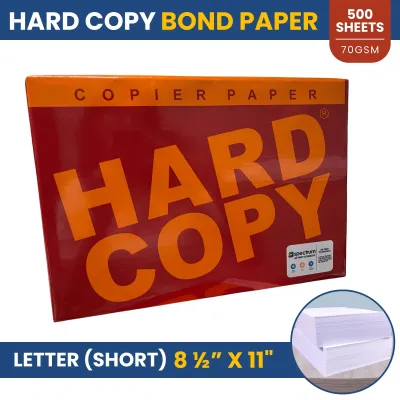
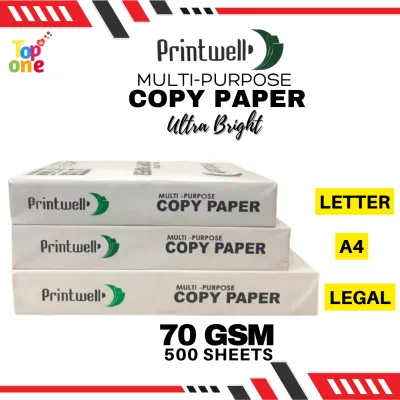
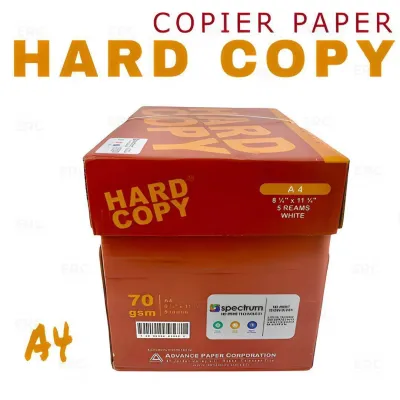
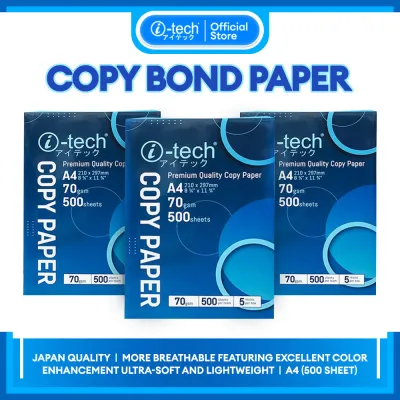
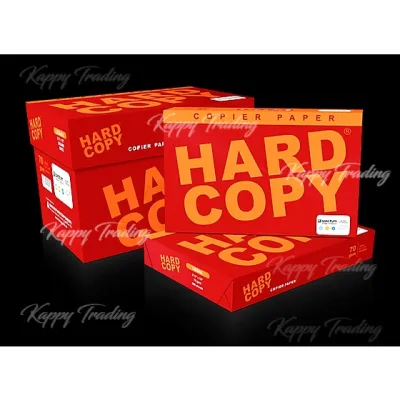
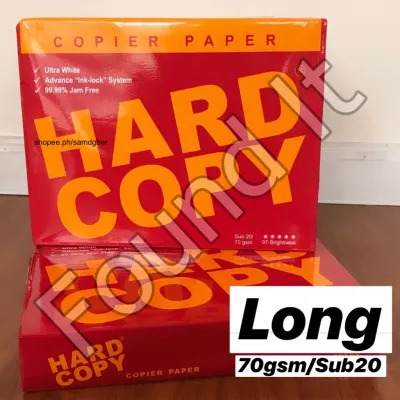
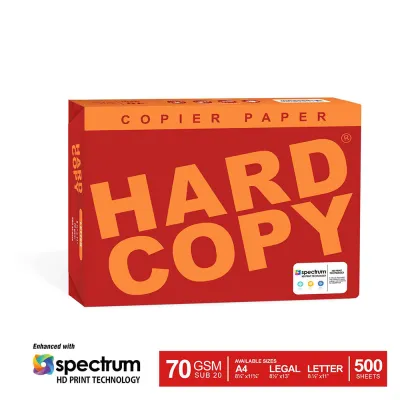
Prices are valid at publication and may change. Please refer to the product page for the latest price.

As the GSM rating increases, the paper fibers become more densely packed, resulting in a physically thicker, stiffer, and more opaque sheet. Thicker paper resists bending, handles ink saturation better, and feels more substantial to the touch.
It is important to note that paper weight is entirely separate from optical properties like brightness and whiteness. Brightness refers to how much blue light reflects off the paper’s surface, while whiteness measures the overall light reflection across the visible spectrum. A high-weight paper is not automatically brighter than a lighter one; you must check the specific ratings on the packaging to verify these optical qualities.
70 GSM A4 Bond Paper: Best for High-Volume and Draft Printing
The lightest standard option widely available in a 1 ream A4 bond paper format is 70 GSM. This paper is highly favored in high-volume environments where cost efficiency is the absolute priority. Schools printing daily worksheets, offices generating internal memos, and copy centers handling massive draft runs rely heavily on this weight to keep their operational expenses low.
However, the thinner profile of 70 GSM paper comes with distinct physical limitations. Because the paper is less dense, ink from inkjet printers or heavy toner from laser printers can easily saturate the fibers. This leads to noticeable show-through, where text printed on one side is clearly visible on the reverse, and in severe cases, actual ink bleed-through that ruins the document. Consequently, 70 GSM paper is generally unsuitable for double-sided printing.
Another critical consideration is how this paper behaves inside your printing equipment. The lower stiffness of 70 GSM sheets makes them highly pliable. In high-speed office copiers or older printer models, the rollers may struggle to separate the thin sheets, increasing the likelihood of multi-sheet feeds and frustrating paper jams.
This weight is best reserved for single-sided black-and-white text documents. Use it for temporary handouts, personal study guides, scratch paper, and initial drafts that do not require a premium presentation.
80 GSM A4 Bond Paper: The Standard for Everyday Office and School Use
If you are looking for a reliable, all-purpose option that minimizes printing headaches, 80 GSM is the standard choice for most offices and schools. This weight represents the sweet spot of the paper industry, offering a highly dependable balance of physical durability, print quality, and cost per ream.
One of the primary advantages of 80 GSM paper is its exceptional feed reliability. Standard office copiers, home inkjet printers, and commercial laser printers are engineered and calibrated specifically around this paper thickness. The sheets possess just enough stiffness to pass smoothly through complex paper paths without curling or misfeeding, significantly reducing downtime caused by jams.
In terms of print quality, 80 GSM paper provides sufficient opacity for standard double-sided printing. While you may still observe a faint shadow of text when holding the page directly up to a bright light, standard text documents and light graphics can be printed on both sides without distracting the reader.
This makes 80 GSM the ideal candidate for everyday school essays, official correspondence, standard business reports, and double-sided forms. While it costs slightly more per ream than 70 GSM, the reduction in wasted paper and printer maintenance often offsets the price difference.
100 GSM A4 Bond Paper: When to Upgrade for Premium Documents
When your documents need to command attention or withstand frequent handling, upgrading to 100 GSM paper is highly recommended. This premium weight is noticeably thicker and heavier than standard office paper, immediately conveying a sense of quality and professionalism to anyone who holds it.
The standout feature of 100 GSM paper is its superior opacity. The dense fiber structure prevents ink from penetrating through to the opposite side, making it the perfect medium for heavy ink coverage, high-resolution color graphics, and detailed charts. Even when printing double-sided documents with rich color illustrations, the reverse side remains clean and legible.
The physical stiffness of 100 GSM paper also ensures excellent durability. It resists tearing, dog-ears, and wrinkling much better than lighter papers, which is crucial for documents that will be archived or passed around frequently.
However, this thickness requires careful handling. Some standard printers, particularly compact home models, may struggle to pull 100 GSM paper from the main tray or bend it around tight internal rollers. To avoid jams, you may need to feed these sheets individually through the printer’s manual bypass tray.
This premium paper is best suited for high-stakes documents. Use it for business proposals, creative portfolios, official certificates, professional resumes, and marketing materials.
Side-by-Side Comparison: 70 vs 80 vs 100 GSM
To help you quickly determine which paper weight aligns with your specific printing needs, the following table summarizes the physical characteristics and practical applications of each GSM level.
| GSM Weight | Relative Thickness | Opacity Level | Best Use Case | Double-Sided Suitability | Relative Cost per Ream |
|---|---|---|---|---|---|
| 70 GSM | Thin and pliable | Low (high show-through) | High-volume drafts, single-sided worksheets | Not recommended | Most economical |
| 80 GSM | Medium and standard | Moderate (minimal show-through) | Everyday office reports, student essays | Good for standard text | Moderate |
| 100 GSM | Thick and stiff | High (no show-through) | Resumes, certificates, color presentations | Excellent for heavy graphics | Premium |
Note: While GSM determines the weight and thickness of the paper, optical properties such as brightness and surface finish vary by brand. Always inspect the specific product packaging to verify these details before purchasing.
How to Choose the Right 1 Ream A4 Bond Paper for Your Needs
Selecting the perfect 1 ream A4 bond paper involves evaluating your equipment, your printing volume, and your local environment. By following a structured approach, you can avoid compatibility issues and ensure you get the best value for your money.
First, consult your printer’s technical specifications. Most manufacturers list the minimum and maximum paper weights the machine can safely process. While almost all printers handle 80 GSM without issue, some budget models may struggle with the pliability of 70 GSM or the stiffness of 100 GSM.
Next, analyze your printing habits and budget. If your household or office prints thousands of pages of temporary documents every week, the cumulative savings of choosing 70 GSM can be significant. However, if your output consists of client-facing reports or academic submissions where presentation matters, investing in 80 GSM or 100 GSM is a necessary expense.
Additionally, pay close attention to the storage conditions in your home or office. In tropical climates like the Philippines, high relative humidity can severely impact paper performance. Paper is hygroscopic, meaning it readily absorbs moisture from the surrounding air. When thin paper like 70 GSM absorbs moisture, it becomes limp, loses its structural integrity, and is highly prone to curling and jamming inside the printer. To mitigate this, store your paper in a cool, dry place, keep the ream wrapper sealed until you are ready to load the paper, and avoid leaving unused sheets in the printer tray for extended periods.
Frequently Asked Questions (FAQ)
Can I mix different GSM papers in the same printer tray?
Mixing different paper weights in a single printer tray is not recommended. Printers rely on consistent friction and paper thickness to feed sheets one by one. When you mix weights, the pickup rollers may grab multiple sheets at once or fail to pull a sheet entirely, leading to immediate paper jams. Always empty the tray before loading a different paper weight, or utilize your printer’s manual feed slot for specialty sheets.
Does a higher GSM always mean the paper is brighter or whiter?
No, paper weight and paper brightness are entirely independent metrics. GSM measures the physical weight and density of the paper fibers per square meter. Brightness and whiteness, on the other hand, are determined by the chemical bleaching process and the addition of optical brightening agents during manufacturing. A high-quality 70 GSM paper can easily be manufactured to look brighter and whiter than a standard 100 GSM paper.
How many sheets are typically in 1 ream of A4 bond paper?
A standard international ream of paper contains exactly 500 sheets. This quantity provides a reliable baseline for calculating your printing costs and volume needs. However, always check the product packaging carefully before purchasing, as some budget brands or specialty paper manufacturers package their products in smaller quantities, such as 250 or 400 sheets per pack.
Community discussion
Share your experience or ask a question. Comments are reviewed before publication.