
Choosing the right paper weight is one of those small decisions that has a surprisingly large impact on your daily productivity, budget, and overall writing or printing experience. When browsing office supply aisles or online storefronts, you will inevitably face the classic matchup: 70gsm versus 80gsm. While a 10gsm difference might sound trivial on paper, it represents a noticeable shift in how the sheet behaves under the heat of a laser printer, how it handles wet gel inks, and how well it survives inside a loose-leaf binder.
To make an immediate decision, you can follow a straightforward rule of thumb. Choose 70gsm if your primary goal is cost-efficiency for high-volume, single-sided printing, internal drafts, or basic note-taking with standard ballpoint pens. On the other hand, choose 80gsm if you require paper for double-sided (duplex) printing, professional client-facing documents, high-flow gel or fountain pens, or loose-leaf refills that undergo frequent handling. While both weights share the exact same physical dimensions, this weight difference directly dictates the paper’s opacity, structural integrity, and resistance to ink saturation.
Understanding Paper Weight: What 70gsm and 80gsm Actually Mean
To understand why these two paper weights perform so differently, it helps to look at how paper is measured. The acronym “gsm” stands for grams per square meter. This is a metric unit that measures the density and weight of the paper, rather than its direct physical thickness. Specifically, if you were to take a sheet of paper that measures exactly one meter by one meter, its weight in grams would equal its gsm rating.
Products mentioned in this guide
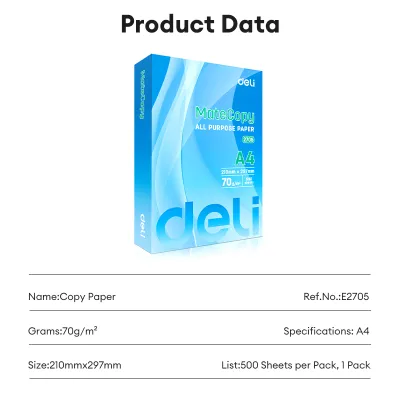
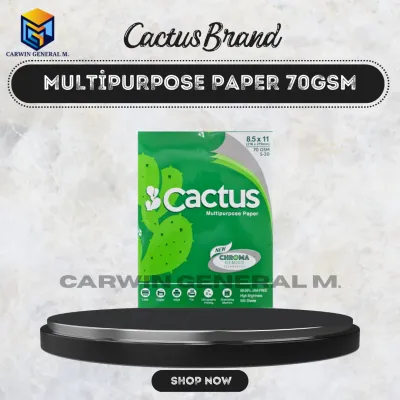
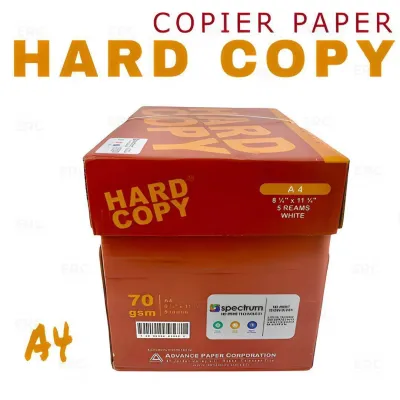
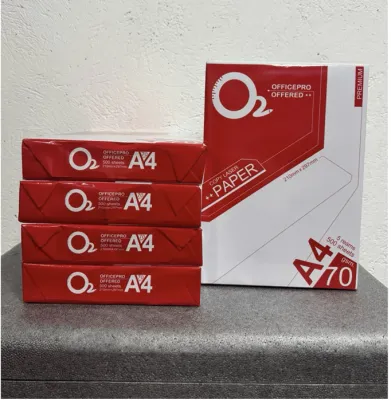
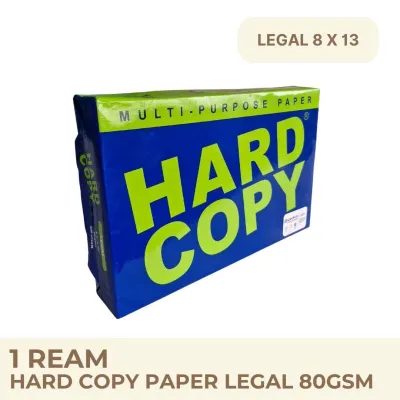
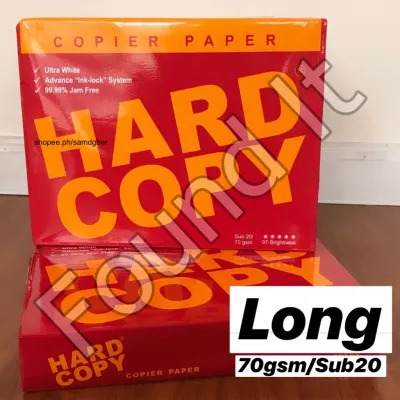
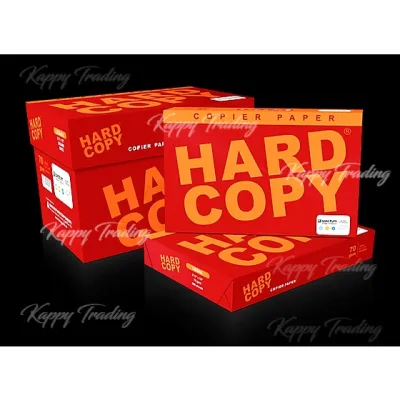
Prices are valid at publication and may change. Please refer to the product page for the latest price.
It is a common misconception that paper weight changes the physical size of the sheet. An A4 bond paper sheet always measures exactly 210 by 297 millimeters, regardless of whether it is rated at 70gsm, 80gsm, or even a heavy cardstock weight of 120gsm. What does change is the density of the wood pulp fibers packed into those dimensions. A sheet of 80gsm paper contains roughly 14% more fiber mass than a 70gsm sheet of the same size, giving it more substance, stiffness, and structural body.
However, you should keep in mind that the actual thickness (caliper) and surface texture can vary slightly between different paper manufacturers. This variation is due to differences in pulp sources, such as eucalyptus or bamboo fibers, and the specific manufacturing processes used. For instance, paper mills use a process called calendering, where the paper web is pressed between heavy rollers to smooth out the surface. High levels of calendering can make an 80gsm sheet feel slightly thinner but much denser and smoother than an uncalendered sheet of the same weight. Consequently, while higher gsm generally correlates with a thicker, more opaque sheet, the physical feel is heavily influenced by the brand’s unique production standards.
70gsm vs 80gsm: Key Differences in Thickness and Durability
The physical differences between these two weights become instantly apparent the moment you hold a single sheet of each side-by-side. The extra fiber density in 80gsm paper alters both its optical properties and its resistance to physical wear.

Thickness and Opacity (Show-through)
Opacity refers to how much light is blocked from passing through the paper, which directly affects “show-through” or ghosting. Show-through occurs when text or images printed on one side of a page are visible from the reverse side, even if the ink itself has not physically bled through the paper fibers.
Because 80gsm paper is denser, it is inherently more opaque. This makes it the superior choice for any scenario where you need to print or write on both sides of the page. Under bright office fluorescent lights or natural tropical sunlight, 80gsm paper keeps the reverse side clean and legible. Conversely, 70gsm paper is thinner and more translucent. When you hold a printed 70gsm sheet up to the light, the text on the back is highly visible. While this is perfectly fine for single-sided documents, it makes double-sided reading highly distracting and unprofessional.
Durability and Tear Resistance
The structural strength of your paper determines how well it survives the rigors of daily handling. Because 80gsm paper contains more tightly packed fibers, it boasts superior tensile strength and tear resistance. It can withstand aggressive erasing, frequent page-turning, and the constant folding or unfolding required for mailings and handouts without fraying at the edges.
In contrast, 70gsm paper is much more delicate. If you use a heavy hand with a polymer eraser to correct a pencil sketch or a math equation, 70gsm paper is prone to thinning, wrinkling, or tearing completely. It also creases easily under minimal pressure, meaning notes stuffed into a backpack or folder will quickly look worn and untidy. Furthermore, the lighter weight of 70gsm paper makes it more susceptible to curling, especially when exposed to temperature changes and ambient moisture.
Performance of A4 Bond Paper in Everyday Printing and Copying
When it comes to office machinery, the weight of your A4 bond paper can mean the difference between a smooth, continuous print run and a frustrating morning spent clearing paper jams. Both weights are fully compatible with standard home and office printers, but they interact with the hardware in distinct ways.
Laser and Inkjet Printer Compatibility
Inside a printer, paper must travel through a complex path of rollers, belts, and heat elements. High-speed office copiers and laser printers rely on the paper having a certain degree of stiffness to feed correctly. Because 80gsm paper is stiffer, printer feed rollers can easily grab a single sheet at a time. This stiffness minimizes the risk of double-feeding, where multiple sheets are pulled into the printer simultaneously, leading to immediate jams.
Lighter 70gsm paper lacks this rigidity. In older or poorly maintained printers where the rubber feed rollers have worn down, 70gsm sheets can slip, misalign, or crumple as they enter the paper path. Additionally, laser printers use intense heat and pressure from a fuser unit to melt toner onto the page. This heat can cause the lighter 70gsm paper to curl significantly as it exits the printer, making the sheets difficult to stack or staple neatly. Inkjet printers present a different challenge: they spray liquid ink onto the page. Because 70gsm paper has less fiber mass to absorb this moisture, heavy ink saturation can cause the paper to ripple or “cockle,” whereas 80gsm paper remains relatively flat.
Double-Sided (Duplex) Printing
If your home or office relies on automatic duplex printing to save paper, 80gsm is the undisputed standard. Duplex printing requires the paper to be fed through the printer, heated on one side, flipped mechanically by the duplexing unit, and then printed on the reverse side. The paper must maintain its structural flatness and opacity throughout this rapid process. The thickness and stability of 80gsm paper ensure that the second pass goes as smoothly as the first, with minimal risk of wrapping around the internal rollers.
Attempting high-volume duplex printing on 70gsm paper is a common cause of office printer jams. The moisture from inkjet inks or the heat from laser toners weakens the thin 70gsm sheet during the first pass, making it too floppy to navigate the tight reversing path of a duplexer. If you must use 70gsm paper for double-sided work, it is best to stick to text-only documents, reduce your printer’s toner density settings, and avoid large blocks of solid color or heavy graphics.
Suitability for Loose-Leaf Notebooks and Handwriting
For students, researchers, and professionals who prefer the tactile experience of handwriting, the choice of paper weight directly shapes the physical writing experience. This is especially true when using loose-leaf binder systems where pages are turned frequently and subjected to localized stress.
Ink Bleed and Feathering with Different Pens
The way paper reacts to ink depends heavily on its surface sizing—a chemical treatment applied during manufacturing to control water absorption—and its overall density. Because 80gsm paper is denser, it generally handles wetter inks much better than its lighter counterpart. If you write with gel pens, rollerballs, fine-liners, or fountain pens, 80gsm paper provides a reliable barrier that prevents ink from bleeding through to the next page. It also reduces feathering, which is the unsightly spreading of ink along the paper fibers that makes your handwriting look fuzzy.
Ink Performance Comparison on A4 Bond Paper

Paper Weight | Ballpoint Pen | Gel/Rollerball | Fountain Pen | Highlighter
-------------|---------------|----------------|--------------|-------------
70gsm        | Excellent     | Moderate*      | Poor         | Moderate*
80gsm        | Excellent     | Excellent      | Moderate*    | Excellent

*Note: Performance can vary based on brand-specific sizing and ink flow wetness.
When using 70gsm paper, you are largely restricted to standard oil-based ballpoint pens and pencils. Because ballpoint ink is thick and dry, it sits on top of the paper fibers without soaking in. However, if you attempt to use a wet gel pen or a liquid highlighter on 70gsm paper, the ink will rapidly penetrate the thin sheet, causing visible bleed-through on the back and occasionally staining the page underneath. Because smoothness and ink resistance depend on the specific brand’s surface sizing, you should always perform a quick trial. Test your favorite pen on a single sheet of a new paper pack before committing to an entire notebook.
Binder Wear and Page Longevity
Loose-leaf systems, such as standard 2-hole, 4-hole, or multi-ring (26-hole or 30-hole) A4 binders, place a high amount of physical stress on very small areas of the paper. Every time you flip a page, the metal rings pull against the edges of the punched holes.
Here, the structural limits of 70gsm paper become a major drawback. The thin margins around the punched holes on a 70gsm sheet tear easily under tension. If you frequently flip back and forth through your notes during study sessions or fast-paced meetings, or if you overstuff your binder, the holes on 70gsm pages will quickly fray, stretch, and rip out completely.
With its higher tensile strength, 80gsm paper provides far better structural integrity at the binder edge. The punched holes resist tearing even under repeated page-turning, making 80gsm the ideal choice for multi-year academic notes, archival records, reference manuals, or professional portfolios that need to remain intact for years.
Cost, Value, and Bulk Buying Considerations
When managing a household budget, a classroom, or an office supply room, financial considerations are just as important as physical performance. Understanding the economic trade-offs between these two weights can help you optimize your stationery spending.
In the Philippine market, A4 bond paper is typically sold by the ream (500 sheets) or by the box (usually containing 5 reams). Price bands generally reflect the material cost of the wood pulp used:
- 70gsm A4 Bond Paper: Typically ranges from ₱160 to ₱220 per ream.
- 80gsm A4 Bond Paper: Typically ranges from ₱240 to ₱320 per ream.
At first glance, 70gsm paper offers a clear upfront saving, making it highly attractive for budget-conscious students or businesses that go through thousands of sheets of paper weekly. Additionally, because 70gsm paper is lighter, it can significantly reduce shipping costs when ordering in bulk from online e-commerce platforms. A standard five-ream box of 70gsm paper weighs approximately 11 kilograms, whereas a five-ream box of 80gsm paper weighs nearly 12.5 kilograms. For deliveries traveling across island provinces, this weight difference can translate into noticeable shipping surcharges.
However, 80gsm paper often represents better long-term value. Because 80gsm paper is fully optimized for double-sided printing, it allows you to utilize both sides of every sheet reliably. By switching from single-sided printing on 70gsm to double-sided printing on 80gsm, you can effectively cut your overall paper consumption in half. This not only offsets the higher initial cost of the 80gsm ream but also reduces the physical storage space required for your archives. To find the best deal, it is wise to monitor local office supply warehouses and online marketplaces for bulk discounts and seasonal promotions, keeping in mind that prices can fluctuate based on global pulp import costs.
Final Verdict: How to Decide Based on Your Needs
To make your final decision, evaluate how you intend to use the paper and the environment in which it will be stored. You can use this checklist to guide your purchase:
Choose 70gsm for:
- High-Volume Drafts: Printing internal office memos, preliminary editing drafts, or temporary receipts where presentation quality is secondary.
- Everyday Schoolwork: Student draft printing, math scratch paper, and basic lecture notes written with standard ballpoint pens.
- Single-Sided Text: Documents that only require printing on one side of the page, minimizing show-through concerns.
- Strict Budget Limits: High-volume environments where minimizing the upfront cost per ream is the absolute priority.
Choose 80gsm for:
- Professional Documents: Client-facing proposals, reports, resumes, contracts, and thesis submissions that require a premium look and feel.
- Double-Sided Printing: Any duplex printing task where clean, legible text on both sides is mandatory.
- Wet-Ink Writing: Note-taking with gel pens, rollerballs, highlighters, or fountain pens where bleed-through must be avoided.
- Loose-Leaf Notebooks: Academic or professional binders where pages are turned frequently and must resist tearing at the punched holes.
- Humid Environments: Tropical climates where ambient humidity can soften lighter paper, as the stiffer 80gsm fibers help prevent printer misfeeds and jams.
Finally, remember that weight is not the only factor on the packaging. Before purchasing, check the label for brightness levels (typically expressed as a percentage, such as 95% or 100% ISO brightness) and paper finish. A high-brightness, ultra-smooth finish on an 80gsm sheet will elevate your color prints, while a standard matte finish is perfect for comfortable, glare-free reading of long text documents.
Frequently Asked Questions (FAQ)
Can I use 70gsm paper for double-sided printing if I use a laser printer?
While it is physically possible to run 70gsm paper through a duplex laser printer, it is generally not recommended. The intense heat of the fuser unit often causes the thin paper to curl, increasing the likelihood of jams during the second pass. Furthermore, the low opacity of 70gsm paper results in severe show-through, making the text on both sides overlap visually and reducing readability.
Does a higher gsm always mean the paper is physically thicker?
Not necessarily. While there is a strong correlation between gsm and thickness, the manufacturing process plays a major role. Heavy calendering—where the paper is compressed between polished rollers—can make a high-gsm paper dense, compact, and smooth without adding physical thickness. Therefore, an 80gsm sheet might sometimes feel similar in thickness to a low-density 70gsm sheet, but it will always be heavier, stiffer, and more opaque.
Which paper weight is better for preventing printer jams in humid weather?
80gsm paper is significantly better at preventing printer jams in humid conditions. Paper is hygroscopic, meaning it readily absorbs moisture from the air. In tropical regions with high humidity, lighter 70gsm paper quickly loses its structural rigidity when damp, causing it to limp, curl, and misfeed. The higher fiber density of 80gsm paper allows it to retain its stiffness and feed reliably through the printer rollers.
Community discussion
Share your experience or ask a question. Comments are reviewed before publication.