
When choosing between 70gsm and 80gsm bond paper, the right choice depends on your specific printing volume, document purpose, and budget. Neither option is universally superior.
Choose 70gsm if: You are printing high-volume internal documents, student notes, everyday drafts, or single-sided text where minimizing cost and physical bulk is the priority.
Choose 80gsm if: You are producing professional external documents, resumes, legal contracts, or materials requiring double-sided printing with minimal ink show-through.
Products mentioned in this guide
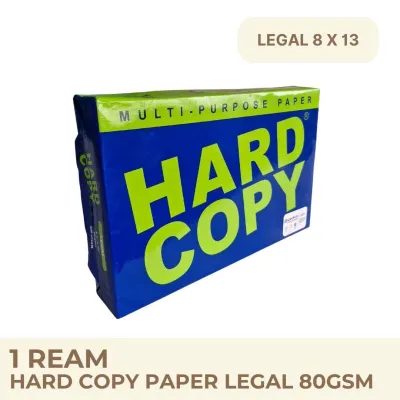
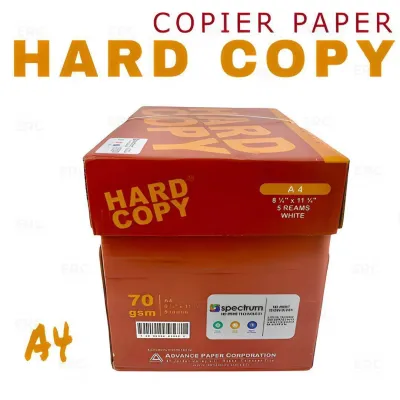
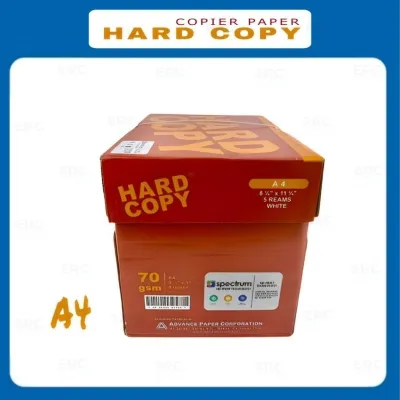
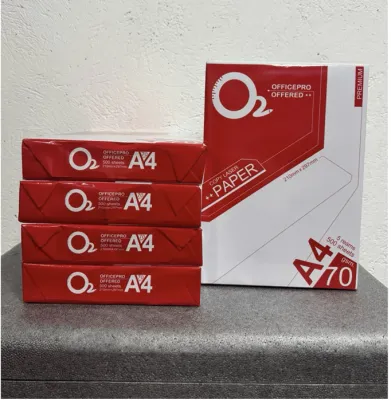
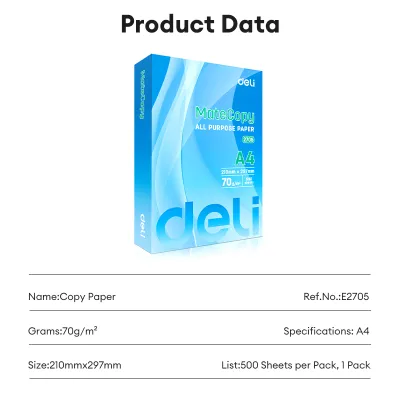
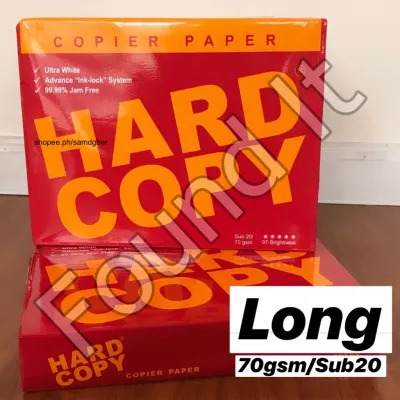
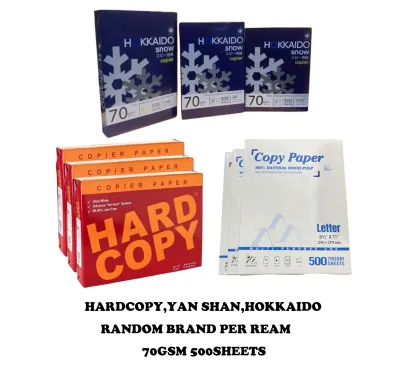
Prices are valid at publication and may change. Please refer to the product page for the latest price.
Verify first if: Your specific printer model has strict minimum or maximum paper weight requirements in its user manual.
What Does GSM Mean in Bond Paper?
To make an informed decision, it is essential to understand the technical metric used to classify paper. GSM stands for Grams per Square Meter. This is the standard metric for measuring paper density and weight, representing how much a single sheet of paper measuring exactly one meter by one meter weighs in grams. Therefore, a square meter of 70gsm paper weighs 70 grams, while a square meter of 80gsm paper weighs 80 grams.
While GSM is directly related to weight, it is closely correlated with the physical thickness of the paper. However, weight and thickness are not identical. The manufacturing process heavily influences how dense a sheet of paper becomes. During production, wood pulp is mixed with water, refined, and pressed through rollers. Manufacturers may add fillers and apply different levels of pressure during the calendering stage to smooth the paper. Consequently, an 80gsm sheet from one brand might feel slightly different in stiffness compared to an 80gsm sheet from another, but it will consistently contain more fiber mass per square meter than a 70gsm sheet.
This additional fiber mass is what gives heavier paper its distinct physical properties. A higher GSM generally results in a stiffer, more opaque, and more durable sheet of bond paper. Standard office bond paper typically ranges from 70gsm to 80gsm, making these the two most common choices for school, home, and office environments.
Key Differences Between 70gsm and 80gsm Bond Paper
Opacity and Double-Sided Printing
One of the most immediate, observable differences between these two paper weights is opacity, which refers to how much light is blocked from passing through the sheet. Because 70gsm paper contains less fiber mass, it is naturally more translucent. When you print text or images on a 70gsm sheet, the ink is highly visible from the reverse side. This phenomenon, known as ghosting, makes 70gsm paper poorly suited for double-sided (duplex) printing. If you attempt to print on both sides, the overlapping text from the back can severely compromise the legibility of the front.

In contrast, 80gsm paper offers superior opacity. The denser network of cellulose fibers effectively blocks light, ensuring that ink applied to one side does not easily show through to the other. This makes 80gsm the standard choice for clean, legible double-sided documents. The choice of ink also interacts with paper opacity. Liquid-based inks, such as the dye inks commonly used in continuous ink supply system (CISS) printers, saturate paper fibers deeply. On 70gsm paper, these liquid inks can bleed through the page entirely, whereas 80gsm remains the safer option for high-ink-coverage prints, such as documents containing charts or bold headers.
Printer Compatibility and Feed Reliability
The physical weight and stiffness of bond paper directly influence how it behaves inside a printer’s feed mechanism. Standard desktop printers and high-speed copiers rely on rubber pickup rollers and friction pads to pull a single sheet of paper from the tray. Because 70gsm paper is lighter and more flexible, it is highly susceptible to static cling and environmental factors. In humid conditions, the edges of 70gsm paper can absorb moisture rapidly, causing the sheets to curl. This curl interferes with the printer’s sensors and rollers, leading to multi-sheet feeds, misalignments, and paper jams.
On the other hand, the added stiffness of 80gsm paper provides greater structural integrity. It resists bending and curling, allowing the printer’s pickup rollers to grab and feed individual sheets smoothly. This stiffness is particularly critical for automatic duplex printing, where the printer must pull the sheet back into its internal mechanism, flip it, and pass it through the heated fuser assembly a second time. The heat from laser printers can cause lighter 70gsm paper to warp severely during the first pass, making a second pass highly prone to jamming.
Tactile Feel and Professional Perception
The physical weight of a document plays a subtle but powerful role in how the recipient perceives its value and professionalism. When you hand someone a document printed on 70gsm paper, the sheet feels thin, flexible, and utilitarian. While perfectly adequate for routine internal communication, it may convey a lack of attention to detail when used for official external correspondence.
Upgrading to 80gsm paper immediately changes this tactile experience. The paper has a distinct crispness, a satisfying stiffness, and a heavier hand-feel. This physical weight is associated with quality and importance. For critical documents like business proposals, legal contracts, and resumes, using 80gsm paper ensures that the physical presentation matches the importance of the content. It resists creasing and dog-ears much better than 70gsm, preserving the pristine appearance of your documents during handling and filing.
| Dimension | 70gsm Bond Paper | 80gsm Bond Paper |
|---|---|---|
| Weight & Density | Lighter (70g per square meter) | Heavier (80g per square meter) |
| Relative Opacity | Medium-Low (prone to show-through) | Medium-High (excellent for double-sided) |
| Feed Reliability | Moderate (prone to curling in high humidity) | High (stiff, reliable feeding) |
| Tactile Feel | Thin, flexible, utilitarian | Crisp, rigid, professional |
| Relative Cost | Budget-friendly (economical for bulk) | Standard (slightly higher cost per ream) |
| Best Use Cases | Drafts, school handouts, single-sided notes | Proposals, contracts, resumes, legal files |
Best Use Cases for 70gsm Bond Paper
70gsm bond paper is the workhorse of high-volume, budget-conscious environments. Its primary advantage lies in its cost-efficiency and physical lightness, making it the ideal choice for scenarios where the content is temporary or intended for internal use only.
One of the most common applications for 70gsm paper is in educational settings. Schools, universities, and review centers print massive volumes of handouts, worksheets, and practice exams daily. For these high-volume, single-sided documents, the lower cost of 70gsm paper is a significant advantage. Students also prefer this weight for printing long lecture slides, draft manuscripts, and personal study reviewers. Because 70gsm paper is thinner, a stack of 100 printed pages takes up less space in a binder or backpack, reducing the physical bulk and weight that students must carry.
In corporate environments, 70gsm paper is highly suited for internal office memos, draft copies, and routine data logging. It is also the preferred choice for mass mailings and billing statements. When sending hundreds or thousands of letters, the physical weight of the paper directly impacts postage and shipping fees. A box containing five reams (2,500 sheets) of A4 70gsm paper weighs approximately 11 kilograms. In comparison, a box of 80gsm paper of the same sheet count weighs nearly 13 kilograms. Over large-scale shipments, this weight difference can lead to substantial savings in logistics and courier fees. If your printing tasks are strictly single-sided, consist primarily of black-and-white text, and require maximum cost-efficiency, 70gsm bond paper is the most practical solution.
Best Use Cases for 80gsm Bond Paper
80gsm bond paper is the standard choice for professional, external-facing, and high-quality printing applications. Its superior thickness, opacity, and durability make it indispensable when the presentation of your documents directly reflects your brand or professional reputation.
This weight is the absolute baseline for formal business documents. When preparing client proposals, financial presentations, corporate contracts, or official letters, using 80gsm paper ensures a polished and professional look. It is also the standard for printed resumes (CVs). A resume printed on 80gsm paper stands out in a physical stack, conveying a sense of quality and professionalism before the hiring manager even reads the first line. Legal offices also rely heavily on 80gsm paper for contracts, deeds, and court filings, as these documents must withstand frequent handling and long-term archiving without tearing or deteriorating.
Furthermore, 80gsm paper is highly advantageous in tropical climates, such as in the Philippines, where relative humidity often exceeds 80%. High atmospheric humidity introduces moisture into paper fibers, causing them to expand and lose rigidity. Because 70gsm paper has a lower fiber density, it absorbs moisture rapidly, leading to severe curling, warping, and frequent paper jams in office equipment. The higher fiber density of 80gsm paper provides a robust structural barrier, allowing it to resist moisture absorption more effectively. This ensures that your printed materials remain flat, crisp, and professional, even when exposed to warm, humid tropical air. If you regularly print double-sided documents, use color graphics, or require your materials to look pristine under demanding environmental conditions, 80gsm is the necessary choice.
Cost and Value: Is 80gsm Worth the Extra Price?
When managing office or household expenses, evaluating the financial trade-offs between 70gsm and 80gsm bond paper is essential. Generally, 80gsm paper is consistently more expensive than 70gsm due to the higher volume of raw wood pulp and materials required during manufacturing.
In the Philippines, a standard ream containing 500 sheets of A4 70gsm bond paper typically retails between ₱150 and ₱190, depending on the brand and purchase location. In contrast, a ream of 80gsm paper of the same size generally ranges from ₱200 to ₱260. While a price difference of ₱50 to ₱70 per ream may seem minor for individual purchases, it quickly compounds in high-volume environments. For an office or school printing business that consumes 100 reams of paper per month, upgrading to 80gsm can increase operational costs by ₱5,000 to ₱7,000 monthly.
To determine if the extra cost of 80gsm is justified, you must analyze your specific printing patterns. If your daily output consists mostly of single-sided text drafts, internal worksheets, or temporary records, the premium feel of 80gsm provides little practical value, making 70gsm the smarter, more economical choice. However, if your operations rely on double-sided printing, client-facing proposals, or high-speed automated copying, the cost of 80gsm is easily offset by the savings in printer maintenance, reduced paper jams, and the professional impression made on clients. Rather than choosing one weight exclusively, many businesses opt for a dual-inventory strategy: stocking 70gsm for routine internal drafts and reserving 80gsm for official, external-facing documents.
How to Store Bond Paper to Prevent Curling and Jams
Regardless of whether you choose 70gsm or 80gsm bond paper, proper storage is critical to maintaining its quality and ensuring reliable printer performance. Paper is highly hygroscopic, meaning it naturally absorbs and releases moisture from the surrounding air. Poor storage practices can ruin high-quality paper, leading to frustrating printer jams and poor print quality.
First, always keep your paper sealed in its original packaging until you are ready to load it into the printer. The wrappers used by reputable paper manufacturers are specially designed with moisture-resistant PE (polyethylene) coatings or wax linings to protect the sheets from environmental humidity. Opening a ream and leaving the unused stack exposed to open air allows the paper to absorb moisture, which leads to wavy edges and curling.
Second, store your paper reams in a cool, dry, and climate-controlled environment. In tropical regions like the Philippines, avoid storing paper directly on concrete floors, as moisture can easily seep up from the ground and ruin the bottom reams. Instead, store boxes on shelves, pallets, or inside plastic storage bins with tight-fitting lids. Keep paper away from open windows, direct sunlight, and air conditioning vents, as extreme temperature and humidity fluctuations can warp the fibers.
Finally, practice proper handling before loading paper into your printer. When transferring a stack of paper to the feed tray, gently fan the sheets. This action introduces a thin cushion of air between each page, breaking any static cling or minor edge-bonding that occurred during cutting or storage. Fanning the paper significantly reduces the risk of double-sheet feeding, ensuring a smooth, jam-free printing cycle for both 70gsm and 80gsm weights.
Frequently Asked Questions (FAQ)
Can I mix 70gsm and 80gsm paper in the same printer tray?
No, mixing different paper weights in the same tray is not recommended. Printers rely on precise friction coefficients to pull a single sheet at a time. Mixing 70gsm and 80gsm paper creates inconsistent resistance, which can confuse the printer’s pickup rollers. This inconsistency often causes the printer to pull multiple sheets at once, leading to misfeeds, skewed prints, or severe paper jams. Always empty the tray before loading a different paper weight.
Is 80gsm bond paper considered cardstock?
No, 80gsm bond paper is not cardstock. While it is heavier and stiffer than standard 70gsm copy paper, 80gsm is still classified as text-weight or standard bond paper. True cardstock, also known as cover paper, is much thicker and heavier, typically starting at 160gsm and going up to 300gsm or more. Cardstock is designed for business cards, postcards, book covers, and heavy-duty crafts, whereas 80gsm paper is designed for standard documents and high-speed printing.
Does higher GSM mean the paper is brighter or whiter?
No, GSM measures only the weight and density of the paper, not its optical brightness or whiteness. Brightness is a separate metric, usually rated on a scale from 90% to 100%+, which indicates how much light the paper reflects. Whiteness refers to the shade of the paper, such as a cool blue-white or a warm creamy-white. These optical properties are determined by the bleaching process and the use of optical brightening agents (OBAs) during manufacturing. You can find highly bright 70gsm paper as well as duller 80gsm paper, so always check the packaging for brightness ratings if you require a whiter sheet.
Community discussion
Share your experience or ask a question. Comments are reviewed before publication.