
Choosing between 70gsm and 80gsm bond paper for bulk office and school printing depends on balancing upfront procurement costs with document durability and printer performance. For high-volume, single-sided everyday printing where budget is the primary constraint, 70gsm bond paper is generally the most cost-effective choice. However, for double-sided documents, official school modules, or high-speed office copiers, 80gsm bond paper offers superior opacity, greater structural rigidity, and a lower risk of printer jams. Selecting the right weight requires analyzing your specific document types, printer specifications, and handling requirements before placing a large wholesale order.
Understanding Paper Weight: 70gsm vs 80gsm Explained
To make an informed purchasing decision, it is essential to understand what paper weight actually measures. The term GSM stands for grams per square meter, which is a metric measurement of the density and weight of the paper. When you compare a 70gsm sheet to an 80gsm sheet, you are looking at a difference in the mass of a single square meter of that paper. This difference in mass directly influences the physical thickness, stiffness, and overall tactile feel of each individual sheet in a ream.
When holding a sheet of 70gsm bond paper, you will notice it feels relatively light and flexible. It is thin enough that light passes through it easily, making text printed on the reverse side highly visible. In contrast, an 80gsm sheet feels noticeably sturdier and stiffer in the hand. This added weight provides a more substantial texture that resists bending under its own weight. When you compare two unopened wholesale reams side by side, an 80gsm ream will also be physically taller and heavier than a 70gsm ream of the same sheet count.
Products mentioned in this guide
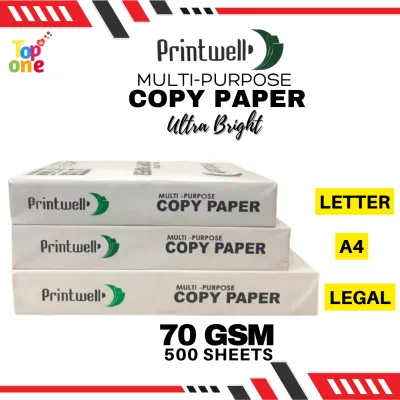
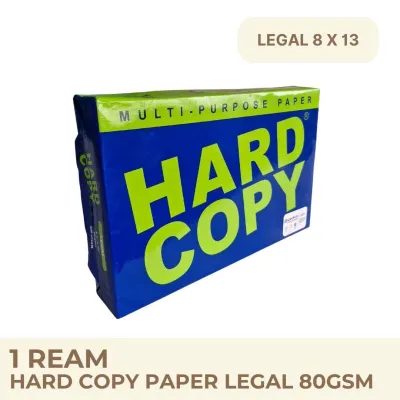
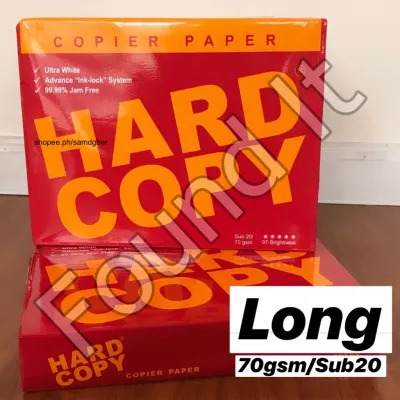
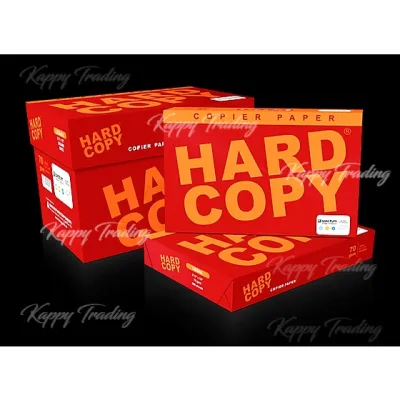
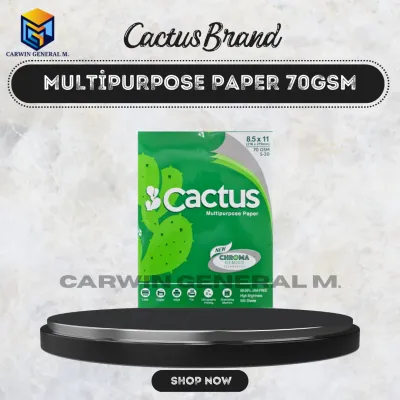
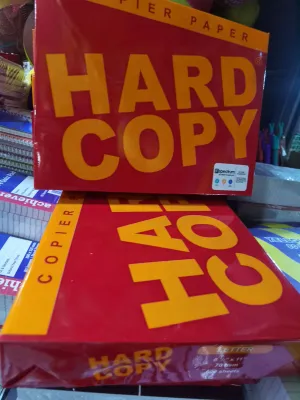
Prices are valid at publication and may change. Please refer to the product page for the latest price.
However, it is important to note that GSM measures weight rather than direct thickness. The actual thickness, smoothness, and finish of the paper can vary slightly depending on the brand, the wood pulp source, and the specific manufacturing process used. Some brands may compress their paper fibers more tightly, resulting in a thinner but denser sheet, while others may produce a bulkier sheet with a rougher texture. Because of these manufacturing variations, buyers planning a large-scale purchase should always check the specific ream’s packaging specifications or request a sample sheet from the supplier to verify the physical characteristics.
Key Comparison Dimensions for High-Volume Printing
When evaluating paper for high-volume environments like schools, copy centers, and busy offices, several physical performance dimensions must be considered. The first critical factor is opacity and show-through. Because 70gsm paper is thinner, it has lower opacity, meaning that ink or toner applied to one side is often visible from the other. If you attempt double-sided printing on 70gsm paper, the text from the back page will bleed through visually, making the document difficult to read. On the other hand, 80gsm paper provides a denser fiber structure that significantly reduces show-through. This makes 80gsm the standard choice for double-sided school modules, multi-page reports, and official correspondence where readability on both sides of the page is mandatory.

Durability and handling represent another major point of comparison. Bulk school materials and office documents are often subjected to rough handling, frequent page-turning, and transport in student backpacks or office folders. Thinner 70gsm paper is more susceptible to tearing, edge fraying, and accidental crumpling during daily use. The extra thickness of 80gsm paper provides better structural integrity, allowing documents to withstand repeated handling, stapling, and filing without tearing away from binder rings or staples.
Ink absorption and drying speeds also vary between these two weights. When printing with standard office inkjet printers, the liquid ink can saturate thin 70gsm paper quickly, causing the sheet to warp, curl, or ripple as it dries. Laser printers, which use heat to fuse dry toner to the paper, are less prone to warping but can still cause thin paper to curl due to the high temperature. The denser composition of 80gsm paper absorbs liquid ink more evenly and resists heat-induced curling much better. Regardless of the weight you choose, it is highly recommended to run a test print of a few sheets on your specific office equipment to observe how the paper handles your printer’s ink saturation and heat output before committing to a full bulk run.
Cost-Effectiveness and Wholesale Ream Value
For institutional buyers, schools, and corporate offices, procurement decisions are heavily driven by budget constraints. When purchasing a bond paper wholesale ream, the price difference between 70gsm and 80gsm can appear small on an individual pack level, but it scales dramatically when ordering in bulk. A single ream of 70gsm paper is consistently priced lower than its 80gsm counterpart. When scaled across hundreds or thousands of reams for an entire school year or fiscal quarter, choosing 70gsm can result in substantial upfront savings on paper procurement.
However, calculating the true value of your purchase requires looking beyond the initial shelf price and considering the “cost per usable page.” If a cheaper 70gsm paper causes frequent printer jams, misfeeds, or double-sheet pulls, the resulting waste can quickly erode your initial savings. Every jammed sheet represents wasted toner, lost productivity, and discarded paper that must be reprinted. If your high-speed office copiers frequently reject thinner paper, the cost of maintenance and the frustration of downtime may outweigh the savings of buying a lighter weight.
To determine the most cost-effective option for your organization, it is best to contact local office supply distributors for current wholesale quotes in Philippine Pesos (₱). Wholesale prices for paper products fluctuate based on global raw material costs, import fees, and seasonal demand spikes, such as the start of the school year. Requesting bulk pricing tiers for both 70gsm and 80gsm allows you to calculate the exact margin of savings and weigh it against the operational demands of your printing equipment.
Printer Compatibility and Jamming Risks
The mechanical reliability of your printing equipment is directly tied to the weight and stiffness of the paper you feed into it. Modern office printers and high-speed copiers rely on a complex system of rubber rollers, feed trays, and tension mechanisms to pull a single sheet of paper from the tray, pass it through the imaging drum, and deposit it in the output tray. The stiffness of the paper plays a vital role in how smoothly it navigates this path.
Because 70gsm paper is highly flexible, it is more prone to curling when exposed to the high heat of laser printer fuser units. This curl can cause the paper to catch on the exit rollers, leading to frequent paper jams. Additionally, the lightweight nature of 70gsm sheets can cause the printer’s feed rollers to accidentally pull multiple sheets at once, resulting in blank pages mixed into your print jobs or multi-sheet jams in the feed tray. In contrast, 80gsm paper possesses the necessary rigidity to feed reliably through high-speed rollers without bending or double-feeding, making it the preferred choice for unattended, high-volume print runs.
To avoid operational downtime, always consult your printer’s user manual to verify the supported paper weight range for each input tray. Many heavy-duty office copiers are optimized specifically for 80gsm paper and may require manual setting adjustments to feed lighter 70gsm sheets without error. Before finalizing a large wholesale order, obtain a single sample ream of your preferred paper weight and run a trial batch through your most frequently used printers to ensure seamless compatibility.
Decision Framework: Which Weight Should You Buy?
To make the final decision for your school or office, evaluate your printing requirements against the following operational guidelines:
- Choose 70gsm if: Your primary printing tasks consist of single-sided documents, internal drafts, temporary worksheets, or low-ink text documents. This weight is ideal when minimizing upfront procurement costs is your absolute priority and your printing equipment is verified to handle lighter paper weights without frequent jamming.
- Choose 80gsm if: You regularly print double-sided documents, official school modules, student handbooks, or external business correspondence. This weight is also necessary if your office relies on high-speed copiers that frequently jam with thinner paper, or if your documents require a professional feel and must withstand frequent physical handling.
- Verify first if: You are printing documents with heavy graphics, using specialized inkjet printers, or purchasing from a new wholesale supplier. In these scenarios, always request a sample ream to test ink absorption, drying times, and printer feed reliability before signing off on a bulk purchase.
Frequently Asked Questions (FAQ)
Does 80gsm paper use more ink than 70gsm?
No, 80gsm paper does not use more ink than 70gsm paper. The amount of ink or toner consumed during printing is determined entirely by your digital document file, the print resolution settings, and the printer’s hardware configuration. However, because 80gsm paper is thicker and denser, it is much better equipped to handle heavy ink saturation from graphics or bold text without warping, rippling, or bleeding through to the opposite side of the sheet.
How should I store wholesale bond paper reams to prevent damage?
To maintain the quality of your wholesale bond paper and prevent printer jams, store unopened reams flat in a cool, dry environment away from direct sunlight. In tropical climates with high humidity, keeping the paper in its original moisture-proof wrapper until the moment of use is critical. Moisture from the air can easily penetrate unprotected paper, causing the sheets to wavy-edge, curl, or stick together, which leads to severe feeding issues and multi-sheet pulls when loaded into your printer.
Community discussion
Share your experience or ask a question. Comments are reviewed before publication.