
Expanding your fuse bead color collection in the Philippines requires a strategic approach that goes beyond simply picking appealing shades. Because local availability can fluctuate and the tropical climate introduces specific storage challenges, building a reliable palette demands careful attention to bead sizes, melting compatibility, and authentic sourcing. Whether you are transitioning from pre-made kits to custom pixel art or scaling up your production for local craft fairs, understanding how to evaluate and verify your materials ensures that your finished designs fuse evenly and stand the test of time. By focusing on systematic color expansion and proper material verification, you can avoid the common pitfalls of mismatched beads and ruined projects.
Understanding Perler Bead Sizes and Compatibility
Before purchasing any refill packs, you must verify the exact size of the beads you currently own, as different sizes cannot be mixed within a single project. The standard size for most fuse bead projects is the 5mm (Regular or Midi) bead, which is highly versatile and ideal for classic pixel art, coasters, and keychains. These beads are large enough to handle easily with fingers or basic plastic tweezers, making them the most common choice for hobbyists of all skill levels.
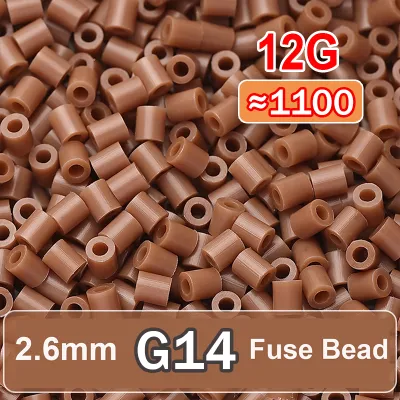
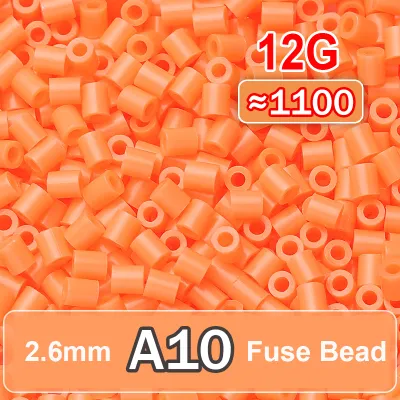
For highly detailed, intricate designs, the 2.6mm (Mini) bead offers a much higher resolution, allowing you to create complex portraits and delicate jewelry within a smaller footprint. However, mini beads require specialized fine-tip metal tweezers and dedicated mini pegboards with smaller, more closely spaced pegs. At the other end of the spectrum are the 10mm (Biggie) beads, designed primarily for young children developing their fine motor skills, which require their own large-peg boards.
Products mentioned in this guide
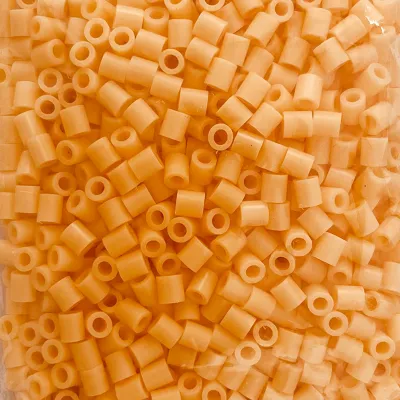
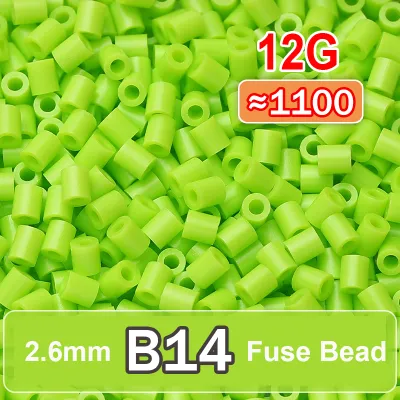
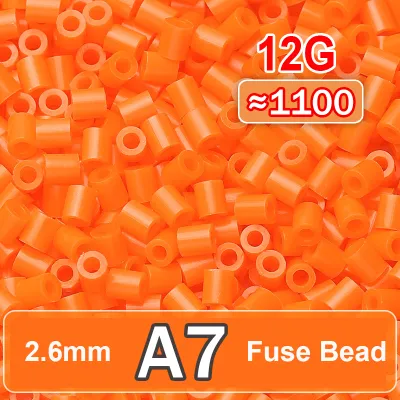
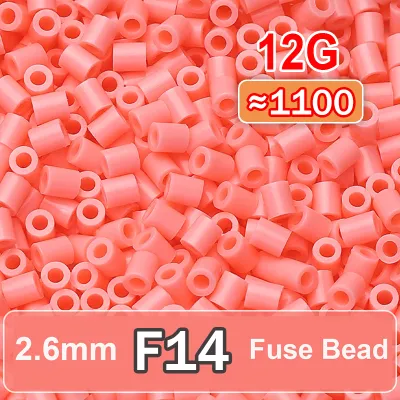
Prices are valid at publication and may change. Please refer to the product page for the latest price.
Mixing different bead sizes on the same pegboard is physically impossible and will ruin your project during the ironing phase. The heating iron must make uniform contact with the top of every bead to melt them evenly; if standard and mini beads are mixed, the iron will only touch the taller beads, leaving the smaller ones completely unfused. Furthermore, different sizes require distinct heat settings and ironing times, with mini beads melting rapidly under low heat, while standard beads require a steady medium heat to fuse safely.
To ensure a successful fuse, you must also use the correct ironing medium, such as high-quality parchment paper or reusable ironing film. Avoid using wax paper, as the wax coating will melt off under the iron, leaving a cloudy, sticky residue on your beads and potentially damaging your iron’s soleplate. When ironing, always apply light, circular pressure to distribute the heat evenly, checking the beads frequently through the translucent paper to monitor their melting progress.
Mixing authentic Perler beads with generic or off-brand beads within the same project introduces significant structural risks. Different manufacturers use varying plastic formulations, which results in different melting points and cooling contraction rates. If you mix incompatible brands, some beads may liquefy and spread flat while neighboring beads remain barely softened, leading to weak joints, warping, and a finished piece that easily snaps apart.
Evaluating Color Series and Palette Expansion
When planning your palette expansion, you must decide between purchasing single-color bulk packs or multi-color assortments based on the nature of your upcoming projects. Single-color refill packs, typically sold in bags of 1,000 or 6,000 beads, are highly cost-effective and essential for colors that form the foundation of almost every design, such as black for outlines, white for highlights, and neutral greys or skin tones. Having an abundant supply of these core colors ensures you do not run out mid-project, which can cause frustrating delays.

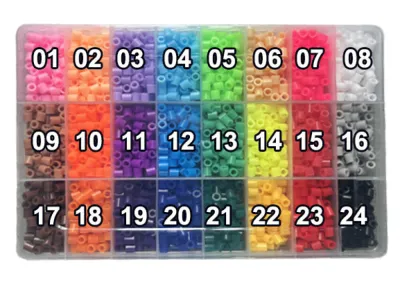
Multi-color assortments, which often come in sorted trays or large unsorted tubs, are excellent for acquiring a wide variety of accent shades without committing to bulk quantities of each. These assortments are perfect for detailed, high-contrast artwork where you only need a few dozen beads of a specific shade to complete a gradient or a small detail. However, sorting unsorted tubs can be incredibly labor-intensive, so purchasing pre-sorted color trays is often a more practical choice for busy crafters.
Specialty finishes can add unique visual appeal to your creations, but they require careful handling during the fusing process. Translucent, glitter, metallic, and glow-in-the-dark beads are formulated with different additives that alter how they react to heat. Translucent beads, for example, tend to soften and melt faster than solid opaque colors, meaning they can easily over-melt and lose their shape if you apply too much heat. Metallic and glitter beads may require a slightly longer, gentler heating process to ensure the additives do not interfere with the plastic’s ability to bond securely.
To maintain consistency across large or multi-part projects, always cross-reference the manufacturer’s official color codes rather than relying on visual estimation or generic color names. Online listings and digital screens can distort shades, making it easy to mistake “Pastel Blue” for “Light Blue” or “Toothpaste.” By keeping a physical swatch card of your existing colors labeled with their official names and numerical codes, you can match new refill packs precisely and avoid jarring color mismatches in solid color blocks.
Sourcing and Verifying Refill Packs in the Philippines
Sourcing authentic Perler bead refill packs in the Philippines requires navigating a mix of physical craft stores and online marketplaces. Specialized local craft stores in major urban centers often provide the most reliable shopping experience, as they allow you to inspect the packaging and verify the exact color shades in person under natural light. However, physical stores may have limited shelf space, resulting in a smaller selection of specialty colors or frequent stockouts of popular shades like black and white.
Online marketplaces and e-commerce platforms offer a vast selection of individual color refills and specialty packs, but they require a higher level of vigilance to avoid counterfeit products. To verify authenticity when shopping online, closely inspect the product listings and customer reviews for images of the actual packaging. Authentic Perler bead refill packs are distributed in sealed, branded plastic bags featuring the official logo, clear typography, and a specific barcode label that includes the official color code and name.
Be cautious of listings that use generic terms like “diy fuse beads” or “plastic iron beads” while displaying official brand imagery, as these are often low-quality counterfeits. Genuine packs will have consistent bead heights and clean, smooth cuts without excess plastic flashing or deformed holes. If a seller’s price seems unusually low compared to established craft distributors, it is highly likely the product is an imitation that will not melt compatibly with your existing authentic beads.
When calculating the cost-effectiveness of your purchase, remember to factor in shipping fees, minimum order values, and potential delivery times. Because plastic beads can be heavy in bulk, shipping costs from major distribution hubs to provincial areas in Visayas or Mindanao can add up quickly. To maximize your budget, plan your purchases in larger, consolidated orders to qualify for shipping discounts or platform vouchers, and look for reputable local distributors who maintain consistent inventory to avoid long international shipping delays.
Storing and Organizing Your Expanded Bead Collection
The tropical climate of the Philippines presents unique challenges for maintaining the quality of your expanded bead collection. High humidity and ambient heat do not easily destroy polyethylene beads, but prolonged exposure to moisture can cause dust and microscopic mold to cling to the plastic surfaces, which can interfere with the melting process and create unpleasant odors when ironed. Additionally, direct sunlight can cause vibrant pigments to fade over time, ruining your raw materials before you even use them.
To protect your investment, store your beads in a cool, dry environment away from direct sunlight and open windows. Stackable plastic compartment boxes with secure, snap-locking lids are the most popular and effective storage solution, as they keep individual colors separated while allowing you to see your entire palette at a glance. For large-volume bulk refills, heavy-duty resealable plastic bags stored inside airtight plastic storage bins are highly recommended, especially if you toss a few silica gel packets inside to absorb excess moisture.
Implementing a clear labeling system is crucial for keeping your collection organized as it grows. Use a permanent marker or a label maker to mark each compartment or storage bag with the official manufacturer color code and name. This simple step not only speeds up your crafting process by allowing you to quickly retrieve the exact shade you need, but it also simplifies inventory management, making it easy to identify which colors are running low so you can order the correct refill packs without any guesswork.
Frequently Asked Questions (FAQ)
How do I prevent color fading in finished Perler bead projects?
Finished fuse bead projects are susceptible to photo-degradation and color fading if they are exposed to direct sunlight or strong ultraviolet (UV) light over extended periods. To preserve the vibrant colors of your completed artwork, display your pieces in indoor areas that do not receive direct sunlight from windows. For valuable or highly detailed creations, you can mount them inside frames fitted with UV-resistant glass or acrylic. Alternatively, applying a thin, even coat of a clear, non-yellowing acrylic sealer that is specifically rated for plastics can provide a protective barrier against dust, moisture, and UV rays, while also adding a subtle gloss or matte finish to your work.
Can I mix different brands of fuse beads with Perler refill packs?
While it is technically possible to mix different brands of fuse beads, doing so is generally not recommended due to significant physical and thermal differences. Even if multiple brands label their products as 5mm, minor variations in manufacturing tolerances can result in slight differences in bead height, outer diameter, and wall thickness, which prevents the iron from heating them uniformly. More importantly, different brands use distinct plastic formulations with varying melting points; mixing them often leads to uneven melting, where some beads liquefy completely while others remain rigid, resulting in a fragile finished piece. If you must mix brands, always perform a small test on a spare pegboard first to observe how they fuse together before committing to a large project.
Community discussion
Share your experience or ask a question. Comments are reviewed before publication.