
Finding the right formal-themed notebooks for elementary students in the Philippines requires balancing strict school guidelines with physical durability. A formal-themed notebook features a clean, distraction-free design—typically solid colors or minimalist patterns—that complies with school policies while helping young learners focus on their studies. Selecting the appropriate formats ensures that students can complete their assignments neatly and present their work in a manner that meets grading standards.
Quick Guide to Formal-Themed Notebooks for Elementary Students
In a school context, a “formal-themed” notebook refers to stationery that prioritizes academic utility over visual distraction. These notebooks typically feature solid-colored covers, simple geometric patterns, or official school logos, completely avoiding pop-culture graphics, cartoon characters, or bright, reflective finishes. Many elementary schools in the Philippines enforce these design restrictions to maintain a standardized, focused classroom environment where students are not distracted by their school supplies.
Beyond aesthetics, elementary school notebooks must withstand the physical demands of daily transport and frequent handling. Students regularly pack and unpack multiple notebooks, meaning the covers and bindings must resist tearing, bending, and moisture. Standardizing the sizes and formats within a classroom also allows teachers to collect, stack, and grade submissions efficiently without dealing with mismatched dimensions.
Products mentioned in this guide
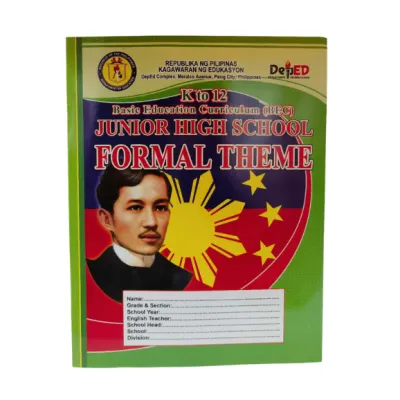
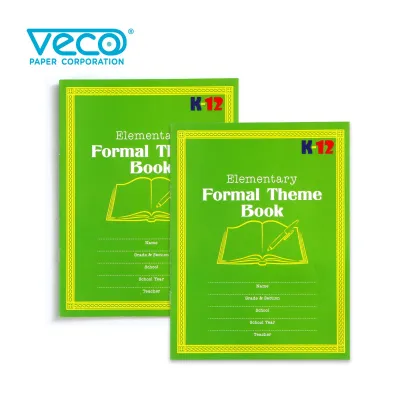
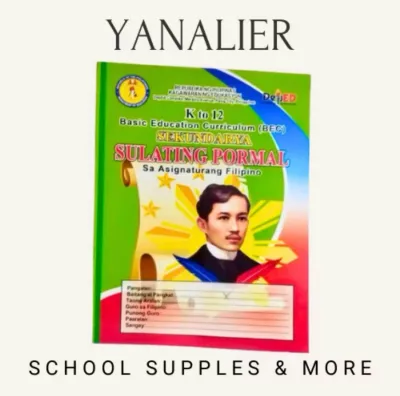
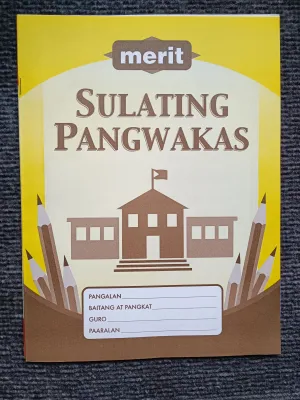
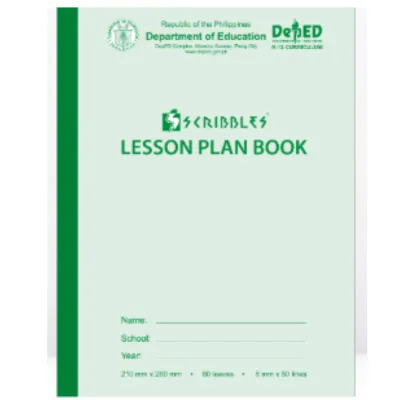
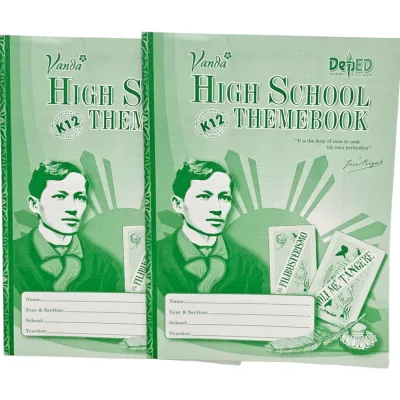
Prices are valid at publication and may change. Please refer to the product page for the latest price.
Before purchasing school supplies for the upcoming academic year, parents can use this quick preliminary checklist to filter out unsuitable options:
- Design Compliance: Does the cover feature solid colors or school-approved designs without distracting illustrations?
- Size Standardization: Does the notebook match the specific dimensions requested by the teacher (such as composition, intermediate, or standard A5/B5 sizes)?
- Ruling Appropriateness: Is the line spacing suitable for the student's grade level and handwriting development?
- Binding Security: Will the binding hold up to daily page-turning without shedding sheets?
Essential Features to Match School Requirements
Evaluating the technical specifications of a notebook ensures it can handle daily classroom activities and meet teacher expectations. Paper weight, binding style, dimensions, and cover materials all play a critical role in how well a notebook performs throughout the school year.

Paper Weight and Opacity
Paper weight is measured in grams per square meter (GSM), which directly influences the paper’s thickness and opacity. For elementary students who primarily use standard ballpoint pens, gel pens, or pencils, a paper weight of 70 GSM to 80 GSM is highly recommended. Lower-weight paper, such as 50 GSM or 60 GSM, is highly susceptible to ink bleed-through and feathering, where the ink spreads sideways along the paper fibers and makes the reverse side of the page unusable.
To verify paper quality before committing to a bulk purchase, parents can perform a simple, observable trial. Take a single notebook and write a few characters on a back page using the student’s standard school pen. Observe how quickly the ink dries to check for smudging, and turn the page to inspect the reverse side. If the writing is clearly visible (ghosting) or if the ink has seeped through the fibers (bleeding), the paper is too thin for double-sided schoolwork.
Binding Types
The choice of binding affects how flat the notebook lays when open, how secure the pages remain, and the overall lifespan of the notebook:
- Stitched Binding (Composition Style): This format uses thread to secure folded sheets to the spine. It is highly durable, prevents pages from being easily torn out, and lacks sharp metal parts, making it exceptionally safe for younger children. However, these notebooks do not always lay completely flat without pressing down on the spine.
- Spiral Binding: Utilizing a plastic or metal coil, spiral notebooks lay completely flat and allow pages to be folded back 360 degrees. This is highly convenient for small school desks. The primary trade-off is that the coils can snag on clothing, bend out of shape, or unravel over time.
- Glued Binding (Perfect Bound): These notebooks offer a clean, book-like spine. While visually appealing, standard glued bindings can fail under heavy use or in high-humidity environments, causing entire sections of pages to detach from the cover.
Standard Dimensions
In the Philippines, schools often specify notebook sizes to ensure uniformity across the classroom. The most common sizes include:
- Composition/Intermediate Size: Typically measuring around 6 by 8.5 inches, this is the traditional standard for elementary grades. It is compact enough for small hands to manage and fits easily into standard school backpacks.
- A5 and B5 Sizes: These international standards are increasingly adopted by modern curricula. B5 (approximately 6.9 by 9.8 inches) offers a slightly larger writing area than A5, making it excellent for intermediate elementary students who need more space for detailed notes.
- A4 Size: Measuring 8.3 by 11.7 inches, this larger format is generally reserved for science lab reports, art portfolios, or specialized projects where extensive drawing or graphing is required.
Cover Material
Notebook covers protect the inner pages from wear, tear, and environmental factors. Hardbound covers offer maximum protection and a sturdy writing surface, but they add significant weight to a student’s backpack. Softbound cardboard covers are lightweight and affordable, though they easily crease and wear out at the corners.
For the tropical climate of the Philippines, plastic or polypropylene (PP) covers are highly practical. They resist water splashes, protect the paper from sweaty hands, and do not tear when exposed to the high humidity of the rainy season. If plastic covers are not permitted by the school, wrapping standard cardboard covers in clear plastic jackets remains a highly effective way to extend their lifespan.
Recommended Notebook Formats by Subject
Using subject-specific notebook layouts helps elementary students organize their thoughts, practice neatness, and present their work in a structured format. This organization allows teachers to evaluate assignments quickly and track academic progress effectively.
Lined and Handwriting Notebooks for Language Arts
Language arts, reading, and writing subjects require specific line spacing to support handwriting development. For students in Grades 1 through 3, primary ruled notebooks featuring wide line spacing with blue and red guidelines are essential. These colored lines help young children master letter height, proper spacing, and the correct placement of ascenders and descenders.
As students transition to Grades 4 through 6, they typically move to standard single-ruled or college-ruled notebooks with narrower line spacing. Regardless of the grade level, formal language notebooks should feature clear, vertical red margin lines on the left side of each page. These margins teach students where to begin writing and leave clean, dedicated space for teacher corrections, grades, and feedback.
When selecting notebooks for cursive practice, look for paper with a smooth finish. Rough paper can cause the pen tip to drag or skip, disrupting the continuous, flowing strokes required for cursive writing. Ensuring the paper resists feathering is also crucial, as cursive writing often involves slower, heavier ink application.
Grid and Graph Notebooks for Mathematics
Mathematics assignments require precise alignment of numbers, symbols, and equations. Standard grid notebooks featuring 5mm (or 0.5cm) squares are highly recommended for elementary math. The grid structure guides students to align digits vertically for addition, subtraction, multiplication, and long division, significantly reducing calculation errors caused by messy handwriting.
Because math work involves frequent corrections, the paper must be highly durable under friction. Parents can test paper erasability by drawing a heavy pencil line on a sample page and erasing it firmly with a standard vinyl eraser. High-quality math paper will retain its smooth texture without pilling, thinning, or tearing, allowing students to rewrite their equations cleanly.
For advanced elementary students learning introductory geometry or graphing, some specialized math notebooks feature alternating pages of grid paper and blank space. This layout allows students to write down formulas and step-by-step instructions on one side while drawing geometric shapes or coordinate planes on the other.
Blank or Dotted Notebooks for Science and Arts
Science and art subjects often require a mix of writing, freehand sketching, and physical media. Dotted grid notebooks offer a subtle, unobtrusive guide for drawing scientific diagrams, charts, and mind maps. The dots provide enough structure to keep drawings aligned without the visual clutter of solid lines, making the final presentation look clean and professional.
For subjects that involve pasting physical specimens, leaf pressings, or paper cut-outs, completely blank notebooks are highly suitable. Blank pages allow students to arrange their layouts freely without being constrained by pre-printed lines. This freedom is particularly useful for project-based learning and interactive science journals.
When using blank notebooks for mixed-media projects, paper thickness is paramount. If students are expected to use light watercolors, markers, or liquid craft glue, select notebooks with a paper weight of at least 100 GSM. Thicker paper prevents the pages from warping, wrinkling, or tearing when wet, ensuring that the student’s portfolio remains intact and presentable.
Buying Checklist and Where to Shop in the Philippines
To ensure you get the best value and quality for the school year, follow a structured approach when inspecting and purchasing formal-themed notebooks.
Physical Inspection Checklist
When shopping in physical stores, take a moment to inspect the notebooks using these criteria:
- Binding Tightness: Gently tug a page in the middle of the notebook to ensure the stitching or glue holds firmly. For spiral notebooks, check that the ends of the coil are crimped inward so they do not slide out.
- Page Alignment: Flip through the pages to ensure the printed lines, margins, or grids are perfectly horizontal and consistent from page to page.
- Paper Smoothness: Run your fingers over the paper. It should feel smooth and uniform, without rough patches or visible wood pulp flecks that can cause ink to skip.
Navigating Retail Options
Parents in the Philippines have several options for sourcing school supplies, each with its own advantages:
- Brick-and-Mortar Stationery Stores: Shopping at traditional local office and school supply stores allows for direct physical inspection of paper quality, binding strength, and cover durability. This is the safest way to ensure the notebooks meet school standards before buying in bulk.
- E-Commerce Platforms: Online marketplaces offer convenience and competitive pricing, especially when purchasing bulk packs of 5 or 10 notebooks. When buying online, read user reviews carefully, focusing on feedback regarding paper thickness, packaging quality, and whether the notebooks arrived with bent corners.
- School-Authorized Suppliers: Many private and public schools partner with local printing services to offer custom-branded, formal-themed notebooks featuring the school's official logo and specific color schemes. Always check the school's official supply list to see if these custom notebooks are mandatory before purchasing external brands.
Budgeting and Planning
When planning your school supply budget in Philippine Pesos (₱), purchasing notebooks in pre-packaged sets is generally more cost-effective than buying individual pieces. A standard pack of 5 to 10 formal-themed notebooks typically ranges from ₱150 to ₱400, depending on the paper weight, cover material, and binding type. Allocating a portion of the budget for protective plastic jackets or notebook covers at the start of the year will save money in the long run by preventing premature damage and the need for mid-semester replacements.
Frequently Asked Questions (FAQ)
Can I use ring binders instead of bound notebooks for formal submissions?
Most elementary schools in the Philippines prefer permanently bound notebooks for daily assignments and homework. Loose-leaf pages from ring binders can easily tear out, get misplaced, or become disorganized when carried in a child’s backpack. However, ring binders are highly accepted for high-grade portfolios, long-term projects, or compilation tasks where students need to rearrange, add, or remove pages over time. Always consult the teacher’s specific syllabus before substituting bound notebooks with binders.
How do I prevent pages from tearing in spiral-bound notebooks?
To extend the life of spiral-bound notebooks, teach students to turn pages from the center or top corner gently, rather than pulling from the outer edge, which puts excessive stress on the punched holes. Using notebooks with plastic spiral coils rather than metal ones can also reduce tearing, as plastic coils tend to flex rather than bend out of shape. If a page does begin to tear near the spiral, reinforce the punched holes with small pieces of clear adhesive tape. This is a safe, reversible fix that prevents the page from detaching completely without adding bulk or sticking adjacent pages together.
Community discussion
Share your experience or ask a question. Comments are reviewed before publication.