
Choosing the right notebook size is the first step toward building an efficient writing, planning, or sketching routine. The ideal choice depends on how you balance your need for writing space against daily mobility. While a large canvas allows thoughts to flow without interruption, a compact notebook ensures you can capture ideas on the go, whether working at a spacious desk or commuting through a crowded transit terminal. By understanding how standard paper sizes function, you can select a tool that fits seamlessly into your daily workflow.
Decoding Standard Notebook Dimensions
Standard notebooks follow the international ISO 216 standard, which uses a logical mathematical ratio to keep proportions consistent. An A4 notebook measures 210 by 297 millimeters (approximately 8.3 by 11.7 inches), providing a generous canvas similar to a standard letter sheet. Folding an A4 sheet exactly in half yields the A5 size, which measures 148 by 210 millimeters (about 5.8 by 8.3 inches). Folding that sheet in half once more yields the A6 size, measuring 105 by 148 millimeters (roughly 4.1 by 5.8 inches). This halving principle means each step down reduces the writing area by exactly fifty percent. However, these standard measurements refer strictly to the inner paper pages. Hardcover designs, thick leather wraps, spiral wire bindings, and integrated pen loops add extra millimeters to the width, height, and thickness. If you plan to slip your notebook into a specific sleeve or a tight bag pocket, always verify the manufacturer’s total exterior dimensions rather than relying solely on the standard paper size label.
Matching Notebook Sizes to Your Specific Use Cases
Selecting the perfect notebook size requires balancing page real estate, portability, and your physical working environment. There is no single option that excels in every scenario; instead, the optimal choice is highly conditional on your daily workflow. By mapping your writing habits to the physical characteristics of each size, you can find a format that supports your productivity without causing unnecessary clutter.
Products mentioned in this guide
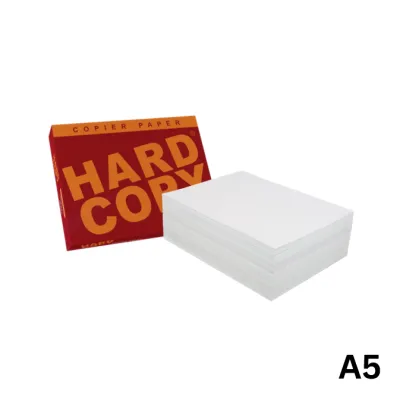
Prices are valid at publication and may change. Please refer to the product page for the latest price.

When to Choose A4 for Maximum Writing Space
An A4 notebook is an excellent choice when your work demands an expansive, uninterrupted canvas. This size is highly recommended for complex mind mapping, detailed academic lecture notes, and structured professional meeting minutes where you need to see multiple columns of information at a single glance. Creative professionals and students often prefer this larger format because it accommodates sprawling diagrams and extensive paragraphs without forcing constant page breaks. The primary trade-off for this generous writing space is a significant reduction in portability. An A4 notebook requires a spacious desk surface to open fully, making it impractical for taking quick notes while standing. It also demands a dedicated compartment in a large backpack, which can add noticeable bulk to your daily carry during a warm, humid commute.
Why A5 is the Standard for Everyday Carry
For the vast majority of writers, planners, and journal enthusiasts, the A5 notebook represents the ideal middle ground. It strikes a balance between offering enough page real estate for structured daily planning and remaining compact enough to slip into standard backpacks, tote bags, or messenger bags. This versatility has made A5 a common standard for bullet journaling, personal diaries, and general office note-taking. An A5 page provides ample room for a complete daily layout or several paragraphs of writing, yet it occupies only a moderate amount of space on a crowded desk. Whether you are sitting in a business meeting or planning your week at a local coffee shop, this size feels substantial without becoming intrusive or heavy.
Using A6 for Quick Capture and Pocket Portability
When mobility is your absolute priority, the pocket-sized A6 notebook is an invaluable tool. This ultra-portable format is designed for quick information capture, making it excellent for field notes, rapid to-do lists, travel journaling, and spontaneous brainstorming sessions. It fits comfortably into a jacket pocket or a small handbag, ensuring you always have a writing surface ready when inspiration strikes. However, the compact nature of A6 paper comes with distinct limitations. The narrow page width restricts long-form writing and complex formatting, forcing you to turn pages frequently if you write in large script. It is generally unsuitable for detailed diagrams or extensive tables, serving instead as a reliable companion for brief, immediate thoughts.
Crucial Specifications to Check Beyond Page Size
While selecting the physical dimensions is a critical first step, several secondary attributes dictate how comfortable and usable your notebook will be in daily practice. First, pay close attention to the paper weight, measured in grams per square meter (gsm), and the overall paper texture. Because ink drying speed, bleed resistance, and smoothness depend heavily on the specific combination of your pen’s ink and the paper’s surface, you should verify these specifications on the product label. If you prefer using fountain pens or wet gel pens, look for heavier, coated paper to prevent feathering and ghosting. Second, evaluate the binding style, as it directly affects how flat the notebook lies when open. Stitched or thread-bound notebooks lay completely flat, which is essential for comfortable writing near the center margin, especially on larger A4 pages. Spiral or wire-o bindings offer excellent flexibility for folding the notebook back on itself, but the central rings can sometimes obstruct your hand while writing. Finally, check the total page count; a thick, high-page-count A5 notebook can easily become as heavy and cumbersome to carry as a slim, lightweight A4 notebook.
Practical Steps to Test Your Notebook Fit
Before committing to a purchase, you can perform a few simple, real-world tests to ensure your chosen notebook size fits your lifestyle. Start by measuring the internal compartments of your everyday bags, work totes, or desk drawers. This step is particularly important if you commute regularly, as a notebook that is even slightly too wide can stretch bag pockets or prevent zippers from closing smoothly. When budgeting for your school or office supplies, comparing the price per page in ₱ can also help you determine the long-term cost-effectiveness of refillable loose-leaf systems versus bound books. Next, simulate the writing experience by cutting a loose sheet of scrap paper to the exact dimensions of the A4, A5, or A6 size you are considering. Write a standard paragraph or sketch a quick layout on this template using your normal handwriting size. This exercise will immediately reveal if your handwriting feels cramped on an A6 page or if an A4 canvas leaves too much intimidating blank space. Lastly, consider the physical weight of the notebook; if you plan to carry it daily in a backpack, holding a similar weight in your hand can help you gauge whether it will add unnecessary physical strain to your daily travels.
Frequently Asked Questions (FAQ)
Can I use an A5 notebook for academic lecture notes?
Yes, an A5 notebook can work well for academic lecture notes if you utilize shorthand, concise bullet points, or abbreviations. It is highly portable and fits easily on small lecture hall desks. However, if your coursework requires copying large, complex board layouts, extensive mathematical formulas, or detailed diagrams, you may find the A5 page too restrictive and should opt for an A4 notebook instead.
Do notebook covers add significant bulk to standard sizes?
Yes, notebook covers can add a measurable amount of bulk and weight to standard paper sizes. Hardcovers, thick leather covers, elastic closure bands, and integrated pen loops can increase the overall width and thickness of the notebook by several millimeters. If you need your notebook to fit into a specific zippered organizer, a custom folio, or a tight pocket, always check the manufacturer’s listed exterior dimensions rather than relying solely on the standard paper measurements.
Community discussion
Share your experience or ask a question. Comments are reviewed before publication.