
Quick Answer: Which A5 Notebook Format Fits Your Workflow?
Choosing between an A5 loose-leaf binder and a traditional bound notebook depends entirely on your organizational habits and how you prefer to interact with the written page. Neither format is universally superior; instead, each serves a distinct style of thinking and working.
Select an A5 loose-leaf notebook if your priority is ultimate flexibility. This format is ideal if you frequently rearrange your notes, need to mix different paper templates (such as grid, lined, and blank sheets), or want a sustainable system where you only replace the paper while keeping the same cover for years.
Choose an A5 bound notebook if you value a seamless, distraction-free writing experience. Bound notebooks are superior if you prefer a flat, unbroken writing surface, require a lightweight and slim profile for daily commuting, or want to maintain a permanent, chronological archive of your thoughts that cannot be altered or misplaced.
Products mentioned in this guide
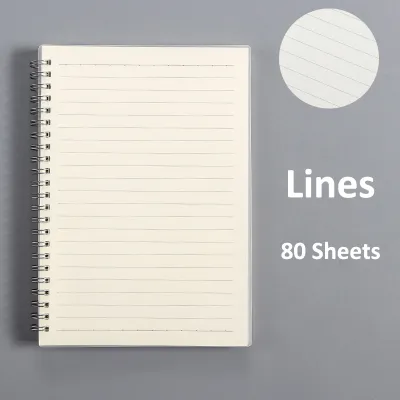
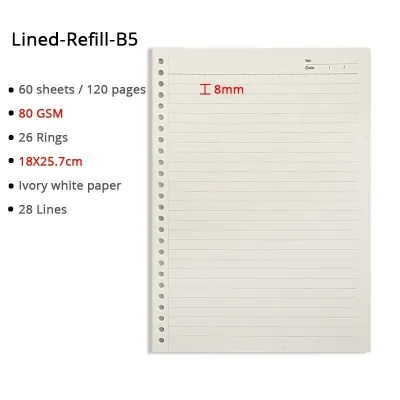
Prices are valid at publication and may change. Please refer to the product page for the latest price.
Understanding the Basics: Loose-Leaf vs Bound A5 Systems
The A5 paper size, measuring approximately 148 x 210 millimeters (5.8 x 8.3 inches), is widely considered the ideal middle ground in stationery. It offers sufficient surface area for detailed note-taking, sketching, or planning, while remaining compact enough to fit comfortably into most daily bags, backpacks, or tote bags. However, how this space is utilized depends heavily on the structural system holding the pages together.

An A5 loose-leaf system consists of a durable outer binder made of materials like polypropylene (PP), PVC, faux leather, or genuine leather. Inside, a mechanical ring binding system—most commonly featuring 20 holes (Japanese standard) or 6 holes (Western planner standard)—allows you to open the rings, insert or remove individual sheets of paper, and snap the rings shut. This system turns the notebook into a dynamic, modular database that you can continuously update, expand, or prune.
In contrast, an A5 bound notebook features pages that are permanently secured to a central spine. The binding method typically involves thread sewing (often called Smyth sewing), adhesive gluing (perfect binding), or spiral wire loops (wire-o binding). Once a page is written in a bound notebook, its physical position is fixed. The cover is integrated directly into the binding, creating a singular, cohesive object designed to be filled from the first page to the last.
Head-to-Head Comparison: 4 Key Decision Factors
To determine which format will serve you best over months of daily use, it is helpful to analyze how they perform across four critical dimensions: page management, physical writing comfort, portability, and long-term financial value.
Flexibility and Page Management
The defining advantage of the loose-leaf system is its unmatched adaptability. When using a loose-leaf binder, you are not bound by chronological order. If you take notes during a meeting today and want to file them next to notes from three months ago on the same topic, you simply open the rings and slide the page into its proper thematic section. You can easily insert colored index tab dividers, pocket sleeves, or plastic card holders. Furthermore, if you make a mistake or ruin a page, you can remove and discard it without affecting the structural integrity of the rest of the notebook.
Bound notebooks enforce a strict linear progression. Your thoughts are recorded in the exact order they occur in time. While this is excellent for maintaining a historical record, it makes thematic organization challenging. If you want to group notes by topic, you must rely on manual indexing, color-coded edge marks, or page numbering. Tearing a page out of a thread-bound notebook is highly discouraged, as it can loosen the threads and cause corresponding pages on the other side of the signature to fall out. Even in spiral-bound notebooks, tearing out pages leaves messy paper debris along the wire spine.
Writing Experience and Layout
The physical act of writing feels remarkably different in these two formats. Loose-leaf binders suffer from what stationery enthusiasts call the “ring bump” obstacle. When writing on the inner margins of a page, the metal or plastic rings can physically obstruct your hand, wrist, or pen. For right-handed writers, this interference occurs on the left-hand page; for left-handed writers, it happens on the right-hand page. To write comfortably, many users find they must open the rings, remove the sheet of paper entirely, write on a flat desk surface, and then re-insert the page. Additionally, the margins required for the punched holes reduce the horizontal writing space, making the usable area slightly narrower than a standard A5 sheet.
Bound notebooks offer a much more continuous and comfortable writing canvas. High-quality thread-bound notebooks are designed to lay completely flat (180 degrees) when opened on a desk. This allows your hand to glide smoothly across the entire page, including the gutter where the pages meet, without any physical barriers. There are no rings to obstruct your hand, and the entire width of the A5 page is available for writing. While cheap, glued perfect-bound notebooks can sometimes resist laying flat and require you to hold the edges down, premium bound options provide an uninterrupted, tactile writing experience that encourages long-form journaling or deep-focus sketching.
Portability, Weight, and Cover Protection
When carrying your notebook daily, physical dimensions and environmental durability become highly practical concerns. Loose-leaf binders are inherently bulkier and heavier than their bound counterparts. The internal ring mechanism, whether made of steel or thick plastic, adds noticeable weight. The covers of loose-leaf binders must also be wider than the paper to accommodate the rings and tabs, making the binder thicker and more demanding of bag space. On the positive side, these rigid, oversized covers offer excellent armor, protecting the delicate edges of the inner pages from being crushed or bent inside a packed bag.
Bound notebooks represent the pinnacle of streamlined portability. Without a heavy ring mechanism, they are slim, lightweight, and highly flexible, easily slipping into tight pockets or small tablet sleeves. Hardcover bound notebooks provide a sturdy, built-in writing surface for taking notes on your lap or while standing, though their corners can dent over time. In humid tropical climates, such as during the rainy season in the Philippines, paper edges are highly sensitive to moisture. When a loose-leaf binder is carried or stored, the open ring design allows humid air to circulate freely around the inner margins, which can cause the paper to warp or wave. Bound notebooks, especially those equipped with an elastic closure band, keep the pages compressed tightly together, creating a natural barrier that protects the paper edges from absorbing ambient moisture.
Long-Term Cost and Refill Availability
The financial commitment of each system reveals a classic trade-off between upfront investment and ongoing maintenance costs. A high-quality A5 loose-leaf binder requires a larger initial purchase price, typically ranging from ₱300 to over ₱1,500 depending on the cover material and ring mechanism. However, once you own the binder, your recurring expenses are remarkably low. You only need to purchase paper refill packs, which generally cost between ₱50 and ₱200 for 50 to 100 sheets. This makes the loose-leaf system highly economical and environmentally sustainable over several years, as you reuse the same cover indefinitely.
Bound notebooks feature a much lower entry barrier, with decent options available from ₱100 to ₱300, while premium, fountain-pen-friendly bound journals cost between ₱700 and ₱1,300. The catch is that once the pages are filled, the notebook is finished. You must purchase an entirely new notebook, paying for both the paper and a new cover every single time. If you write extensively—filling several notebooks a year—the cumulative cost of premium bound books can quickly surpass the cost of maintaining a single high-end loose-leaf binder system.
Quick Reference: A5 Loose-Leaf vs Bound Notebook Comparison
To help you compare these two systems at a glance, the table below summarizes how they stack up across key performance and structural metrics.
| Decision Metric | A5 Loose-Leaf Notebook System | A5 Bound Notebook System |
|---|---|---|
| Upfront Cost | Moderate to High (₱300 – ₱1,500+) | Low to Moderate (₱100 – ₱1,300) |
| Long-Term Cost | Low (only purchase paper refills) | High (must buy a complete new book) |
| Page Reorganization | Excellent (pages can be moved freely) | None (fixed chronological order) |
| Writing Comfort | Moderate (rings can obstruct hand) | High (flat, continuous surface) |
| Weight & Bulk | Higher (due to ring hardware) | Lower (slim, lightweight profile) |
| Page Protection | High (rigid, protective outer covers) | Moderate (susceptible to corner wear) |
| Archival Quality | Moderate (pages can tear at the holes) | High (securely bound permanent record) |
| Customizability | High (mix paper types, add pockets) | Low (fixed paper type throughout) |
| Humidity Resistance | Lower (exposed inner margins) | Higher (compressed closed pages) |
Matching the Format to Your Specific Use Case
Because both systems have distinct strengths, the best choice depends on your daily routines, professional requirements, and personal writing habits.
Ideal Scenarios for Loose-Leaf A5 Notebooks
Loose-leaf systems shine brightest in complex, multi-faceted environments where information is constantly evolving and needs categorization.
- Academic Study: University students balancing multiple distinct subjects can use a single A5 loose-leaf binder divided by plastic tabs. Instead of carrying five separate notebooks to campus, they carry one binder. At the end of a unit or semester, they can remove the completed notes, archive them in larger storage folders at home, and insert fresh paper for the next term.
- Project Management: Professionals managing multiple clients, projects, or cases can allocate dedicated sections within one binder. As project details change, meeting notes, action items, and printouts can be reordered, discarded, or transferred to archive files, keeping the active binder clean and relevant.
- Custom Planners and Bullet Journaling: Individuals who like to design their own planning systems can combine monthly calendar inserts, weekly tracking grids, and blank sheets for sketching. If a particular layout does not work, it can be taken out and replaced without ruining the rest of the year's records.
Ideal Scenarios for Bound A5 Notebooks
Bound notebooks are the preferred choice for activities that demand focus, continuity, and physical simplicity.
- Daily Journaling and Creative Writing: For personal diaries, morning pages, or creative writing, the chronological progression of a bound notebook is highly therapeutic. The permanent binding preserves the journey of your thoughts exactly as they occurred, creating a beautiful, unalterable physical artifact over time.
- On-the-Go Note-Taking: If you frequently take notes while standing, traveling on public transit, or sitting in cafes with limited table space, a lightweight bound notebook is incredibly convenient. It opens quickly, takes up minimal space, and provides a solid, uniform writing surface.
- Official Records and Laboratory Logs: In many legal, medical, and scientific fields, record-keeping must be tamper-evident. Bound notebooks are often legally required for patent logs, research data, or meeting minutes because the sewn pages prevent anyone from secretly removing, replacing, or backdating entries.
Final Decision Framework: Which One Should You Buy?
Before making your final purchase, use this quick checklist to align your choice with your practical needs.
Choose an A5 Loose-Leaf Notebook if:
- You love organizing, categorizing, and rearranging your notes after writing them.
- You want to use different paper templates (e.g., dot grid for layouts, ruled for writing, blank for drawing) inside a single book.
- You want a sustainable, long-term system where you invest in one premium cover and only buy affordable paper refills.
- You do not mind a slightly heavier, bulkier notebook in your daily bag.
Choose an A5 Bound Notebook if:
- You want a completely flat, comfortable, and uninterrupted writing surface without any rings in the way.
- You prioritize a slim, lightweight, and highly portable notebook for daily commuting.
- You view your notebooks as permanent archives and want to look back at your thoughts in their original chronological order.
- You prefer the classic aesthetic and tactile feel of a traditional book spine.
Important Verification Checks Before Buying:
- Paper Quality (GSM): If you plan to write with fountain pens, gel pens, or wet inks, check the paper's weight (measured in grams per square meter, or GSM). Look for paper that is at least 80 to 100 GSM to prevent ink bleeding and feathering. Always perform a small ink test in an inconspicuous corner of a page to verify drying speed and bleed resistance with your specific pen and ink combination.
- Refill Compatibility: If choosing a loose-leaf binder, pay close attention to the hole configuration. A Japanese-style 20-hole binder will not accept standard Western 6-hole punched paper, and vice versa. Ensure that your preferred paper refills match the exact ring count and spacing of your binder before purchasing.
- Institutional Rules: If you are buying a notebook for a specific academic lab, corporate legal department, or field research project, verify if there are strict institutional mandates requiring permanently bound, page-numbered books for record-keeping.
Frequently Asked Questions (FAQ)
Can I use loose-leaf paper in a bound notebook?
No, loose-leaf paper is designed with prepunched holes along the margin and cannot be securely bound into a traditional thread or glue-bound notebook. However, if your bound notebook features an expandable paper pocket on the back cover, you can store loose-leaf sheets there for emergency use. Some writers also use a single sheet of loose-leaf paper as a loose guide sheet (with dark grid or guide lines) slipped beneath a blank, semi-translucent page in a bound notebook to help them write in straight lines.
Do A5 loose-leaf binders damage pages over time?
Yes, loose-leaf pages are susceptible to wear and tearing around the punched holes due to the friction of flipping pages over metal or plastic rings. To prevent this damage, always check that the binder rings are perfectly aligned; misaligned rings will snag and tear the paper. If you have highly important pages that you flip to frequently, you can protect them by applying small, adhesive reinforcement rings (reinforcement labels) around the punched holes, or by storing those specific sheets inside clear plastic A5 pocket sleeves designed for multi-ring binders.
How does humidity affect loose-leaf vs bound paper?
In highly humid environments, paper fibers naturally absorb moisture from the air, which can cause the sheets to expand, soften, and warp. Bound notebooks offer superior protection against humidity because when the notebook is closed, the pages are compressed flat against each other, limiting the surface area exposed to the air. Loose-leaf binders have more gaps around the rings and edges, allowing humid air to circulate between the loose sheets. To protect your paper from humidity damage, always store your notebooks in a dry, cool place, keep them closed when not in use, and consider carrying your loose-leaf binder inside a zippered, water-resistant pouch during rainy commutes.
Community discussion
Share your experience or ask a question. Comments are reviewed before publication.