
Choosing the right binder notebook is more than just a matter of aesthetic preference; it directly impacts your daily productivity, writing comfort, and organization. Unlike fixed-bound notebooks, a loose-leaf binder system offers the flexibility to rearrange, add, or remove pages as your thoughts evolve. However, selecting the wrong size can lead to a frustrating mismatch with your daily routine—leaving you with a binder that is either too cramped for your notes or too bulky to carry comfortably.
To find the ideal fit, you must evaluate how you write, where you work, and how you transport your stationery. The three standard sizes—A5, B5, and A4—each serve distinct purposes, balancing writing real estate against physical portability.
Quick Answer: Which Binder Notebook Size Should You Get?
If you want to bypass the detailed specifications and make an immediate decision, your choice should align with your primary environment and daily movement. You can select the most suitable option by applying a simple, conditional framework based on your routine:
Products mentioned in this guide
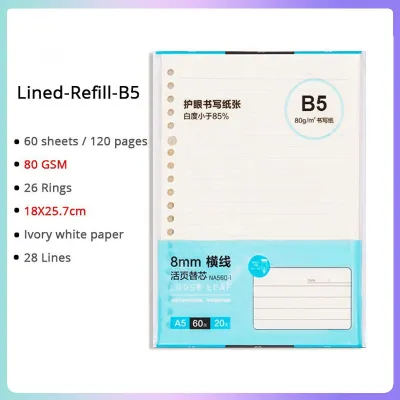
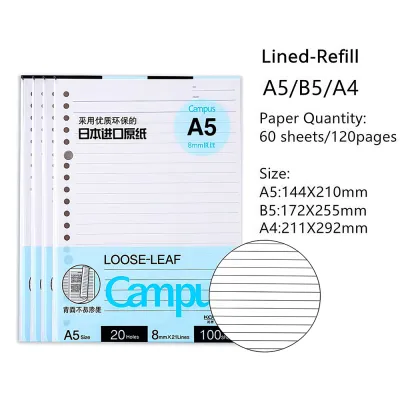
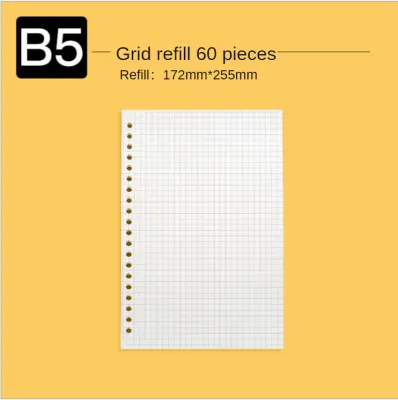
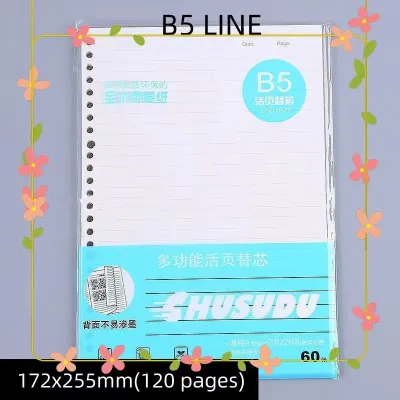
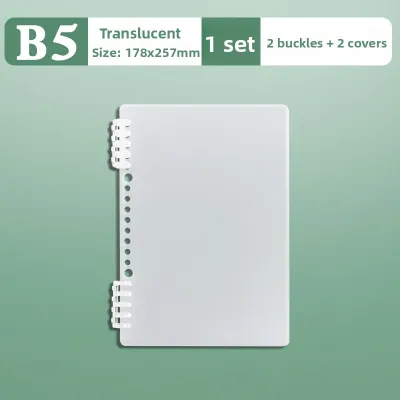
Prices are valid at publication and may change. Please refer to the product page for the latest price.
- Choose A5 if you prioritize maximum portability and need a compact companion for daily journaling, language learning logs, quick task lists, or on-the-go scheduling. It fits effortlessly into small tote bags, crossbody bags, and tight daily commutes without adding noticeable weight.
- Choose B5 if you are a university student or a corporate professional seeking the ultimate balance between writing space and portability. Widely considered the "sweet spot" of stationery sizes, B5 accommodates structured lecture notes, meeting minutes, and mind maps while remaining highly bag-friendly.
- Choose A4 if you require an expansive canvas for detailed technical sketches, accounting ledgers, complex diagrams, or long-term project archives. It is the best choice if you frequently print standard documents at home or the office and want to insert them directly into your binder without folding them.
The ideal binder size is not universally superior; rather, it is highly situational. Your decision should depend on your handwriting size, the physical dimensions of your everyday carry bag, and whether your workflow relies on pre-printed documents or purely handwritten notes.
Physical Dimensions and Portability: A5 vs B5 vs A4
To make an informed purchase, you must first understand the physical footprint of each option. Stationery sizes can be deceptive on screen, but their real-world dimensions dictate how they feel in your hands and how much space they occupy on a desk.

| Binder Size | Standard Paper Dimensions (Metric) | Standard Paper Dimensions (Imperial) | Common Ring Configurations |
|---|---|---|---|
| A5 | 148 mm x 210 mm | 5.8 in x 8.3 in | 20-hole (Japanese) / 6-ring (Planner) |
| B5 (JIS) | 182 mm x 257 mm | 7.2 in x 10.1 in | 26-hole |
| B5 (ISO) | 176 mm x 250 mm | 6.9 in x 9.8 in | 26-hole (Less common) |
| A4 | 210 mm x 297 mm | 8.3 in x 11.7 in | 30-hole (Japanese) / 2-ring / 4-ring |
When evaluating B5 binders, pay close attention to the standard being used. Most prominent Asian stationery brands utilize the Japanese Industrial Standard (JIS) B5, which is slightly wider and taller than the International Organization for Standardization (ISO) B5. Purchasing ISO B5 refills for a JIS B5 binder can result in misaligned margins or loose pages that do not sit flush with the binder cover, so always verify the exact millimeter specifications before buying.
In terms of daily transit, your commute plays a massive role in determining the right size. If you regularly navigate crowded public transit, such as the MRT or packed buses, a large binder can become a physical burden. An A5 binder slips easily into almost any bag, leaving plenty of room for other essentials. A B5 binder fits comfortably inside standard backpacks and medium-sized tote bags, alongside a 13-inch laptop, making it highly practical for daily travel. An A4 binder, however, requires a dedicated large backpack or a spacious briefcase; its rigid covers can easily get bent or scuffed if forced into a bag that is too small.
Weight and bulk accumulate quickly once a binder is fully loaded. A binder containing over 100 sheets of paper, plastic index dividers, and a zippered utility pouch can easily double in thickness. An A4 binder filled to capacity is heavy and rigid, which can fatigue your shoulders during long walks across a campus or office complex. In contrast, a fully loaded A5 binder remains lightweight and manageable, even when packed with thick, high-grade paper.
Your physical workspace is another critical variable. If you often work on cramped coffee shop tables, shared office desks, or small lecture hall armchairs, desk footprint is paramount. When fully opened flat, an A4 binder covers a massive area, leaving little room for a laptop, a tablet, or a cup of coffee. A B5 binder occupies a moderate footprint, allowing you to take notes comfortably alongside a digital device. An A5 binder requires minimal space, making it the perfect choice for tight workspaces or for taking notes on your lap while transit boarding or waiting in line.
Matching the Size to Your Daily Routine
Every binder size excels in specific environments. By identifying your daily habits and note-taking style, you can select a size that integrates seamlessly into your workflow.
A5 Binder Notebooks: The Commuter and Journaler
The A5 binder is designed for those who value agility and spontaneous writing. Because of its compact footprint, it serves as an excellent personal planner, daily diary, or travel journal. If you enjoy capturing thoughts, tracking habits, or logging vocabulary while sitting in a cafe or riding transit, the A5 size is exceptionally convenient.
This size is highly compatible with compact lifestyles. You can easily slip an A5 binder out of a small shoulder bag or a large jacket pocket without needing to rummage through a deep laptop compartment. It encourages quick, frequent entries rather than long, exhaustive writing sessions, making it highly appealing to bullet journalers and creative writers who carry their notebooks everywhere.
However, the A5 format has distinct limitations. If you have large handwriting or prefer expansive, structured layouts, you may find the pages fill up too quickly. It is not well-suited for complex mind mapping, detailed flowcharts, or multi-column comparative notes, as the physical margins restrict horizontal expansion.
B5 Binder Notebooks: The Student and Meeting Professional
The B5 binder represents the ideal compromise for academic and professional use. It provides ample room for structured note-taking systems, such as the Cornell Method, which requires a wide left-hand margin for cues and a dedicated bottom section for summaries. This layout is difficult to execute on A5 paper but fits naturally on a B5 page.
For university students attending back-to-back lectures or professionals managing multiple projects, the B5 binder keeps notes organized without adding unnecessary bulk. It fits neatly into standard school backpacks and sits perfectly alongside slim laptop sleeves. The page width allows you to write complete sentences on a single line, reducing the need to constantly break your train of thought to start a new line.
Additionally, B5 easily accommodates mathematical formulas, moderate mind maps, and side-by-side comparisons. It offers the spacious feel of a traditional notebook while remaining light enough to carry around all day, making it the most versatile option for general note-taking.
A4 Binder Notebooks: The Archivist and Technical Writer
The A4 binder is a heavy-duty workspace built for high-capacity organization and technical precision. It is the premier choice for engineering sketches, detailed accounting ledgers, sheet music, and long-term project archiving. If your work involves complex data visualization or extensive diagramming, the expansive canvas of an A4 page is indispensable.
A significant advantage of the A4 binder is its direct compatibility with standard office printer paper. In many regions, A4 is the default size for printed handouts, syllabus sheets, and corporate reports. With an A4 multi-hole punch, you can insert printed documents directly into your binder without folding, cutting, or damaging the text. This makes it an exceptional tool for organizing school handouts, medical records, or legal documents.
Despite these advantages, the physical size of an A4 binder makes it highly stationary. It is best suited for a permanent home on a large desk or in an office cabinet. Transporting it regularly requires effort, and its corners are highly susceptible to wear and tear if it is constantly crammed into a commuter bag.
Crucial Compatibility and Refill Factors
Before purchasing a binder, you must consider the long-term maintenance of your stationery system. Unlike bound notebooks, binders rely on a continuous supply of loose-leaf refills and compatible accessories, which vary significantly by size and regional standards.
Hole Punch Mechanisms and Ring Counts
One of the most common mistakes when buying a binder notebook is assuming that any refill paper of the same size will fit. Ring counts and hole spacing are highly standardized but differ by region and style:
- A5 Binders: Often come in either a Japanese-style 20-hole configuration or a Western-style 6-ring organizer format. The hole spacing between these two systems is completely incompatible. A 6-hole refill sheet will not fit into a 20-ring binder, and vice versa.
- B5 Binders: Almost universally utilize a 26-hole ring mechanism. This system provides excellent support, preventing the paper from tearing at the holes, but it requires specific 26-hole punched paper.
- A4 Binders: Typically feature a 30-hole mechanism in Asian stationery systems, or a standard 2-ring, 3-ring, or 4-ring mechanism in Western office binders.
Always count the rings on your binder and verify the hole configuration of the refill paper before completing your purchase.
Paper Availability and Sourcing
While A4 and A5 paper refills are universally available in almost any local office supply store or department chain, B5 refills can be more challenging to source. Because JIS B5 is highly specialized, you may need to purchase refills from specialty stationery boutiques or dedicated online marketplaces. If you choose a B5 binder, it is wise to buy refill packs in bulk to avoid running out of writing paper during critical study or work periods.
Accessories and Inserts
A functional binder system often relies on accessories like index tab dividers, plastic pocket folders, pen loops, and zippered utility pouches. These accessories must match your binder size exactly. An A5 pouch cannot be stretched to fit a B5 binder, and A4 index dividers will protrude awkwardly from a B5 cover, leaving the tabs exposed to damage. When building your system, ensure that all add-ons are explicitly rated for your specific binder size and ring count.
Paper Weight, Humidity, and Bleed-Through
The climate in your region can actively affect how your stationery performs. In tropical environments with high relative humidity, paper fibers naturally absorb moisture from the air. This absorption softens the paper, making it highly susceptible to ink feathering, ghosting, and bleed-through—especially when using gel pens, rollerballs, or fountain pens.
To combat this, pay close attention to the paper weight, measured in grams per square meter (GSM):
- 70 GSM to 80 GSM: Standard weight, highly suitable for ballpoint pens and light pencil work, but prone to bleed-through in humid conditions if you use wet inks.
- 90 GSM to 100 GSM: Premium weight, offering excellent resistance to moisture-induced warping and ink bleed-through. This is highly recommended if you write with gel pens or fountain pens.
Before committing to a large bulk purchase of refill paper, always perform a quick spot test on a single sheet with your preferred writing instruments to ensure the ink does not bleed through to the reverse side.
Final Decision Checklist
To ensure you choose the perfect binder notebook for your needs, follow this step-by-step checklist before making your purchase:
Step 1: Measure Your Everyday Bag
Use a ruler or tape measure to find the interior dimensions of the bag you carry daily. Keep in mind that a binder is always wider than the paper inside it because of the spine width and the protrusion of the ring mechanism. Ensure your bag has at least two centimeters of clearance beyond the binder’s physical dimensions so you can zip it shut without crushing the edges.
Step 2: Analyze Your Writing Style
Reflect on how you naturally put pen to paper. If you write in short, concise bullet points or prefer minimal layouts, A5 is highly efficient. If you write long, continuous paragraphs or use structured layouts like the Cornell system, B5 is the most practical choice. If your work involves large sketches, printing out worksheets, or archiving documents, A4 is the logical option.
Step 3: Check Refill Costs and Local Availability
Browse your favorite local stationery shops or online marketplaces to verify the ongoing cost of refills. In the Philippines, standard loose-leaf refill packs can range from ₱50 for budget-friendly local brands to ₱250 or more for premium imported Japanese paper. Make sure the ongoing cost of maintaining your chosen size fits comfortably within your budget.
Rather than buying an entire ecosystem of dividers, pouches, and specialized paper immediately, start by purchasing a single binder and one standard pack of refill paper. Testing this basic setup in your daily environment for a week or two will help you confirm if the size fits your workflow before you invest in a complete, customized stationery system.
Frequently Asked Questions (FAQ)
Can I use A4 paper in a B5 binder?
No, you cannot use standard A4 paper in a B5 binder without modifying it. A4 paper is physically larger than a B5 binder cover. Even if you use a multi-hole punch to match the 26-ring mechanism, the paper will stick out significantly past the top, bottom, and side edges of the binder. This exposes the paper to immediate bending, tearing, and moisture damage. If you must use A4 documents in a B5 system, you will need to trim the paper down to B5 dimensions (182 mm x 257 mm) before punching holes.
Is B5 the exact same size everywhere?
B5 is not uniform across all brands, as there are two distinct standards. The Japanese Industrial Standard (JIS) B5 measures 182 mm x 257 mm and is the most common standard found in Asian stationery. The international ISO B5 standard is slightly smaller, measuring 176 mm x 250 mm. Because of this size difference, the hole spacing and overall page dimensions do not align perfectly. Always check the packaging or product description of your binder and refill paper to ensure both specify the same standard—usually JIS B5 for popular imported stationery brands.
Which binder size is best for left-handed writers?
For left-handed writers, the central ring mechanism of a binder can pose an ergonomic challenge, as the metal or plastic rings often obstruct the wrist or hand while writing on the right-hand page. The A5 binder is often preferred by left-handed individuals because its smaller page height allows the hand to rest naturally above or below the ring cluster more easily. Alternatively, regardless of whether you choose A5, B5, or A4, left-handed writers should look for binders designed with low-profile, flexible, or soft rings, which minimize physical discomfort during long writing sessions.
Community discussion
Share your experience or ask a question. Comments are reviewed before publication.