
Choosing the right document organizer depends on how you handle, store, and retrieve your papers daily. If you need to quickly drop loose, unpunched sheets into categorized sections without prep work, an accordion folder offers an efficient, expandable solution. Conversely, if you require a system where you can flip through pages like a book, rearrange sheets at will, and present continuous reports, a ring binder is the more practical choice.
Finding the ideal balance between these two systems requires looking closely at your document volume, how often you travel with your files, and your local storage environment. In tropical climates where high humidity can soften paper and cause sheets to cling together, the physical design of your organizer plays a critical role in preserving your important documents.
Understanding Structural Differences and Capacity Limits
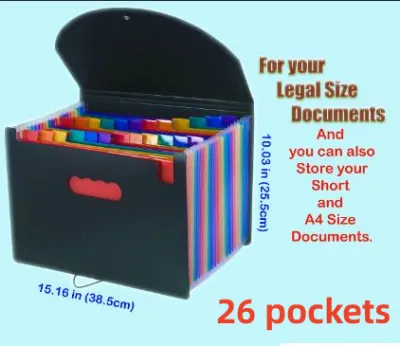
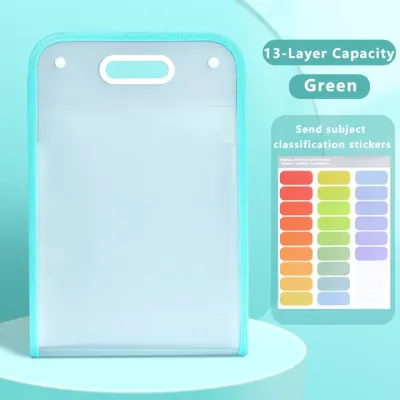
The fundamental difference between these two organizers lies in their physical architecture and how they support paper weight. Accordion folders are designed with flexible, fan-like gussets on the sides that expand or contract based on the volume of documents inside. They feature built-in dividers that partition the interior into multiple distinct pockets, allowing you to drop loose, un-punched papers directly into designated slots. This makes them highly accommodating for varying document thicknesses, as the folder naturally widens to accept more paper up to its maximum physical limit.
Products mentioned in this guide
Prices are valid at publication and may change. Please refer to the product page for the latest price.
Ring binders, on the other hand, rely on a rigid spine equipped with metal or plastic ring mechanisms, typically in D-ring or O-ring configurations. To secure papers inside a binder, you must either use a hole puncher on every sheet or slide the documents into plastic sheet protectors. The storage capacity of a binder is strictly governed by the inner diameter of its rings rather than the flexibility of its outer cover. A binder cannot expand beyond the physical sweep of its rings; attempting to force more pages inside will cause the rings to gap, leading to torn pages and jammed mechanisms.
When selecting either option, it is essential to check the manufacturer’s stated sheet capacity on the product packaging. Overstuffing an accordion folder can put excessive tension on the outer elastic bands, snaps, or plastic welds, eventually tearing the bottom gussets. For ring binders, exceeding the recommended sheet count puts uneven pressure on the ring alignment, which can permanently warp the metal prongs. In humid environments, paper naturally absorbs moisture from the air, making individual sheets slightly thicker and heavier, which makes adhering to these capacity limits even more critical to prevent structural damage.
Comparing Accessibility and Daily Retrieval Habits
How you interact with your documents on a daily basis should heavily influence your choice of organizer. Ring binders excel in active environments where you need to read, edit, or rearrange pages frequently. Because the pages are bound along a spine, the binder can lay completely flat on a desk, allowing you to flip through sheets smoothly like a book. If you need to insert a new page or remove an outdated sheet from the middle of a section, you can simply snap the rings open, make the adjustment, and lock them back into place without disturbing the rest of the sequence.

Accordion folders operate on a different retrieval logic that favors categorization over sequential reading. To access a document inside an accordion folder, you must pull the entire stack of papers out of a specific pocket. This design is less suited for continuous reading or presenting a single, cohesive report, as you cannot easily flip through the pages while they remain inside the folder. Instead, accordion folders are ideal for batching independent documents—such as monthly utility bills, receipts, or student worksheets—where you simply need to drop a paper into a slot and retrieve it only when necessary.
Before making a decision, evaluate whether your daily workflow involves frequent page shuffling or long-term archival storage. If you are compiling a training manual, a project portfolio, or a presentation that requires a strict page order with frequent updates, the flat-laying accessibility of a ring binder is unmatched. If your goal is to sort tax documents, medical records, or classroom handouts by month or subject without the hassle of punching holes, the quick-drop pocket system of an accordion folder will save you significant time.
Evaluating Portability and On-the-Go Protection
If your daily routine involves commuting, attending off-site meetings, or moving between classrooms, portability and physical protection become primary concerns. Accordion folders are inherently built for travel, featuring integrated protective flaps secured by elastic bands, button-and-string ties, or plastic snap buckles. This fully enclosed design ensures that even if the folder is tipped upside down inside a bag, loose papers cannot slide out. Furthermore, because they are typically constructed from lightweight polypropylene, accordion folders remain relatively light and compact when only partially filled.
Ring binders offer excellent structural rigidity, with hard cardboard or heavy-duty plastic covers that prevent your documents from bending or creasing inside a crowded bag. However, they are generally bulkier and heavier than accordion folders, even when empty, due to the weight of the metal ring mechanism and the stiff outer panels. Binders also lack fully enclosed sides; if a binder is dropped or jostled violently, the rings can accidentally pop open, or loose sheets can slip out from the exposed top and bottom edges.
When planning your mobile setup, consider the physical dimensions of your carrying bag and the weather conditions you encounter. Standard three-ring binders often have wide, square corners that can snag on backpack zippers or require a larger briefcase to fit comfortably. If you frequently commute during the rainy season, a water-resistant plastic accordion folder or a zippered binder cover is essential to shield your papers from moisture. Always verify the outer dimensions of the organizer against your bag’s main compartment to ensure a smooth fit before purchasing.
Labeling, Indexing, and Shelf Organization
The way you store your organizers when they are not in use determines how quickly you can locate your files in the future. Ring binders are designed primarily for vertical shelf storage, much like library books. They feature wide, flat spines that often include a clear plastic pocket for customizable spine labels, allowing you to identify the contents of each binder at a glance from across the room. This makes them highly efficient for building a neat, uniform filing library on bookshelves or office credenzas.
Accordion folders, by contrast, are more challenging to organize vertically on an open shelf because their expandable bottoms can cause them to stand unevenly or tip over when fully loaded. They are best stored horizontally in deep desk drawers, flat on desktop organizers, or tucked inside sturdy magazine files. For indexing, accordion folders rely on small, stepped plastic tabs that sit inside the pockets, which are highly visible when looking down into the open folder but completely hidden when the folder is closed and stored away.
To create an efficient filing system, match your organizer’s labeling style to your physical workspace. If you have ample bookshelf space and prefer a clean, vertical presentation with highly visible spine labels, a series of matching ring binders is the logical choice. If you prefer to keep your active files tucked away in desk drawers or filing cabinets where you look down at the tabs from above, the internal indexing system of an accordion folder will provide a more intuitive retrieval experience.
Decision Framework: Choosing the Right Document Organizer
To finalize your choice, assess your specific document types, storage habits, and environmental conditions. Choose an accordion folder if you work primarily with unpunched documents, need to sort files into distinct categories quickly, and require a lightweight, securely closed organizer for daily travel. This option is highly efficient for managing household bills, receipts, and loose school handouts that do not require sequential reading.
Opt for a ring binder if you manage continuous, multi-page documents that must be kept in a precise order, need the ability to easily insert or rearrange pages, and plan to store your files vertically on a bookshelf. Binders are the standard choice for presentation portfolios, reference manuals, and academic course materials that you need to flip through flat on a desk.
Regardless of the style you choose, always verify the material composition of the organizer if you plan to store important documents for several years. Look for product specifications that explicitly state the materials are acid-free and PVC-free. In warm, humid climates, standard PVC plastics can degrade over time, releasing chemicals that cause ink to lift off printed pages and stick to the organizer itself. Choosing archival-safe polypropylene or acid-free paperboard ensures your documents remain clean, legible, and protected for the long term.
Frequently Asked Questions (FAQ)
Can I use sheet protectors in an accordion folder?
While you can physically place sheet protectors inside an accordion folder, doing so significantly increases the bulk of your files. Plastic protectors are wider and thicker than standard paper sheets, which can prevent the folder’s expandable gussets from stretching evenly and make the outer flap difficult to latch securely. If you must use sheet protectors, check the pocket dimensions and expansion limits on the product packaging to ensure the folder is wide enough to accommodate the extra plastic margins without bending.
How do I prevent ring binders from tearing my documents?
To protect your papers from tearing at the punched holes, avoid overfilling the binder past the manufacturer’s recommended sheet capacity, as excess weight puts heavy stress on the margins when pages are turned. For documents that you reference or flip through frequently, apply self-adhesive hole reinforcements to the punched edges to strengthen the paper. Additionally, always ensure the ring prongs are perfectly aligned; if you notice a gap where the rings meet, gently realign them to prevent pages from catching and tearing as you turn them.
Community discussion
Share your experience or ask a question. Comments are reviewed before publication.