
Choosing the right long-size file organizer depends entirely on your storage environment and how frequently you need to access your documents. If you need to transport categorized documents between locations, an accordion file is the most practical choice. For high-volume archiving and shelf stacking, a box file provides the necessary rigidity and capacity. If your workflow relies on a filing cabinet drawer and requires frequent, rapid retrieval, hanging folders are the most efficient system. Before purchasing, always verify the exact dimensions of your documents, as “long size” can refer to either 8.5 x 13 inches or 8.5 x 14 inches depending on the manufacturer.
Managing physical paperwork in a tropical climate requires careful planning, as high humidity and dust can quickly degrade loose sheets. Selecting the correct organizer not only keeps your workspace tidy but also shields important legal forms, contracts, and school records from moisture and physical wear. By aligning your filing system with your daily routine, you can save hours of searching and prevent costly damage to essential documents.
Understanding Long-Size Document Requirements
In the Philippines, the term “long size” is widely used in offices, schools, and copy centers, but it can be surprisingly ambiguous when matching paper to storage products. Most local users associate long bond paper with the Folio or F4 size, which measures exactly 8.5 by 13 inches (216 by 330 mm). However, many international manufacturers design their “long” or “legal” organizers to fit the standard US Legal format, which measures 8.5 by 14 inches (216 by 356 mm).
Products mentioned in this guide

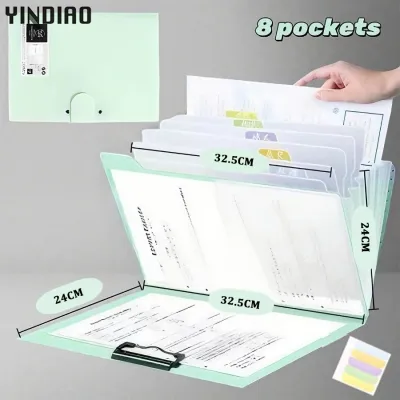
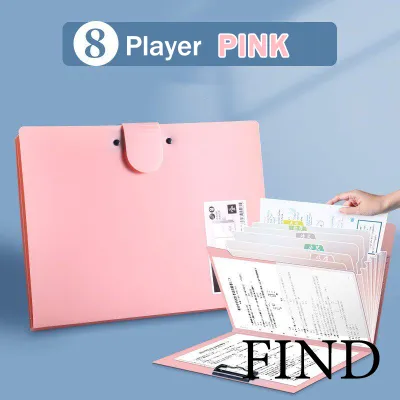
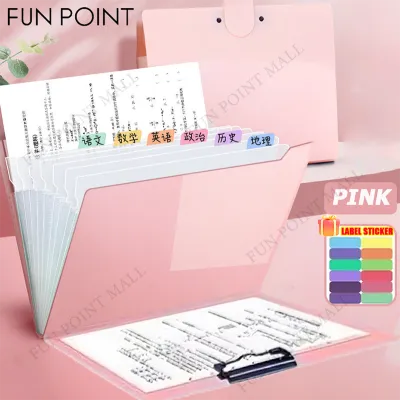
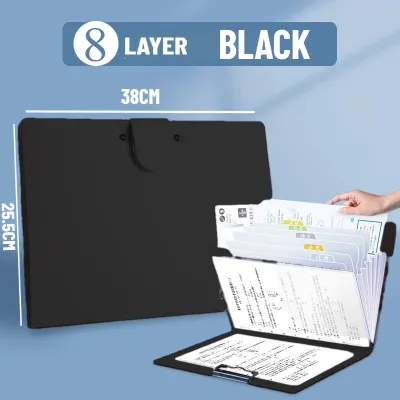
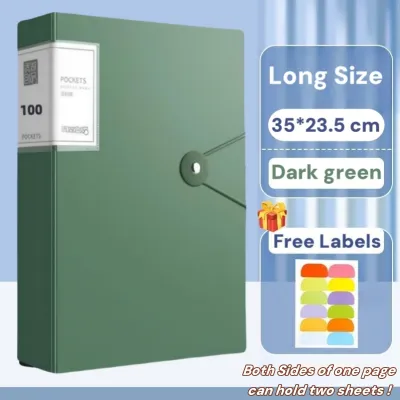
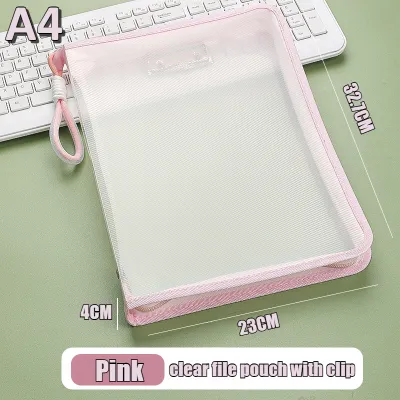
Prices are valid at publication and may change. Please refer to the product page for the latest price.
This one-inch difference can cause significant issues if you purchase the wrong organizer. If you try to place US Legal documents into an organizer designed strictly for 13-inch Folio paper, the tops of your documents will protrude, bend, or prevent the organizer from closing properly. Conversely, using a US Legal organizer for Folio paper is generally safe, though it will occupy slightly more physical space on your desk or shelf.
Before committing to any filing system, physically measure your most critical documents with a ruler or tape measure. Do not rely solely on generic marketing labels like “long size” or “legal size” printed on the front of the packaging. Instead, look closely at the product specification sheet or the back label to verify the exact internal dimensions in inches or millimeters. This simple check ensures your documents will lie completely flat without curled edges or crumpled corners.
Accordion Files: Best for Portability and Categorized Transport
Accordion files, also known as expanding files, are designed for users who need to keep categorized documents organized while on the move. These organizers feature a series of built-in pockets that expand outward, resembling the bellows of an accordion. This design allows you to sort documents by project, date, client, or subject within a single, self-contained unit that is easy to carry in a bag or under your arm.

When evaluating accordion files for long-size documents, the closure mechanism is a critical feature to inspect. Common options include elastic bands, snap buttons, and full-zipper closures. Elastic bands offer quick access but can lose their elasticity over time, especially in warm, humid environments. Snap buttons provide a secure lock but can be difficult to close if the file is overfilled. Zipper closures offer the highest level of security, preventing loose sheets, receipts, or small notes from slipping out of the sides during transit.
Material choice is another vital consideration for tropical climates. Plastic or polypropylene accordion files are highly resistant to moisture, spills, and tearing, making them excellent for daily commuting or field work. Paperboard or heavy cardstock variants are more eco-friendly and lightweight, but they are highly susceptible to absorbing atmospheric moisture, which can soften the structure and lead to mold growth over time.
Despite their excellent portability, accordion files have distinct limitations when it comes to permanent office storage. Because their spines expand and contract based on the volume of paper inside, they tend to become unstable and top-heavy when fully loaded. Trying to stand an expanded accordion file upright on an open shelf often results in it tipping over, making them poorly suited for neat, vertical shelf displays.
Box Files: Best for High-Volume Archiving and Stacking
Box files are rigid, deep containers designed to hold large volumes of documents flat and secure on a shelf or desk. Unlike flexible folders, a box file features solid walls made of thick cardboard, plastic, or laminated paperboard. This structural rigidity provides a protective shield around your long-size documents, preventing them from bending, creasing, or gathering dust over long periods of storage.
One of the primary advantages of box files is their ability to stand upright or stack flat on shelves. They typically feature a wide, flat spine that remains uniform in width regardless of how many papers are inside. This flat spine is ideal for applying large, clear labels, allowing you to identify the contents of each box at a glance from across the room. Many models also include a finger pull hole on the spine, making it easy to slide the box off a tightly packed shelf.
Inside a box file, you will often find a metal or plastic spring clip mechanism. This clip holds the stack of papers firmly against the back of the box, preventing them from slumping or curling at the bottom when the box is stored vertically. This feature is particularly important for long-size documents, as gravity can cause thin paper sheets to sag and warp over time if they are not held flat.
The trade-off for this high level of protection and neat shelf presentation is a lack of portability and a fixed physical footprint. Box files are bulky and do not compress when they are only partially filled, meaning they will occupy the same amount of shelf space whether they contain five sheets or five hundred. They are also cumbersome to transport, making them best suited for stationary archiving rather than active, mobile workflows.
Hanging Folders: Best for Drawer Filing and Frequent Retrieval
Hanging folders are the standard choice for high-efficiency office environments that utilize filing cabinets or deep desk drawers. These folders feature integrated metal or plastic rods with hooked ends that suspend the folder from parallel rails inside a drawer. Because the folders hang freely, they can glide smoothly back and forth, allowing you to slide them apart to view and retrieve documents quickly.
The suspension system keeps long-size documents perfectly vertical and flat, preventing the slumping and bending that often occurs in traditional manila folders. To set up this system successfully, you must first verify the compatibility of your filing cabinet. Measure the distance between the drawer rails to ensure they match the width of long-size hanging folders, which are wider than standard letter-size options. Additionally, check that the drawer has sufficient depth so the bottom of the hanging folder does not drag along the bottom of the cabinet.
It is important to note that hanging folders are designed to act as a carrier system rather than direct storage for individual loose sheets. Placing loose papers directly into a hanging folder can lead to a disorganized mess, as there are no built-in dividers. For an efficient workflow, use lightweight inner folders or plastic sleeves to group related documents, and then place those sub-folders inside the main hanging folder.
While hanging folders offer unmatched retrieval speed and organization for desk-bound administrators, they require a dedicated infrastructure. You cannot use them without a compatible filing cabinet, a mobile file cart, or a desktop hanging rack. This requirement makes them the most expensive and least portable option to set up initially, but the investment pays off in environments where documents must be accessed multiple times a day.
Feature-by-Feature Comparison Matrix
To help you quickly identify which long-size file organizer aligns with your specific workspace and daily routine, the table below compares their core structural traits and operational limits.
| Feature | Accordion Files | Box Files | Hanging Folders |
|---|---|---|---|
| Primary Storage Environment | Bags, desks, and mobile setups | Open shelves, cabinets, and archives | Filing cabinet drawers and deep desk drawers |
| Portability | High; lightweight with secure closures | Low; bulky and rigid structure | None; requires external rails or cabinets |
| Document Protection Level | Moderate; protects from light spills and dust | High; rigid walls protect from bending and crushing | Moderate; keeps papers flat but open at the top |
| Retrieval Speed | Moderate; requires opening closures and flipping tabs | Slow; requires removing from shelf and opening the box | Fast; slides smoothly along rails for instant access |
| Setup Complexity | Low; ready to use out of the box | Low; ready to use, may require labeling | High; requires compatible drawer rails or racks |
How to Choose Based on Your Workflow
Selecting the right long-size file organizer comes down to analyzing your daily workflow and physical storage constraints. If your routine involves moving between different offices, classrooms, or client meetings, choose an accordion file. Its built-in dividers and secure closures allow you to carry a complete, categorized filing system in a single hand without worrying about losing important papers along the way.
If your primary goal is long-term archiving, tax record storage, or keeping a clean shelf display, choose a box file. The rigid structure protects documents from environmental factors like dust and humidity, while the flat spine makes labeling and vertical stacking simple. This is the ideal choice for documents that you need to keep safe but only need to access occasionally, such as annual financial statements or property deeds.
If you are a desk-bound professional who handles dozens of active files daily, choose hanging folders. The ability to slide folders along a rail and drop documents inside without removing the folder from the drawer saves valuable time. This system keeps your active projects within arm’s reach while keeping your desktop completely clear of clutter.
Before making a final purchase, always verify your physical storage space. Measure the height of your shelves to ensure they can accommodate the vertical height of a long-size box file, or measure your drawer depth to confirm a hanging folder will clear the bottom. For a comprehensive document management system, consider mixing these types: use hanging folders for your daily active work, box files for yearly archives, and an accordion file for off-site meetings.
Frequently Asked Questions (FAQ)
Can I use standard letter-size organizers for long-size documents?
No, you should avoid using standard letter-size organizers for long-size documents. Standard letter-size organizers are designed for 8.5 by 11-inch paper, which is significantly shorter than long-size Folio (13 inches) or US Legal (14 inches) paper. Forcing long documents into a letter-size folder will cause the top edges of the paper to protrude, fold, or crease. This exposure leaves your documents vulnerable to tearing, dust, and spills, and it will prevent accordion files or box files from closing securely. Always match the internal dimensions of your organizer to the specific length of your documents to ensure complete protection.
How do I prevent long-size documents from bending in hanging folders?
To prevent long-size documents from bending or sagging in hanging folders, you must ensure your filing cabinet drawer is deep enough to allow the folder to hang completely free. If the bottom of the folder touches the bottom of the drawer, the paper will buckle and bend. If you are storing heavy stacks of paper, insert a rigid cardboard or plastic sheet at the bottom of the hanging folder to distribute the weight evenly and maintain the folder’s shape. Additionally, avoid overloading a single hanging folder; instead, split large document sets into multiple inner folders to keep the weight manageable and the papers perfectly flat.
Community discussion
Share your experience or ask a question. Comments are reviewed before publication.