
Acrylic markers are specialized writing and drawing instruments filled with liquid acrylic paint instead of traditional dye-based ink. While standard markers rely on transparent dyes that soak into paper, acrylic markers lay down an opaque, highly pigmented layer of paint that sits on top of the surface. This fundamental difference in composition transforms how they behave and vastly expands where you can use them.
Regular markers are generally limited to paper and cardstock, but acrylic markers allow you to paint on glass, wood, plastic, metal, and stone. Understanding these material differences is key to choosing the right tool for your creative or professional projects.
What Are Acrylic Markers?
To understand acrylic markers, it helps to look at what is inside the barrel. The fluid inside these markers is not typical ink; it is actual liquid acrylic paint. This paint consists of finely ground pigments suspended in a water-based acrylic polymer emulsion.
Products mentioned in this guide
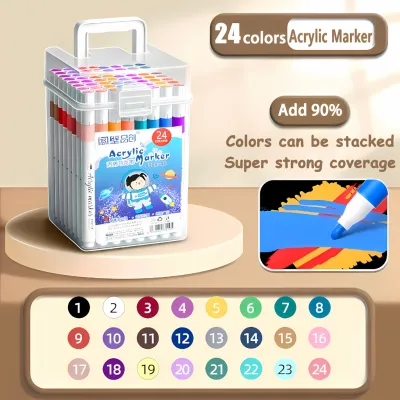
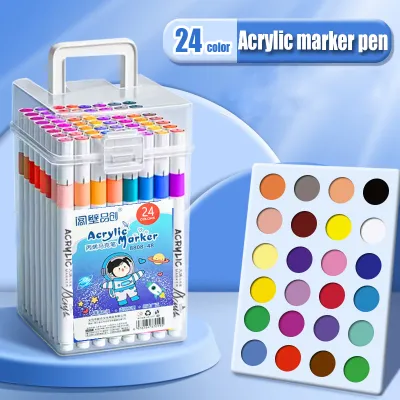
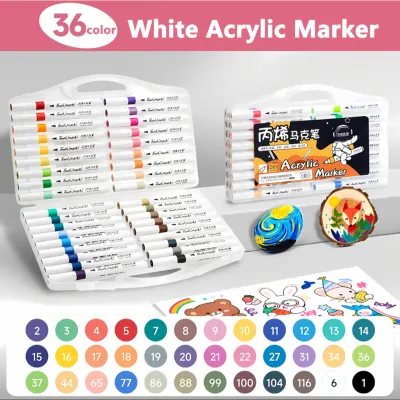
Prices are valid at publication and may change. Please refer to the product page for the latest price.
Because they contain real paint, acrylic markers offer distinct visual and physical traits. When you draw with them, they deliver high opacity, meaning the paint completely covers whatever is underneath it. The colors remain vibrant even on dark backgrounds, drying to a clean matte or satin finish that mimics traditional tube acrylic paint.
The drying process of these markers involves a physical transition. While the paint is still wet, it is water-soluble, which makes it easy to clean up spills or wipe away mistakes with a damp cloth. However, once the water carrier evaporates, the acrylic polymer cures to form a flexible, water-resistant plastic film. This cured layer is permanent, lightfast, and highly resistant to peeling or cracking over time.
To keep this thick, pigmented paint from drying out or settling inside the marker, manufacturers use a valve-action mechanism. Unlike regular markers that use a polyester fiber reservoir to hold ink, valve-action acrylic markers feature an internal ball bearing and a spring-loaded valve. Shaking the marker mixes the paint, and pressing down on the nib (pumping) opens the valve to release the paint into the tip.
Acrylic vs. Water-Based vs. Alcohol-Based Markers
Choosing the right marker depends on understanding how acrylic paint markers compare to standard water-based and alcohol-based options. Each type uses a different carrier fluid and colorant, resulting in distinct behaviors on different mediums.

Acrylic Markers Acrylic markers stand out for their opacity and surface versatility. Because the paint sits on top of the surface rather than soaking in, you can layer light colors directly over dark colors without the underlying shades showing through. They require manual shaking and priming to activate the flow, but once prepped, they work on both porous and non-porous materials.
Water-Based Markers Water-based markers, which include standard school markers, water-based brush pens, and bullet journal pens, use water or glycerin as a solvent to carry acid dyes. They produce a transparent to semi-opaque finish and rely on absorption, meaning they soak directly into porous surfaces like paper. They are exceptionally easy to clean and blend with water, but they lack water resistance when dry and will bleed or wash away if they get wet.
Alcohol-Based Markers Alcohol-based markers are favored by illustrators and designers for their fast-drying, dye-based inks. The alcohol solvent evaporates rapidly, allowing you to blend colors seamlessly to create smooth gradients without warping paper. However, these inks are highly transparent and tend to bleed through thin or standard paper, requiring heavy marker paper or cardstock. While they are permanent and water-resistant once dry, they do not have the surface versatility of acrylics and can fade over time when exposed to direct sunlight.
To help you compare these options at a glance, the table below summarizes how each marker type performs across key creative dimensions:
| Marker Type | Ink Base | Opacity | Blendability | Surface Versatility | Permanence |
|---|---|---|---|---|---|
| Acrylic Markers | Acrylic polymer emulsion and pigment | High (Opaque, covers dark surfaces) | Low (Dries quickly, layers instead of blending) | High (Glass, plastic, wood, metal, paper) | High (Water-resistant and fade-resistant once cured) |
| Water-Based Markers | Water/glycerin solvent and dye | Low to Medium (Transparent) | Medium to High (Blends easily with water) | Low (Primarily restricted to paper and cardstock) | Low (Soluble in water even after drying) |
| Alcohol-Based Markers | Alcohol solvent and dye | Low (Transparent, designed for layering) | High (Blends seamlessly for gradients) | Medium (Paper, some plastics, but prone to fading) | Medium to High (Water-resistant, but prone to UV fading) |
Best Surfaces and Use Cases for Acrylic Markers
The unique composition of acrylic markers makes them incredibly versatile tools for a wide range of creative and practical projects. Because the acrylic polymer binds to almost any surface, these markers excel where traditional ink-based markers fail.
Non-Porous Surfaces One of the primary advantages of acrylic markers is their ability to adhere to non-porous materials. They are highly effective for drawing or writing on glass, metal, plastic, polished stone, and glazed ceramics. On these surfaces, water-based markers would bead up and wipe away instantly, and alcohol markers would leave a streaky, easily scratched transparent layer. Acrylic paint forms a durable, opaque coat that can be sealed with a clear varnish for extra durability.
Dark or Colored Surfaces Because acrylic paint is naturally opaque, it does not rely on the background color to show its true shade. This makes acrylic markers the ideal choice for working on black paper, dark cardstock, or colored kraft boards. Light colors like white, pastel pink, or metallic gold stand out vividly on dark backgrounds, allowing for striking contrast in hand lettering, journaling, and illustration.
Mixed Media and Crafts Crafters and DIY enthusiasts frequently turn to acrylic markers for customizing everyday objects. They are perfect for decorating terra-cotta plant pots, painting rocks, customizing leather or canvas shoes, and designing outdoor wooden signage. The thick paint fills in the texture of rough surfaces, creating a clean, professional finish.
If you plan to use acrylic markers on fabrics like cotton tote bags or t-shirts, always check the manufacturer’s label first. While acrylic paint naturally adheres to fabric fibers, many brands require heat-setting with an iron or the addition of a fabric medium to ensure the design does not crack or wash out in the laundry.
Limitations and What to Check Before Buying
While acrylic markers are highly versatile, they are not a universal solution for every artistic task. Understanding their limitations will help you avoid frustration and select the right tools for your specific project.
Blending Difficulties Unlike alcohol-based markers, which are designed to blend into smooth gradients, acrylic markers dry quickly and sit on top of the surface. This makes wet-on-wet blending challenging. Instead of blending smoothly, wet acrylic paint layered over semi-dry paint can drag, lift, or create muddy patches. If your artwork requires soft gradients or seamless color transitions, alcohol markers or traditional liquid paints remain the superior choice.
Paper Warping Because acrylic markers use a water-based emulsion, applying heavy layers of paint can cause thin or standard printer paper to buckle, warp, or pill. To achieve the best results, it is highly recommended to use heavy-weight paper, such as cardstock, mixed-media pads, or watercolor paper. These thicker mediums can absorb the moisture without losing their shape or structural integrity.
Nib Clogging The very property that makes acrylic paint permanent—its ability to cure into a plastic film—also makes it prone to clogging. If a marker is left uncapped, or if paint is allowed to dry on the tip, the nib can become stiff and unusable. Proper maintenance and capping are essential to prevent the paint from drying inside the valve and tip.
Pre-Purchase Checklist Before purchasing a set of acrylic markers, take a moment to verify these key specifications:
- Nib Type and Versatility: Check if the marker features a brush, bullet, chisel, or dot nib. Some brands offer reversible nibs (such as a bullet tip that can be flipped to a chisel tip) or sell replacement nibs separately, which can significantly extend the life of the marker.
- Lightfastness: Look for "lightfast" or "fade-resistant" labels on the packaging, especially if your finished artwork will be displayed in direct sunlight or placed outdoors.
- Manufacturer Instructions: Read the manufacturer's guidelines for surface compatibility, required primers, and curing times. Some specialty surfaces may require a clear primer beforehand or a protective sealant afterward to ensure the paint remains intact.
Practical Tips for Using and Storing Acrylic Markers
To get the most out of your acrylic markers and ensure they last as long as possible, proper usage and maintenance are key. Following a few simple steps will keep the paint flowing smoothly and prevent premature drying.
Priming the Marker Most acrylic markers use a valve-action system that requires priming before your first use. Start by shaking the marker vigorously with the cap securely on to mix the pigment and polymer emulsion. Next, remove the cap and gently press the nib down onto a piece of scrap paper several times. This action pumps the valve and coaxes the paint down into the tip. Avoid pressing too hard or too rapidly, as this can flood the nib and cause a large puddle of paint on your artwork.
Layering Technique When working on detailed designs, patience is essential. Always let the first layer of paint dry completely before applying a second layer or a different color on top. Applying wet paint over a layer that is still tacky can lift the underlying paint, tear the paper, or muddy your colors.
Climate Considerations In highly humid environments, such as the tropical climate of the Philippines, the evaporation of the water carrier in acrylic paint slows down significantly. This means your artwork will take longer to dry and cure. Be sure to allow extra curing time—often up to 48 hours—before handling, stacking, or applying a clear protective sealant to your finished pieces.
Storage To maintain an even distribution of pigment and polymer emulsion, store your acrylic markers horizontally. Storing them vertically can cause the heavy pigments to settle at the bottom of the barrel, clogging the valve, or pool at the top, leaving the nib dry and watery.
Reviving Dry Nibs If you notice the paint has dried on the tip of the nib, you do not need to throw the marker away. Gently pull the nib out with tweezers and wipe it with a damp cloth, or briefly soak it in warm water to dissolve the dried, water-soluble paint. Once clean and completely dry, insert the nib back into the marker and prime it again on scrap paper to restore the paint flow.
Frequently Asked Questions (FAQ)
Can you use acrylic markers on canvas?
Yes, acrylic markers work exceptionally well on canvas. They are highly favored by artists for adding fine details, crisp outlines, precise lettering, or bright highlights over larger areas painted with traditional tube acrylics. For the best results, use a primed canvas, as raw canvas will absorb the paint quickly and may cause the nib to wear down faster due to the rough texture.
Are acrylic markers waterproof?
Acrylic markers become highly water-resistant once they have fully cured, which typically takes at least 24 hours depending on the brand, layer thickness, and local humidity. While they can easily withstand light splashes or damp wiping, they are not strictly waterproof. If the decorated item will be continuously submerged, scrubbed, or exposed to heavy outdoor weather, applying a clear, weather-resistant acrylic sealant is highly recommended to protect the design.
How do you fix a clogged acrylic marker?
If your acrylic marker stops flowing, first check the manufacturer’s specific care instructions. A common fix is to remove the nib gently using tweezers and soak it in warm water for a few minutes to dissolve any dried paint blockages. After soaking, blot the nib dry with a paper towel, reinsert it into the marker, and gently pump it on scrap paper to draw fresh paint through the valve. Never use harsh solvents or chemicals to clean the nib, as these can break down the acrylic polymer and ruin the marker.
Community discussion
Share your experience or ask a question. Comments are reviewed before publication.