
Choosing between an acrylic marker and a regular marker comes down to two main factors: the surface you are writing on and how opaque you need the ink to be. If you are customizing non-porous items like glass bottles, plastic organizers, polished stones, or canvas shoes, an acrylic marker is the correct tool because it lays down an opaque layer of actual paint that sits on top of the material. On the other hand, if you are sketching in a sketchbook, coloring manga, or practicing calligraphy on paper, regular markers—whether water-based or alcohol-based—are superior because they are designed to sink into paper fibers, allowing for smooth blending and seamless gradients. Understanding these ink compositions before starting is essential to prevent ruined projects, bleeding paper, and wasted money.
Ink Composition and Opacity: The Fundamental Difference
To understand why these writing instruments behave so differently, you must look at what is inside their barrels. An acrylic marker is filled with fluid acrylic paint, which consists of finely ground pigments suspended in an acrylic polymer emulsion. When you write with an acrylic marker, you are essentially painting with a highly controlled brush. The presence of the acrylic polymer binder allows the paint to form a cohesive, flexible plastic film as it dries. This film is highly opaque, meaning it completely blocks out the surface underneath. Because of this opacity, you can easily layer light colors, such as white or pastel yellow, directly over dark backgrounds like black cardstock or dark blue painted wood without the underlying color showing through.
Regular markers, by contrast, use a completely different chemical formulation. They generally fall into two categories: water-based and alcohol-based. Instead of paint, these markers contain colorants—usually liquid dyes, though sometimes fine pigments—dissolved in a water or alcohol solvent. Because dyes are fully dissolved rather than suspended, the resulting ink is translucent. When you apply a regular marker to a page, the light passes through the ink, reflects off the white paper underneath, and travels back to your eyes. This translucency makes regular markers excellent for layering colors to build depth, shading, and creating smooth gradients. However, it also means they are virtually useless for covering up mistakes or writing on dark surfaces, as the dark background will simply absorb the light and render the ink invisible.
Products mentioned in this guide

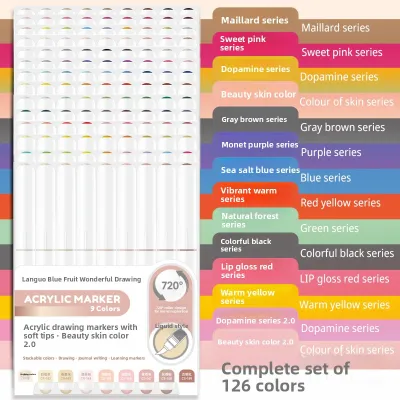
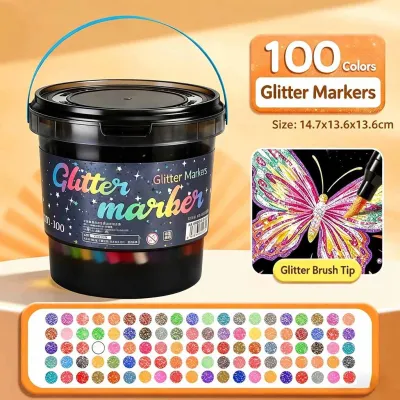
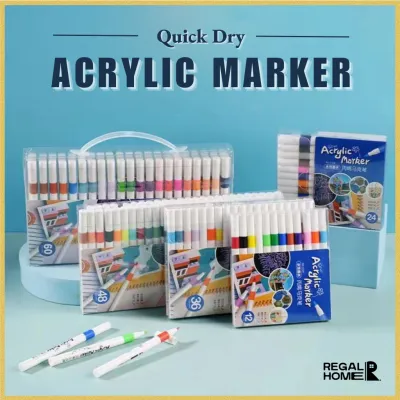
Prices are valid at publication and may change. Please refer to the product page for the latest price.
This difference in composition also dictates the physical texture of your finished work. Acrylic markers leave a distinct, slightly raised, paint-like texture on the surface because of the dried polymer film. Regular markers leave no physical texture at all; they stain the fibers of the material directly, leaving a flat finish that preserves the original texture of the paper or fabric.
Surface Compatibility: Where Can You Use Them?
The choice of marker dictates which surfaces you can successfully decorate. Choosing the wrong marker for your material can result in bleeding ink, peeling paint, or designs that wipe away with a simple touch.

Porous Surfaces (Paper, Cardboard, Canvas)
Regular markers are designed primarily for paper. They glide smoothly across the page, and the paper fibers absorb the ink instantly. However, on thin or uncoated papers, regular markers—especially alcohol-based ones—tend to bleed or feather, spreading past your pencil lines and soaking through to the next page. Acrylic markers work beautifully on heavy canvas, thick cardboard, and mixed-media paper. However, if you use them on thin printer paper or lightweight notebook pages, the heavy water-and-polymer load of the paint will saturate the sheet, causing the paper to warp, pucker, or even tear if you apply multiple layers.
Non-Porous Surfaces (Glass, Plastic, Metal, Ceramics)
This is where acrylic markers show their true utility. Because the acrylic binder forms a physical film, it can cling to smooth, non-porous surfaces where liquid inks would fail. To make these designs permanent, always check the manufacturer’s instructions on the marker packaging. Some brands require baking the decorated ceramic item in a household oven to cure the paint, while others recommend applying a clear polyurethane or acrylic sealer spray to protect the design from scratches. Regular markers will fail on these surfaces; the ink will bead up due to surface tension, wipe away easily, or remain tacky and never dry properly.
Wood and Fabric
Unfinished wood is highly porous and absorbs liquids rapidly. If you use a regular marker on raw wood, the ink will bleed along the grain, creating fuzzy, distorted edges. Acrylic markers sit on top of the wood grain, maintaining clean, crisp lines. On fabric, regular markers will bleed extensively and eventually wash out in the laundry unless they are specialized fabric dye markers. Acrylic markers can be used on fabric items like canvas tote bags or denim jackets, but they typically require heat-setting with an iron (using a protective cloth between the iron and the design) to lock the paint into the fibers. Always check the product label of your specific marker brand to verify fabric compatibility and washing instructions.
In the Philippines, the high relative humidity—which frequently exceeds 80% during the wet season—can significantly slow down the drying and curing process of acrylic markers on non-porous surfaces. While a regular alcohol marker dries almost instantly even in humid weather due to the rapid evaporation of alcohol, an acrylic marker relies on water evaporation. In damp conditions, give your acrylic projects extra time to dry completely before applying any sealants or handling them.
Permanence, Drying Time, and Finish
The way these markers dry and wear over time affects both your working process and the longevity of your finished piece.
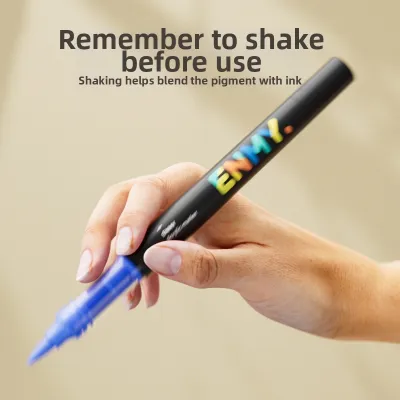
Regular markers dry almost instantly. For alcohol markers, the solvent evaporates in seconds, allowing you to work quickly without worrying about smudging. Water-based markers dry as the water sinks into the paper fibers. Acrylic markers require a different mechanical preparation. Because they contain suspended paint solids, you must shake them thoroughly before use—you will hear a metal mixing ball rattling inside—and pump the nib against a scrap piece of paper to prime the valve and start the paint flow. Once applied, they dry as the water evaporates and the polymer cures. This curing process can take anywhere from a few minutes to several hours depending on the thickness of the layer and ambient humidity.
Once fully cured, acrylic markers are highly water-resistant and durable because the polymer film is plastic-based. Regular water-based markers remain water-soluble; a single drop of water or a sweaty hand can reactivate the dye and smudge the artwork. Alcohol-based markers are water-resistant once dry, but they are highly susceptible to UV fading if exposed to direct sunlight over time. Always verify waterproof, archival, or lightfast claims on the packaging of your chosen brand, as dye-based regular markers will fade much faster than pigment-based acrylic markers.
In terms of visual appearance, acrylic paint markers generally dry to a matte, satin, or slightly textured finish that mimics traditional acrylic paint. Some premium brands offer glossy finishes, but the default is usually a clean, flat matte that feels slightly raised to the touch. Regular markers dry completely flat, sinking into the paper and leaving no physical texture or sheen, maintaining the original texture of the paper itself.
Cost, Maintenance, and Nib Care
Owning and maintaining these tools requires different levels of care and financial investment.
Acrylic markers generally carry a higher price point per unit than standard water-based regular markers. In the Philippines, a basic set of student-grade water-based markers can cost as little as ₱100 to ₱300, whereas a decent entry-level set of acrylic paint markers typically ranges from ₱400 to ₱1,200. Premium professional acrylic marker sets or high-end alcohol-based marker sets can easily exceed ₱2,000 to ₱5,000. It is wise to check local stationery shops or reputable online craft stores for current bundle pricing in PHP to find a set that fits your budget.
The nib of a regular marker can often be revived if it dries out slightly. For water-based markers, a tiny drop of water on the nib can reactivate the ink. For alcohol markers, a drop of isopropyl alcohol can do the trick. Acrylic markers are much less forgiving. Because the binder is an acrylic polymer, once the paint dries inside the nib, it turns into solid plastic and permanently clogs the flow. To prevent this, always wipe the nib clean of excess paint after use, cap the marker tightly immediately, and store them horizontally. Storing them horizontally prevents the pigment from settling entirely at the bottom or clogging the tip.
Many high-end regular alcohol markers are designed with sustainability in mind, offering replaceable nibs and refill ink bottles. In contrast, the vast majority of acrylic markers on the market are disposable. Once the internal paint reservoir is empty, the entire marker must be discarded, though some premium artist-grade acrylic brands do offer refillable bodies and replacement tips.
Decision Framework: Which Should You Buy?
To make your final decision, evaluate your specific project requirements against the strengths of each marker type.
Choose Acrylic Markers if:
- You are decorating non-porous or textured items: This includes terracotta plant pots, glass jars, phone cases, leather shoes, or smooth stones.
- You need opaque coverage: If you want to paint light colors over dark backgrounds or easily correct mistakes by layering a new color over an old one.
- You want a paint-like finish: You prefer a textured, paint-like finish without the cleanup, water cups, and brushes required by traditional acrylic painting.
- You are working on outdoor crafts: These markers are ideal for items that will be handled frequently, provided you apply a suitable protective sealer afterward.
Choose Regular Markers if:
- Your primary medium is paper: Your projects involve sketching, bullet journaling, manga illustration, or adult coloring books.
- You want to achieve smooth color transitions: You need soft gradients and seamless blending, which are impossible with fast-drying, opaque acrylic paint.
- You prefer a tool that is instantly ready to write: You want to avoid needing to shake, pump, or prime the nib before every session.
- You require a highly portable, mess-free setup: You need a tool for quick note-taking, hand lettering, or everyday writing.
Verify First if:
- You plan to use the markers on specialized surfaces: For example, if you are decorating plates, mugs, or bowls, ensure the marker is labeled as non-toxic and food-safe, or understand that the design must be kept away from surfaces that touch food and lips.
- You are creating outdoor signs or window art: Check the packaging for UV-resistance and lightfastness ratings to ensure your colors do not fade under intense sunlight. Always check the manufacturer's safety certifications and sealing requirements before committing to a bulk purchase for commercial projects or children's crafts.
Frequently Asked Questions (FAQ)
Can you use acrylic markers on regular printer paper?
Yes, you can use acrylic paint markers on standard printer paper, but it is not ideal. Because printer paper is thin (typically 70 to 80 gsm) and uncoated, the wet acrylic paint will saturate the fibers, causing the paper to warp, pucker, or bleed through to the other side. For the best results, use heavier substrates like mixed-media paper, watercolor paper, or cardstock (at least 200 gsm) that can handle the moisture and weight of acrylic paint.
Are regular markers waterproof?
It depends entirely on the formulation of the ink. Standard water-based regular markers are not waterproof; they will smudge and run if they come into contact with water. Alcohol-based regular markers are generally water-resistant once dry, meaning they will not bleed if splashed with water, though they can still be dissolved by alcohol or heavy solvents. Always check the manufacturer’s label for specific waterproof or water-resistant claims.
How do you fix a dried-out acrylic marker?
If the nib of an acrylic marker has dried and clogged with hardened paint, you can often fix it by pulling the nib out with tweezers and soaking it in warm water or rubbing alcohol for a few minutes to dissolve the dried polymer. Rinse it, press it dry with a paper towel, reinsert it, and pump the marker to draw fresh paint down. However, if the paint inside the main reservoir has completely dried and cured, the marker cannot be salvaged or refilled and must be replaced.
Community discussion
Share your experience or ask a question. Comments are reviewed before publication.