
Quick Answer: Acrylic Pen vs Paint Marker
When choosing between an acrylic pen and a paint marker, your decision should depend on your project’s surface material, your working environment, and your cleanup preferences. An acrylic pen is generally the most efficient choice for porous surfaces like paper, canvas, cardboard, and untreated wood because its water-based ink dries quickly without bleeding excessively or emitting strong chemical odors. Conversely, a paint marker is typically more suitable for non-porous or outdoor surfaces such as glass, glazed ceramics, metal, or smooth plastics due to its highly opaque, oil- or solvent-based formula that adheres strongly to slick materials.
Before purchasing your tools on an online marketplace, verify whether your project requires specific safety certifications, outdoor weather exposure, or food-safe materials. Neither standard acrylic pens nor paint markers are safe for direct contact with food or drink; projects like custom mugs or plates must remain purely decorative or be sealed with specialized, food-safe coatings.
Understanding the Ink: Acrylic vs Paint Formulations
To understand how these writing instruments behave, you must look at their chemical compositions. Acrylic pen ink is typically a water-based acrylic polymer emulsion. This formulation consists of pigment particles suspended in water and an acrylic plastic binder. As the water evaporates, the polymer particles fuse together, forming a flexible, water-resistant, plastic-like film. This makes acrylic pens highly flexible and less prone to cracking over time, especially on slightly yielding surfaces.
Products mentioned in this guide
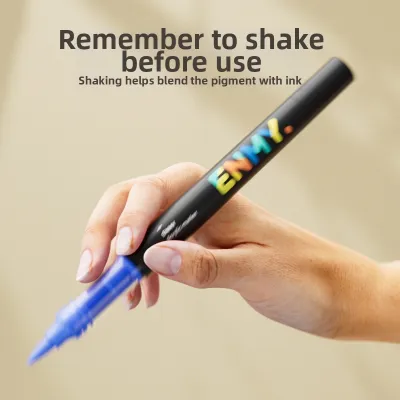
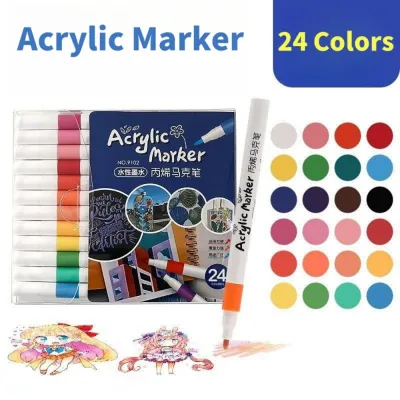
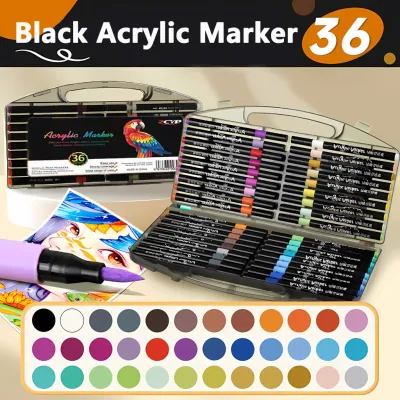
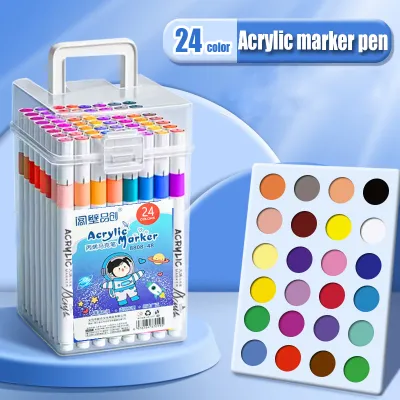
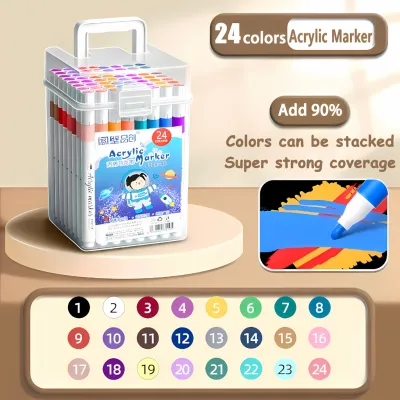
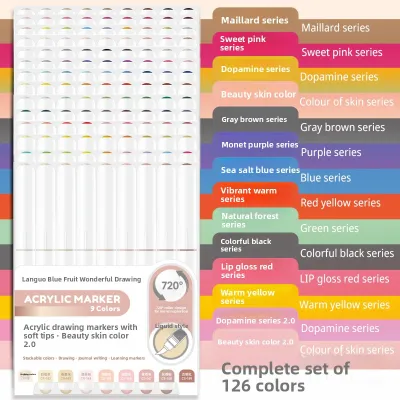

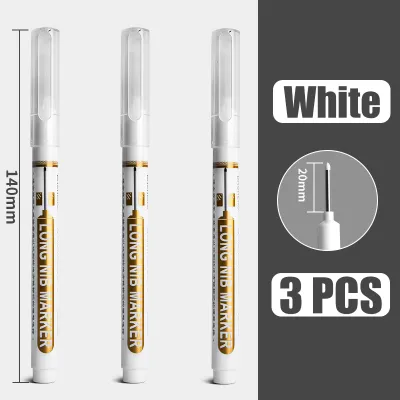
Prices are valid at publication and may change. Please refer to the product page for the latest price.

In contrast, paint marker ink is traditionally formulated with oil-based or solvent-based carriers, though water-based paint markers do exist. Solvent-based markers rely on organic solvents like alcohol or hydrocarbons to keep the paint liquid inside the barrel. When applied, these solvents evaporate rapidly, leaving behind a tough, highly opaque layer of enamel or oil paint. Because of these solvents, these markers often carry distinct chemical odors and require specific safety precautions.
To verify what you are buying, always read the manufacturer’s ingredient list, solvent warnings, and safety data printed on the marker barrel or packaging. In tropical climates like the Philippines, high relative humidity can significantly slow down the evaporation of water-based acrylic inks, whereas solvent-based paint markers will still dry relatively quickly due to the volatile nature of their carriers.
Matching the Tool to Your Project Surface
Selecting the correct marker requires matching the ink’s physical properties to the texture and porosity of your substrate. Using the wrong tool can lead to smudging, flaking, or ruined materials.
Porous Materials (Paper, Canvas, Untreated Wood)
Porous surfaces absorb liquids readily. Both acrylic pens and paint markers can be used here, but they behave differently. Acrylic pens are highly compatible with paper and canvas because the water-based ink binds beautifully with organic fibers. However, thin paper can warp or experience bleed-through if the ink is applied too heavily. Paint markers, particularly oil-based ones, can leave greasy halos or bleed extensively through paper fibers. Always perform a bleed test on a scrap piece of your material before committing to your final design.
Non-Porous Materials (Glass, Glazed Ceramics, Metal, Hard Plastics)
Slick, non-porous surfaces do not allow ink to sink in, meaning the paint must adhere entirely to the surface. Paint markers are the preferred choice here because their solvent- or oil-based binders form a chemical bond with smooth surfaces, making them highly resistant to scratching and peeling. While acrylic pens can write on glass or plastic, the dried acrylic film remains sitting on top of the surface and can easily be scraped off with a fingernail unless it is baked or sealed with a protective clear coat.
Flexible Materials (Fabric, Leather, Vinyl)
If your project involves wearable items like custom sneakers, leather jackets, or tote bags, flexibility is your primary concern. Standard paint markers dry to a rigid, enamel-like finish that will crack and flake when the material bends. For these projects, look for flexible acrylic formulations specifically labeled for textile or leather use. These inks are designed to stretch and flex alongside the fibers without losing adhesion.
How to Test Your Markers Before Starting
Before committing to your final piece, perform these three simple tests on a scrap piece of your project material to verify compatibility:
- The Bleed and Feathering Test: Draw a thick line on your scrap material. Observe if the ink spreads sideways (feathering) or bleeds through to the back. This is especially important for paper and untreated wood.
- The Adhesion and Scratch Test: Apply the ink, let it dry completely for 24 hours (especially in humid conditions), and then gently run a fingernail or plastic edge over the mark. If it flakes or peels, the ink is not adhering properly to that specific surface.
- The Water-Resistance Test: Place a single drop of water on the dried mark. Wait 30 seconds, then blot it with a clean white paper towel. If color transfers to the towel, the ink requires a protective sealer to withstand moisture.
Additionally, verify the tip size (ranging from extra-fine 0.7mm for detail work to broad 15mm chisel tips for large areas) and check if the manufacturer offers replacement nibs or refillable ink reservoirs to extend the tool’s lifespan.
Opacity, Drying Time, and Visual Finish
The visual outcome of your project depends heavily on how the ink lays down, how fast it cures, and the final texture it leaves behind.
Opacity and Layering
If you are working on a dark background, such as black cardstock or a painted canvas, you need an ink with high opacity. Paint markers generally offer superior one-stroke coverage because of their dense pigment load and thick carrier. Acrylic pens also offer excellent opacity, but you may need to apply multiple layers to achieve a solid, streak-free finish. When layering colors, always test the combination on a sample piece first. Applying a wet layer of water-based acrylic over an incompletely dried layer can reactivate the underlying pigment, causing the colors to bleed together and ruin your clean lines.
Drying Time and Curing
Drying speed is highly dependent on your local environment. In humid tropical conditions, water-based acrylic pens may take longer to dry than they would in dry climates. However, they still dry to the touch faster than oil-based paint markers. It is crucial to distinguish between “dry to the touch” and “fully cured.” While a paint marker might feel dry within ten minutes, the underlying oil or solvent layers can take 24 to 48 hours to cure completely. Handling the object too early can cause smudges or permanent fingerprints.
Finish Types
Do not assume that all paint markers dry to a high-gloss shine or that all acrylic pens dry matte. Manufacturers produce these tools in a wide range of finishes, including matte, satin, gloss, and metallic. Always verify the finish specification on the product packaging or online product listing rather than guessing based on the marker category.
Durability, Weather Resistance, and Cleanup
How your artwork holds up over time—and how easily you can fix mistakes during the process—should influence your purchasing decision.
Water and UV Resistance
Never assume a marker is automatically waterproof or fade-proof just because it is labeled as “paint.” While dried acrylic and oil-based inks are generally water-resistant, prolonged exposure to rain, moisture, and UV rays will cause them to degrade, peel, or fade. For outdoor projects like garden signs or painted rocks, you must strictly follow the manufacturer’s sealing instructions. This typically involves applying a UV-resistant clear acrylic sealer or, in the case of ceramics, baking the item in a home oven to cure the paint permanently.
Cleanup and Mistakes
Mistakes happen, and your ability to correct them depends on the ink formulation. Water-based acrylic pens are incredibly forgiving; while the ink is still wet, you can easily wipe away errors with a damp cloth or cotton swab. Once dry, they can often be scraped off non-porous surfaces or dissolved with a bit of rubbing alcohol. Solvent-based paint markers are much more permanent. Correcting mistakes requires acting quickly with a solvent like mineral spirits, acetone, or high-concentration isopropyl alcohol, which can damage sensitive plastic or painted substrates underneath.
Safety and Ventilation
Because solvent-based paint markers emit volatile organic compounds (VOCs), they require careful handling. Always check the packaging for safety warnings. If you are using solvent-based markers for extended periods, work outdoors or in a highly ventilated room, and keep them away from children. Acrylic pens, being water-based, are generally low-odor and non-toxic, making them a safer choice for indoor crafting sessions and family projects.
Decision Framework: Which Should You Buy?
To finalize your decision, evaluate your project against this straightforward framework:
Choose an Acrylic Pen if:
- Your project substrate is paper, canvas, cardboard, fabric, or untreated wood.
- You are working indoors, with children, or in a space without heavy ventilation.
- You want quick drying times, low odor, and easy cleanup with water.
- You need a flexible paint film that won't crack on flexible materials.
Choose a Paint Marker if:
- Your project substrate is glass, metal, glazed ceramic, or hard plastic.
- The finished item will be exposed to outdoor weather conditions (and you plan to seal it).
- You require maximum opacity on dark surfaces in a single pass.
- You have a well-ventilated workspace and are comfortable handling solvent-based products.
Neither may fit if:
- Your project involves surfaces that come into direct contact with food or beverages.
- You require extreme heat resistance, such as marking automotive engine parts or industrial machinery.
- You are working on highly specialized industrial coatings. In these cases, seek out specialized industrial-grade markers or culinary-safe paints instead.
Frequently Asked Questions (FAQ)
Can I use an acrylic pen and a paint marker together in the same project?
Yes, you can combine both tools, but you must follow strict layering rules to prevent your artwork from ruining. The primary risk is reactivation: applying a solvent-based paint marker over a water-based acrylic layer that is not fully cured can cause the solvent to dissolve and smudge the acrylic underneath. Conversely, water-based acrylic ink may bead up or fail to adhere if applied over a glossy, oil-based paint marker layer. Always allow the base layer to cure completely—ideally for 24 hours—before applying the second medium, and test the combination on a scrap piece of your material first.
How do I fix a dried-out acrylic pen or paint marker?
The revival method depends entirely on the ink formulation. For water-based acrylic pens, you can often revive a dry nib by removing it with tweezers and soaking it in warm water for a few minutes, then blotting it dry and reinserting it. For solvent-based paint markers, water will not work and may ruin the ink; instead, dip the nib in a small amount of rubbing alcohol or the manufacturer-recommended solvent thinner to dissolve the dried paint clog. Never use harsh household chemicals like acetone on water-based pens, as this can cause the acrylic polymer to clump permanently inside the barrel and ruin the marker’s internal flow mechanism.
Community discussion
Share your experience or ask a question. Comments are reviewed before publication.