
Selecting the right letter beads for a jewelry project shapes not only the final design’s aesthetic but also how well the finished piece survives daily wear. In the warm, humid climate of the Philippines, jewelry faces unique environmental challenges like sweat, moisture, and intense sunlight. Choosing between acrylic and polymer clay letter beads requires balancing durability, visual style, and ease of assembly. While acrylic offers a uniform, water-resistant, and highly durable option for casual wear, polymer clay provides an organic, matte, and highly customizable alternative for artisanal designs. Understanding how these materials behave under different conditions will help you select the ideal option for your next crafting venture.
Evaluating Durability and Daily Wear Resistance
Acrylic beads are molded from synthetic polymers, making them highly impact-resistant and structurally rigid. They rarely crack or break when dropped, making them excellent for everyday accessories like friendship bracelets, phone straps, and kids’ jewelry. However, their glossy surfaces are prone to fine scratches over time if they rub against metal findings, keys, or other hard beads in a bag.
Polymer clay beads, made from a plasticized polyvinyl chloride (PVC) medium, remain slightly flexible even after baking. This flexibility prevents them from shattering easily, but they can snap, chip, or crumble if they are rolled too thin, under-baked, or subjected to heavy physical impact.
Products mentioned in this guide
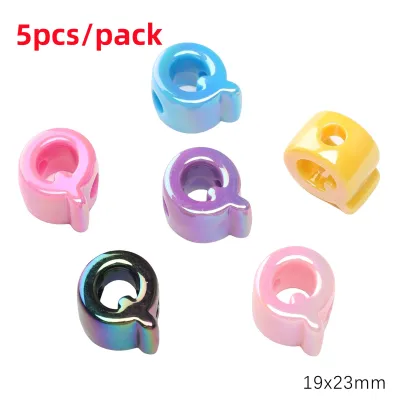
Prices are valid at publication and may change. Please refer to the product page for the latest price.
In tropical conditions, humidity and perspiration are constant factors. Acrylic beads are completely non-porous and waterproof, meaning they will not absorb sweat or swell. The letters, which are typically engraved and paint-filled, are relatively stable, though cheap paint can eventually wear away with constant friction. Polymer clay is also water-resistant once fully cured, but prolonged exposure to moisture can weaken unsealed clay or cause painted-on lettering to peel. UV exposure from the tropical sun can cause some low-grade acrylics to yellow or become brittle over time, while certain polymer clay pigments may fade if exposed to direct sunlight for extended periods. Checking manufacturer specifications for UV resistance and colorfastness is highly recommended before finalizing your material choice.
To ensure your materials can withstand daily wear, use this simple verification checklist before committing to a large batch:
- The Squeeze Test: Press a sample bead firmly between your fingers. Acrylic should not yield at all. Polymer clay should have a tiny amount of microscopic give without cracking or bending permanently.
- The Scratch Test: Gently rub a coin or fingernail across the surface to check how easily the finish or the letter paint scratches off.
- The Water Soak: Submerge a test bead in warm water for a few hours. Check if the letter paint softens, bleeds, or if the bead surface becomes tacky.
- Hole Integrity Check: Run a piece of wire or a needle through the bead hole to ensure there are no sharp plastic burrs or clay blockages that could fray your stringing material.
Comparing Finish, Texture, and Visual Appeal
The visual impact of your jewelry depends heavily on the surface finish of your beads. Acrylic letter beads typically feature a high-gloss, smooth, and highly uniform surface. Because they are mass-produced in molds, every bead in a batch will have identical dimensions, rounded edges, and centered lettering. This uniformity is ideal for clean, modern, or commercial designs where consistency is key.

Polymer clay letter beads offer a distinct matte, slightly textured, and organic feel. Even commercially manufactured clay beads retain a handmade charm, often showing slight variations in shape, thickness, and letter placement. This makes them highly suitable for bohemian, cottagecore, or personalized artisanal jewelry lines.
Color application differs significantly between the two. In acrylic beads, the letters are usually molded into the plastic or engraved and filled with contrasting paint, such as black paint on white acrylic, or gold paint on colorful acrylic. This creates sharp, high-contrast lettering that is easy to read from a distance. In polymer clay, letters can be stamped and painted, printed on the surface, or created using clay cane techniques where the letter runs all the way through the bead. Cane-cut letters offer excellent durability because the letter cannot rub off, but stamped or painted clay letters require careful inspection to ensure the paint is sealed and won’t flake.
Before purchasing in bulk, inspect sample beads for finish consistency. Check that the edges around the stringing holes are smooth and free of sharp flashing (excess plastic or clay). Ensure the letters are centered and legible, with no blurred edges or missing paint fill.
Assessing Workability and Assembly Requirements
For crafters, workability determines how quickly and easily a project can be completed. Acrylic letter beads are ready-to-use components. They require no preparation, curing, or post-processing. You simply open the pack and begin stringing. This makes them highly efficient for high-volume production or group crafting activities.
Polymer clay offers two paths: purchasing pre-made clay beads or crafting your own custom letter beads from scratch. Making your own clay beads allows for absolute creative freedom in terms of color, font, and bead shape, but it demands a significant investment in tools and time. You must condition the clay, roll it, stamp or paint the letters, pierce the stringing holes, bake the beads in a dedicated craft oven, and potentially sand or seal them.
Safety is a crucial consideration when working with raw polymer clay. Always bake clay in a well-ventilated room, and never use an oven that you also use for preparing food unless the clay is completely enclosed in a baking bag or container. Use dedicated craft blades for slicing clay, and wear a dust mask if you plan to dry-sand cured clay beads to avoid inhaling fine plastic particles.
Stringing compatibility is another vital check. Acrylic beads generally feature standardized, clean-cut holes (often 1.2mm to 2mm in diameter), making them highly compatible with standard elastic cords, nylon threads, and metal headpins. Polymer clay beads, especially handmade ones, can have irregular hole sizes or rough interior walls. Always verify that your chosen stringing material—whether it is a 0.8mm elastic cord for a stretch bracelet or a thicker waxed polyester cord—can pass smoothly through the bead holes without snagging or fraying.
Decision Framework: Choosing the Right Material
To finalize your material selection, consider how the jewelry will be used, your production scale, and your aesthetic goals.
Choose Acrylic if:
- You are making everyday wear, beach jewelry, or children's accessories that must withstand water, sweat, and rough handling.
- You need a clean, uniform, and highly legible look with high-contrast lettering.
- You are producing jewelry in large quantities or hosting a crafting event where immediate assembly is required.
Choose Polymer Clay if:
- You want an artisanal, matte, or bohemian aesthetic with a distinct handmade feel.
- You require custom color palettes, unique bead shapes, or personalized letter styles that are not available in mass-produced plastic.
- Your project is a premium or limited-edition jewelry line where customers value unique, handcrafted details over mass-produced uniformity.
Verify first if:
- Your project must meet specific safety standards (such as lead-free or phthalate-free certifications for children's toys).
- You require specialized finishes, such as metallic plating, glow-in-the-dark properties, or UV-reactive colors, which may require specific manufacturer verifications.
- You are managing a tight budget; compare the cost per unit in Philippine Pesos (‛) at local craft stores or online marketplaces, balancing the low cost of bulk acrylic against the premium pricing of handmade polymer clay.
| Feature | Acrylic Letter Beads | Polymer Clay Letter Beads |
|---|---|---|
| Surface Finish | High-gloss, smooth, uniform | Matte, textured, organic |
| Water Resistance | Excellent (completely waterproof) | Moderate (water-resistant, but avoid soaking) |
| Customization | Low (pre-made standard designs) | High (can be custom-shaped and colored) |
| Durability | High (rigid, impact-resistant) | Moderate (flexible but can chip if thin) |
| Assembly Speed | Fast (ready to string immediately) | Slow (requires baking/drilling if handmade) |
| Ideal Use Cases | Friendship bracelets, phone straps, kids' crafts | Artisanal jewelry, bohemian designs, custom gifts |
Frequently Asked Questions (FAQ)
Can I mix acrylic and polymer clay beads in the same jewelry piece?
Yes, mixing acrylic and polymer clay beads can create a visually interesting contrast between glossy and matte textures. However, you must balance the physical properties of both materials to ensure the jewelry remains comfortable and durable. Acrylic beads are typically lighter and more uniform, while polymer clay beads can be slightly heavier and irregular in shape. Ensure that the stringing holes of both bead types align properly and are large enough for your chosen cord. Additionally, use a strong, high-quality elastic or nylon thread to handle the slight weight variation, and ensure that both materials are cared for using compatible cleaning methods.
How do I clean and maintain finished letter bead jewelry?
To keep your letter bead jewelry looking its best, clean it gently using a soft, damp cloth and mild, soapy water. Avoid submerging the jewelry for extended periods, especially if it contains polymer clay beads or metal findings. Never use harsh chemicals, alcohol, acetone, or abrasive cleaners, as these solvents can dissolve the glossy finish of acrylic beads, strip away painted lettering, or degrade the structure of cured polymer clay. When applying perfumes, lotions, or hairsprays, do so before putting on your jewelry to prevent chemical buildup. Store your finished pieces in a cool, dry place away from direct sunlight to prevent color fading and material degradation.
Community discussion
Share your experience or ask a question. Comments are reviewed before publication.