
Choosing the right adjustable drafting table is a critical decision that directly impacts your productivity, physical comfort, and the quality of your creative work. For architecture students, a drafting table is an essential, high-precision workstation designed to handle large-format sheets, heavy technical tools, and grueling design studio hours. For casual sketchers, the table serves as a flexible, inviting space that prioritizes comfort, ease of adjustment, and seamless integration into a cozy home environment. Understanding how your specific workflow dictates your furniture needs will prevent you from overspending on unnecessary industrial features or struggling with a flimsy table that wobbles during precise line work.
In the tropical climate of the Philippines, selecting the right workstation also requires considering environmental factors like humidity, which can affect both paper stability and wooden table surfaces. A well-chosen table not only supports your physical medium but also preserves your posture during long hours of creative focus. By comparing tilt mechanisms, surface materials, and storage options, you can find the perfect balance between professional utility and casual convenience.
Identifying Your Core Workflow: Technical Drafting vs. Light Sketching
Technical drafting is a rigorous discipline where millimeter-level accuracy is absolutely non-negotiable. Architecture students frequently work on large-format sheets, such as A1 or A0 paper, which require an expansive, completely flat surface that does not flex under pressure. The tools of the trade—including heavy T-squares, drafting arms, compasses, and fine-tipped technical pens—demand a stable environment where nothing slides or shifts unexpectedly.
Products mentioned in this guide
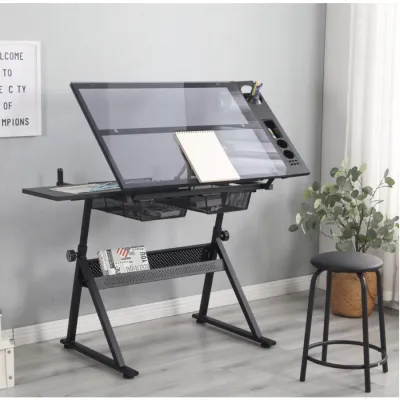
16 Lazada user ratings
I bought exactly the same unit in the USA and used it for years for drafting and advertising artwork, and after that for doing podcasts. Now…Read full reviewShow less
I bought exactly the same unit in the USA and used it for years for drafting and advertising artwork, and after that for doing podcasts. Now my wife uses the one I ordered from Lazada here in Cavite for doing portraits and painting. It is a great unit. She loves it. Thank you.
Thank you seller pati na rin kay kuya na nagdeliver! Ang bigat pa naman. Pero ang ganda ng item at very well packed. Two thumbs up sa inyo! …Read full reviewShow less
Thank you seller pati na rin kay kuya na nagdeliver! Ang bigat pa naman. Pero ang ganda ng item at very well packed. Two thumbs up sa inyo! 👍👍
Great for drawing and writing, Sturdy and durable construction, Spacious work area for creativity, Comfortable stool for long hours,
Nice and sturdy. It great for architecture student. Very stylish as my daughter say. We will order again
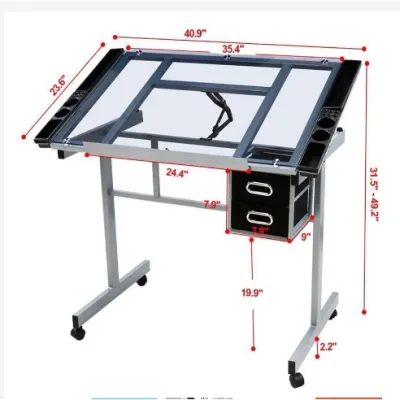
79 Lazada user ratings
There is a broken light glass and no hole for attachment of no.15 item based on drawing. Please see photo.
Versatile and stylish design, Comfortable stool included, Easy to assemble, yes and the other one is the
Perfect for drawing and drafting, Great value for money, Easy to assemble, fast delivery
Maganda ang kalidad sakto sa presyo , mabilis ang delivery. salamat seller.
Prices are valid at publication and may change. Please refer to the product page for the latest price.
Casual sketching, by contrast, is a more relaxed, leisure-driven activity that focuses on creative expression rather than mathematical precision. Sketchers typically work with smaller formats like A4 or A3 sketchbooks and utilize dry media such as graphite, charcoal, or colored pencils. The workflow is characterized by frequent shifts in posture, shorter drawing sessions, and a preference for comfortable, intuitive viewing angles rather than rigid, standardized setups.
Before investing, assess your future creative needs. If you are starting a multi-year architecture degree, a heavy-duty, professional-grade table is a vital tool that supports your academic journey. If you are a hobbyist who enjoys weekend sketching, a compact, adjustable table provides the necessary flexibility without dominating your living space.
Tilt Mechanisms: Precision Locking vs. Simple Adjustability
For architecture students, the tilt mechanism is the most critical structural component of the table. Technical drawing requires secure locking at steep angles, often up to 60 or 70 degrees, to allow the artist to work on the upper sections of large sheets without straining their neck or back. The locking mechanism must offer zero-slip stability; any slight wobble when you lean on the table with a heavy T-square can ruin hours of meticulous ink work. Look for heavy-duty dual-lock knobs, ratchet systems, or spring-loaded steel pins that clamp the frame rigidly into place.

Casual sketchers, on the other hand, benefit from simple, lightweight manual lifts or basic pneumatic assists. These systems allow for quick, effortless adjustments between flat and moderate angles, usually up to 30 or 45 degrees, which are ideal for everyday sketching, reading, or light painting. Because hobbyists do not typically apply heavy physical pressure to their boards, these lighter mechanisms keep the table easy to adjust on the fly and reduce the overall weight of the furniture.
When shopping, verify the specifications on the product label. Pay close attention to the maximum tilt degree, the number of locking points, and the stated weight capacity when fully inclined. A reliable table explicitly states its weight limit at an angle, ensuring it can safely support your tools and the physical pressure of your hands.
Surface Materials and Dimensions: Hard Precision vs. Textured Comfort
The material of your tabletop directly influences the precision of your lines and the durability of your workspace. Technical drafting demands an ultra-smooth, hard surface that resists denting from sharp compass points, hard lead pencils, and heavy dividers. High-pressure laminate (HPL) and tempered glass are excellent choices for architecture students because they provide a perfectly flat, unyielding plane. Furthermore, the dimensions must accommodate standard drafting sheets; look for a surface area of at least 90 by 60 centimeters to comfortably fit A1 paper with extra room for your tools.
For casual sketchers, a slightly textured wooden surface, such as medium-density fiberboard (MDF) with a wood-grain veneer, can be highly appealing. This subtle texture provides a natural “tooth” and warmth that feels comfortable when working with dry media like charcoal or colored pencils. Additionally, hobbyists typically prefer space-saving dimensions—such as 60 by 45 centimeters—which easily fit into a typical bedroom or study corner without restricting movement in your home.
Regardless of your medium, edge guards and pencil lips are crucial to prevent tools and paper from sliding at steep angles. Look for an adjustable sheet stopper that can be raised to secure your work or lowered flush with the table surface. A flush-adjustable lip is essential for technical drafting, allowing you to slide a T-square smoothly across the bottom edge without obstruction. Remember that ink drying speed and bleed resistance depend heavily on your paper and ink combination; always perform an observable trial on a scrap piece before starting your final draft.
Accessories and Storage: Technical Add-ons vs. Casual Convenience
A professional drafting setup is an integrated workstation. For architecture students, essential accessories include parallel straightedges sliding on cables, built-in side trays for technical pens, and under-board storage to keep large rolls of tracing paper flat and dry. Task lighting mounts are also critical, as precise line work requires shadow-free illumination during late-night sessions.
Casual sketchers can opt for simpler storage. Basic side trays for pencils, erasers, and a cup holder are often enough to keep a creative session organized. Many hobby-focused tables feature foldable designs, allowing the unit to fold flat against a wall or slide into a closet when not in use, preserving valuable living space.
When deciding between a bundled table and a bare-bones model, evaluate your drawing habits. Bundled accessories offer convenience but may not match the professional standards required for architecture school. For instance, a pre-installed parallel ruler might lack the micro-adjustment precision of a standalone drafting arm. If you require professional-grade accuracy, it is often wiser to buy a sturdy, plain table and invest in separate, high-quality tools.
Finding a Middle Ground: Hybrid Tables for Shared Spaces
If you balance both worlds—perhaps you are a design student who occasionally drafts but mostly sketches—a hybrid drafting table offers an excellent compromise. These tables typically feature durable MDF boards with a smooth melamine finish, providing moderate tilt angles (up to 45 degrees) and manual height adjustments suitable for both sitting and standing work.
However, prioritize a specialized table if your primary output demands absolute technical precision. If your curriculum requires ink-on-mylar drawings or complex perspective projections, a hybrid table’s slight flex or limited tilt options will quickly become a frustrating bottleneck. In such cases, a dedicated, heavy-duty professional table is a necessary investment.
In the Philippines, space and budget are critical factors when setting up a home studio. High-end imported tables represent a significant investment of several thousand ₱, and their large footprints require a well-ventilated area to protect paper from tropical humidity. When evaluating long-term value in ₱, consider the durability of the frame’s powder coating against rust in humid climates, and ensure the footprint fits comfortably within your room without blocking airflow.
Frequently Asked Questions (FAQ)
How do I prevent my paper from sliding off a tilted drafting board?
To secure paper at steep angles, use low-tack drafting dots or drafting tape, which hold the sheet firmly without tearing the fibers upon removal. You can also utilize weighted edge rulers or parallel bars to keep large sheets flat. Ensure your table’s built-in pencil lip is raised to catch sliding tools, and consider placing a textured backing sheet under your drawing paper to increase friction when working with dry media on smooth surfaces.
Is a glass-top drafting table better than wood for architecture students?
Glass-top tables offer a durable, ultra-smooth surface that is easy to clean when dealing with ink spills or graphite smudges. They also allow you to place a light source underneath, turning the table into a tracing light box. However, check the manufacturer’s guidelines regarding sharp tools like metal compasses, as forceful contact can scratch tempered glass. Wood or high-pressure laminate is often preferred if you frequently use heavy, sharp technical instruments.
What is the ideal desk height for standing vs. sitting while drafting?
The ideal sitting height ranges from 70 to 75 centimeters, paired with an adjustable drafting stool that lets your feet rest comfortably on a footring. For standing, adjust the table so the surface is at elbow height, usually between 95 and 105 centimeters. Always verify the stability of the table’s base when fully extended; high-quality models feature wide, heavy steel T-legs or H-frames to prevent wobbling when you apply pressure at standing heights.
Community discussion
Share your experience or ask a question. Comments are reviewed before publication.