
Choosing between an adult fuse beads kit and a children’s set goes far beyond the age recommendation printed on the box. It is a decision that dictates the physical scale of your projects, the level of patience required, and the quality of the final piece. An adult fuse beads kit typically relies on micro-sized beads designed for high-resolution pixel art, complex color gradients, and sophisticated structural models. These projects demand specialized tools, a dedicated workspace, and hours of steady concentration. Conversely, kids’ kits are designed for quick, tactile gratification, utilizing larger beads and simple layouts that help develop fine motor skills without inducing fatigue.
By understanding how bead dimensions, design complexity, material composition, and tool requirements differ between these two categories, you can select a kit that aligns with your creative goals. Whether you are looking for a deeply meditative, long-term hobby or a fun, straightforward activity to share with family, making the right choice prevents physical strain and ensures a successful, durable finished craft.
Assess Your Crafting Goals and Patience Level
Before purchasing a kit, it is essential to evaluate what you want to achieve and how much time you are willing to invest. Crafters seeking a mindful, long-term hobby often find that adult-tier kits provide a therapeutic escape. These projects are rarely finished in a single sitting; they are designed for multi-hour or even multi-day sessions that require sustained, quiet focus. The process of placing thousands of tiny beads becomes a form of active meditation, where the reward lies in the gradual, precise assembly of a complex image.
Products mentioned in this guide
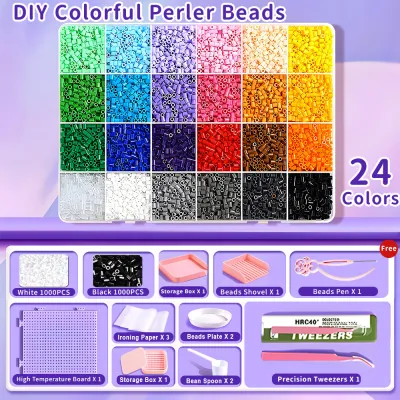
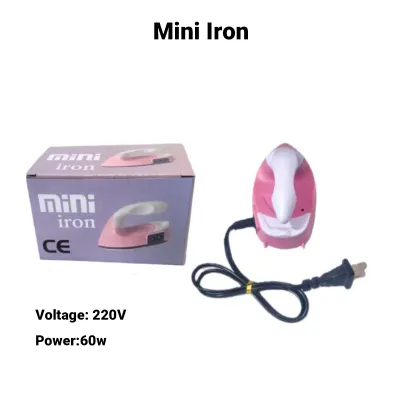
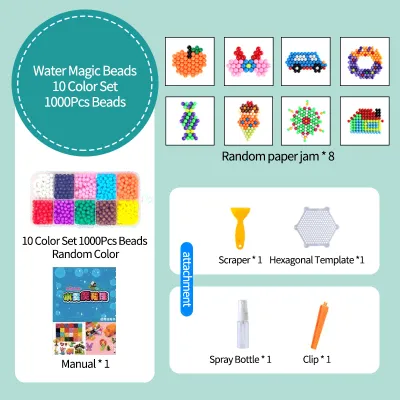
Prices are valid at publication and may change. Please refer to the product page for the latest price.
In contrast, children’s fuse bead kits are structured around shorter attention spans, typically offering projects that can be completed within 30 to 60 minutes. These kits focus on immediate results and play value. If a child is forced to work on a project that takes days to complete, frustration often sets in, leading to abandoned boards and spilled beads.
You can use a simple self-check framework to determine which tier suits your current mindset. If you experience irritation when dealing with highly meticulous tasks, or if you prefer to see a finished product on your shelf by the end of the afternoon, a standard beginner or kids’ kit is the more practical choice. However, if you enjoy the challenge of pixel-art precision, find satisfaction in delayed gratification, and want to create highly detailed display pieces, an adult-focused kit will meet your needs.
In terms of budget, entry-level kids’ kits in the Philippines are widely available for around ₱200 to ₱500, making them low-risk trials. Comprehensive adult kits featuring thousands of mini beads, specialized tweezers, and sorting cases typically range from ₱1,500 to ₱3,000 or more, reflecting their status as a dedicated hobby investment.
Compare Bead Sizes and Handling Requirements
The physical size of the beads is the most significant differentiator between adult and kids’ kits, directly impacting how you handle the materials and the physical comfort of your crafting sessions.

- Mini Beads (approx. 2.6mm): These are the standard for adult kits. Because of their tiny footprint, they allow for incredibly detailed, high-resolution designs, much like individual pixels on a screen.
- Standard/Midi Beads (approx. 5mm): Found in beginner and older children's kits, these are the most common size. They are large enough to be placed by hand but small enough to allow for recognizable shapes.
- Maxi Beads (approx. 10mm): Designed specifically for toddlers and young children, these oversized beads are easy to grasp and help develop basic hand-eye coordination.
Handling mini beads requires a high level of manual dexterity. You cannot place 2.6mm beads reliably with your bare fingers; you must use fine-tip metal tweezers to pick up and position each piece on the pegboard. This level of precision can lead to physical strain if you are unprepared. Eye strain is a common issue during extended sessions, making a well-lit workspace or a dedicated magnifying lamp highly beneficial.
Environmental factors also play a role in how these materials behave. In warm, tropical climates like the Philippines, high humidity can cause hands to perspire slightly. Sweaty fingers make handling tiny plastic cylinders incredibly difficult, as the beads tend to stick to the skin or slip out of alignment. Using high-quality tweezers and working in a cool, well-ventilated space helps mitigate these handling challenges, ensuring that your crafting experience remains relaxing rather than frustrating.
Evaluate Design Complexity and Project Scale
The visual style and scale of the projects vary dramatically between the two tiers, reflecting the cognitive and artistic differences of their target audiences. Kids’ kits rely on simple, bold patterns with flat colors and basic geometric shapes. The templates are often printed at a one-to-one scale, allowing children to place a transparent pegboard directly over the pattern and match the colors visually. This minimizes cognitive load, making the activity intuitive and easy to follow.
Adult kits, on the other hand, embrace complex design principles. They feature intricate pixel art, realistic color shading, subtle gradients, and even three-dimensional interlocking structures. Instead of simple color matching, these projects require you to read complex grid patterns, plan color transitions, and manage a vast palette of subtle shades. A single adult project can easily require 24 to 48 different color variations to achieve realistic depth and shadow.
The sheer scale of these projects also differs. While a child’s design might fit on a single small star-shaped pegboard and require only 200 to 300 beads, an adult project can span multiple interlocking square pegboards and consume thousands of beads. Managing a project of this scale requires careful planning, as a single accidental bump to the workspace can scatter hours of un-ironed work.
Check Material Quality and Fusing Consistency
The chemical composition and manufacturing tolerances of the beads determine how evenly they melt and how durable the final piece will be. Most fuse beads are made from either Polyethylene (PE) or Ethylene-Vinyl Acetate (EVA).
- PE Beads: These are harder and yield a more rigid, durable finished piece. They require slightly higher, more precise ironing temperatures to melt evenly.
- EVA Beads: These are softer, more flexible, and melt at a slightly lower temperature. They are highly forgiving for beginners but can sometimes result in a more pliable finished product.
Adult-grade kits prioritize high manufacturing consistency. The beads are cut to highly uniform heights and wall thicknesses. This uniformity is critical: if some beads are even a fraction of a millimeter shorter than others, the hot iron will not make contact with them, resulting in weak joints and a project that falls apart after ironing. Kids’ kits, while safe and non-toxic, sometimes exhibit wider manufacturing tolerances, which can lead to uneven melting or warped edges if the heat is not carefully monitored.
Before starting a large project, always perform a test melt with a few scrap beads on a small board. This allows you to verify the melting characteristics of your specific bead batch. Note whether the manufacturer recommends a “soft fuse” (where the beads are lightly joined, preserving the open center holes) or a “hard fuse” (where the beads are melted completely flat to create a solid, smooth surface). Additionally, because high ambient humidity can affect how plastics cool and contract, always place a heavy book over your ironed project while it cools to prevent the edges from warping upward.
Review Tool Requirements and Workspace Setup
The tools included in a kit often indicate its target audience and quality tier. Kids’ kits are self-contained, usually including chunky plastic tweezers, basic pre-shaped pegboards, and small sheets of thin ironing paper. These are sufficient for simple, low-stakes crafting on a dining room table.
To successfully complete an adult-tier project, you will likely need to upgrade your tools and establish a dedicated workspace.
- Tweezers: Replace basic plastic tweezers with fine-tip, anti-static metal tweezers. These allow for precise placement of 2.6mm beads without disturbing adjacent pieces.
- Ironing Paper: Opt for high-quality silicone-coated parchment paper or specialized ironing film rather than standard wax paper. Wax paper can leave a cloudy residue on your beads and damage your iron.
- The Iron: A dry household iron with an adjustable, reliable temperature dial is essential. Avoid using steam settings, as moisture trapped in the steam vents can cause uneven heating and ruin the plastic bond.
- Storage and Organization: Sorting is key when working with dozens of color shades. Adult crafters require multi-compartment storage boxes with secure latches. Spilling a container of sorted mini beads is a major setback that can take hours to rectify.
Frequently Asked Questions (FAQ)
Can adults use kids' fuse bead kits for practice or relaxation?
Yes, adults can absolutely use kids’ or standard-sized (5mm) fuse bead kits. Many adult crafters enjoy working with standard 5mm beads because they are much easier on the eyes and hands, making for a faster, lower-stress crafting experience. While you will lose the high-resolution detail that 2.6mm mini beads provide, standard beads are excellent for creating bold, retro 8-bit style coasters, keychains, and flat wall art. They offer a great way to practice your ironing technique and experiment with color combinations before committing to the meticulous demands of a micro-bead project.
Are mini fuse beads from adult kits safe for young children?
No, mini fuse beads (2.6mm) are strictly unsafe for young children. Due to their incredibly small size, they present a severe choking hazard and should be kept far out of reach of toddlers and pets. Most manufacturers place a strict age limit of 12+ or 14+ on mini bead kits. Parents should always check the age grading on the packaging before purchasing. If older children are working with mini beads, close adult supervision is highly recommended to ensure safety and to assist with the ironing process, which requires handling a hot household appliance.
Community discussion
Share your experience or ask a question. Comments are reviewed before publication.