
Air dry clay is a versatile, user-friendly modeling material that cures and hardens naturally at room temperature without the need for a kiln or oven. Unlike traditional pottery clay that requires extreme heat to vitrify, or polymer clay that must be baked in a home oven, air dry clay relies on the simple evaporation of water to achieve its solid state. This accessibility makes it a favorite for hobbyists, students, and professional crafters looking to create decorative sculptures, school projects, and quick prototypes without specialized equipment.
Over the years, this material has evolved from basic paper pulp mixtures to sophisticated formulas that mimic ceramic finishes. Whether you are looking to sculpt a detailed figurine, craft custom home decor, or introduce children to the joy of sculpting, understanding the unique characteristics of this clay will help you decide if it is the right medium for your creative goals.
What Is Air Dry Clay and How Does It Cure?
To understand how air dry clay functions, it helps to look at its composition. This material is typically water-based and formulated with a mix of binders, fillers, and fibers. Depending on the specific product, the base composition can vary. Paper-based air dry clays are exceptionally lightweight and slightly fibrous, making them excellent for large, lightweight structures. Resin-based options, often referred to as cold porcelain, dry to a semi-translucent, highly durable finish. Earth-based or clay-based varieties contain actual natural clay minerals, providing a realistic earthy texture and a feel that closely resembles traditional pottery clay.
Products mentioned in this guide
![Jovi Air Dry Clay White 500g [2285]](https://img.lazcdn.com/g/p/8b82dde3d75fbe85d2fefe503294dab3.jpg_400x400q80.jpg_.webp)
![Jovi Air Dry Clay - White 1000g [2286]](https://img.lazcdn.com/g/p/db9cc8e716da206931c23fd9db9fb7d8.jpg_400x400q80.jpg_.webp)
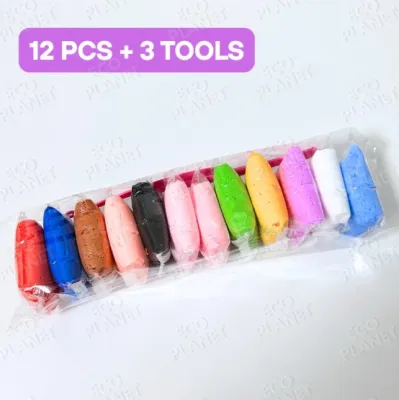
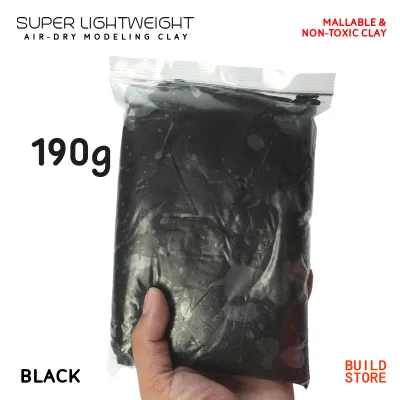
Prices are valid at publication and may change. Please refer to the product page for the latest price.
The curing process of air dry clay is entirely physical rather than chemical. When you open a package of air dry clay, it is highly malleable because of its water content. As you work with it and expose it to the air, the water begins to evaporate. This evaporation causes the clay particles to pack tightly together, ultimately hardening the structure. Because it relies on natural air exposure, you do not need to invest in an expensive high-temperature kiln or run a home oven. This lack of heat requirements makes it an incredibly safe and accessible option for home crafting, classroom settings, and beginner sculptors who want to explore three-dimensional art without a steep financial barrier.
Key Properties and Crafting Limitations to Know
Working with air dry clay requires an understanding of its unique handling properties and physical limitations. During the sculpting phase, you will find that the clay is highly workable and smooth, though it can begin to dry out if left exposed to the air for too long. A key advantage of this material is its ability to be slightly rehydrated. If you notice the surface cracking or becoming too stiff while you are shaping it, you can lightly mist it with water or work a few drops into the clay with your fingers to restore its elasticity. However, adding too much water can make the clay slimy and weaken its structural integrity, so moderation is essential.

The drying speed of air dry clay is highly variable and depends on several environmental factors. The thickness of your piece, the ambient room temperature, and the local humidity levels all play a critical role in how long the curing process takes. In high-humidity tropical environments, such as the Philippines, the evaporation process naturally slows down. During the wet season, a medium-sized sculpture that might dry in 24 hours in a dry climate can easily take 48 to 72 hours to cure completely. To prevent mold growth and ensure a thorough cure in humid conditions, you should place your pieces in a well-ventilated area with consistent airflow, perhaps near an electric fan, rather than in a closed cupboard.
Another critical property of air dry clay is its natural porosity. Because the clay hardens simply by losing water, it remains highly porous once dry. Unsealed air dry clay is not waterproof and will readily reabsorb moisture from the air or direct contact, which can cause the piece to soften, warp, or completely disintegrate over time. This makes sealing a mandatory step for any piece you wish to preserve.
Additionally, you must account for shrinkage. As the water evaporates, the volume of the clay decreases, typically shrinking by about 5% to 15% depending on the brand and composition. This shrinkage can lead to warping or cracking, especially if the clay is applied too thickly over a rigid, non-yielding armature like metal wire or glass, or if different parts of the sculpture dry at different rates.
Air Dry Clay vs. Polymer Clay: Which Fits Your Project?
When deciding on a clay for home crafting, the choice often comes down to air dry clay versus polymer clay. Understanding their key differences will prevent project failures and help you achieve the desired finish.
The most fundamental difference lies in the curing process. While air dry clay cures through simple moisture evaporation at room temperature, polymer clay is a synthetic material made of polyvinyl chloride (PVC) binders and liquid plasticizers. It does not dry out when exposed to air and remains completely workable indefinitely until it is baked in a standard home oven or toaster oven. This baking process, typically done at low temperatures between 110°C and 135°C, triggers a chemical reaction that fuses the plastic particles together into a solid state.
In terms of durability and flexibility, polymer clay is the clear winner for small, high-stress items. Once baked, polymer clay is highly durable, slightly flexible, and naturally water-resistant. It can withstand drops and light handling without breaking. Air dry clay, on the other hand, cures to a rigid, somewhat brittle state. It lacks the internal plastic matrix of polymer clay, making it prone to snapping or chipping if dropped or subjected to mechanical stress.
When it comes to detail and finishing, the two materials behave quite differently. Polymer clay holds incredibly fine details, sharp edges, and intricate patterns without losing its shape, and it experiences virtually zero shrinkage during the baking process. Air dry clay has a softer, more organic texture. As it dries and shrinks, very fine details can soften or warp slightly. To achieve a perfectly smooth finish with air dry clay, you will often need to wait until the piece is fully dry and then use fine-grit sandpaper to smooth out imperfections, followed by a protective sealant.
These characteristics dictate their best use cases. Polymer clay is the ideal choice for creating delicate jewelry like earrings, detailed keychains, miniature figurines, and intricate charms. Its strength and water resistance ensure these wearable items last. Air dry clay is far better suited for larger-scale sculptures, decorative bowls, school dioramas, relief tiles, and quick design prototypes. Its lower cost per gram and ease of use over large volumes make it highly practical for substantial projects where baking in a small home oven would be impossible.
Air Dry Clay vs. Oven-Bake and Traditional Pottery Clays
To broaden your understanding of the modeling clay landscape, it is helpful to compare air dry clay with other specialized materials, such as industrial oven-bake clays and traditional pottery clays.
Differences from Oven-Bake Modeling Clays
Oven-bake modeling clays—often used by professional sculptors, industrial designers, and prototype modelers—differ significantly from standard air dry clay. While air dry clay relies on water loss, these professional oven-bake clays (which include specific polymer-based formulas and wax-clay hybrids) cure through heat-activated chemical reactions. They require a domestic oven to achieve their final hardness. Once cured, oven-bake clays offer superior structural integrity, impact resistance, and tensile strength. This makes them highly suitable for detailed action figures, mechanical prototypes, and items that require structural load-bearing capabilities that air dry clay simply cannot support.
Differences from Traditional Kiln-Fired Pottery
Traditional pottery clay is an entirely different class of material derived from natural earth minerals. Unlike air dry clay, which is designed for convenience, traditional pottery clay must be fired in a specialized, high-temperature kiln reaching temperatures between 1,000°C and 1,300°C. This extreme heat causes a chemical transformation called vitrification, where the silica in the clay melts and fuses into a glass-like, non-porous structure. Traditional pottery also requires specific mineral glazes that are melted onto the surface during a second firing. This process makes the final ceramic piece completely waterproof, highly durable, and chemically stable.
It is critical to understand the safety and functional boundaries here. Air dry clay is strictly for decorative, non-functional use. It can never be fired in a kiln, as the rapid moisture loss and organic binders would cause it to explode or catch fire. Furthermore, air dry clay is never food-safe, even if you apply multiple layers of commercial varnish or epoxy resin. It should never be used to make functional mugs, plates, or bowls that will come into contact with food or drink.
Quick Comparison Matrix
To help you compare these materials at a glance, the following table summarizes the key differences across their essential practical dimensions:
| Clay Type | Curing Method | Equipment Needed | Water Resistance (Post-Cure) | Food Safety |
|---|---|---|---|---|
| Air Dry Clay | Room temperature evaporation | None (air exposure) | Low (requires sealant) | Non-food safe (decorative only) |
| Polymer Clay | Low-temperature baking | Home oven / toaster oven | High (naturally water-resistant) | Non-food safe (decorative only) |
| Oven-Bake Clay | Moderate-temperature baking | Home oven | High (naturally water-resistant) | Non-food safe (decorative only) |
| Traditional Pottery | High-temperature kiln firing | Ceramic kiln | High (when glazed and vitrified) | Food-safe (when using food-safe glazes) |
How to Choose the Right Clay for Your Crafting Needs
Selecting the correct clay depends heavily on your project goals, the age of the crafters, and the intended use of the finished piece. By analyzing your specific scenario, you can avoid material failures and ensure a successful crafting experience.
For children’s crafts, classroom activities, and large school projects, air dry clay is almost always the best choice. Its non-toxic formulation, ease of clean-up with water, and lack of hot ovens or sharp tools make it exceptionally safe for young hands. It allows kids to explore sculpting without the risk of burns or chemical exposure. It is also highly economical when you need to purchase bulk quantities for a whole classroom or a massive diorama project.
If you are planning to make wearable items, delicate jewelry, or highly intricate miniatures, you should choose polymer clay. The strength of polymer clay ensures that thin parts—such as earring loops, miniature flower petals, or delicate limbs on a figurine—will not snap off during daily wear or handling. Its water resistance also means that sweat, rain, or accidental splashes will not ruin your hard work.
For functional tableware like mugs, plates, bowls, or plant pots that will hold standing water, traditional pottery clay is your only viable option. You must accept the trade-off of finding a local ceramic studio or community kiln to fire your pieces. Do not attempt to use air dry clay or polymer clay for these items, as they cannot withstand the moisture, washing, and heat of functional kitchenware.
Regardless of the clay you choose, always verify the product specifications on the packaging. Look for safety certifications, such as the AP (Approved Product) non-toxic seal from the Art and Creative Materials Institute (ACMI), particularly when purchasing materials for children or prolonged skin contact.
Essential Tips for Shaping, Drying, and Sealing
To get the best results from your air dry clay projects, following proper handling, preservation, and finishing techniques is essential.
Proper storage is your first line of defense against wasted material. Because air dry clay begins to cure the moment it is exposed to air, you must store any unused portion immediately. Wrap the leftover clay tightly in plastic cling wrap, ensuring there are no air pockets, and place it inside an airtight container or a heavy-duty zip-top bag. Adding a damp paper towel or a light mist of water inside the bag can help maintain the humidity level and keep the clay soft for your next crafting session.
When it comes to drying, patience is key. To ensure your sculpture dries evenly and does not warp, place it on a non-stick surface, such as parchment paper or a silicone mat, and turn the piece periodically. This allows air to reach all sides, including the bottom. Never attempt to speed up the drying process using direct heat sources like hair dryers, kitchen ovens, microwave ovens, or direct, harsh sunlight. Forcing the moisture out too quickly causes the outer layer to shrink and harden while the interior is still wet, leading to severe surface cracking and structural warping.
Once your piece is completely dry—which you can verify by checking if it feels room temperature and has turned a uniform, lighter color—you must seal it for protection. Applying a high-quality sealant is necessary to block moisture, dust, and oils from your hands. You can use acrylic varnish, polyurethane, or clear epoxy resin. Before coating your finished masterpiece, always conduct a compatibility test by applying your chosen sealant to a small, dried scrap piece of the same clay. This ensures the sealant dries clear, adheres well, and does not react chemically or soften the clay.
Frequently Asked Questions (FAQ)
Can you make air dry clay food-safe for mugs or plates?
No, you cannot make air dry clay food-safe, regardless of the sealant you use. Air dry clay is inherently porous and lacks the chemical vitrification that traditional kiln-fired ceramics undergo. Even if you coat the piece with food-grade epoxy resin, the sealant can develop microscopic cracks over time through washing or temperature changes. Moisture and food particles will seep into the porous clay underneath, creating a breeding ground for bacteria. Additionally, air dry clay cannot withstand the heat of hot beverages or the mechanical washing required for tableware. It should strictly be reserved for decorative items, like trinket dishes, ring holders, and wall art.
Why does air dry clay crack during the drying process?
Cracking during the drying process is almost always caused by uneven shrinkage or rapid moisture loss. If one part of your sculpture is significantly thicker than another, the thinner section will dry and shrink first, pulling against the wet, unshrunk thicker section and causing cracks. To prevent this, aim for a uniform thickness throughout your piece, or use a lightweight core material like aluminum foil to fill out thick areas. Cracking also occurs when you try to dry the clay too quickly with artificial heat or when you attach separate pieces of clay without proper joining techniques. Always score (scratch) both joining surfaces and apply a small amount of water or clay slip to create a strong, unified bond.
Community discussion
Share your experience or ask a question. Comments are reviewed before publication.