
Choosing the right paper for your creative projects is just as important as selecting the markers themselves. If you have ever watched a vibrant illustration ruin the next three pages of your sketchbook, you already know that not all paper is created equal. When comparing marker pads for alcohol markers versus brush pens, there is no single option that excels at both. This is because alcohol-based inks and water-based brush inks behave in fundamentally different ways when they touch paper fibers.
To get the best results, you must balance two competing needs. Alcohol markers require specialized bleed-proof coatings or significant paper thickness to prevent their highly fluid, solvent-based inks from soaking through the sheet. On the other hand, brush pens—which typically use water-based or pigment-based inks—demand an ultra-smooth, non-abrasive surface to protect their delicate, flexible nylon or felt tips from fraying. The core trade-off is clear: specialized, coated marker pads are excellent at stopping alcohol ink from bleeding, but their non-porous surfaces can cause water-based brush pen inks to pool, smear, and dry slowly. Conversely, thick, high-GSM smooth papers protect brush nibs and absorb water-based inks beautifully, but they will easily let alcohol inks bleed through to the other side unless a protective barrier is used.
Understanding Ink and Paper Interaction
To understand why one pad cannot easily serve both mediums, we must look at how these inks interact with paper fibers on a microscopic level. Alcohol markers utilize an alcohol solvent to carry color pigments or dyes. Alcohol has a much lower surface tension and a faster evaporation rate than water. When applied to paper, the alcohol solvent rapidly spreads through capillary action, pulling the dye along with it. If the paper fibers are highly porous and untreated, the ink will quickly penetrate the entire thickness of the sheet and bleed onto the surface below. To combat this, paper designed specifically for alcohol markers is treated with a specialized barrier or sizing on the reverse side, which stops the solvent from passing through, keeping the color locked on the top surface.
Products mentioned in this guide
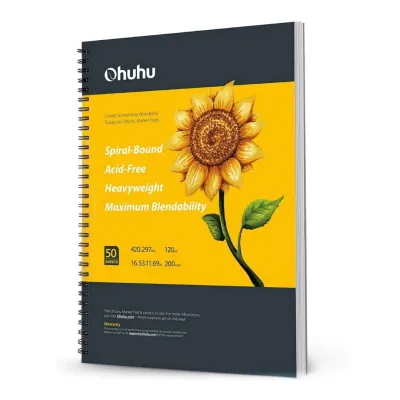
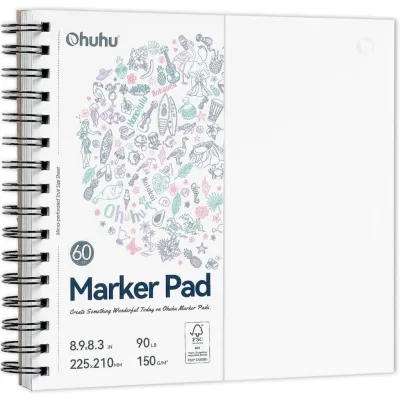
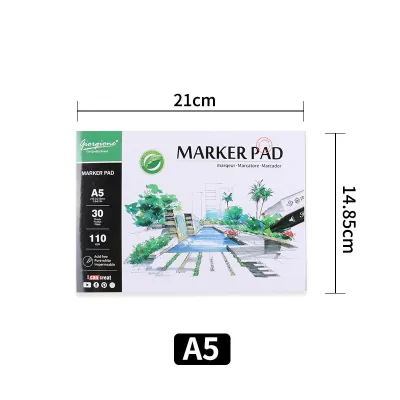
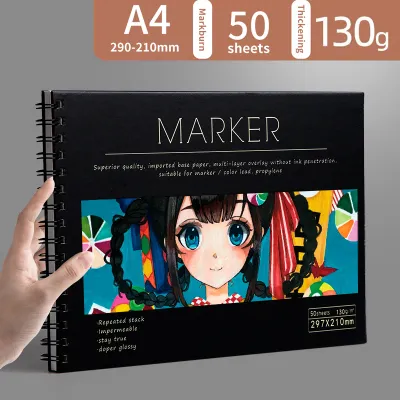
Prices are valid at publication and may change. Please refer to the product page for the latest price.
In contrast, brush pens usually contain water-based or pigment-based inks. Water has a higher surface tension and evaporates much more slowly than alcohol. When you write or draw with a brush pen, the ink is designed to sit slightly on top of the paper before gradually absorbing into the fibers. If the paper is too absorbent or lacks proper sizing, the water-based ink will spread outward along the fibers, a frustrating phenomenon known as feathering, which ruins clean lines. Furthermore, brush pens rely on flexible, delicate tips made of felt, nylon, or natural hair. If the paper surface has even a slight roughness or “tooth,” the friction from repetitive strokes will quickly fray these tips, permanently destroying the pen’s ability to create fine lines.
Key Comparison Dimensions for Marker Pads
When shopping for a marker pad at a local stationery store or an online marketplace, you cannot rely on the cover design alone. To find a pad that matches your specific tools, you must evaluate three primary physical dimensions: the paper’s coating, its weight (measured in grams per square meter, or GSM), and its surface texture.

Bleed Resistance and Paper Coating
The presence of a bleed-proof coating is the defining characteristic of dedicated alcohol marker paper. Manufacturers apply a micro-thin, non-porous barrier to the back of each sheet. This barrier acts as a physical shield, stopping the highly penetrative alcohol solvent from seeping through to the next page. Because of this coating, these papers can be incredibly thin—often resembling tracing paper—while remaining completely impervious to bleed-through.
However, this protective coating presents a major challenge for water-based brush pens. Because the barrier prevents liquid from penetrating the paper, water-based inks cannot absorb properly. Instead of drying quickly, the ink pools on the surface of the coated paper. This leads to extremely long drying times, which are exacerbated by the tropical humidity of the Philippines. If you accidentally brush your hand across the page, the pooled ink will smear instantly. Additionally, as the water slowly evaporates from the surface, it can leave behind uneven, patchy pools of color rather than the smooth, seamless gradients that brush pens are known for.
Paper Weight (GSM) and Thickness
Paper weight is measured in GSM, and it plays a vital role in how a pad handles heavy ink application. Dedicated, coated alcohol marker pads are surprisingly light, typically ranging from 50 to 70 GSM. Despite their thinness, their chemical coating prevents bleed-through. However, if you are using uncoated paper, thickness is your primary defense against ink seepage. Uncoated sketchpads, drawing pads, and mixed-media papers generally range from 120 to over 200 GSM.
It is a common misconception that a high GSM rating automatically makes a paper bleed-proof for alcohol markers. While a thick 150 GSM uncoated sheet can absorb more ink than a thin 70 GSM uncoated sheet, alcohol solvent will eventually saturate the fibers and bleed through if you apply multiple layers or blend colors. The extra thickness merely acts as a temporary sponge, delaying the bleed-through rather than stopping it chemically. For brush pens, however, a medium-to-high GSM (around 120 to 160 GSM) is often ideal. It provides enough structural integrity to handle the moisture of water-based inks without warping or buckling, which is a frequent issue with thin papers.
Surface Texture and Nib Protection
The texture of a paper, often referred to as its “tooth,” determines how much friction your pen tip encounters. For brush pens, texture is the single most critical factor for tool longevity. Rough papers, such as cold-press watercolor paper or heavily textured sketchbooks, act like fine sandpaper on delicate brush tips. Within just a few drawing sessions, the friction will cause the nylon or felt fibers of your brush pen to split and fray, rendering the pen useless for detailed calligraphy or fine line work.
To protect your brush pens, you must seek out paper with an ultra-smooth finish, often labeled as “smooth,” “satin,” or “hot-press.” Specialized alcohol marker pads are almost always exceptionally smooth, which makes them highly safe for brush pen nibs from a physical wear perspective. However, as noted, the lack of absorbency due to the bleed-proof coating on these pads still makes them less than ideal for water-based ink application. Therefore, the goal is to find a paper that is smooth enough to protect brush tips but absorbent enough to let water-based inks dry cleanly without pooling.
How to Evaluate a Marker Pad Before Buying
When browsing options in a stationery shop or on an online marketplace, you can perform a few quick checks to ensure you are buying the right pad. First, read the product label carefully for specific manufacturing terms. Look for keywords like “bleed-proof,” “barrier paper,” or “for alcohol markers” if you need a pad dedicated to solvent-based coloring. If your primary tools are brush pens, look for terms such as “smooth finish,” “satin,” “bristol smooth,” or “hot-press.”
Second, check the GSM rating on the cover. If the pad is thin (50 to 80 GSM) and does not explicitly state that it is “bleed-proof” or “coated,” assume that alcohol markers will bleed through instantly and that water-based brush pens may warp the paper. If the GSM is not listed at all, it is safest to treat the paper as standard, low-weight utility paper and plan to use a protective backing sheet.
Third, consider the binding style of the pad. Glued-top pads allow you to easily tear out sheets, which is highly convenient if you want to work on a flat surface or scan your artwork. Spiral-bound pads keep your pages secure, but they can make it slightly more difficult to place a protective scrap sheet directly underneath your working page. If you choose a spiral pad, ensure the binding is large enough to accommodate a thick piece of cardstock or a plastic sheet slipped behind the active page to protect the sheets below.
Decision Framework: Which Pad Should You Buy?
To make the right purchase, you must evaluate your primary creative medium and workflow. If your work relies almost exclusively on alcohol markers, your best choice is a specialized, coated marker pad. These pads are engineered to keep your colors vibrant on the surface, allow for seamless blending without excessive ink consumption, and guarantee that the pages underneath remain pristine. While you cannot easily use brush pens on this paper due to smearing, it provides the absolute best performance for solvent-based markers.
If your primary tools are water-based brush pens, dual-tip brush markers, or calligraphy pens, you should choose a high-GSM, smooth-finish drawing pad, bristol smooth pad, or mixed-media pad (ideally between 120 and 160 GSM). This paper provides the perfect balance: it is smooth enough to prevent your delicate brush tips from fraying, yet absorbent enough to let water-based inks dry quickly without pooling or smudging.
If you plan to use both mediums equally, or if you enjoy combining alcohol markers and brush pens in the same piece of art, you have two practical paths. The first is to maintain two separate pads—one coated pad for your alcohol marker illustrations and one smooth, heavy-weight pad for your brush lettering and watercolor-style work. The second path is to use a high-quality, smooth mixed-media pad as a compromise. When using alcohol markers on this mixed-media paper, you must accept that the ink will bleed through the page, meaning you must place a thick backing sheet underneath to protect the rest of the pad. However, the smooth surface will protect your brush pen tips, and the paper’s absorbency will prevent your water-based inks from smearing.
Practical Tips to Prevent Bleeding and Wasted Pages
Regardless of which marker pad you choose, adopting a few smart habits will protect your artwork and save you money on wasted supplies. First, always place a disposable backing sheet—such as a sheet of heavy cardstock, a plastic writing board, or a piece of scrap paper—directly beneath the page you are working on. Even high-quality papers can experience minor bleed-through under heavy ink saturation, and a simple backing sheet provides cheap, reliable insurance for the rest of your pad.
Second, control your ink saturation by building up colors gradually. Alcohol markers work by dissolving and blending previous layers, but flooding the paper with too much solvent all at once will overwhelm the paper’s fibers and cause the ink to spread laterally beyond your lines. Apply light, controlled layers and let the solvent evaporate slightly before adding more color.
Finally, pay close attention to drying times, especially in humid tropical environments. If you are using brush pens on smooth or semi-coated papers, give the ink a few minutes to cure completely before touching the page or erasing pencil guidelines. A simple test on a scrap piece of the same paper can help you verify the exact drying speed of your specific ink and paper combination before you begin your final piece.
Frequently Asked Questions (FAQ)
Can I use regular printer paper for alcohol markers or brush pens?
Regular printer paper, which typically weighs between 70 and 80 GSM, is highly unsuitable for both mediums. It lacks the specialized backing coating required to stop alcohol markers from bleeding, which means the solvent will instantly soak through and stain your desk. At the same time, printer paper is highly absorbent and has a relatively rough texture on a microscopic scale. This causes water-based brush pen ink to feather rapidly, creating fuzzy, bleeding lines, while the abrasive surface quickly frays your delicate brush tips. Investing in a proper marker pad will save your pens and prevent wasted ink.
Does the brand of the marker pad matter as much as the paper type?
The physical specifications of the paper—such as its coating, weight (GSM), and surface smoothness—are far more important than the brand name printed on the cover. While well-known stationery brands often offer consistent quality control, an unbranded or lesser-known pad that features a true bleed-proof coating or an ultra-smooth, high-GSM finish will perform beautifully. Instead of spending ₱500 or more on a premium pad solely for a brand name, learn to read the paper specifications on the label and conduct a small trial stroke in the corner of the page to verify how your specific markers interact with the surface.
Community discussion
Share your experience or ask a question. Comments are reviewed before publication.