
Choosing between an alcohol-based and a water-based markers set depends on your creative goals, paper choices, and working environment. If you want to create seamless, streak-free gradients, professional illustrations, or multi-layered designs, an alcohol-based markers set is highly suitable. However, if you are focused on bullet journaling, calligraphy, school projects, or working in a shared space where strong odors are a concern, a water-based markers set offers a safer, more versatile, and budget-friendly alternative. In tropical climates like the Philippines, where high humidity can affect how ink dries and behaves on paper, understanding these core differences is essential to getting the most out of your stationery investment.
Core Differences in Ink Composition and Behavior
Alcohol markers use ethanol or isopropyl alcohol as the solvent carrier for dyes. This solvent evaporates incredibly fast. In warm, humid environments, this rapid evaporation is highly consistent, allowing the pigment to settle quickly into the paper fibers.
Water-based markers use water and sometimes glycerin as the carrier. Water evaporates much slower, meaning the ink remains wet on the surface of the paper for a longer period.
Products mentioned in this guide
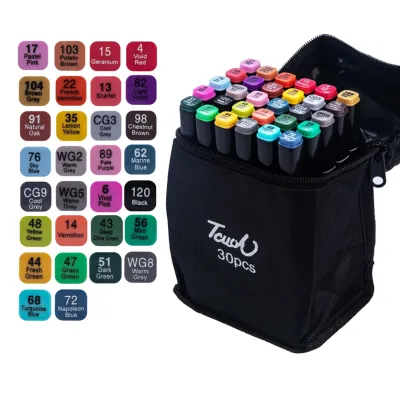
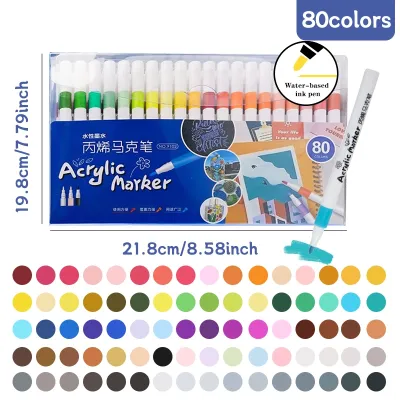
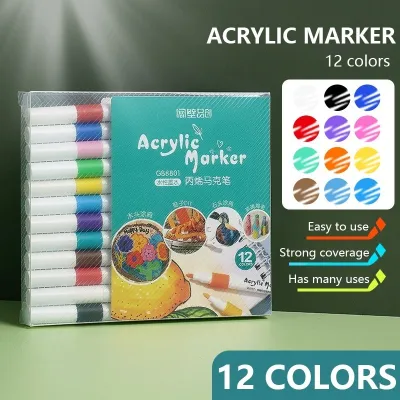
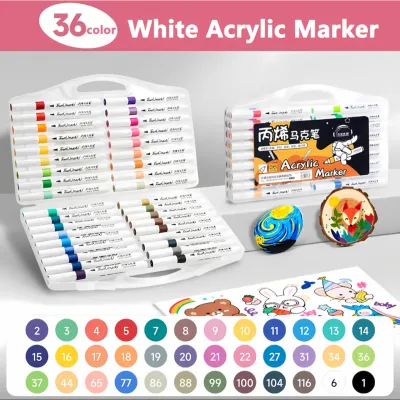
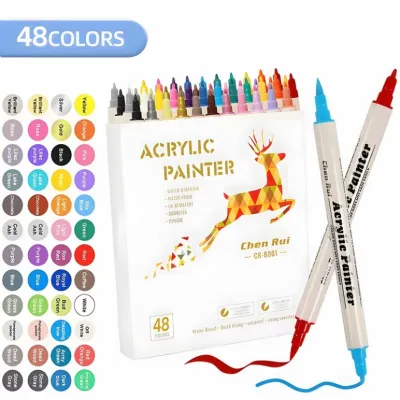
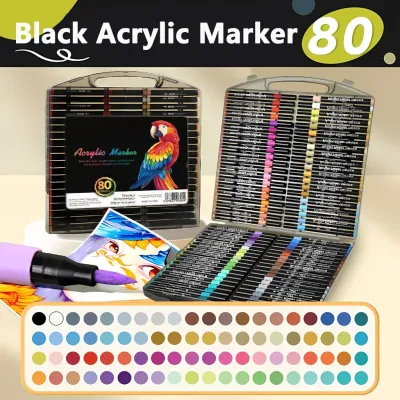
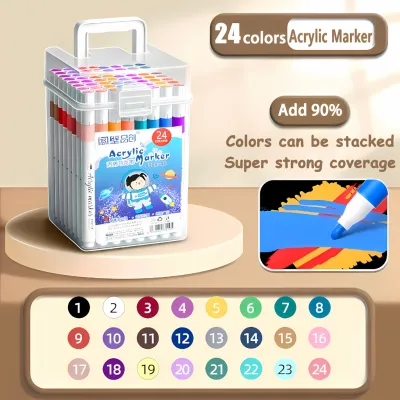
Prices are valid at publication and may change. Please refer to the product page for the latest price.
Because alcohol ink dries almost instantly, you can apply overlapping strokes without creating harsh, visible lines where the wet and dry ink meet. This results in smooth, flat, print-like color fills. Water-based ink, on the other hand, dries slowly enough that the edges of your strokes begin to dry before you can finish filling an area. This leads to visible overlap lines, often called streaking.
Additionally, because water-based ink reactivates when wet, going over the same area multiple times can oversaturate the paper, causing it to warp or pill. The rapid, aggressive penetration of alcohol solvents means the ink will easily pass through the back of standard paper. It is designed to saturate the fibers completely, whereas water-based ink tends to sit on top of the paper fibers first, only bleeding through if the paper is thin or if you apply too many layers in one spot.
Performance on Different Paper Types and Surfaces
Standard copy paper (usually 70 to 80 GSM) and standard cardstock react very differently to these inks. If you use an alcohol markers set on standard copy paper, the ink will bleed through to the next page almost instantly, and the edges of your lines will feather, spreading outward uncontrollably. Water-based markers perform much better on standard copy paper for simple writing or light coloring, though heavy layering will still cause the paper to warp or tear.

To get the best results from alcohol markers, specialty marker paper or bleed-proof pads are highly recommended. These papers are typically coated on the back to prevent ink from passing through, or they are made of dense, smooth fibers that allow the alcohol ink to sit on the surface just long enough to blend before drying. This preserves your marker nibs from wearing down prematurely and gives you precise control over the ink’s spread.
When working on non-porous surfaces like plastic, glass, metal, or glazed ceramics, you must check the manufacturer’s labels. Alcohol-based ink is permanent on many of these surfaces but can be wiped away with rubbing alcohol. Water-based ink will bead up on non-porous surfaces unless the marker is specifically formulated as an acrylic or multi-surface paint marker. Always perform a small patch test on an inconspicuous area to verify adhesion and drying behavior.
Blending, Layering, and Artistic Techniques
Blending is where alcohol markers perform exceptionally well. Because the alcohol solvent reactivates the dry ink layers beneath it without damaging the paper fibers, you can create smooth gradients between different shades. You can blend a dark blue into a light blue by working while the ink is wet or by using a colorless blender marker.
Water-based markers make smooth gradients much harder to achieve. Attempting to blend them by rubbing the paper repeatedly will cause the paper fibers to break down, leading to pilling, where small clumps of paper tear off.
Once alcohol ink dries, it is permanent and water-resistant. You can layer other colors on top to build depth, shadows, or color complexity without lifting the original layer. With water-based markers, adding a new wet layer on top of a dry layer will reactivate the dry ink. While this can be used intentionally for artistic effects, it makes clean, crisp layering very difficult to control.
However, water-based markers offer a unique advantage for watercolor effects. By scribbling a water-based marker onto a plastic palette, you can pick up the pigment with a wet paintbrush to create soft washes on watercolor paper. This dual-use capability makes water-based sets highly popular for mixed-media artists and hobbyists who enjoy traditional painting techniques without the mess of actual paint tubes.
Odor, Safety, and Workspace Considerations
The chemical composition of alcohol markers means they release volatile organic compounds (VOCs) as the solvent evaporates. This results in a strong, distinct chemical odor. If you are working with a large alcohol markers set for extended periods, you must ensure your workspace is well-ventilated. In tropical areas, opening windows or using an exhaust fan is highly recommended to keep the air moving and prevent discomfort from the fumes.
For children, school classrooms, and shared household spaces, water-based markers are the standard. They are virtually odorless, non-toxic, and wash out of most fabrics and skin easily. This makes them safe for young artists who might accidentally get ink on their hands or clothes. Alcohol markers, by contrast, are highly permanent and can stain clothing, desks, and skin, requiring rubbing alcohol or heavy scrubbing to remove.
Storage is critical to extending the lifespan of both marker types. Alcohol markers are highly volatile and will dry out quickly if the caps are not snapped on tightly. Many artists prefer double-ended markers with a brush tip on one end and a chisel tip on the other. These should always be stored horizontally. Horizontal storage ensures that the ink is distributed evenly to both nibs, preventing one end from drying out while the other becomes oversaturated. Water-based markers are slightly more forgiving but still benefit from horizontal storage to maintain consistent ink flow.
Cost, Refillability, and Long-Term Value
When building your markers set, the initial investment can vary significantly. Student-grade water-based sets are highly affordable, often costing between ₱150 and ₱500 for a decent range of colors. Professional-grade alcohol marker sets represent a much larger investment, with premium sets ranging from ₱1,500 to well over ₱5,000 depending on the number of colors and the brand.
To evaluate long-term value, check the product specifications for refillability and replaceable nibs. Many professional alcohol marker systems allow you to buy individual ink refills and replacement nibs. While the initial cost of a refillable set is higher, it is far more economical over time. Instead of buying a whole new marker when the ink runs out or the brush nib frays, you simply buy a bottle of ink or a pack of nibs to restore the marker to brand-new condition.
Most water-based marker sets are disposable. When a marker dries out or the tip frays from heavy use, you typically have to replace the entire marker or buy a new set. However, because the individual replacement cost of a water-based marker is relatively low, this disposable nature is often acceptable for casual users, students, and bullet journal enthusiasts who do not use the markers daily.
How to Choose the Right Markers Set for Your Needs
To make your final decision, apply this straightforward framework based on your primary use case, budget, and workspace:
- Choose an alcohol-based markers set if: Your primary goal is professional-grade illustration, manga drawing, character design, or realistic portraiture. You must be willing to invest in heavy, bleed-proof marker paper (usually 120 GSM or higher) and have a dedicated, well-ventilated workspace where the chemical odor will not cause issues.
- Choose a water-based markers set if: You are buying for school projects, bullet journaling, hand lettering, calligraphy, or casual coloring books. These markers are ideal if you work in shared spaces, classrooms, or around young children, and if you prefer a budget-friendly option that does not require specialized, expensive paper to perform well.
- Verify first if: You plan to use your markers for mixed-media art. If you want to combine markers with colored pencils, watercolors, or fine-liners, check the reactivity of the inks. Always test how your fine-liner reacts to both alcohol and water solvents on a scrap piece of paper before committing to a full art piece, ensuring your outlines do not smudge or bleed.
Frequently Asked Questions (FAQ)
Can I use alcohol and water-based markers together on the same project?
Yes, you can combine both marker types, but you must follow specific layering rules to avoid ruining your artwork. Always apply your alcohol-based markers first as the base layers. Once the alcohol ink is completely dry and permanent, you can layer water-based markers on top for fine details or watercolor washes. If you try to apply alcohol markers over water-based ink, the alcohol solvent will reactivate the water-based pigment, causing the colors to smudge, bleed, and potentially stain your alcohol marker’s light-colored nibs. Additionally, limit the number of wet layers to prevent the paper from pilling or tearing.
How do I revive a dried-out water-based marker?
If a water-based marker has dried out because the cap was left off, you can often revive it using a simple warm water technique. Dip the very tip of the marker nib into a small cup of warm water for just a few seconds. Afterward, cap the marker tightly and store it tip-down for a few hours to allow the moisture to draw down and redistribute through the internal ink reservoir. Note that this method only works if there is still pigment left inside the reservoir that has simply dehydrated; if the marker is completely empty of ink, it cannot be revived and must be replaced.
Community discussion
Share your experience or ask a question. Comments are reviewed before publication.