
Choosing the right coloring materials for your creative projects depends on your artistic goals, your budget, and the specific paper you plan to use. If your goal is to achieve seamless, streak-free gradients, professional-grade character illustrations, or vibrant, layered designs, alcohol-based markers are your best option. These markers use an alcohol solvent that evaporates rapidly, allowing you to blend colors smoothly without tearing the paper fibers.
Conversely, if you are working on everyday journaling, casual coloring books, or hand lettering, water-based markers are highly suitable. They do not bleed through standard paper as easily, are generally odorless, and can even be diluted with water to create beautiful watercolor effects. Before purchasing a large set, always verify your paper weight and texture, as ink behavior changes drastically across different coloring materials. In humid tropical climates, such as in the Philippines, managing drying times and paper moisture is particularly important to prevent unexpected warping or smudging.
Quick Answer: Which Marker Type Should You Choose?
To quickly identify the best marker type for your coloring projects, consider this simple decision framework based on your creative goals and paper constraints:
Products mentioned in this guide
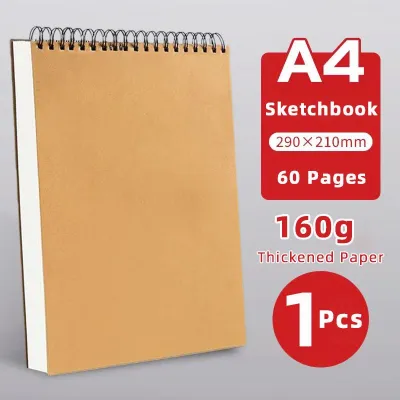
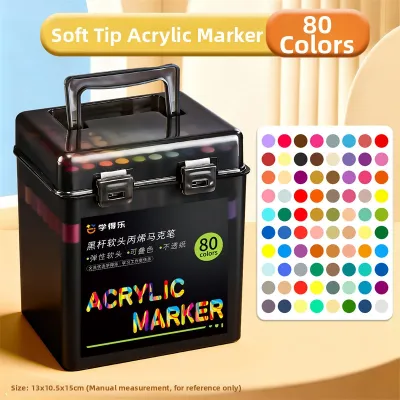
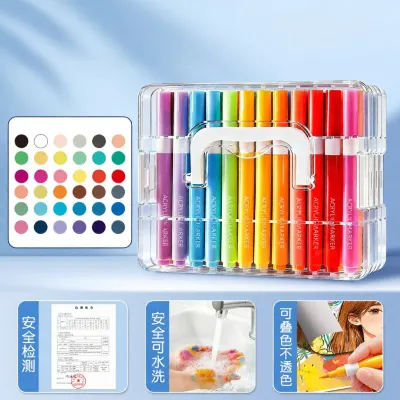
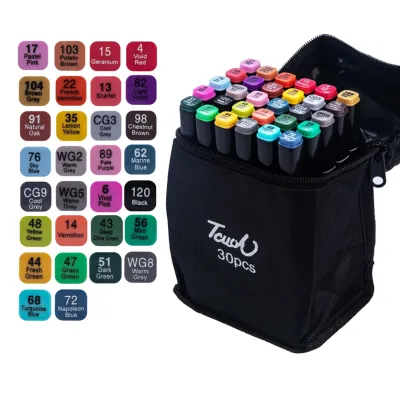
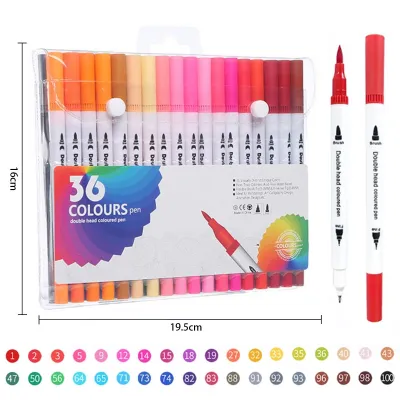

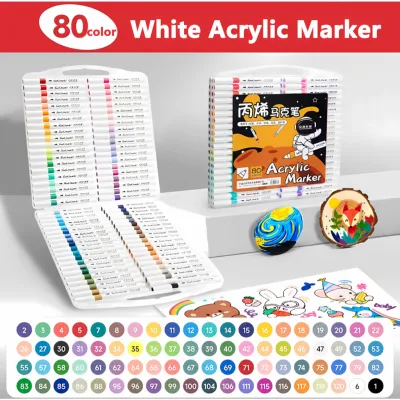
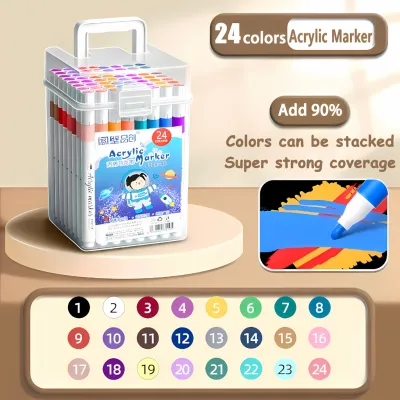
Prices are valid at publication and may change. Please refer to the product page for the latest price.
- Choose alcohol-based markers if you need seamless blending, vibrant layering, and professional illustration results on heavy-weight, coated paper.
- Choose water-based markers if you prefer watercolor effects, minimal bleed-through, and beginner-friendly coloring on standard sketchbooks or journals.
- Verify your paper weight and texture before purchasing, as ink behavior changes drastically across different coloring materials.
If you are budgeting for a starter set, basic water-based options are highly accessible, often ranging from ₱100 to ₱500 in local stationery shops, while professional alcohol-based sets represent a larger investment.
Core Differences in Ink Behavior and Blending
The fundamental difference between these two coloring materials lies in the carrier solvent of the ink, which dictates how the pigment behaves once it touches the page. Alcohol-based markers utilize fast-evaporating alcohol as the solvent. When you apply alcohol ink to paper, the solvent temporarily liquefies the underlying layers of ink, allowing the pigments to mix and create seamless gradients. This unique chemical property makes it easy to eliminate harsh brush strokes and achieve flat, print-like color fills.

Water-based markers, on the other hand, use water or a water-glycerin mix to carry the dye or pigment. Because water does not dissolve dried water-based ink as easily as alcohol dissolves alcohol ink, layering these markers often results in visible overlap lines. If you attempt to blend water-based inks by repeatedly coloring over the same spot, the water will saturate the paper fibers. This over-saturation swells the cellulose, leading to paper pilling, where tiny balls of fiber tear away from the surface, or causing the entire page to warp.
Drying speed and water resistance also vary significantly between the two types. Alcohol inks dry almost instantly upon contact with the paper, which minimizes the risk of accidental smudging during active coloring sessions. However, because they dry so quickly, you must work efficiently when blending adjacent colors. Water-based inks have a slower drying time, which is further extended in high-humidity environments. While this slower drying time gives you more time to manipulate the ink with a wet brush, it also increases the risk of smudging if your hand brushes against a freshly colored area.
Because smoothness, bleed resistance, and drying speed depend entirely on the exact combination of ink and paper, it is highly recommended to perform an observable trial. Before starting a major project, create a small color swatch on a scrap piece of your chosen paper. Observe how long the ink takes to dry completely, check if the edges of the strokes feather or spread, and test whether the ink resists light water splashes or smudges under light pressure.
Paper Compatibility and Bleed-Through Risks
The success of your coloring projects relies heavily on matching your markers with the correct paper weight, texture, and coating. Alcohol-based markers are notorious for bleeding through paper because the alcohol solvent spreads rapidly through capillary action. To control this bleed and prevent the ink from spreading uncontrollably beyond your outlines, you must use specialized, coated marker paper or heavy-weight cardstock. Coated marker papers are designed with a barrier on the back that keeps the ink on the surface, allowing for maximum blendability with minimal ink consumption. If you use standard copy paper or thin sketchbooks, the alcohol ink will quickly soak through multiple pages, potentially ruining the sheets underneath.
Water-based markers are much more forgiving on standard paper types, making them a popular choice for bullet journals and standard planners. They do not bleed through pages as aggressively as alcohol markers, provided you do not over-satur-ate the paper. However, because water-based inks rely on water, they require paper with sufficient thickness and sizing to prevent warping. Sizing is a chemical treatment applied during paper manufacturing that regulates how much liquid the paper absorbs. For light washes and casual coloring, a paper weight of at least 120 gsm is recommended, while serious watercolor-style projects require heavy-weight watercolor paper of 200 gsm to 300 gsm.
To ensure your coloring materials perform as expected, establish a simple testing protocol before committing to a final piece. Take a scrap sheet of your intended paper and draw a series of overlapping lines. Check the reverse side of the paper to observe the level of bleed-through. If you notice significant feathering—where the ink spreads outward like a spiderweb—the paper is too absorbent for alcohol markers. If the paper begins to buckle or pill after two or three passes of a water-based marker, you will need to transition to a heavier, more durable paper stock.
Ideal Use Cases and Artistic Styles
Understanding the strengths of each marker type allows you to align your coloring materials with your specific artistic style. Alcohol-based markers are the industry standard for manga illustration, anime art, fashion design, and architectural rendering. Their ability to produce smooth, streak-free color blocks and soft skin-tone gradients is unmatched. Artists who work with detailed character designs rely on the layering capacity of alcohol inks to build realistic shadows and highlights without damaging the paper surface.
Water-based markers excel in organic, expressive, and decorative art styles. They are the preferred choice for modern calligraphy, hand lettering, and bullet journaling because their flexible brush tips can create dramatic line-weight variations without bleeding through to the next page. Additionally, because the ink is water-soluble, you can scribble the marker onto a plastic palette, mix it with water using a paintbrush, and apply it to your paper to create beautiful, soft watercolor washes. This versatility makes water-based markers an excellent dual-purpose tool for artists who enjoy both drawing and painting.
Your skill level and budget should also play a role in your decision. Alcohol markers generally have a steeper learning curve, as mastering the speed and pressure required for seamless blending takes practice. They also tend to be more expensive, with professional-grade sets costing several thousand pesos, though starter sets can be found for a few hundred pesos on local online marketplaces. Water-based markers are highly accessible, beginner-friendly, and widely available in school supply sections, making them an excellent starting point for hobbyists and younger artists who want to explore coloring without a significant financial investment.
Maintenance, Storage, and Reviving Dried Markers
Proper maintenance and storage are essential to extend the lifespan of your coloring materials, especially in tropical climates where temperature and humidity fluctuations can affect ink stability. For dual-tip markers—which typically feature a broad chisel nib on one end and a fine bullet or brush nib on the other—horizontal storage is highly recommended. Storing dual-tip markers horizontally ensures that the internal ink reservoir remains centered, keeping both nibs evenly saturated. If you store them vertically, gravity will pull the ink to one end, leaving the top nib dry and prone to fraying.
When markers eventually dry out, you can often revive them depending on the ink type and the condition of the nibs. For alcohol-based markers, check the manufacturer’s instructions to see if they offer dedicated colorless blender refills or replacement nibs. If the nib is dry but the reservoir still has ink, applying a few drops of high-percentage isopropyl alcohol (90% or higher) directly to the nib can reactivate the dried solvent and restore ink flow. However, avoid using water or low-concentration rubbing alcohols, as these will ruin the chemical balance of the ink.
To revive water-based markers, you can use a simple water-dipping technique. Gently dip the very tip of the dried nib into a small container of clean, room-temperature water for a few seconds, then cap the marker and let it sit vertically with the tip pointing down for a few hours. This allows the water to draw down into the dried fibers and reactivate the water-soluble dyes. Be cautious not to submerge the entire marker or leave it in water too long, as this will dilute the internal ink reservoir, resulting in faded, washed-out colors. If your marker brand supports refills, purchasing ink bottles is always the most sustainable and cost-effective way to keep your favorite colors flowing.
Frequently Asked Questions (FAQ)
Can you use alcohol and water-based markers together in one project?
Yes, you can combine both marker types in a single project, but you must pay close attention to the layering order. As a general rule, you should apply your water-based inks first, allow them to dry completely, and then layer your alcohol-based inks on top. Because alcohol acts as a powerful solvent, applying an alcohol marker directly over a wet or dry water-based layer can dissolve the water-based pigments, leading to muddy colors and potentially staining your alcohol marker’s nib. Always test the combination on a scrap piece of paper first to observe how the inks interact and to ensure the colors do not feather or bleed into each other uncontrollably.
Are alcohol markers suitable for standard children's coloring books?
Alcohol markers are generally not suitable for standard children’s coloring books because these books are typically printed on thin, double-sided paper. The alcohol ink will bleed heavily through the page, ruining the illustration on the reverse side and potentially staining the pages underneath. For younger children, water-based markers are a much safer and more practical choice. Water-based inks do not bleed as aggressively, are usually odorless, and are formulated to be washable, meaning they can be easily cleaned from skin, clothing, and furniture, whereas alcohol-based inks are permanent and highly resistant to standard soap and water.
How do you manage bleed-through when using alcohol markers?
To manage bleed-through when working with alcohol markers, always place a sacrificial backing sheet, such as a thick piece of cardstock, a silicone mat, or several sheets of scrap paper, directly underneath your working page. This protective barrier will absorb any excess ink that passes through the paper, protecting your desk or the subsequent pages of your sketchbook. Additionally, adjust your coloring technique by using lighter, quicker strokes. Holding the marker tip in one spot for too long allows the alcohol solvent to pool and saturate the paper fibers, which increases both bleed-through and lateral feathering. Allow each layer to dry slightly before applying additional coats of color.
Community discussion
Share your experience or ask a question. Comments are reviewed before publication.