
Choosing the right black ink for your creative work is not about finding a single, universally superior product, but about matching ink chemistry to your specific painting or illustration technique. While Allegory Ultra Black Ink has gained attention for its deep, dark profile, its performance depends heavily on your choice of paper, tools, and environmental conditions. In the tropical climate of the Philippines, where high relative humidity can prolong drying times and alter how paper fibers absorb liquid, understanding the physical properties of your ink is essential. Whether you are executing fine-line calligraphy, laying down broad watercolor washes, or building up mixed-media layers, comparing Allegory Ultra Black with alternative formulations allows you to select the exact bottle that supports your workflow.
Understanding Allegory Ultra Black Ink Baseline Specifications
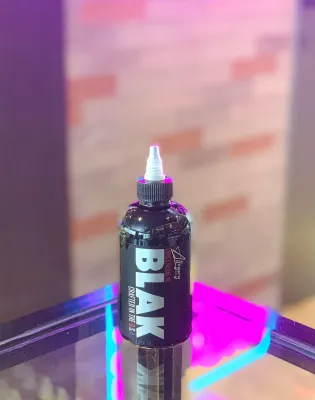
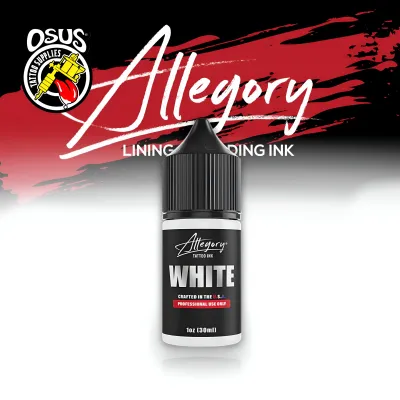
Before comparing Allegory Ultra Black Ink to other options on the market, it is important to establish its baseline characteristics by examining its product specifications. When you receive a bottle, first check the label for its base formulation. Black inks generally fall into pigment-based or dye-based categories, often utilizing an acrylic, shellac, or simple water-soluble gum arabic binder. The binder determines how the ink adheres to the surface and whether it can be layered without lifting. Next, review the manufacturer’s claims regarding opacity and lightfastness. An ink labeled as highly opaque is designed to cover underlying pencil lines or paint layers in a single pass, while lightfastness ratings indicate how well the pigment resists fading when exposed to ambient light over time. Additionally, observe the physical packaging. Allegory Ultra Black Ink is typically distributed in specific bottle sizes equipped with particular nozzle or dropper tops. A dropper top is highly beneficial for transferring precise amounts of ink to a palette or airbrush reservoir, whereas a wide-mouth bottle is more convenient for direct dipping with traditional calligraphy nibs or large wash brushes. Understanding these baseline physical traits gives you a clear standard of comparison when evaluating alternative brands.
Key Dimensions for Comparing Black Inks
To evaluate any black ink against Allegory Ultra Black, you must first assess its pigment load and opacity. Pigment load refers to the concentration of black particles suspended within the liquid binder. A high pigment load produces a rich, deep black that absorbs light efficiently, preventing the paper fibers from showing through. You can observe this by drawing a single stroke over a pre-printed black-and-white line; a highly opaque ink will completely obscure the line beneath it, while a less concentrated ink will appear slightly translucent or charcoal-gray.
Products mentioned in this guide
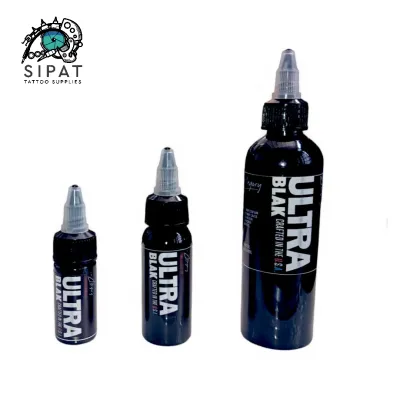
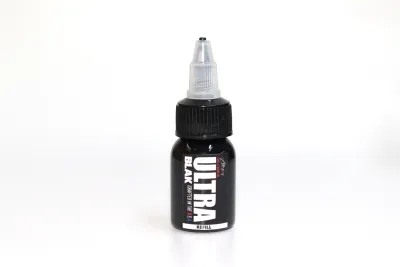
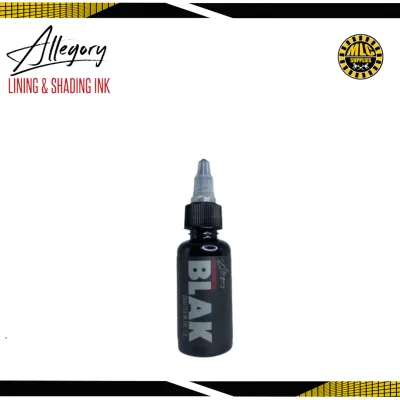
Prices are valid at publication and may change. Please refer to the product page for the latest price.

Viscosity dictates how easily the ink moves from your tool to the paper. Low-viscosity inks are thin and watery, making them ideal for technical pens, fountain pens, and airbrushes where clogging is a constant risk. High-viscosity inks are thicker and hold their shape better, which is preferred for expressive brushwork or dip pens that require a controlled release of ink. In humid tropical environments, ink viscosity can shift slightly as water evaporates from open palettes, making it crucial to monitor how the ink flows during extended painting sessions.
Understanding the distinction between water-resistant and waterproof claims is vital for mixed-media artists. A waterproof ink uses a binder—such as acrylic or shellac—that undergoes an irreversible chemical change as it dries, forming a plastic-like film that cannot be dissolved by subsequent layers of water. A water-resistant ink, by contrast, may resist light splashes but will smudge or bleed if subjected to heavy watercolor washes. Always verify these claims on your specific paper, as paper sizing and texture heavily influence how deeply the binder penetrates and locks into the fibers.
The final appearance of dry ink can range from a completely flat matte to a semi-gloss or high-gloss finish. Matte finishes are highly favored for illustration and scanning, as they do not reflect light or create glare under digital cameras. Glossy finishes, often resulting from shellac binders, offer a striking, lacquer-like depth but can be prone to cracking if applied too thickly on flexible paper. Drying time is equally critical; in high-humidity regions, inks with slow-drying binders may remain tacky for longer periods, increasing the risk of accidental smudging.
Matching Ink Properties to Your Painting Technique
For artists focusing on intricate line art, comic illustration, or calligraphy, the primary goal is achieving crisp, sharp edges without feathering. Feathering occurs when ink bleeds outward along the paper fibers, destroying fine details. To prevent this, detail artists should pair low-to-medium viscosity inks with smooth, heavily sized papers like hot-press watercolor paper or bristol board. The ink must flow consistently through fine metal nibs or technical pen tips without pooling or drying prematurely on the point.
If your technique involves creating soft gradients, atmospheric washes, or monochromatic ink paintings, you require an ink that dilutes predictably. When water is added to a high-quality drawing ink, the pigment particles should remain evenly suspended, allowing you to lay down smooth, flat washes without patchiness. Some inks are formulated to granulate, where heavier pigment particles settle into the valleys of textured cold-press paper, creating a rustic, organic texture. If you prefer clean, seamless transitions, look for inks designed specifically for wash techniques, which disperse smoothly without clumping.
Mixed-media artists who combine ink with watercolors, gouache, or acrylics must select their products based on layering compatibility. If you plan to apply wet washes over your black ink lines, the ink must dry to a completely waterproof state. Any lifting of the black pigment will muddy your colors and ruin the transparency of your washes. Conversely, if you want to blend your ink lines into your paint layers dynamically, you should choose a water-soluble ink that reactivates easily when touched with a wet brush, allowing for expressive, smoky transitions.
Sourcing and Evaluating Alternatives in the Philippines
When looking for alternatives to Allegory Ultra Black Ink in the Philippines, artists can explore a variety of local art supply stores, specialty stationery shops, and online e-commerce platforms. Common alternative categories include traditional Chinese or Japanese calligraphy inks, acrylic-based drawing inks, and professional-grade watercolor pan blacks. Traditional India inks often contain shellac, providing excellent water resistance and a slight sheen, while acrylic inks offer a highly durable, matte finish that remains completely waterproof once dry.
To evaluate the cost-effectiveness of these options, calculate the unit price in Philippine Pesos per milliliter (₱/ml). While purchasing larger bottles may seem to offer better value upfront, keep in mind that the high humidity and ambient temperatures in tropical climates can cause water to evaporate from partially filled bottles over time, potentially leading to thickening or mold growth if the container is not sealed perfectly. For occasional users, smaller bottles (such as 30ml or 50ml sizes) are often more practical and economical in the long run. Always read the product specifications carefully to ensure the alternative matches your required archival standards, especially if your artwork is intended for exhibition or sale.
Pre-Purchase Testing and Verification
Before committing any new black ink to a finished piece of artwork, conducting a series of simple, low-risk tests on scrap paper is highly recommended. Start by creating a personal swatch card using the exact paper you plan to use for your project. Draw a series of solid blocks, fine lines, and diluted washes. This allows you to observe the ink’s true opacity, drying time, and dry finish under your local studio conditions.
Once the swatch card has dried completely—ideally after waiting at least twenty-four hours—perform a water-reactivation test. Run a wet brush loaded with clean water across the dry ink strokes. If the water remains clear and the ink lines do not smudge, the ink is fully waterproof on that specific paper. Finally, test your cleanup procedures. Wash your brushes and pen nibs immediately after use with mild soap and water. Some highly pigmented or acrylic-based inks can dry quickly and clog fine tools, so verifying how easily the ink washes out will help you protect your expensive brushes and calligraphy equipment from permanent damage.
Frequently Asked Questions (FAQ)
Can I mix black ink with other paint mediums?
Yes, but compatibility depends entirely on the binders used in each product. You can safely mix water-based acrylic inks with standard acrylic paints to increase their fluidity or deepen their color. However, mixing an acrylic-based ink directly into watercolors or gouache can alter the paint’s drying characteristics and make it difficult to reactivate on the palette. Always check the manufacturer’s guidelines and perform a small test mix on a plastic palette first; if the mixture curdles, clumps, or separates, the binders are incompatible and should not be used together.
Why does my black ink look gray or patchy when diluted?
This patchiness, often called granulation or separation, occurs when the pigment particles in the ink are too heavy or poorly dispersed to remain suspended when diluted with water. In some cases, dye-based inks may separate into their constituent colors (such as blue or purple undertones) when water is added. To achieve smooth, even gradients, use distilled water for dilution, stir the mixture thoroughly, and consider using a wet-on-wet painting technique where you apply the diluted ink to pre-dampened paper, allowing the fibers to distribute the pigment naturally.
Community discussion
Share your experience or ask a question. Comments are reviewed before publication.