
Selecting the ideal marker for your creative projects hinges on understanding your specific surface requirements, budget constraints, and the exact medium you are working with. If you have encountered the term “arcyclic marker” while browsing online craft stores in the Philippines, you are likely looking at a budget-friendly variant or common spelling of water-based acrylic paint markers. These markers provide an exceptionally opaque, vibrant layer of paint on diverse surfaces like wood, glass, canvas, and plastic. However, they serve a very different purpose compared to traditional alcohol-based sketch markers or high-end, professional-grade acrylic paint pens. To make the right purchase, you must weigh their affordable multi-surface utility against the superior blending, archival longevity, and physical durability of premium alternatives.
Quick Verdict: Should You Choose Arcyclic Markers?
Deciding whether to invest in budget-friendly arcyclic markers or to opt for premium alternative brands depends on your artistic goals, your target surface, and your budget.
In the Philippine e-commerce landscape, “arcyclic” is frequently used as a search term or product label for highly affordable, water-based acrylic paint pens. These budget markers are designed to democratize multi-surface crafting, offering a wide array of vibrant colors at a fraction of the cost of legacy art brands. They are highly accessible and perform admirably on casual projects, but they do carry distinct trade-offs in terms of ink consistency, lightfastness, and nib wear.
Products mentioned in this guide

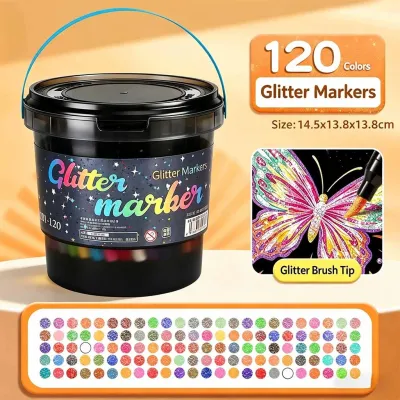
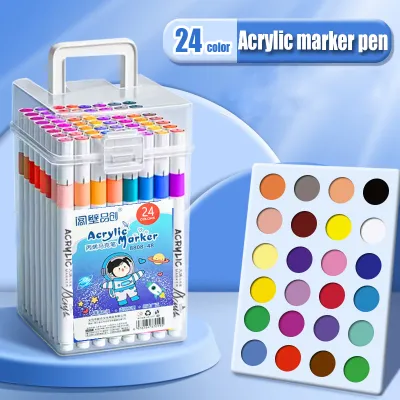
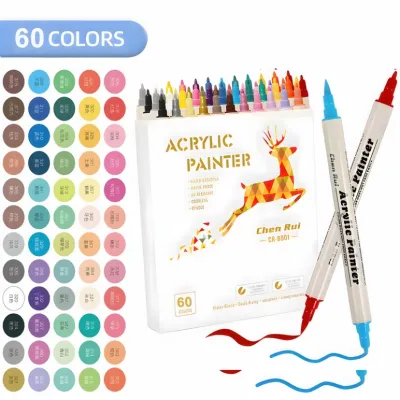
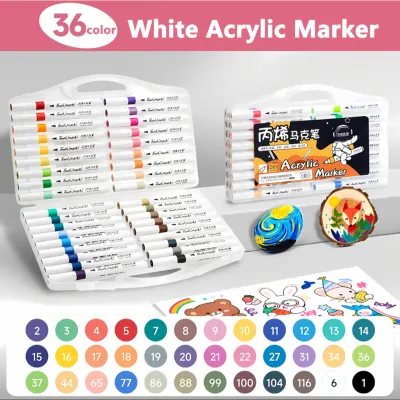
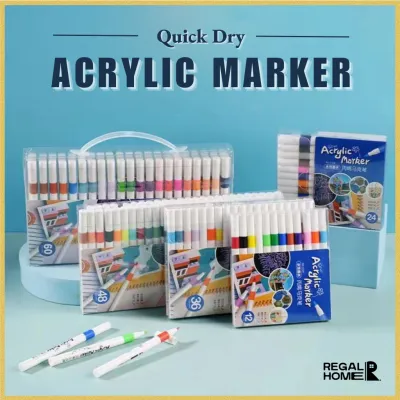
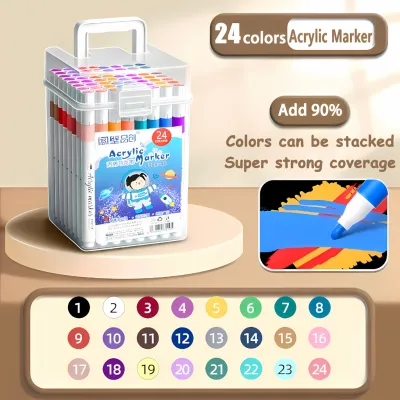
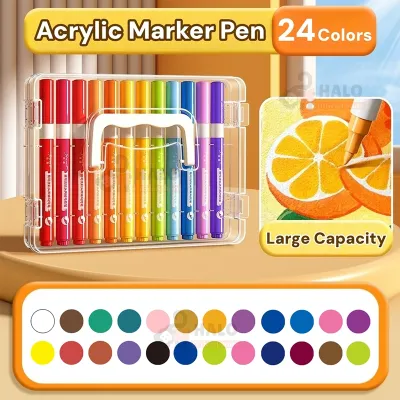
Prices are valid at publication and may change. Please refer to the product page for the latest price.
Choose Arcyclic markers if:
- You are a hobbyist, student, or beginner crafter looking to experiment with painting on diverse, non-porous surfaces like rocks, glass, plastic, or terracotta pots.
- You require a large palette of colors (such as sets of 24, 36, or 72) without making a massive upfront financial investment.
- Your projects are primarily for indoor display, personal enjoyment, or casual gifts where professional archival standards are not mandatory.
- You want an easy-to-use, low-mess alternative to traditional acrylic paint tubes and brushes for quick DIY home decor tasks.
Choose premium or alternative brands if:
- You are a professional artist or illustrator creating commercial work that requires certified lightfastness to prevent fading over years of exposure to light.
- You need highly precise, consistent ink flow through a calibrated valve system that minimizes the risk of splattering or pooling on your work.
- Your primary medium is paper, and you require seamless color gradients, shading, and blending, which are best achieved with high-quality alcohol-based markers.
- You want a sustainable, long-term system that supports replaceable nibs and individual ink refills to minimize plastic waste.
Understanding Arcyclic Markers: Specs and Performance Baseline
To evaluate how these markers fit into your creative toolkit, it is essential to understand the science behind their ink formulation and physical design. Arcyclic markers are fundamentally water-based acrylic paint pens. Unlike traditional writing felt-tips, which use transparent water-soluble dyes, these markers contain suspended pigment particles bound within a liquid acrylic polymer emulsion.

When you apply the ink to a surface, the water content evaporates, causing the acrylic polymer molecules to cross-link. This chemical process cures the paint into a flexible, water-resistant, and opaque plastic film. Because the pigment sits on top of the substrate rather than soaking into it, these markers can easily cover dark backgrounds, including black cardstock, painted canvas, or dark stained wood.
Most arcyclic markers utilize a pump-action or valve-action mechanism to deliver ink. Inside the marker barrel is a small metal mixing ball. When you shake the marker, this ball agitates the settled pigment particles, ensuring a homogeneous mixture. To prime the marker for the first time, you must gently press the nib down onto a scrap piece of paper, which opens an internal valve and allows the pressurized paint to saturate the fiber tip.
Standard arcyclic sets typically feature medium bullet tips made of polyester or nylon fibers, measuring around 2mm to 3mm in diameter. Some variations offer extra-fine plastic tips (0.7mm) for detailed linework, or reversible tips that can be flipped from a bullet point to a chisel edge. Because paint formulations can vary significantly between different production batches and brands, always verify the exact manufacturer specifications on the product packaging regarding drying times, non-toxicity certifications, and recommended surface preparations.
Key Comparison Dimensions: Arcyclic vs. Competing Brands
To determine which marker brand delivers the best value for your specific needs, we must analyze how they perform across three critical dimensions: ink behavior, mechanical durability, and financial value.
Ink Formulation, Opacity, and Layering
The primary difference between budget arcyclic markers and professional-grade acrylic paint pens (such as Posca, Molotow, or Liquitex) lies in the refinement of the pigment and the quality of the acrylic binder. Professional brands utilize highly ground, artist-grade pigments suspended in a premium binder. This results in a smooth, fluid paint that achieves complete, streak-free opacity in a single coat, even on dark or highly textured surfaces.
In contrast, budget arcyclic markers may use slightly larger pigment particles and a thinner binder. While they still offer impressive coverage, you may notice subtle streaking or a semi-translucent finish on your first pass, particularly with lighter pastel shades or yellow tones. Achieving a perfectly solid, opaque finish with budget markers often requires applying a second or third layer after the initial coat has dried completely.
When compared to alcohol-based markers (such as Copic, Ohuhu, or Touch), the ink behavior is entirely different. Alcohol markers use transparent, dye-based inks designed to penetrate paper fibers, allowing you to blend colors seamlessly to create smooth gradients and realistic shadows. However, alcohol ink will bleed through standard paper and cannot be used on dark surfaces because it lacks opacity. Acrylic markers do not bleed through heavy paper, but they cannot be blended smoothly on the page; instead, they are designed for bold, graphic shapes, clean outlines, and layered details.
Furthermore, ink separation is more pronounced in budget formulations. If left unused for several weeks, the pigment and liquid binder in an arcyclic marker will separate. You must shake the marker vigorously for 30 to 60 seconds before each use to restore the correct consistency. Failure to do so can result in a watery, transparent discharge that can ruin your artwork.
Nib Durability and Line Control
The physical tip of the marker, or the nib, is the bridge between the paint reservoir and your creative surface. Premium paint markers are typically equipped with sintered acrylic or high-density plastic nibs. These materials are exceptionally rigid and resist fraying, even when used on abrasive, unpolished surfaces like raw concrete, rough stone, or coarse canvas.
Budget arcyclic markers generally feature softer, compressed polyester or felt nibs. While these tips feel smooth and pleasant on smooth paper or sealed wood, they are highly susceptible to wear and tear. If you use them extensively on rough surfaces like unprimed terracotta or coarse rocks, the fibers will quickly split and fray. Once a nib frays, it loses its sharp edge, making fine detail work and clean linework nearly impossible.
Line control is also heavily influenced by the quality of the internal valve mechanism. Professional markers feature highly calibrated spring-loaded valves that release a precise, micro-metered amount of paint when pressed. Budget markers are more prone to valve inconsistency. If you press the nib too firmly or too frequently, the valve may stick open, causing a large pool or “blob” of paint to flood your surface. Conversely, if the valve is stiff, the ink flow may dry up mid-stroke, requiring frequent re-priming and disrupting your creative flow.
Finally, consider the availability of replacement parts. If a nib becomes clogged with dried paint or wears down on a professional marker, you can easily purchase a pack of replacement tips for a low cost. For most budget arcyclic markers, replacement nibs are not sold separately. If the tip is ruined, the entire marker must be discarded, even if the barrel is still full of paint.
Pricing, Set Sizes, and Overall Value
When evaluating the financial aspect of your purchase, it is crucial to look beyond the initial price tag and calculate the true cost-per-marker and the volume of ink you are receiving.
Professional acrylic paint markers are typically sold individually or in small, specialized sets. A single professional marker can cost anywhere from ₱150 to ₱350 in the Philippines. This high price point reflects the premium pigments, lightfastness ratings, and durable hardware. For an artist who only needs three or four specific colors for a project, buying individual premium markers is highly practical.
On the other hand, budget arcyclic markers are almost exclusively sold in large, pre-packaged sets. You can easily find a 24-color set for ₱300 to ₱500, which translates to an incredibly low cost-per-marker of approximately ₱12 to ₱20. This makes budget sets exceptionally attractive for beginners who want a broad spectrum of colors to play with without spending thousands of pesos.
However, you must be aware of ink volume discrepancies. Budget markers often feature thinner barrels or contain smaller internal reservoirs, sometimes holding as little as 1.5ml to 2.5ml of paint. Premium markers often feature wider, robust barrels containing 4ml to 15ml of paint. Therefore, while a budget set offers more colors upfront, you may run out of popular colors (like white, black, or primary blue) much faster than expected.
Matching the Marker to Your Project: A Use-Case Guide
To get the absolute best results from your creative endeavors, match the specific strengths of each marker type to the physical demands of your project.
Customizing Sneakers and Apparel
If you are painting custom designs on leather sneakers, canvas shoes, or denim jackets, the flexibility and adhesion of the paint are paramount. Premium acrylic markers are formulated with high-quality, flexible acrylic binders that can withstand the constant bending and creasing of footwear without cracking or peeling.
If you choose to use budget arcyclic markers for apparel customization, you must take extra precautions. First, clean the leather surface thoroughly with acetone to remove the factory glaze. Once your design is dry, you must apply a flexible, clear acrylic finisher or leather sealant to protect the paint from water and friction. For fabric items, mixing the paint with a fabric medium or heat-setting the dry design with a clean iron (using a protective cloth) is highly recommended to ensure washability.
Rock Painting and Outdoor Crafts
Rock painting is an incredibly popular hobby in the Philippines, often enjoyed as a family activity. For this specific application, budget arcyclic markers are actually the superior choice in terms of value. Because natural rocks are highly abrasive, they will quickly wear down and ruin any marker nib, regardless of the brand.
It is far more economical to wear out the nib of a ₱15 budget marker than a ₱250 professional pen. To achieve the best results on rocks, wash them thoroughly to remove dirt and dust, apply a base coat of cheap white acrylic gesso or primer, paint your colorful designs with the arcyclic markers, and seal the finished rock with a clear, weather-resistant outdoor varnish to protect it from the tropical rain and sun.
Illustration, Manga, and Sketchbooks
For traditional paper-based illustrations, comic art, or manga, alcohol-based markers remain the undisputed standard. Their ability to blend smoothly, layer without tearing the paper, and create realistic skin tones or sky gradients cannot be replicated by acrylic paint markers.
However, arcyclic markers serve as an excellent supporting tool in a sketch artist’s arsenal. You can use an extra-fine white arcyclic marker to add bright, opaque highlights over your finished alcohol marker illustrations, such as catchlights in eyes, glistening water droplets, or sharp metallic reflections. Just ensure the alcohol ink is completely dry before applying the paint marker to prevent the tip from picking up and smearing the underlying dye.
Summary of User Profiles
- The Beginner Crafter or Student: Opt for a large, budget-friendly set of arcyclic markers. This allows you to explore multi-surface painting on wood, plastic, and glass without a heavy financial commitment.
- The DIY Home Decorator: Use a hybrid approach. Purchase a budget arcyclic set for general colorful accents on picture frames or plant pots, but invest in a high-quality, opaque white and black professional marker for crisp, permanent lettering.
- The Professional Illustrator or Commission Artist: Invest exclusively in premium, lightfast acrylic paint markers. Your clients expect their purchased artwork to remain vibrant and fade-free for decades, which budget pigments cannot guarantee.
Smart Buying Tips: Verifying Quality on E-Commerce Platforms
When shopping for art supplies on online marketplaces in the Philippines, navigating the sea of listings requires a strategic approach to ensure you receive functional, high-quality products.
First, scrutinize the customer review section of the listing, paying close attention to the 2-star and 3-star reviews. While 5-star reviews can sometimes be generic, mid-tier reviews often provide honest, detailed feedback regarding common manufacturing defects. Look for recurring complaints such as “markers arrived completely dried out,” “ink leaked inside the plastic packaging,” or “the tips are too stiff to prime.”
Second, consider the intense tropical climate of the Philippines. During transit, delivery trucks and sorting warehouses can reach exceptionally high temperatures. This extreme heat can cause the air inside alcohol-based markers to expand, forcing ink out of the nibs and causing messy leaks. For water-based arcyclic markers, prolonged exposure to high heat can accelerate the evaporation of the water carrier, leading to thickened paint or completely cured, unusable valves before you even open the box. To mitigate this risk, purchase from local sellers with fast shipping times rather than overseas shops, reducing the time your markers spend in hot transit facilities.
Third, always check the seller’s return and refund policies. A reputable seller should offer a clear window (typically 7 to 14 days) to replace or refund any defective items. As soon as your marker set arrives, perform a quick test on a scrap piece of paper. Shake each marker, prime the nib gently, and ensure that the paint flows smoothly and that no tips are damaged or missing from the set. If you encounter any issues, document them immediately with photos or videos to facilitate a smooth return process.
Additionally, store your markers correctly to prolong their lifespan in a humid, tropical environment. Always store acrylic paint markers horizontally. Storing them vertically can cause the heavy pigment particles to settle entirely at the bottom of the barrel, clogging the valve, or conversely, settling at the tail end, leaving the nib dry and difficult to prime.
Frequently Asked Questions (FAQ)
Can I use acrylic-style markers on fabric or skin?
While water-based acrylic markers will adhere to fabric, the paint dries into a stiff, plastic-like film that can crack when the fabric bends or stretches. To make the design durable and washable, you must let the paint dry completely, then heat-set it by pressing the reverse side of the fabric with a warm iron.
However, you must never use craft acrylic markers on human skin. They are not formulated or certified for cosmetic use and can cause severe skin irritation, allergic contact dermatitis, or chemical burns. For body art, always use products specifically labeled and certified as cosmetic face or body paint.
How do I revive a dried-out paint or acrylic marker?
To revive a sluggish paint marker, first shake it vigorously. If you can hear the internal mixing ball rattling, the paint inside the reservoir is still liquid. If the nib itself has dried out and clogged with hardened paint, gently pull the fiber nib out of the marker with a pair of tweezers.
Soak the clogged nib in a small cup of warm water for five to ten minutes to dissolve the dried acrylic binder. Once the water runs clear, press the nib firmly between paper towels to remove all excess moisture, reinsert it into the marker, and gently pump it on scrap paper to re-prime the flow. If the mixing ball does not rattle when shaken, the paint inside the barrel has fully cured and hardened; in this case, the marker cannot be saved and must be replaced.
Are budget acrylic markers refillable?
No, the vast majority of budget-friendly arcyclic markers are designed as sealed, single-use, disposable items. The plastic barrel and valve assembly are permanently welded together during manufacturing, and attempting to pry them open will crack the plastic and ruin the marker.
In contrast, high-end professional acrylic paint markers feature threaded collars or removable valve bodies. This allows you to unscrew the marker, pour in fresh acrylic ink refills, and replace worn-out nibs, which is a far more sustainable and economical choice for heavy, long-term users.
Community discussion
Share your experience or ask a question. Comments are reviewed before publication.