
Choosing the right creative tool depends heavily on your medium, technique, and durability expectations. The Tisoso acrylic marker is highly suited for artists, hobbyists, and crafters seeking opaque, vibrant coverage on diverse surfaces like canvas, wood, stone, and plastic. However, whether it is the perfect fit for your specific art projects depends on several project-specific variables.
Before purchasing, assess your surface type, whether you need to layer light colors over dark backgrounds, and the environmental conditions the finished piece will face. While these water-based paint pens are highly versatile, they do not replace specialized tools for fine paper illustration or heavy-duty outdoor exposure. Let’s analyze how to determine if this marker category aligns with your creative workflow.
Step 1: Diagnose Your Art Project Requirements
Surface Compatibility and Coverage
Different artistic mediums interact uniquely with paint. Porous surfaces like raw wood, terracotta, unglazed ceramics, and canvas readily absorb water-based acrylic ink, providing excellent adhesion but requiring more paint to achieve full saturation. Non-porous surfaces like glass, glazed ceramics, metal, and smooth plastics do not absorb the ink, meaning the paint must form a cohesive film on top of the material.
Products mentioned in this guide
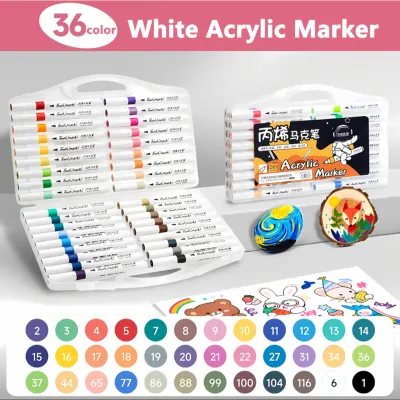
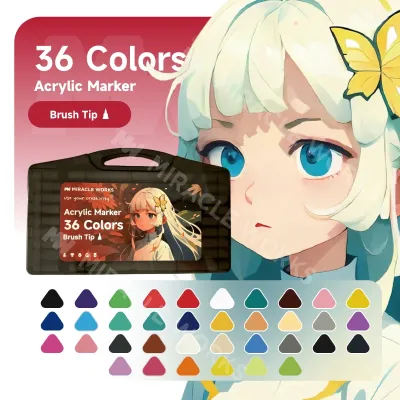
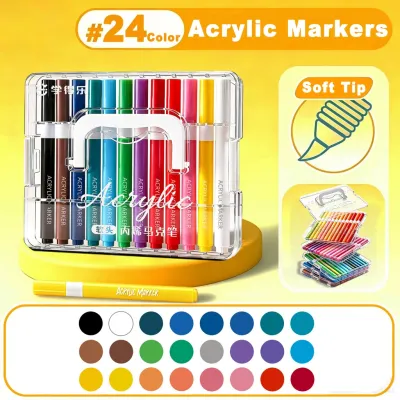
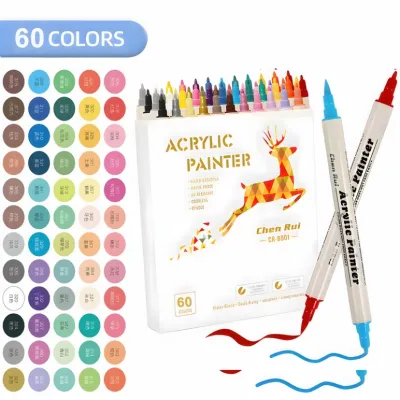
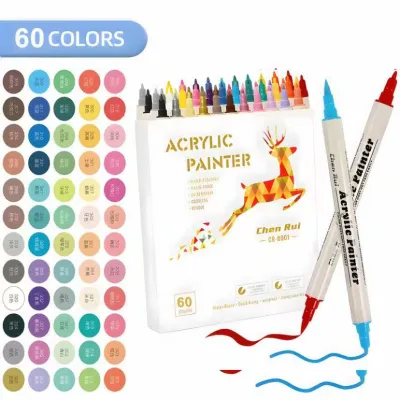
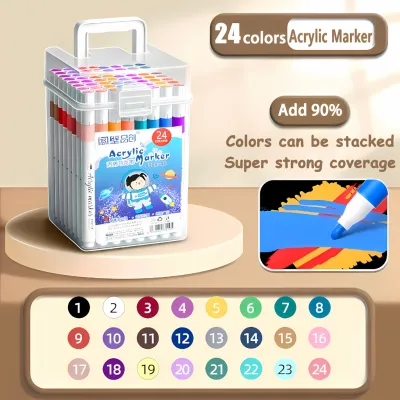
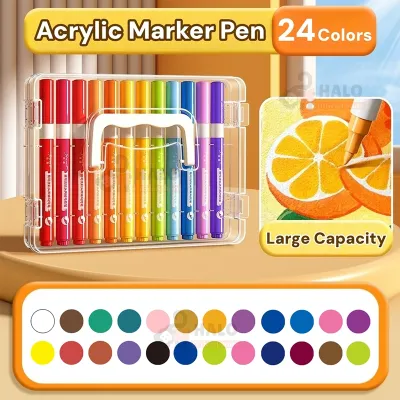
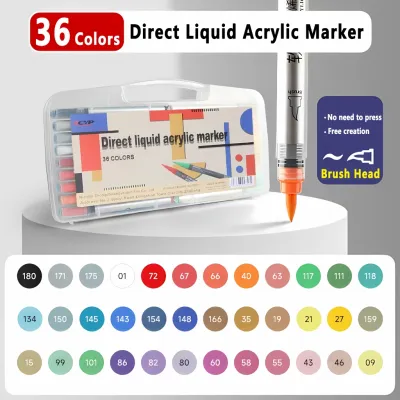
Prices are valid at publication and may change. Please refer to the product page for the latest price.
When working in a highly humid tropical environment like the Philippines, the drying rate and surface moisture can affect how paint adheres. For non-porous surfaces, you must verify if the ink can dry completely without pooling or sliding. If your project involves dark or heavily patterned backgrounds, you need an ink with high opacity that can completely cover the underlying colors in one or two coats. Always perform a small test patch on a scrap piece of your chosen material to verify smoothness and adhesion before committing to your final design.
Indoor vs. Outdoor and Durability Needs
Consider where your finished artwork will live. Indoor decorative items, such as customized journals, canvas paintings, or indoor wood signs, experience minimal physical wear and environmental stress. For these projects, standard water-based acrylic paint markers offer sufficient durability without intensive post-processing.
If you plan to create outdoor rock art, painted plant pots, or items that undergo frequent handling, the artwork will be exposed to moisture, UV rays, and physical friction. Water-based acrylic markers are generally water-resistant once dry, but they are not entirely weatherproof or scratch-proof on their own. You should check the manufacturer’s packaging for specific durability ratings and plan to apply a clear, UV-resistant acrylic sealant to protect your work from fading or peeling under intense sun and heavy seasonal rains.
Step 2: Understand Acrylic Marker Behavior
Ink Flow and Tip Types
Acrylic markers use a water-based acrylic emulsion that is significantly thicker than standard dye-based inks. To manage this viscosity, most acrylic paint pens utilize a valve-action or pump-tip mechanism. When you first open a new marker, the tip is dry and white; you must shake the marker thoroughly with the cap on to mix the pigment, then gently press the tip repeatedly onto a scrap piece of paper to prime the valve and draw the paint down into the nib.

Choosing the correct tip size is critical for your technique. Fine tips (typically 0.7mm to 1mm) are ideal for precise line work, outlining, and intricate details on small crafts. Medium tips (around 2mm to 3mm) balance detail and coverage, making them the standard choice for general coloring and medium-sized canvases. Broad or chisel tips are best for filling large areas quickly. Because water-based acrylics dry relatively fast when exposed to air, you must cap the markers tightly immediately after use to prevent the paint from drying inside the nib and clogging the flow.
Opacity and Layering Capabilities
Unlike transparent alcohol or watercolor markers, acrylic markers dry to a matte or semi-satin finish that is highly opaque. This opacity is a defining feature of the acrylic medium, allowing you to layer light colors—such as white, yellow, or pastel pink—directly over dark backgrounds once the base layer is completely dry.
To achieve clean layers without muddying the colors, patience is required. If you apply a second layer before the first is fully dry, the wet nib can scrape up or reactivate the bottom layer, leading to clumping and mixed pigments. Drying times can vary based on ambient humidity and the thickness of the application, so always perform a quick touch-test on a scrap area before layering.
Step 3: Verify Tisoso Acrylic Marker Specifications
When shopping for a Tisoso acrylic marker set, it is crucial to verify the exact product specifications on the physical packaging or digital product listing rather than relying on general brand assumptions. These markers are widely available in various set sizes and tip configurations on online marketplaces in the Philippines, often priced within affordable budget bands (typically ranging from ₱150 to ₱600 depending on the color count).
To ensure the product matches your project needs, check the following key checkpoints:
- Tip Size and Material: Verify if the set contains extra-fine, medium, or brush tips. For detailed sketching, look for nylon or plastic fiber tips that hold their shape under pressure.
- Safety Certifications: Look for non-toxic labels (such as ASTM D-4236 or EN71 compliance) on the packaging, especially if the markers will be used by student artists or for family craft projects.
- Ink Type: Confirm that the markers are water-based acrylics rather than oil-based or alcohol-based, as this dictates how you prime, clean, and use them.
- Recommended Surfaces: Read the manufacturer's list of compatible materials. While most acrylic paint pens work well on paper, cardboard, and canvas, specific formulations may perform better or worse on challenging surfaces like polished metal, untreated wood, or smooth glass.
- Refillability and Replacement Nibs: Check if the set supports nib replacements or ink refills. For budget-friendly markers, they are typically disposable, meaning you will need to replace the entire marker once the ink runs dry or the tip becomes frayed.
Step 4: Compare Alternatives for Specific Techniques
If your creative goals involve techniques that do not align with the opaque, film-forming nature of acrylic paint, you should consider alternative marker types:
- Alcohol-Based Markers: If you are working on specialized marker paper and need to create seamless color gradients, soft skin tones, or smooth shading for manga and fashion illustrations, alcohol markers are the superior choice. They dry almost instantly and blend beautifully, but they are highly transparent and will bleed through standard paper.
- Watercolor Markers: For artists who want to create soft, transparent washes, blend colors with water brushes, or reactivate dry ink on watercolor paper, water-soluble dye-based markers are ideal. They do not work on non-porous surfaces and lack the opacity of acrylics.
- Oil-Based Paint Markers: If your project requires maximum outdoor durability, superior adhesion to glossy metal or glass, and high resistance to water without requiring a sealant, oil-based paint markers are highly effective. However, they carry a strong odor, require chemical solvents like mineral spirits for cleanup, and have much longer drying times compared to water-based acrylics.
Final Verdict: When to Buy and When to Look Elsewhere
The decision to purchase a Tisoso acrylic marker set comes down to your specific project parameters, budget, and desired artistic finish.
Buy these markers if:
- You want an affordable, low-odor tool for multi-surface crafting, rock painting, or customizing personal items.
- Your art style relies on bold, opaque colors, crisp outlines, and the ability to layer light pigments over dark backgrounds.
- You are working on mixed-media projects that combine canvas, wood, or cardboard.
Look elsewhere if:
- Your primary technique involves smooth, streak-free color blending, watercolor washes, or realistic portrait shading on paper.
- You need permanent, wash-resistant designs on garments that will go through a washing machine regularly without wearing off.
- You require industrial-grade, weatherproof outdoor signs that must withstand heavy rain and direct sunlight without a protective topcoat.
Frequently Asked Questions (FAQ)
Can I use Tisoso acrylic markers on fabric?
Yes, you can apply these water-based acrylic markers to fabrics like cotton or canvas bags for decorative purposes. However, the paint will stiffen the fabric fibers as it dries. To make the design more durable and resistant to light hand-washing, you must allow the paint to dry completely for 24 hours and then heat-set the design by ironing the reverse side of the fabric on a medium setting without steam. Always check the product label for specific textile recommendations.
Do acrylic markers bleed through paper?
Because acrylic paint is water-based and thicker than dye-based inks, it sits on top of the paper fibers and forms a film rather than soaking deeply into them. Consequently, they rarely bleed through to the other side of the page. However, if you use very thin paper (under 100 gsm) or apply multiple wet layers in the same spot, the moisture can cause the paper to warp, buckle, or pill. For the best results, use heavy cardstock, mixed-media paper, or watercolor paper.
How do I revive a dried-out acrylic marker?
If the tip of your marker has dried out because the cap was left off, you can often revive it through simple, reversible steps. Remove the nib gently with tweezers and rinse it under warm water to dissolve the dried acrylic paint, then pat it dry with a paper towel and reinsert it. Store your markers horizontally when not in use to keep the ink evenly distributed, and gently pump the tip on a scrap surface to re-establish the ink flow. Avoid injecting water or rubbing alcohol directly into the marker barrel, as this can permanently break the paint emulsion and ruin the marker’s consistency.
Community discussion
Share your experience or ask a question. Comments are reviewed before publication.