
Finding the perfect gift for girls aged 7 to 12 years requires moving past the brightly colored, plastic-wrapped novelty kits designed for toddlers. At this developmental stage, young artists are transitioning from simple sensory play to structured skill acquisition. They want to draw what they see, experiment with realistic shading, and learn how colors interact on the page. A low-quality art set filled with hard, scratchy crayons and watery paints will only lead to frustration, while a thoughtfully selected set of real, functional tools can foster a lifelong love for creative expression.
To choose an art tool set that is both engaging and practical, you must look beyond the sheer volume of items and focus on the quality of the mediums. A set containing 24 rich, blendable colored pencils and a pad of heavy-weight paper is infinitely more valuable to a ten-year-old than a 150-piece plastic suitcase stuffed with dried-out markers and chalky watercolors. By matching the kit’s contents to the recipient’s specific creative interests—whether that is sketching, painting, or crafting—and verifying key material specifications before purchase, you can ensure your gift becomes a cherished outlet for her imagination.
How to Evaluate Art Sets for Older Children
When shopping for a gift for girls 7 to 12 years, the packaging can often be misleading. Many commercial art kits rely on massive piece counts and flashy, character-themed boxes to attract buyers. However, these sets frequently contain low-grade materials that fail to perform. For an older child who is developing real artistic techniques, the physical properties of the tools matter immensely.
Products mentioned in this guide
Prices are valid at publication and may change. Please refer to the product page for the latest price.
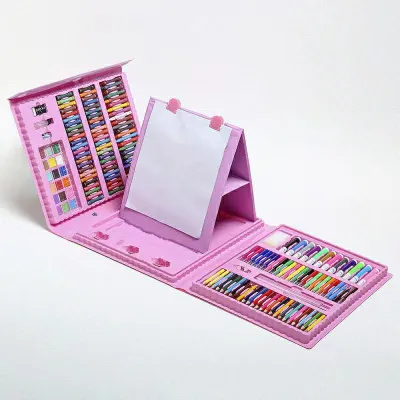
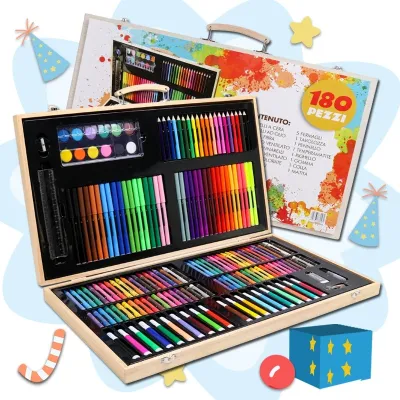
The first step in evaluation is distinguishing between high piece-count novelty kits and sets with quality mediums that support skill development. Novelty kits often pad their numbers with filler items like plastic rulers, safety scissors, paperclips, and dozens of identical, low-pigment crayons. These crayons are typically made with a high ratio of cheap paraffin wax to pigment, resulting in a stiff, scratchy application that barely leaves color on the page. In contrast, a quality art set prioritizes the formulation of the core mediums. Look for colored pencils with soft, wax- or oil-based cores that glide smoothly, and watercolors that use finely ground pigments rather than cheap binders that dry to a dusty, chalky finish.
Safety remains a critical consideration, even for older children in the 7 to 12 age bracket. Always check the packaging for recognized non-toxic certifications, such as the ASTM D-4236 standard, which indicates that the materials have been evaluated by a toxicologist and are safe for art use. While children in this age group are generally past the stage of putting art supplies in their mouths, they still experience prolonged skin contact with clay, paints, and adhesives. Furthermore, verify if the set includes sharp tools like metal pencil sharpeners, utility knives, or heavy-duty scissors. If the recipient is on the younger end of this spectrum, you may want to opt for sets that substitute safety shears for metal blades, or plan to supervise their creative sessions.
Finally, evaluate the baseline quality of the core materials rather than relying on the total number of included items. For drawing sets, this means checking the wood quality of the pencils—cheap wood splits easily when sharpened, leading to broken leads before the pencil is even used. For painting sets, look at the consistency of the paint and the construction of the brushes. In the tropical climate of the Philippines, high humidity can cause low-quality paper to warp and buckle even before paint is applied, and cheap water-based markers are highly susceptible to drying out if the caps do not form an airtight seal. Prioritizing sets that offer fewer, higher-quality items wrapped in protective, durable packaging will always yield a better creative experience than a giant box of sub-par supplies.
Matching Art Set Categories to Creative Interests
Every young artist has a unique way of expressing herself, meaning there is no single perfect art set that fits every child. To find a gift that truly resonates, you must match the category of the art set to the recipient’s specific creative habits and current hobbies. If she spends hours filling notebooks with cartoon characters, a professional sketching kit will be far more appreciated than a complex watercolor set.

Using interest-based categories allows you to narrow down your options systematically, especially when specific brand names are unavailable or unverified. By focusing on the functional components of each category, you can assess whether a kit contains the right tools to support her preferred medium. It is also important to recognize the practical limitations of multi-purpose kits. While a do-it-all mega-set seems convenient, it often spreads its quality thin across multiple mediums. A specialized, single-medium set—such as a dedicated acrylic painting kit or a professional-grade sketching portfolio—almost always offers superior tools that allow for deeper skill development.
Comprehensive Drawing and Sketching Kits
For girls who love to sketch, design characters, or create detailed illustrations, a dedicated drawing kit is an exceptional choice. A functional drawing set for the 7-12 age group should bridge the gap between school-grade pencils and professional sketching tools. Look for kits that include graded graphite pencils, which typically range from hard leads (like H or HB) for light sketching to soft, dark leads (such as 2B, 4B, or 6B) for deep shading and contrast. Learning to control these different grades is a fundamental milestone in a young artist’s journey.
In addition to graphite, verify that the colored pencils included in the set are designed for blending. Cheap colored pencils often feature hard, waxy leads that skip across the paper and resist layering. High-quality colored pencils use soft, oil- or wax-based cores that deposit rich, vibrant pigment with minimal pressure, allowing the artist to blend colors smoothly to create realistic gradients. The kit should also include essential accessories like blending stumps (tortillons) for smoothing out graphite or charcoal, a kneaded eraser for lifting highlights, and a dual-port metal sharpener that won’t chew up the pencil wood.
Finally, check the storage and portability of the drawing set. A successful gift should be easy to pack up and take to school, art class, or a friend’s house. Look for sets housed in a durable, structured case, such as a zippered canvas wrap, a sturdy tin, or a folding folio with individual elastic slots for each pencil. This not only protects the delicate graphite and colored pencil cores from shattering when dropped but also teaches the young artist to keep her tools organized and accounted for.
Painting and Color Mixing Sets
Painting is a highly tactile and expressive medium, but it can quickly become frustrating if the materials do not cooperate. When selecting a painting kit, prioritize sets that offer a genuine color-mixing experience. Avoid cheap watercolor pans that dry into hard, glassy cakes and yield only faint, watery washes. Instead, look for semi-moist watercolor pans or gouache tubes that offer rich pigment load, allowing the child to explore opacity, layering, and vibrant color theory.
If the recipient prefers acrylics, ensure the set includes washable acrylic paints. Acrylics are beloved for their bright colors and ability to adhere to various surfaces like wood, canvas, and cardboard, but standard acrylics can permanently stain clothing. Washable formulations provide peace of mind while still offering the thick, satisfying texture of traditional paint. The kit must also feature a functional mixing palette with deep wells so she can experiment with blending primary colors to create custom shades, rather than relying solely on pre-mixed colors straight from the tube.
The quality of the brushes is just as important as the paint itself. Inspect the brush specifications to ensure they feature secure metal ferrules—the metal sleeve that connects the bristles to the wooden handle. Cheap brushes with poorly crimped ferrules will shed synthetic hairs constantly, leaving frustrating debris embedded in the wet paint. Look for synthetic bristles, such as nylon or golden taklon, which maintain their shape, hold water well, and are easy to clean. Lastly, check if the set includes integrated water cups and brush rests, or if you will need to provide household jars to complete the setup.
Crafting and Mixed Media Collections
For children who enjoy three-dimensional creation, journaling, or structural projects, crafting and mixed-media sets offer endless variety. These kits often combine paper crafts, beadwork, clay modeling, or fabric design. When evaluating these collections, the primary focus should be on the quality and safety of the included adhesives and cutting tools. Avoid kits that rely on cheap, solvent-based glues that emit strong fumes, or hot glue guns that present a burn hazard for younger children. Instead, look for kits that include safe, acid-free glue sticks, water-based liquid school glue, or double-sided adhesive dots that allow for clean, frustration-free assembly.
Another critical factor is the quantity and durability of the base materials. Many low-end craft kits contain barely enough supplies to complete a single project, leaving the child with a useless plastic tray once the initial activity is finished. Opt for sets that provide generous quantities of versatile materials—such as thick cardstock, colorful felt sheets, reusable polymer clay, or high-quality beads—that can be used for multiple independent projects. This encourages open-ended creativity rather than rigid adherence to a single set of instructions.
Finally, verify that the instructions included in the crafting kit are clear, highly visual, and age-appropriate. At age 7 to 12, girls are capable of working independently, but they can easily lose interest if faced with dense, text-heavy manuals. Look for kits that feature step-by-step photographic guides, clear illustrations, or QR codes that link to short, engaging video tutorials. This supports independent problem-solving and ensures a sense of accomplishment when they complete a project on their own.
What to Verify Before Checkout: Storage and Refills
Before you finalize your purchase and head to the checkout, there are several practical, long-term factors to consider. An art set is only as good as its usability over time. If the tools are difficult to store or impossible to replace once they run out, the gift will quickly find its way to the back of a closet.
First, assess the durability of the storage solution. Many budget-friendly art sets are packaged in flimsy, vacuum-formed plastic trays inside a thin cardboard sleeve. Once opened, these trays crack easily, and the individual slots lose their grip, causing markers, pencils, and paint tubes to spill out and get lost. A high-quality gift should feature a robust storage case. Look for zippered fabric cases, sturdy wooden boxes with secure latches, or heavy-duty tin cases. These durable containers protect the supplies from dust, physical damage, and the high humidity typical of tropical climates like the Philippines, which can degrade paper and cause certain mediums to spoil.
Second, check the compatibility and availability of refills. Markers will eventually dry out, favorite paint colors will run empty, and sketchpads will be filled to the last page. Verify whether the art set uses standard-sized components that can be easily replaced at local stationery stores or online marketplaces in the Philippines. For example, check if the paint tubes are standard 12ml sizes, if the colored pencils are of a standard diameter that fits common sharpeners, and if the sketchpads can be easily swapped with standard A4 or 9×12-inch paper pads. Choosing a set that accommodates standard refills ensures that the beautiful storage case can be used for years to come.
Third, pay close attention to the quality of the paper or canvas included in the kit. The performance of any drawing or painting tool is directly tied to the surface it is used on. Cheap, thin paper (such as standard copy paper) will bleed through when used with markers, tear under the friction of an eraser, and warp or pill when exposed to wet paint. A truly thoughtful art set should include paper specifically matched to the medium: heavy-weight cartridge paper (at least 120 gsm) for drawing and sketching, and thick watercolor paper (at least 200 to 300 gsm) or primed canvas boards for painting.
To help you make a final decision, use this quick verification checklist before purchasing:
| Verification Dimension | What to Look For | Why It Matters |
|---|---|---|
| Storage Case | Zippered canvas, wood, or heavy tin with secure latches | Prevents loss, protects tools from drops, and resists humidity damage. |
| Refill Compatibility | Standard 12ml tubes, standard pencil diameters, standard paper sizes | Allows easy replacement of depleted supplies at local stationery shops. |
| Paper Weight | Drawing: 120+ gsm; Painting: 200+ gsm | Prevents ink bleed-through, paper tearing, and warping from wet mediums. |
| Safety Standards | ASTM D-4236 non-toxic label, age-appropriate tool edges | Ensures safe skin contact and minimizes risk of accidental cuts. |
Frequently Asked Questions (FAQ)
Are art sets with over 100 pieces actually better for this age group?
No, massive art sets with high piece counts are rarely the best choice for children aged 7 to 12. These sets often prioritize quantity over quality, packing the box with cheap plastic accessories, low-pigment crayons, and markers that dry out quickly. For an older child who is developing genuine artistic skills, a smaller, specialized set containing higher-quality tools—such as a 24-pack of artist-grade colored pencils or a professional sketching kit—is far more practical, satisfying, and engaging than a giant box of sub-par supplies.
How can I tell if the included markers will bleed through standard paper?
To determine if markers will bleed, you can perform a simple, observable trial. Take a scrap piece of the included paper (or a hidden corner of the sketchbook) and draw a small, heavily saturated patch of color. Flip the page over to check for ink absorption and spread on the reverse side. If the ink shows through or warps the paper, always place a thick sheet of scrap paper or a silicone protective mat directly underneath the working page to protect the desk surface and prevent ruining subsequent pages in the sketchbook.

Community discussion
Share your experience or ask a question. Comments are reviewed before publication.