
Quick Answer: Do You Need a Basic or Scientific Calculator?
Choosing between a basic calculator and a scientific calculator depends entirely on your current academic level and the subjects you plan to take. If you are in elementary or early junior high school focusing on foundational arithmetic, a basic calculator is usually all you need to verify your work. These simple devices are excellent for learning core mathematical operations without unnecessary distractions.
For students entering senior high school STEM tracks, college, or any course involving advanced mathematics and sciences, a scientific calculator is indispensable. These advanced tools handle complex equations, trigonometry, and scientific notation that a standard model cannot process. Before making a final purchase, always verify your specific syllabus and exam board guidelines to ensure your chosen device is permitted in the testing room.
Understanding the Limits of a Basic Calculator
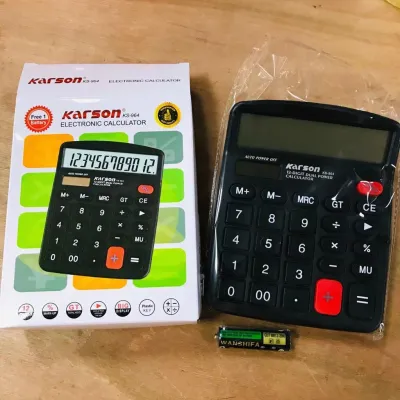
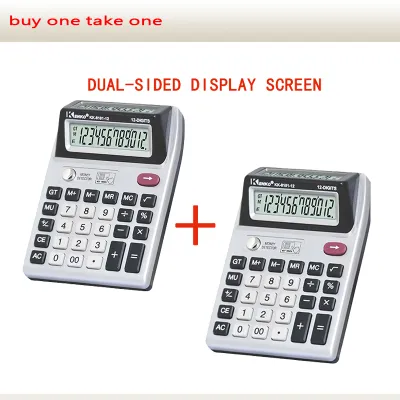
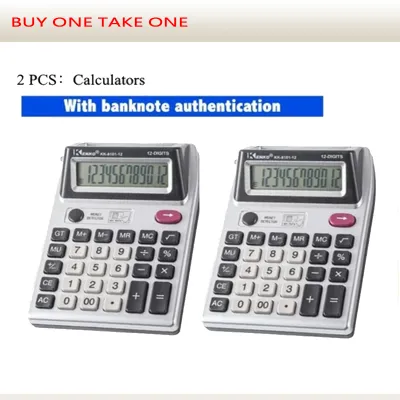
A basic calculator is designed for straightforward, everyday arithmetic. Its primary function is to assist with quick calculations that do not require multi-step algebraic logic. On the face of these devices, you will typically find keys for addition, subtraction, multiplication, division, percentages, and square roots. Most also include basic memory keys like M+, M-, and MRC to store a single running total.
Products mentioned in this guide
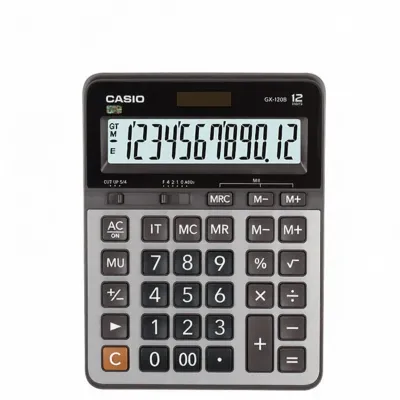
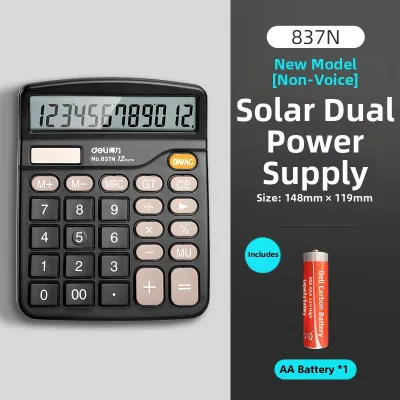
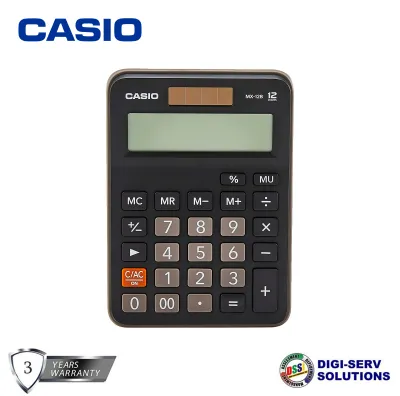
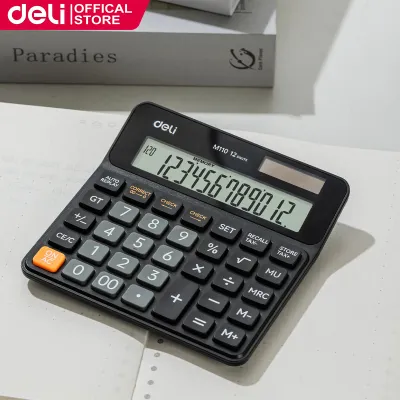

Prices are valid at publication and may change. Please refer to the product page for the latest price.

However, these devices have clear functional boundaries that make them unsuitable for advanced academic work. They lack the ability to process trigonometric functions such as sine, cosine, and tangent. You will not find keys for logarithms, natural logs, exponents, or complex fractions. Furthermore, basic calculators cannot handle statistical variables or store multiple equations, which limits their usefulness in higher-level science and math classes.
Despite these limitations, basic calculators are highly practical for specific academic and daily tasks. They are ideal for general arithmetic, basic accounting, home economics, and introductory business math. In the Philippines, these durable devices are staple tools in local retail environments, market stalls, and classrooms where quick, simple calculations are the norm. Their simple LCD screens and rubber keys are highly resilient against tropical humidity, making them a reliable, low-maintenance choice for everyday use.
Academic Signs You Need to Upgrade to a Scientific Calculator
Recognizing when to transition to a scientific calculator can save you from struggling with complex homework assignments. The most obvious sign is encountering advanced mathematical functions in your textbooks. If your homework requires you to calculate angles using sine, cosine, or tangent, or if you are introduced to logarithmic scales, a basic calculator will no longer suffice.
Another critical sign is the need to calculate complex formulas with multiple parentheses. Scientific calculators are programmed with algebraic logic, meaning they natively follow the strict order of operations (PEMDAS or BODMAS). Instead of calculating each part of a formula separately and writing down intermediate steps, you can input the entire multi-step equation into a scientific calculator to get an accurate result instantly.
Science classes like physics and chemistry also demand the use of standard form, also known as scientific notation. When calculating values involving extremely large numbers like Avogadro’s number or incredibly small numbers like Planck’s constant, a basic calculator’s eight-digit screen will simply display an error message. Scientific calculators easily handle these exponents and complex fractions, allowing you to focus on understanding the scientific concepts rather than manual decimal shifting.
Finally, pay close attention to explicit instructions from your teachers or professors. Instructors often list specific calculator requirements in their course outlines or laboratory manuals. If your class involves statistical analysis, data plotting, or complex number operations, your teacher will likely require a scientific model to ensure you can keep up with the classroom demonstrations and practical exercises.
How to Check Your Syllabus and Exam Rules
Before purchasing any calculator, it is vital to check your official academic rules to avoid buying a device that is banned in the exam hall. Every course syllabus or subject handbook typically outlines the permitted calculator tiers. Some courses may allow any non-programmable model, while others might restrict students to a specific list of approved brands and model numbers.
Standardized testing boards and national licensing examinations maintain incredibly strict regulations regarding calculator usage. For instance, professional board exams and college entrance tests in the Philippines often publish an official list of allowed calculator models. Bringing a prohibited device to these high-stakes exams can result in immediate disqualification, making it essential to cross-reference your calculator’s model number with the latest official guidelines.
If your syllabus is vague or does not mention calculator policies, consult your teacher or professor directly before the semester begins. They can provide clarity on what features are necessary for the coursework and what limitations are enforced during quizzes and exams. Asking early prevents the inconvenience of purchasing a device that you cannot use for your midterms or finals.
Understanding why certain advanced features are banned can help you choose a compliant model. Exams generally prohibit calculators with Computer Algebra Systems (CAS) because these systems can perform symbolic algebraic manipulation, essentially solving equations for you. Models with QWERTY keyboards, wireless communication, or internet connectivity are also banned to prevent cheating and unauthorized sharing of information during testing.
A Quick Checklist to Make Your Final Decision
To finalize your decision, use this structured checklist to evaluate your academic needs and budget.
Step 1: List Your Subjects Write down all the math and science subjects you will take over the next two semesters. If your list includes algebra, geometry, physics, chemistry, or statistics, you will almost certainly need a scientific model.
Step 2: Identify Required Functions Look at your textbooks or course descriptions to see if you will encounter exponents, trigonometry, or scientific notation. If these concepts are present, a basic calculator will not be able to perform the necessary operations.
Step 3: Verify Exam Compliance Check the calculator guidelines for your school’s department or the national testing boards you plan to face. Ensure the model you choose does not feature banned capabilities like programmable memory or wireless connectivity.
Step 4: Consider Longevity and Budget Evaluate your budget in ₱ and think about the long term. While a basic calculator is highly affordable, investing in a durable scientific calculator early in your high school years can carry you all the way through college, saving you from buying multiple devices over time.
Frequently Asked Questions (FAQ)
Can I use a scientific calculator for basic math classes?
In most standard classrooms and basic math courses, using a scientific calculator is generally permitted. However, doing so can sometimes be counterproductive for younger students. The steeper learning curve of an advanced device can distract from learning foundational concepts, and there is a risk of relying on the calculator’s functions instead of mastering manual arithmetic.
Are basic calculators allowed in college?
Basic calculators are widely allowed in college, particularly for non-STEM majors where students only need to satisfy general education math requirements. However, if your degree path includes nursing, engineering, business administration, or finance, a basic calculator will quickly prove insufficient. These fields require specialized scientific, graphing, or financial calculators to handle complex formulas and statistical data.
What is the difference between a scientific and a graphing calculator?
A scientific calculator handles complex numbers, trigonometry, and advanced formulas but displays results on a standard, multi-line text screen. A graphing calculator features a much larger, high-resolution screen capable of plotting equations, visualizing data curves, and running custom programs. Graphing models are typically required only for advanced calculus, engineering, or specific university-level mathematics courses.
Community discussion
Share your experience or ask a question. Comments are reviewed before publication.