
To create jewelry or craft items that last, the critical step is matching the bead’s inner hole diameter with the thickness of your stringing material. If the hole is too small, the cord will fray or simply refuse to pass through; if it is too large, the bead will wobble, slide unevenly, or swallow your securing knots. Achieving a professional finish requires understanding how these dimensions interact and choosing the correct clearance for your specific project.
Understanding Bead Hole and Stringing Material Specs
Bead manufacturing relies on precise measurements, typically expressed in millimeters (mm). This standard applies globally to both the outer diameter of the bead and the inner diameter of its drill hole. When purchasing supplies online or at local craft shops in the Philippines, you will find that a bead listed as “8mm” refers to its outer size, while its hole size is a separate specification that must be checked independently.
For metal wires, the sizing system shifts to wire gauge, such as American Wire Gauge (AWG). Understanding gauge requires remembering an inverse relationship: a higher gauge number represents a thinner wire. For instance, a delicate 24-gauge wire is approximately 0.5mm thick, whereas a sturdy 18-gauge wire is about 1.0mm thick. When planning a project, you must convert these gauge sizes into millimeters to ensure they will pass through your selected beads.
Products mentioned in this guide
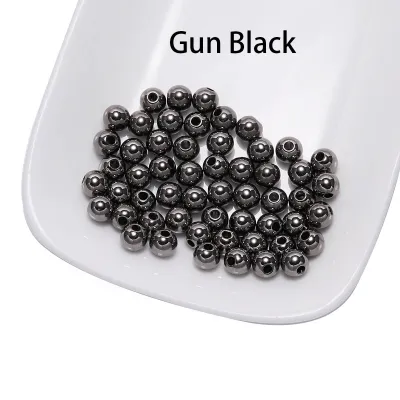
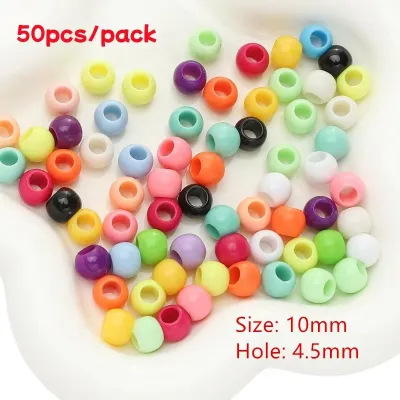

Prices are valid at publication and may change. Please refer to the product page for the latest price.
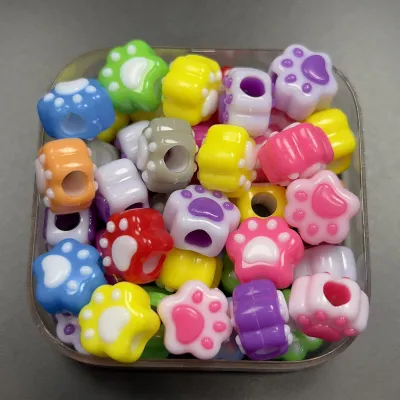
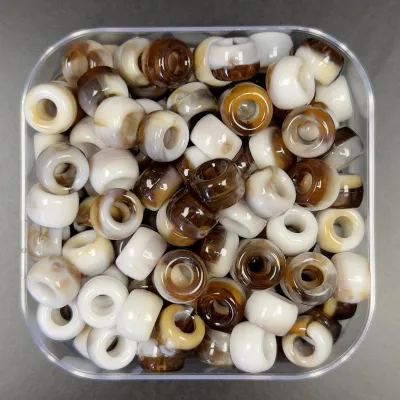
In the jewelry-making market, you will frequently encounter terms like “large hole” or “big hole” beads. While standard beads usually feature drill holes ranging from 0.5mm to 1.0mm, large hole beads generally offer openings between 2.0mm and 5.0mm, or even wider. These generous channels are designed specifically to accommodate thicker stringing materials that would otherwise fail to fit standard beads.
A common pitfall for beginners is assuming that a larger bead automatically features a larger hole. In reality, a massive 20mm hand-carved wooden bead might only have a narrow 1mm hole drilled through its center. Conversely, a tiny 4mm metal spacer bead might be designed with a 2mm hole to slide over thick cords. Because outer dimensions do not dictate internal clearance, always verify the exact hole specification before finalizing your purchase.
Matching Bead Holes to Cords, Chains, and Wires
Selecting the perfect pairing between your bead and stringing material prevents structural failure and ensures your jewelry drapes naturally. Different materials behave uniquely under tension and movement, requiring specific clearance tolerances.

Cords, Threads, and Thin Wires
Flexible materials like nylon thread, elastic cords, thin leather, and multi-strand flexible beading wires are the backbone of classic bead weaving and stringing. For these materials, applying a practical clearance rule of thumb is essential: the bead hole should be at least 0.1mm to 0.2mm larger than the actual diameter of the cord. This small margin of clearance allows the cord to slide through smoothly without friction, which prevents the material from fraying over time.
The material combination also dictates how smoothly the beads will glide. When pairing rougher materials, such as raw hemp or cotton thread, with glass or ceramic beads, a larger clearance is necessary to prevent the abrasive surfaces from wearing down the fibers. You can verify this by performing a simple sliding test: slide a single bead back and forth along a scrap piece of your cord to observe if any fibers lift or pill.
Furthermore, if your design requires passing the thread through the same bead multiple times—such as in bead weaving, off-loom stitches, or when securing a knot—the hole must be significantly wider. For a double pass, the bead hole must accommodate twice the cord’s thickness plus a margin for clearance. If you are using a 0.5mm thread and plan to loop back through, a bead hole of at least 1.2mm is recommended to prevent the needle from getting stuck or splitting the existing thread.
Chains, Thick Cords, and Rigid Wires
Bulky, rigid, or complex stringing materials present a different set of challenges. Metal chains, thick leather cords, and stiff memory wires require much larger bead holes to allow for natural movement and drape. If a bead’s hole is too tight on a rigid wire, the bead cannot slide freely, causing the wire to bend sharply. This bending weakens the metal structure and can lead to sudden breakage.
When stringing beads directly onto finished metal chains, you must look beyond the nominal thickness of the chain links. A critical checkpoint is the chain’s end-pieces: the bead hole must be large enough to slide over the jump rings, clasps, or end-caps that are already attached to the chain. If these components cannot pass through, you will need to assemble the chain elements after the beads are in place, which requires specialized jewelry pliers and findings.
Before working with rigid memory wire, always check the manufacturer’s maximum thickness rating. Forcing a thick, hardened steel wire through a fragile glass or gemstone bead can cause immediate cracking. If you feel any resistance during assembly, stop immediately; forcing the fit compromises both the structural integrity of the wire and the safety of the bead.
When to Choose Large Hole Beads for Your Projects
Large hole beads are not merely a stylistic choice; they serve vital functional roles in various jewelry designs and craft applications. Understanding when to deploy these specialized components can elevate both the durability and the aesthetic of your handmade pieces.
In projects that utilize heavy stringing materials, such as macrame wall hangings, braided paracord items, or thick leather wrap bracelets, large hole beads are indispensable. These crafts often use cords ranging from 2mm to 4mm in thickness, especially in tropical climates like the Philippines where durable, sweat-resistant nylon and synthetic cords are popular for daily wear. Standard beads simply cannot accommodate these robust materials, making “beads big hole” specifications a necessity.
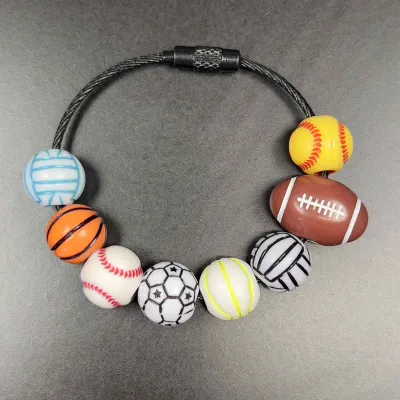
Another primary function of large hole beads is hiding unsightly hardware and finishing elements. Crafters often use them to conceal bulky knots, crimp tubes, or clasp assemblies. By sliding a large hole bead over a knot tied in elastic cord, you can tuck the knot inside the bead’s cavity, securing it with a small drop of jewelry adhesive if necessary. This technique creates a seamless, professional look while protecting the knot from rubbing against the skin.
Additionally, large hole beads excel as focal points or “slider” beads in multi-strand designs. When creating a necklace with three or four thin nylon threads, a single large hole bead can act as a central gathering point. This allows multiple strands to merge into a single channel before splitting again, keeping the design structured and preventing the individual threads from tangling during wear.
How to Measure and Verify Compatibility Before Stringing
To avoid the frustration of mismatched supplies mid-project, establish a reliable verification routine before you begin stringing. Relying on visual estimation often leads to errors, as microscopic differences in millimeter sizes are difficult to judge by eye.
Investing in a simple tool, such as a sliding brass bead gauge or a digital caliper (which can be purchased on local online marketplaces for around ₱200 to ₱500), is the most accurate way to measure your materials. Use the caliper to measure the outer diameter of your cord under light tension, as elastic and textile cords can compress when pulled. Next, use the internal measuring jaws of the caliper to find the true inner diameter of the bead hole.
Always conduct a “dry run” test before committing to your final design. Thread a single bead, along with any planned jump rings or clasps, onto a test piece of your stringing material. Slide the bead back and forth to check for friction, and verify that the bead does not slip over your terminating knots or crimps. If the bead slides too loosely or swallows the knot, you may need to add a small, small-hole spacer bead as a buffer.
Never attempt to force a thick cord or wire through a tight bead hole. The pressure can easily shatter delicate glass, chip expensive semi-precious gemstones, or shred the outer fibers of your cord. If you are working with soft materials like wood, bone, or soft natural stones, you can use a hand tool called a bead reamer to carefully enlarge the hole. Dip the reamer tip in water to act as a lubricant and minimize dust, then rotate it slowly inside the hole. However, always check the manufacturer’s material limits first; attempting to ream hard materials like tempered glass, porcelain, or hardened metals without professional rotary tools will result in broken beads and ruined supplies.
Frequently Asked Questions (FAQ)
Does a larger bead always have a larger hole?
No, the outer diameter of a bead and its inner hole size are completely independent specifications. A large 15mm ceramic bead may be manufactured with a tiny 0.8mm hole intended for delicate thread, while a small 5mm metal spacer bead might feature a wide 3mm hole designed to slide over thick leather. Always read the product’s technical specifications carefully rather than assuming the hole size based on the bead’s overall physical presence.
What if my bead hole is slightly too small for my cord?
If you are working with soft, organic materials such as wood, bamboo, pearls, or soft gemstones, you can gently enlarge the opening using a manual bead reamer. For harder materials like glass, crystal, or metal, reaming is highly risky and can shatter the bead. In these cases, it is safer to switch to a thinner stringing material, use a different bead with a verified larger hole, or utilize a transitional jump ring or thread adapter to connect the components.
Community discussion
Share your experience or ask a question. Comments are reviewed before publication.