
Selecting the right 2026 planner with calendar is a highly personal decision that directly impacts your daily productivity and mental clarity. Whether you are navigating a demanding corporate role in a bustling business district, managing university courses, or organizing a creative freelance business, your planner serves as your primary tool for offloading mental clutter. The most effective planner does not simply list dates; it aligns with how your brain processes time, tasks, and long-term goals under daily pressure.
To find a tool that you will consistently use throughout the year, you must look beyond aesthetic appeal. A planner’s physical construction—including its paper weight, binding style, and layout—must withstand daily handling and match your writing instruments. By understanding your specific organizational habits and matching them to the correct physical specifications, you can select a 2026 planner that remains a reliable companion from January through December.
How to Choose the Right 2026 Calendar Planner for Your Style
An effective 2026 planner with calendar relies on a dual-view system: a high-level monthly calendar overview for long-term planning paired with a detailed daily or weekly breakdown for immediate task execution. The monthly view allows you to plot deadlines, travel dates, and major events, giving you a broad visual representation of your time. The daily or weekly spreads are where you manage the granular details of your schedule, ensuring that your daily actions align with your broader monthly commitments.
Products mentioned in this guide
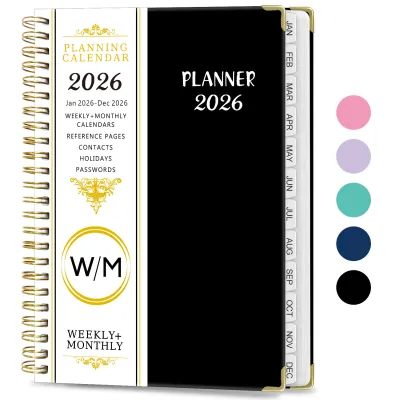
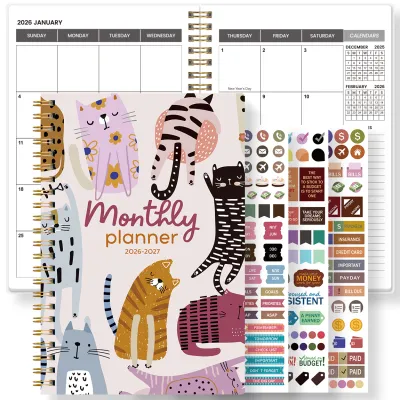
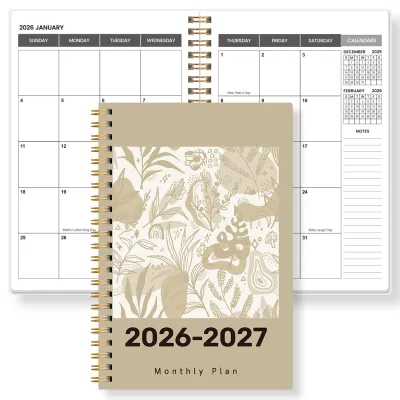
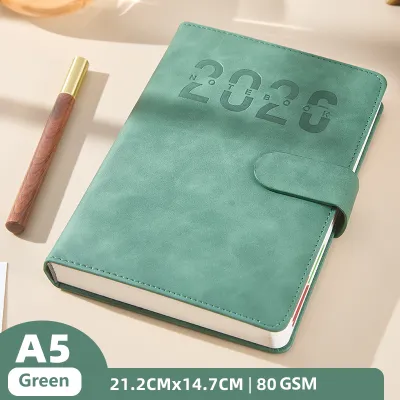
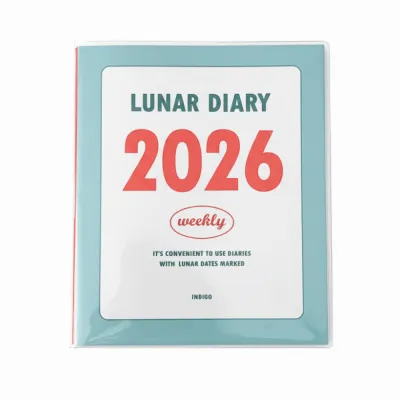
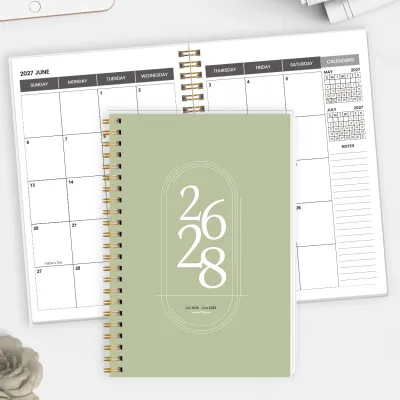
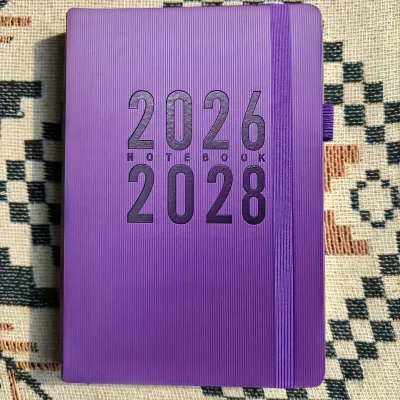
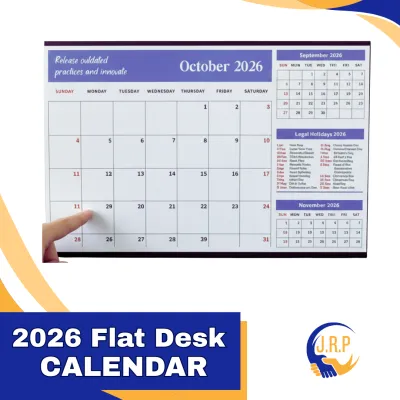
Prices are valid at publication and may change. Please refer to the product page for the latest price.
Matching your daily cognitive load to the planner’s physical structure is the foundation of a sustainable planning habit. If your day is packed with back-to-back meetings and hourly appointments, a minimalist notebook with blank pages will quickly cause organizational friction. Conversely, if you prefer to use your planner for creative reflection, memory-keeping, or flexible task lists, a rigid hourly grid will feel restrictive and leave you with frustratingly empty sections. Identifying how you naturally process tasks is the first step in narrowing down your options.
Four primary planning styles dominate the organizational landscape: time-blocking, creative journaling, goal-tracking, and academic scheduling. Time-blockers require strict hourly grids to allocate specific periods to dedicated tasks. Creatives benefit from flexible dot-grid layouts that accommodate sketches, hand lettering, and custom spreads. Goal-setters need structured prompts, habit trackers, and reflection spaces to maintain focus on long-term milestones. Students require lightweight, durable weekly layouts designed to track assignments, exams, and extracurricular activities.
Because a planner is a physical tool that you will carry and handle daily, tactile comfort and material durability are just as important as the printed layout. A planner that is too heavy will be left behind on your desk, while one with fragile binding will fall apart before the mid-year mark. Paper quality, measured in grams per square meter (GSM), determines how your ink behaves on the page. Selecting the right combination of binding, cover material, and paper weight ensures that your planner remains functional and intact throughout 2026.
Top 2026 Planner Recommendations by Planning Style
For the Time-Blocker: Hourly & Minimalist Layouts
Busy professionals, medical students, and freelancers managing multiple client appointments require a structured layout that treats time as a finite resource. For these individuals, a weekly or daily layout featuring a vertical hourly grid is highly effective. These grids typically run from 6:00 AM to 9:00 PM, allowing you to visually block out intervals for meetings, deep work, and personal errands. This visual representation of your day helps prevent overcommitment and highlights open windows of free time.

When shopping for an hourly planner, prioritize lay-flat binding, such as Smyth-sewn or wire-o designs. This construction allows the planner to sit completely flat on your desk next to your keyboard, facilitating quick updates during calls. Look for ultra-smooth, medium-weight paper ranging from 80 GSM to 100 GSM. This weight is optimized for rapid writing with fine-point gel pens or reliable ballpoints, ensuring the ink dries quickly and does not smudge when you turn the page during a fast-paced workday.
To find these layouts, search for established daily planner series from premium international stationery brands or local minimalist stationery designers on online marketplaces. Many of these brands offer clean, monochrome covers and understated interior typography that keeps the visual focus entirely on your schedule. These minimalist designs eliminate unnecessary decorative elements, leaving maximum space for your time blocks and daily priorities.
However, hourly planners have distinct physical limitations. Because they dedicate an entire page or a large vertical column to a single day, they are significantly thicker and heavier than standard notebooks. If you commute daily via public transit or carry a slim laptop bag, a thick daily planner can add substantial weight to your load. Consider whether you need a desk-bound planner that stays in your office or a more compact weekly version that balances hourly scheduling with portability.
For the Creative: Dot Grid & Bullet Journal Formats
Artists, hobbyists, and dedicated bullet journalists often find pre-printed lines and rigid calendar boxes restrictive. If you prefer to design your own weekly spreads, track daily moods, or incorporate watercolor washes, sketching, and calligraphy into your planning, a flexible dot-grid notebook is the ideal choice. These formats provide a subtle guide for straight lines and layouts without dictating where your writing must start or stop.
For creative planning, paper quality is the most critical specification. You must verify that the notebook features thick, high-quality paper of at least 100 GSM to 120 GSM, or even heavier if you plan to use wet mediums. This thickness prevents ink ghosting and bleed-through when using water-based markers, brush pens, highlighters, or fountain pens. A durable hardcover is also essential, as it provides a sturdy writing surface when you are working away from a desk and protects your artistic spreads from bending.
When searching for creative formats, look for premium dot-grid notebooks that include dedicated 2026 calendar inserts, pre-printed monthly divider tabs, or built-in index pages. Several specialized bullet journal brands offer these hybrid structures, giving you the freedom of blank dotted pages alongside a few structured reference sheets to keep your yearly planning organized.
While highly rewarding, the primary limitation of a dot-grid planner is the time and effort required to set up your layouts. Drawing your own monthly calendars and weekly spreads requires a consistent time commitment. If your schedule becomes exceptionally busy, the task of designing your next week’s layout can become a source of stress. If you want an immediate, grab-and-go organizational tool, a pre-printed layout is a more practical choice.
For the Goal-Setter: Productivity & Habit Trackers
Entrepreneurs, fitness enthusiasts, and individuals dedicated to personal growth require a planner that acts as an active accountability partner. These planners go beyond simple scheduling by incorporating structured goal-setting frameworks, weekly habit-tracking grids, and dedicated spaces for monthly reflection. They are designed to help you break down large annual milestones into manageable weekly actions and daily habits.
An ideal goal-setting layout features a monthly calendar view followed immediately by quarterly goal sheets, weekly priority lists, and habit-tracking tables. Look for planners equipped with at least two ribbon bookmarks. This simple physical feature allows you to keep one bookmark on your current weekly spread and the second on your monthly habit tracker or long-term goal page, allowing you to toggle between them instantly without flipping through pages.
Search for productivity-focused planner brands that emphasize structured methodologies, such as the “12-week year” or quarterly sprint planning. These are widely available in national bookstores and specialized online stationery shops. These planners often feature durable, textured covers made of synthetic leather or heavy-duty book cloth, ensuring they can withstand constant handling throughout a year of goal pursuit.
Before purchasing, recognize that highly structured planners carry a specific trade-off. The abundance of prompts, reflection questions, and tracking grids can feel overwhelming if your daily routine is relatively straightforward. If you do not naturally enjoy filling out written reflections, these empty pages can create a sense of guilt. Ensure that the specific prompts and tracking structures align with your actual habits before committing to a highly structured system.
For the Student: Academic & Flexible Calendar Planners
High school and college students face a unique organizational challenge: balancing rotating class timetables, assignment deadlines, exam dates, and extracurricular activities. A student planner must offer a flexible weekly layout with ample space for checklist items and project notes. It must also be resilient enough to survive being tossed into a crowded backpack daily.
Prioritize lightweight materials to minimize the physical burden on your shoulders during long campus days. Look for planners with flexible, water-resistant covers made of PVC or treated cardboard, which protect the pages from spills, sudden tropical downpours, and the high humidity levels typical of the local climate. Additionally, ensure the planner includes a clear overview of local public holidays and academic breaks to help you plan study sessions and vacations accurately.
To find these student-friendly options, search for local stationery brands that release specific “Academic Year” or “Civil Year” planners. These are commonly stocked in national bookstores, campus co-ops, and local online retail shops. Many of these planners are designed with vibrant covers and practical inner pocket folders for storing loose handouts, syllabus sheets, and receipts.
To keep these planners affordable and lightweight, manufacturers often use lower-weight paper, typically between 70 GSM and 80 GSM. The limitation of this lighter paper is its susceptibility to ink ghosting. If you rely on vibrant highlighters or liquid ink gel pens to color-code your subjects, you must verify the paper’s performance or adapt your writing tools to avoid ink bleeding through to the reverse side of your schedule.
Essential Specs to Verify Before Checkout
To ensure your 2026 planner with calendar performs reliably under daily use, you should verify several technical specifications before finalizing your purchase. These details are often listed in the product description or can be checked physically in-store.
- Paper Weight and Texture (GSM): Grams per square meter (GSM) indicates the density of the paper. Standard office paper is typically 70 to 80 GSM, which works well for standard ballpoint pens and pencils. If you prefer writing with gel pens, highlighters, or fountain pens, select a planner with 100 GSM to 120 GSM paper to prevent unsightly bleeding and ghosting. Be aware that highly coated, smooth papers resist ink bleed but prolong drying times. In humid climates, this can lead to smudging if you close the planner too quickly.
- Binding Construction: The binding determines how easily your planner opens and how long it stays intact.
- Wire-O / Spiral: This binding allows the planner to lay completely flat and fold back on itself 360 degrees, which is excellent for writing on small desks or on your lap. However, the metal coils can sometimes distort over time if crushed in a bag.
- Stitched / Smyth-Sewn: This premium binding method sews folded groups of pages together. It is highly durable, allows the book to lay flat when open, and ensures pages do not fall out over time.
- Perfect-Bound: This method glues the pages directly to the spine. It is a more budget-friendly option, but the planner will resist laying flat, and the spine can crack under heavy daily use, causing pages to detach.
- Cover Durability and Climate Fit: The high humidity and wet seasons of the tropical climate can take a toll on paper products. Avoid raw, untreated fabric or soft paper covers if you plan to carry your planner daily without a protective sleeve, as they easily absorb moisture, warp, and attract mold. Opt instead for water-resistant covers, such as polyurethane (PU) synthetic leather, hard bookboard, or flexible plastic (PVC) covers that can be easily wiped clean.
- Calendar Accuracy and Date Ranges: Always verify the exact date range of the planner before checking out. Sellers frequently list "Academic Year" planners (running from mid-2025 to mid-2026) alongside "Civil Year" planners (running strictly from January to December 2026). Carefully read the product title and description to ensure the calendar covers the exact months you require.
- Local Relevance: Confirm whether the planner's monthly calendar views include local public holidays and long weekends. Planning your work schedule, school projects, or personal trips requires accurate knowledge of local non-working days. While international planners offer excellent paper quality, they often omit local holiday listings, requiring you to write them in manually.
Quick Comparison of Planner Layouts for 2026
| Planning Style | Ideal Calendar View | Recommended Paper Spec | Best Binding Type | Main Limitation |
|---|---|---|---|---|
| Time-Blocker | Monthly + Hourly Weekly | 80 to 100 GSM (Smooth) | Stitched or Wire-O | Thicker and heavier to carry daily |
| Creative | Dot Grid + Calendar Insert | 100 to 120+ GSM (Thick) | Stitched (Lay-Flat) | Requires significant setup time |
| Goal-Setter | Monthly + Goal & Habit Spreads | 90 to 100 GSM | Stitched or Hardcover | Structured prompts can feel restrictive |
| Student | Monthly + Checklist Weekly | 70 to 80 GSM (Lightweight) | Wire-O or Flexible Softcover | Thinner paper is prone to ink ghosting |
Frequently Asked Questions (FAQ)
When is the best time to buy a 2026 planner in the Philippines?
Civil year 2026 planners generally become available on local bookstore shelves and e-commerce platforms between late Q3 and Q4 of 2025, typically starting around September or October. Purchasing your planner during this initial release window ensures you have the widest selection of layouts, cover designs, and paper types. If you wait until January or February of 2026, you may find clearance discounts, but stock is usually highly limited, and popular layouts are often sold out.
How do I prevent ink from bleeding through my planner pages?
To prevent ink from bleeding through, verify that the planner uses paper of at least 100 GSM. If your planner features thinner paper (70 to 80 GSM), switch to fine-point ballpoint pens, quick-dry gel pens, or high-quality colored pencils, which deposit less wet ink onto the page. You can also place a sheet of thick cardstock or blotting paper directly behind the active page to absorb excess ink. Always perform a small ink test on an inconspicuous back page of your planner before using a new pen or highlighter.
What is the difference between a civil year and an academic year planner?
A civil year planner runs from January to December 2026, aligning with the standard calendar year. An academic year planner is structured around school and university schedules, typically starting in June, July, or August of 2025 and ending in mid-2026. Students, teachers, and academic professionals should carefully check the start and end months listed in the product description before checking out to ensure the planner covers their active school terms.
Community discussion
Share your experience or ask a question. Comments are reviewed before publication.