
A high-quality big calendar serves as the central visual anchor for any busy household or productive office in the Philippines. When coordinating school schedules, office deadlines, and family events, a large-format physical calendar provides an immediate, glanceable overview that digital screens simply cannot replicate. To find the ideal model, you must prioritize paper thickness to resist tropical humidity, choose a layout that matches your writing style, and select a durable binding that keeps the pages hanging flat throughout the year.
Selecting the right calendar involves balancing aesthetic preferences with practical stationery specifications. This guide breaks down the essential criteria for choosing a large wall calendar, analyzes the top layout styles available in the local market, and provides actionable tips for mounting and maintaining your calendar in Philippine conditions.
How to Choose the Right Big Wall Calendar
Choosing a large-format calendar requires looking beyond attractive cover designs. Because a wall calendar is a functional tool used daily, its physical construction directly impacts how easy it is to write on, read from a distance, and preserve over twelve months.
Products mentioned in this guide
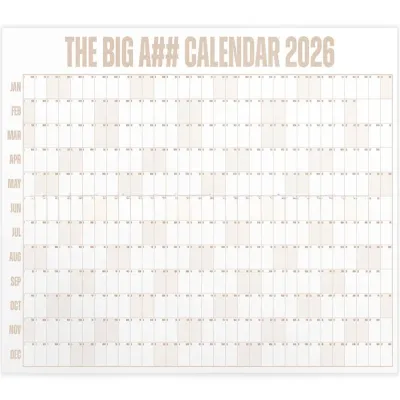
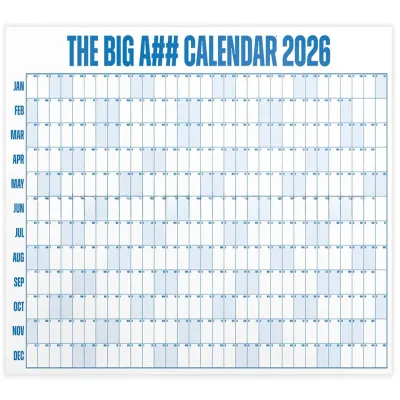
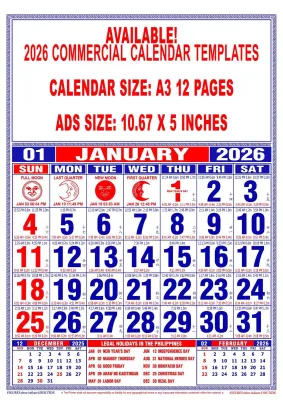
Prices are valid at publication and may change. Please refer to the product page for the latest price.
Paper Quality and Weight
The paper weight, measured in grams per square meter (gsm), is the most critical factor in determining how well a calendar handles ink. In the humid climate of the Philippines, paper naturally absorbs moisture from the air, making it softer and more prone to ink feathering and bleed-through.
For a reliable writing experience, look for calendars with a paper weight of at least 100 gsm to 120 gsm. Thinner papers (such as standard 70 gsm or 80 gsm copy paper) will easily allow gel pens, rollerballs, and markers to ghost or bleed through to the next month’s page. Uncoated, matte paper is generally preferred for wall calendars because it absorbs ink quickly, reducing the risk of smudging when you write. Coated or glossy paper may look vibrant, but it requires specialized permanent markers or specific ballpoint pens to prevent long drying times and accidental smears.
Grid Size and Writing Space
A large calendar is only useful if its daily blocks can comfortably accommodate your entries. Before purchasing, evaluate the daily grid dimensions against your typical planning needs.
If you plan to write multiple appointments, names, or tasks within a single day, aim for individual grid cells that measure at least 1.5 inches by 1.5 inches (approximately 3.8 cm by 3.8 cm). For high-density scheduling, look for oversized options with 2-inch (5 cm) cells. Additionally, consider whether you prefer ruled grids—which feature faint horizontal lines to keep your handwriting neat—or unruled grids, which offer complete visual freedom for sketching, color-coding, or using custom stickers.
Binding and Mounting
The binding mechanism determines how easily you can turn pages and how flat the calendar hangs against your wall.
- Twin-Loop Wire Binding: This is the gold standard for large wall calendars. A sturdy metal wire spine allows you to flip pages a full 360 degrees without creasing the paper. It usually includes a built-in wire hanging loop that centers the weight, ensuring the calendar hangs straight.
- Glued Top Binding: Often found on desk pads that double as wall calendars, this style features sheets that you tear off at the end of each month. While it provides a completely flat writing surface, it does not allow you to refer back to previous months once a page is discarded.
- Punched-Hole Binding: Common in traditional saddle-stitched (stapled) calendars, this design requires you to hang the calendar via a single punched hole. Over time, the weight of the hanging pages can cause the paper around the hole to tear, especially in humid environments where the paper fibers weaken.
Layout Orientation
Wall calendars are generally designed in either landscape (horizontal) or portrait (vertical) orientations. Your choice should depend on the physical space available on your wall and your typical viewing distance.
Landscape calendars are ideal for wide, open wall spaces, such as above a desk, sideboard, or hallway console. They naturally align with the human visual field, making it easy to scan a full week from left to right. Portrait calendars are better suited for narrow spaces, such as columns, doors, or the side of a refrigerator. When planning your layout, ensure the calendar is mounted at eye level—approximately 57 to 60 inches from the floor—so that users of various heights can read and write on it comfortably.
Top Big Wall Calendar Layouts for Home and Office Needs
Different environments demand different organizational structures. To help you find the perfect fit, we have categorized the best large-format calendars available in the Philippines into three distinct layout styles. These options are highly accessible through local stationery stores, specialty paper boutiques, and major online marketplaces.

The Family Command Center (Monthly Grid with Notes)
The Family Command Center layout is designed for households coordinating multiple overlapping schedules, extracurricular activities, and household chores. These calendars prioritize collaborative planning by combining a spacious monthly grid with dedicated columns for shared lists, reminders, and notes.
- Ideal For: Families, shared apartments, and individuals managing complex personal lives.
- Key Features: Extra-wide daily blocks, dedicated columns for weekly chores or grocery lists, and a robust hanging mechanism to withstand daily use by multiple family members.
Product Recommendations
Papemelroti Large Kraft Wall Calendar
- Approximate Price Range: ₱120 to ₱180
- Pros: Features thick, 100% recycled eco-friendly kraft paper that resists bleeding; charming hand-drawn local illustrations that add warmth to a home; very budget-friendly.
- Cons: The dark, rustic tan color of the kraft paper can make light-colored highlighters or pastel gel pens difficult to read.
- Ideal User: Eco-conscious families looking for a cozy, rustic organizer with plenty of space for daily scribbles.
Limelight Undated Monthly Wall Planner
- Approximate Price Range: ₱250 to ₱350
- Pros: Undated format allows you to start planning at any point in the year without wasting pages; clean white paper provides excellent contrast for color-coded pens; includes a generous side column for weekly goals.
- Cons: Requires you to manually write in the dates for every month, which can be time-consuming during initial setup.
- Ideal User: Busy households that want a highly customizable, structured layout without being locked into a specific calendar year.
The Office Project Tracker (Weekly or Daily Breakdown)
In a professional setting, a calendar must serve as a high-visibility tool for tracking project milestones, client deadlines, and team availability. The Office Project Tracker format emphasizes linear progress, often utilizing weekly columns or segmented daily blocks that make it easy to see project phases at a glance.
- Ideal For: Corporate offices, co-working spaces, creative studios, and agile project teams.
- Key Features: Clean, professional typography; minimal decorative elements; horizontal line structures that mimic gantt charts; and durable backing boards that keep the calendar rigid.
Product Recommendations
Veco Large Desk Pad & Wall Calendar
- Approximate Price Range: ₱180 to ₱280
- Pros: Dual-purpose design can lie flat on a desk or hang on a wall; features a clean, professional grid with clear week numbers; thick backing board prevents warping.
- Cons: Uses a glue-bound top, meaning you must tear off and discard the sheet to move to the next month, making it impossible to flip back to past notes.
- Ideal User: Project managers and team leads who need a massive, high-contrast visual aid for tracking weekly milestones during team meetings.
Generic A3 Wire-Bound Professional Wall Calendar
- Approximate Price Range: ₱200 to ₱350
- Pros: Features a sturdy twin-wire binding with a central hanging loop; clean, minimalist grid lines with ample margin space for project keys; high-quality uncoated paper that accepts ballpoint and gel inks smoothly.
- Cons: The stark, purely functional aesthetic may feel too sterile for home environments.
- Ideal User: Small business owners and office teams who require a reliable, no-nonsense deadline tracker.
The Minimalist Monthly Overview (Clean, High-Visibility Grid)
For those who find busy designs distracting, the Minimalist Monthly Overview offers a clean, high-contrast grid focused entirely on date visibility and flexible planning. These calendars strip away decorative borders, illustrations, and unnecessary text, leaving maximum white space for your own notes, color-coding systems, or sticky notes.
- Ideal For: Students, remote workers, creative professionals, and fans of minimalist design.
- Key Features: Ultra-clean sans-serif typography, thin grid lines, generous white space, and premium paper textures.
Product Recommendations
Muji-Style Minimalist Large Wall Calendar (A2 or A3)
- Approximate Price Range: ₱300 to ₱500
- Pros: Exceptional aesthetic simplicity that complements modern interiors; premium, smooth paper that offers an incredibly satisfying writing feel; highly visible from across a large room.
- Cons: Higher price point relative to local brands; thin grid lines require neat handwriting to maintain the clean visual appeal.
- Ideal User: Creative professionals, architects, and students who want an elegant, distraction-free visual workspace.
Layout Comparison Summary
To help you quickly identify the best option for your workspace, the table below summarizes the key differences between these three primary calendar layouts.
| Calendar Type | Best For | Layout Style | Writing Space | Ideal Pen Type |
|---|---|---|---|---|
| Family Command Center | Households & personal life | Monthly grid with side notes | Large (approx. 1.8" cells) | Gel pens, fine-liners, water-based markers |
| Office Project Tracker | Offices & project teams | Weekly/daily block breakdown | Extra-large (A3/Desk pad size) | Ballpoint pens, permanent markers |
| Minimalist Monthly | Creative professionals & students | Clean, high-contrast monthly grid | Medium to Large (uncluttered) | Gel pens, fine-point drawing pens |
How to Mount and Maintain Large Wall Calendars
Because big wall calendars carry significant physical weight—especially multi-page wire-bound models—proper mounting and maintenance are essential. In the Philippines, high humidity and temperature fluctuations can affect both adhesives and paper stability, requiring specific care steps.
Mounting Methods for Philippine Walls
Most homes and offices in the Philippines feature painted concrete walls, plywood partitions, or gypsum drywall. Each surface requires a specific mounting approach to ensure your calendar stays secure without damaging the paint.
- Painted Concrete Walls: Standard adhesive strips often struggle to grip textured concrete, especially when humidity levels rise. For concrete, use heavy-duty adhesive hooks rated for at least 1.5 to 2 kg, and ensure you clean the wall surface with rubbing alcohol before application. Alternatively, a small concrete nail provides a permanent, highly secure anchor.
- Plywood and Gypsum Drywall: These surfaces are ideal for medium-duty adhesive hooks or simple pushpins. If using adhesive strips, always check the manufacturer's instructions regarding weight limits and curing times (usually 24 hours before hanging the calendar).
- Glass and Metal Surfaces: If mounting your calendar on a glass partition or a refrigerator door, high-quality suction hooks or heavy-duty magnetic hooks work exceptionally well and leave zero residue.
Page Management and Tearing
To keep your calendar looking neat throughout the year, manage page transitions carefully based on the binding type.
- For Wire-Bound Calendars: Simply flip the page over the wire spine. Do not attempt to tear pages out unless they are explicitly perforated, as ripping paper from a wire spine can distort the wire loops and cause the calendar to hang unevenly.
- For Glue-Bound or Perforated Calendars: Hold the top binding strip down firmly with one hand while pulling the page downward and outward with the other. Pulling at an angle can cause the paper to rip jaggedly, leaving unsightly scraps along the top border.
Environmental Care in Tropical Climates
The tropical climate of the Philippines presents unique challenges for paper products. High humidity can cause paper to soften and curl, while direct sunlight can fade ink and dry out adhesives.
- Avoid Moisture Zones: Do not hang your calendar directly under an air conditioning unit (where condensation can drip) or near open windows where sudden rain showers could drench the paper. Keep it away from high-humidity areas like kitchens or bathroom entryways.
- Prevent Airflow Damage: If your calendar is placed in the direct path of an electric fan, the pages may constantly flap and curl. To prevent this, secure the bottom corners of the current month to the wall using a small piece of removable mounting putty (tack).
- Sunlight Protection: Position the calendar away from direct afternoon sunlight. Ultraviolet rays will quickly fade colored inks, highlighters, and marker entries, making your schedule difficult to read over time.
Frequently Asked Questions (FAQ)
What pen works best on large wall calendars without bleeding through?
The ideal pen depends on your calendar’s paper weight and coating. For standard calendars (under 100 gsm), use a high-quality oil-based ballpoint pen; these inks sit on top of the paper fibers and rarely bleed. For premium calendars with paper weights of 100 gsm or higher, water-based gel pens and fine-liners (such as 0.5 mm or 0.7 mm tips) offer smooth writing and vibrant colors without ghosting. Always perform a quick ink test on a back page or a corner of the calendar before writing to verify drying speed and bleed resistance.
Are academic year calendars better than standard calendar year formats?
Academic year calendars (typically running from June or August to July of the following year) are highly beneficial for students, teachers, and parents coordinating school terms. They align perfectly with the school calendar system in the Philippines. However, for business operations, corporate tracking, and general household planning, a standard calendar year format (January to December) is much more practical as it aligns with the fiscal year and standard tax cycles.
How do I keep a large wire-bound calendar lying flat against the wall?
Large wire-bound calendars can sometimes curl outward at the bottom corners due to humidity or the natural curve of the paper roll during manufacturing. To keep the calendar flat, apply a small pea-sized piece of reusable mounting putty (such as Blu-Tack) to the back of the bottom corners and press them gently against the wall. Alternatively, you can clip a small, stylish binder clip to the bottom center of the calendar; the weight of the clip acts as a natural anchor, pulling the pages straight down.
Community discussion
Share your experience or ask a question. Comments are reviewed before publication.