
Selecting the right scientific calculator is one of the most critical decisions for Senior High School (SHS) and college students in the Philippines. With the academic year demanding rigorous calculations in mathematics, science, and engineering, finding a reliable tool during a calculator sale can save both money and stress. CASIO remains the gold standard in Philippine classrooms due to its durability, compliance with local board exam guidelines, and intuitive user interfaces. However, with multiple models available at various price points, choosing the one that aligns with your specific academic track—without overpaying for features you will never use—requires careful consideration.
How to Match CASIO Calculator Features to Your Academic Track
Before browsing any online marketplace or local bookstore for a calculator sale, you must identify the exact computational requirements of your curriculum. Philippine secondary and tertiary education systems are highly structured, meaning your academic strand or college major dictates the specific mathematical functions you will need daily.
For students in non-STEM strands such as Accountancy, Business, and Management (ABM), Humanities and Social Sciences (HUMSS), or the General Academic Strand (GAS), basic scientific functions are usually more than sufficient. These tracks primarily require foundational operations, including fractions, percentages, basic statistics (such as standard deviation and linear regression), and standard trigonometric functions.
Products mentioned in this guide
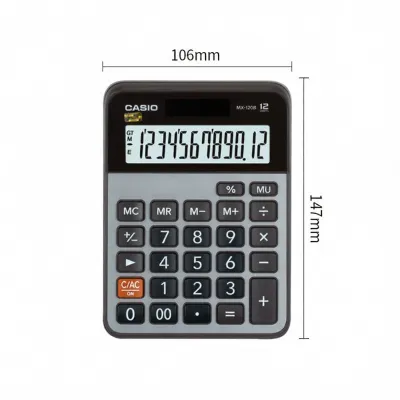
Prices are valid at publication and may change. Please refer to the product page for the latest price.
Conversely, students in Science, Technology, Engineering, and Mathematics (STEM) strands, as well as college majors in engineering, architecture, physics, chemistry, and advanced statistics, require advanced computational capabilities. These include numerical integration, differentiation, matrix calculations, vector operations, complex numbers, and equation solvers.
Another critical factor to consider is the strict “non-programmable” and “non-graphing” regulations enforced across Philippine universities and by the Professional Regulation Commission (PRC) for professional licensure board exams. Purchasing a calculator with graphing capabilities or programmable memory might seem like an upgrade, but it will result in the device being confiscated at the exam room door to prevent academic dishonesty.
Furthermore, display technology plays a major role in exam performance. Older generations, such as the classic MS (S-V.P.A.M.) or ES PLUS series, utilize multi-line segmented displays that can make complex fractional equations difficult to read. The newer ClassWiz CW and EX series feature high-resolution, menu-driven displays that mimic natural textbook layouts. This visual clarity significantly reduces input errors and speeds up calculation times during high-pressure, timed exams.
Here is a quick decision matrix mapping common Philippine academic tracks to the appropriate CASIO calculator tier:
| Academic Track / College Major | Recommended CASIO Tier | Key Functions Required | Exam Compliance |
|---|---|---|---|
| ABM / HUMSS / GAS | Entry-Level (e.g., fx-82 series) | Basic statistics, fractions, percentages, trigonometry | Fully compliant with high school and college exams |
| STEM (Senior High School) | Advanced (e.g., fx-991 / fx-570 series) | Quadratic equations, basic calculus, matrices, vectors | Fully compliant with high school exams |
| Business / Economics (College) | Entry to Mid-Level (e.g., fx-82 or fx-350 series) | Statistics, regression analysis, financial mathematics | Fully compliant with college exams |
| Engineering / Architecture (College) | Advanced (e.g., fx-991 series) | Numerical calculus, complex numbers, matrices, vectors, conversions | Must verify model against the latest PRC allowed list |
| Pure Sciences / Math (College) | Advanced (e.g., fx-991 series) | Base-n calculations, advanced statistics, equation solvers | Must verify model against university guidelines |
Top CASIO Scientific Calculators to Look for During a Calculator Sale
When promotional seasons arrive, understanding the distinctions between CASIO’s product lines helps you target the best deals. Let’s break down the primary models you should look for during a calculator sale, categorized by student needs and academic levels.

Essential Pick for Junior/Senior High and Non-STEM Tracks
For students who do not plan to pursue engineering or advanced sciences, the standard CASIO fx-82 series—particularly the fx-82ES PLUS or the newer fx-82CW ClassWiz—is the ideal entry-level standard. This tier is specifically designed to handle the core mathematics and science curricula mandated by the Department of Education (DepEd) for Junior High School and non-STEM Senior High School strands like ABM, HUMSS, and GAS.
The fx-82 series provides excellent support for standard scientific notation, basic statistical calculations (including mean, variance, and standard deviation), and fundamental trigonometric, logarithmic, and exponential functions. Because it lacks advanced features like matrix calculations or integration, it is incredibly straightforward to navigate, reducing the learning curve for students who may feel intimidated by more complex devices.
During back-to-school promotional events or double-digit monthly sales on major e-commerce platforms, the fx-82 series becomes an even more attractive option. Already positioned as a budget-friendly choice, applying store coupons and platform-wide vouchers can lower its price significantly. This makes it a highly affordable primary tool for high schoolers, or a reliable, low-cost backup unit for college students who want a secondary calculator in their bag in case of emergencies.
The All-Rounder for SHS STEM and College Engineering
For students enrolled in the SHS STEM strand or pursuing college-level degrees in engineering, architecture, computer science, or mathematics, the advanced CASIO fx-991 and fx-570 series (specifically the ClassWiz fx-991CW, fx-991EX, or their current equivalents) are the absolute gold standards. These models are packed with advanced computational power designed to handle complex academic workloads.
The key features of this tier easily justify its higher retail price. Students can perform numerical calculus (including integration and differentiation within specific limits), solve quadratic, cubic, and simultaneous linear equations, compute complex numbers, and perform matrix and vector calculations up to 4×4 dimensions. Additionally, the newer ClassWiz models include a spreadsheet-like function, which is incredibly useful for basic data tracking and iterative calculations without needing a computer.
These advanced capabilities are not just convenient; they are essential for surviving college-level calculus, physics, and engineering mechanics courses in the Philippines. Because these models are highly sought after, they are prime targets during a calculator sale. The premium retail price of the fx-991 series means that stacking e-commerce platform vouchers, shop-specific discounts, cashback offers, and free shipping promotions can yield substantial savings, making high-tier computational power accessible even on a tight student budget.
Upgrading from Older Models: Is the Newer ClassWiz Series Worth It?
Many students enter senior high school or college already owning an older CASIO model, such as the classic fx-991MS or fx-570MS, and wonder if upgrading during a sale period is truly necessary. While the older MS series is highly durable and has served generations of Filipino students, the technological leap to the newer ClassWiz (EX and CW) series is substantial.
The most immediate difference is the display. Older models use low-resolution, multi-line segmented screens where fractions are represented by an “L” shaped symbol (e.g., 1\l2 for one-half). The ClassWiz series features a high-resolution LCD that utilizes a natural textbook display, showing fractions, square roots, and exponents exactly as they appear in printed textbooks. This visual layout, combined with intuitive menu-driven navigation instead of cryptic key combinations, dramatically reduces the risk of input errors.
Furthermore, the newer ClassWiz models boast faster processing speeds. When calculating complex matrix inversions or numerical integration, older models can lag or take several seconds to display a result, whereas newer models process the data almost instantly. This speed difference can save precious minutes during high-pressure, timed exams.
An upgrade is highly recommended and worth the investment if you are transitioning into a curriculum heavy on calculus, advanced statistics, or engineering. However, if your remaining coursework only requires basic algebra and general statistics, your existing MS or ES model remains perfectly adequate, and you can safely skip the upgrade to save your budget for other academic supplies.
How to Spot Authentic CASIO Calculators and Maximize Sale Discounts
The popularity of CASIO calculators in the Philippines has unfortunately led to a flood of counterfeit products on online marketplaces. Buying a fake calculator not only deprives you of a warranty but can also lead to catastrophic failures during an exam due to inaccurate calculations or sudden system freezes.
When shopping during a calculator sale, you must keep an eye out for common red flags of counterfeit devices. Authentic CASIO calculators feature crisp, high-contrast LCD screens, whereas fakes often have washed-out displays with poor viewing angles. The physical buttons on an authentic unit provide tactile, clicky feedback, while counterfeit buttons feel mushy, loose, or have misaligned printed labels. Additionally, genuine CASIO packaging in the Philippines always includes a holographic security sticker, a unique serial number, and a QR code that can be scanned to verify authenticity on the official CASIO website.
To guarantee you are receiving an authentic product, purchase exclusively from official brand stores, authorized stationery retailers, or verified mall-based sellers on major e-commerce platforms. Avoid third-party listings with suspiciously low prices—if a high-end fx-991CW is being sold for a fraction of its standard retail price, it is almost certainly a counterfeit.
To maximize your savings safely, time your purchases around major shopping events, such as back-to-school campaigns (typically from June to August) or double-digit monthly sales (like 9.9, 10.10, 11.11, and 12.12). You can stack store-specific coupons with platform-wide discount vouchers and payment partner promotions. Some authorized sellers also offer student discount programs if you present a valid school ID. Lastly, always check the seller’s return policy and ensure the package includes a local warranty card before finalizing your checkout, giving you peace of mind throughout the school year.
Frequently Asked Questions (FAQ)
Are graphing calculators allowed in Philippine college and board exams?
Most Philippine universities, high schools, and the Professional Regulation Commission (PRC) strictly prohibit the use of graphing and programmable calculators during examinations. These advanced devices can store text, formulas, and custom programs, which violates academic integrity policies. Standard scientific calculators, particularly non-programmable models like the CASIO fx-991 or fx-82 series, are the standard requirement. Always check the official, updated list of allowed calculators published by the PRC or your university’s department head before purchasing a device for licensure exams.
How long does a CASIO scientific calculator battery typically last?
Most modern CASIO ClassWiz calculators feature a dual-power system (solar panel + backup button battery), which allows the device to operate seamlessly under normal classroom or exam room lighting. Under typical usage conditions, the internal button battery in a dual-power model can last upwards of five years, as the solar panel handles the primary power load. For older, non-solar models that rely solely on battery power, the lifespan is typically around three years. It is highly recommended to check your calculator’s screen contrast before exam season and keep a spare, compatible button battery (usually LR44 or CR2032, depending on the model) in your pencil case.
Community discussion
Share your experience or ask a question. Comments are reviewed before publication.