
Selecting the right writing instruments for scripture study and church services requires balancing delicate paper preservation with rapid, reliable performance. Whether you are highlighting a meaningful passage in your personal Bible or capturing a fast-paced sermon in your journal, your tools must perform flawlessly without damaging your pages. High-quality christian pens—especially those designed with inspirational scripture or elegant religious motifs—can serve as both beautiful expressions of faith and highly functional study tools when paired with the correct ink and tip specifications.
To make an informed choice, you must understand how different inks interact with delicate paper and how ergonomic designs support prolonged writing sessions. By focusing on technical features like ink composition, tip size, and drying speed, you can find the perfect pen that honors your study time and keeps your notes clean, legible, and preserved for years to come.
Understanding the Unique Constraints of Bible Paper and Sermon Notes
Standard Bible paper, often referred to as lightweight offset or scuff-resistant paper, is uniquely thin and delicate. Typically ranging between 20 to 40 grams per square meter (gsm), this paper is engineered to keep thick, multi-page volumes lightweight and portable. However, this extreme thinness means the paper is highly susceptible to three major writing frustrations: bleed-through, ghosting, and feathering. Bleed-through occurs when ink completely penetrates the paper fibers, showing up on the reverse side of the page and obscuring the text. Ghosting, or show-through, refers to the shadow of the writing visible on the other side due to the paper’s semi-transparency. Feathering happens when ink spreads horizontally along the paper fibers, causing sharp lines to become fuzzy and illegible.
Products mentioned in this guide
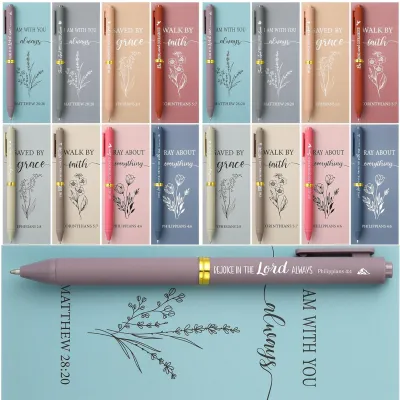
![[COD] SHPYHT TOY 30 Pcs Christian Bible Verse Pens Gifts Bulk Religious Inspirational Scripture Ballpoint Pen For Women Men Office Sunday School](https://img.lazcdn.com/g/p/dd494b3c91fcbdf82b93d6d8fc4aaa46.jpg_400x400q80.jpg_.webp)
Prices are valid at publication and may change. Please refer to the product page for the latest price.
In addition to paper limitations, church note-taking presents distinct situational challenges. During a fast-paced sermon, you must write quickly to capture key insights, scripture references, and personal reflections. This requires an ink that flows instantly without skipping, yet dries fast enough to prevent smearing as you turn pages or move your hand.
In tropical climates like the Philippines, high relative humidity can soften paper fibers and slow down ink evaporation rates. This environmental factor makes quick-drying, moisture-resistant ink even more critical to prevent accidental smudges and messy pages during Sunday services.
Key Pen Features for Scripture Annotation and Thin Paper
When writing directly on thin Bible pages, technical specifications dictate how well your pen will perform. Prioritizing the right combination of tip size, ink composition, and viscosity will protect your Bible from permanent ink damage.

Fine and Ultra-Fine Tip Sizes
For marginal notes, interlinear writing, and small-print annotations, tip size is paramount. Standard medium-point pens (1.0mm) lay down too much ink, which easily bleeds through thin paper and crowds small margins. Instead, opt for fine (0.5mm) or ultra-fine (0.3mm to 0.38mm) tips. These precise tips restrict ink delivery, allowing you to write tiny, crisp characters in tight spaces without overloading the delicate paper fibers.
Pigment-Based vs. Dye-Based Ink
The chemical composition of your ink determines its archival quality and bleed resistance. Dye-based inks consist of fully dissolved colorants that saturate the paper fibers, making them highly prone to bleeding and feathering on thin sheets. Conversely, pigment-based inks contain microscopic solid color particles suspended in a liquid carrier. When applied to paper, these pigment particles sit on top of the fibers rather than soaking deep into them. This makes pigment ink highly resistant to bleed-through, completely waterproof once dry, and fade-resistant over decades of storage.
Low-Viscosity and Controlled Flow
Ink viscosity controls how smoothly a pen glides and how much ink pools on the page. High-viscosity inks, like traditional oil-based ballpoint inks, require more downward pressure but rarely bleed. Low-viscosity inks, such as those found in standard rollerball pens, flow very freely but can easily saturate thin paper and cause severe bleeding. For Bible study, look for hybrid inks or controlled-flow gel inks that offer the smooth glide of a gel pen with the fast-drying, non-bleeding characteristics of a high-quality ballpoint.
Best Pen Types for Bible Journaling and Color-Coding
Creative Bible journaling and structured color-coding systems help organize your thoughts and make key themes stand out during future readings. Different pen types serve specific roles in these creative and analytical study methods.
- Mild-Color Highlighters and Dry Highlighters: Traditional neon highlighters use wet, dye-based inks that easily soak through thin Bible pages. To avoid this, use mild-color or pastel highlighters, which feature softer pigment tones that emphasize text without bleeding or distracting the eye. Alternatively, dry highlighters—which utilize a translucent, wax-based formula similar to a sleek crayon—lay down dry color that is physically incapable of bleeding through even the thinnest sheets.
- Fine-Tip Brush Pens: If you enjoy hand-lettering, calligraphy, or adding decorative headers to your study journal, fine-tip brush pens are excellent tools. Look for water-based pigment brush pens that offer flexible but firm tips. These allow you to control your line width through pressure while maintaining a consistent, non-bleeding ink flow.
- Multi-Color Ballpoints: For a compact, highly portable color-coding system, a multi-color retractable ballpoint pen is invaluable. Instead of carrying a bulky pencil case to church, a single 0.5mm four-in-one pen allows you to switch colors instantly. You can establish a simple color-coding key: black for scripture text, blue for personal applications, red for divine promises, and green for historical context.
Optimizing for Speed and Comfort During Church Note-Taking
Sermon note-taking is a rapid, continuous writing activity that can span 30 to 60 minutes. To maintain legibility and comfort throughout the service, your writing instruments must support your hand’s natural ergonomics.
Smooth-gliding gel pens are highly favored for note-taking because they require minimal downward pressure to write. This low-friction experience significantly reduces finger fatigue and wrist strain during long writing sessions. When choosing a gel pen for church, ensure it features a fast-drying formula to prevent smearing as your hand moves across the notebook page.
Ergonomic barrel design is another crucial factor. Look for pens with soft, rubberized, or textured silicone grips that provide a secure hold without requiring a tight, tiring pinch. Slightly wider barrels can also distribute pressure more evenly across your hand, preventing cramping during intense writing.
For left-handed writers, church note-taking presents a unique challenge, as the left hand naturally trails behind the pen tip, risking smudges on freshly written lines. Left-handed users should look for ultra-fast-drying hybrid inks that dry in under a second. Additionally, tilting your notebook at a 45-degree angle can help keep your hand positioned below the writing line, ensuring clean notes and clean hands.
When to Use Christian Pens and Inspirational Designs
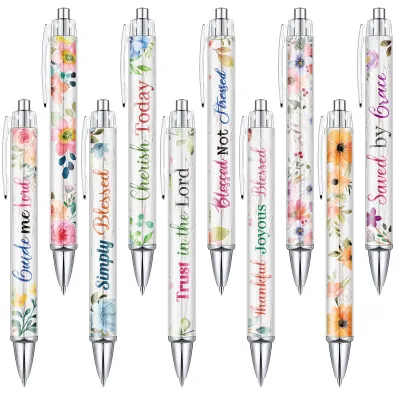
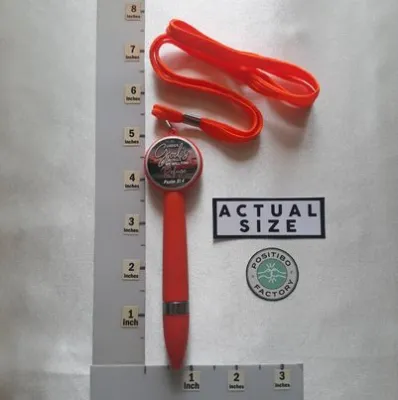
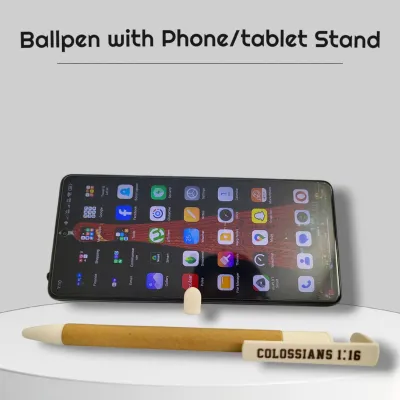
When shopping for stationery, it is helpful to distinguish between premium, high-performance study pens and novelty christian pens that feature scripture verses, cross clips, or inspirational quotes. Both have distinct places in your spiritual and daily life.
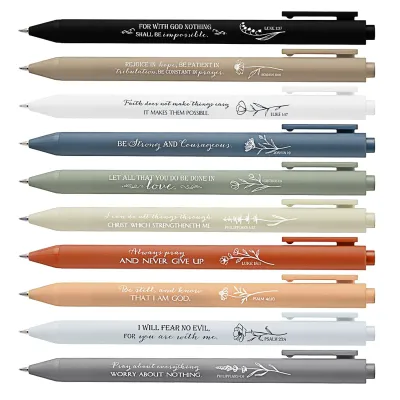
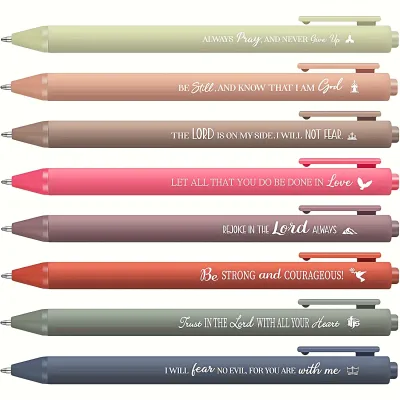
Inspirational and Christian-themed pens are excellent for gifting, outreach, and daily encouragement. They make thoughtful presents for baptisms, confirmations, graduations, or ministry appreciation events. Having a pen engraved with a favorite verse, such as Jeremiah 29:11 or Philippians 4:13, on your office desk or in your purse serves as a constant, gentle reminder of your faith throughout a busy workday.
If you plan to use an inspirational or novelty pen for deep Bible study or extensive church note-taking, you must verify its internal writing components. Many novelty pens prioritize outer aesthetics over ink quality, using generic, high-viscosity blue or black ballpoint refills that may skip or require heavy hand pressure. To optimize these pens for thin Bible paper, check if the pen body accepts standard, high-quality refills. Many metal christian pens are compatible with standard Parker-style or G2 gel refills. Swapping out the factory cartridge for a premium, ultra-fine, pigment-based refill allows you to enjoy a meaningful, faith-inspired design on the outside while experiencing professional-grade, bleed-resistant performance on the inside.
How to Test and Pair Pens with Your Specific Bible
Because every Bible publisher uses slightly different paper coatings, weights, and manufacturing processes, ink performance will vary. Before writing extensively in a new Bible, always perform a simple compatibility test to ensure your pens will not ruin your pages.
- Locate a Safe Test Area: Turn to the back of your Bible, where you can find blank dedication pages, index margins, or maps. These pages are typically made of the same paper stock as the rest of the Bible and provide a safe space for testing.
- Conduct the Pen Test: Draw a few short lines, write a couple of words, and shade a small block using your chosen pen or highlighter. Write with your natural hand pressure to get an accurate representation of daily use.
- Evaluate the Results: Wait approximately thirty seconds to allow the ink to dry completely. Turn the page to inspect the reverse side. Check for physical bleed-through (ink spots on the back) and evaluate the level of ghosting. If the ghosting is minimal and there is no bleeding, the pen is safe to use.
- Use a Protective Blotting Sheet: As an extra precaution during study sessions, place a thin sheet of cardstock, a heavy index card, or a dedicated piece of blotting paper directly behind the page you are writing on. This sheet acts as a physical barrier, absorbing any accidental ink pooling or heavy pressure marks and protecting the clean pages underneath.
- Store Your Stationery Correctly: To maintain consistent ink flow and prevent your pens from drying out prematurely—especially in warm, humid tropical environments—store your fine-liners, gel pens, and dual-tip highlighters horizontally. Horizontal storage keeps the ink evenly distributed across the internal reservoir, ensuring your pens are ready to write the moment you open your Bible.
Frequently Asked Questions (FAQ)
Can I use standard highlighters on thin Bible paper?
Standard office highlighters are generally not recommended for thin Bible paper. They use wet, dye-based liquid inks designed for thick copy paper, which will quickly saturate thin Bible sheets and cause severe bleed-through and feathering. For safe highlighting, choose specialized dry highlighters, which use a translucent wax formula that does not wet the page, or mild-color pigment highlighters designed specifically for delicate stationery.
What is the best ink type for left-handed church note-takers?
Left-handed note-takers should prioritize ultra-fast-drying gel inks or hybrid inks. These specialized formulas dry almost instantly upon contact with the paper, preventing your hand from smearing the text as it glides across the page. Pairing these fast-drying inks with a fine or ultra-fine tip (0.5mm or smaller) further reduces the volume of ink on the page, ensuring a clean, smudge-free writing experience during fast-paced church services.
Community discussion
Share your experience or ask a question. Comments are reviewed before publication.