
Selecting the ideal clay set for kids in the Philippines requires balancing developmental milestones with local environmental factors like high humidity. The right choice depends entirely on your child’s age: toddlers need taste-safe, ultra-soft wheat doughs; preschoolers thrive on colorful, mold-friendly sets with simple extruders; and older children require structural air-dry or firm modeling clays that hold fine details. By matching the material’s physical properties to your child’s motor skills, you can foster creativity while ensuring a safe, frustration-free play experience.
Quick Guide to Age-Appropriate Clay Sets
A child’s motor skills and cognitive development dictate the ideal clay texture, tool complexity, and safety requirements. For young toddlers, the primary goal of clay play is sensory exploration and bilateral integration, which requires ultra-soft, highly pliable materials. As children transition into preschool, their hand strength increases, allowing them to manipulate moderately firm doughs and use basic mechanical tools like extruders and stamps. By school age, children possess the coordination needed for detailed sculpting, structural armatures, and permanent creations, making advanced mediums like air-dry clay highly appropriate.
Different age groups benefit from distinct clay formulations:
Products mentioned in this guide
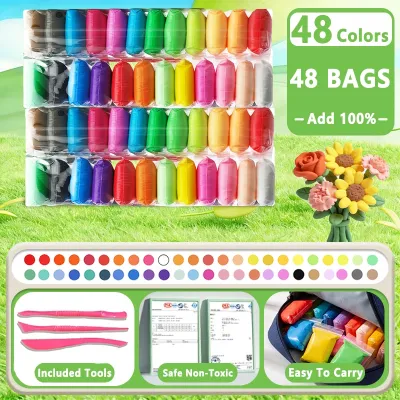
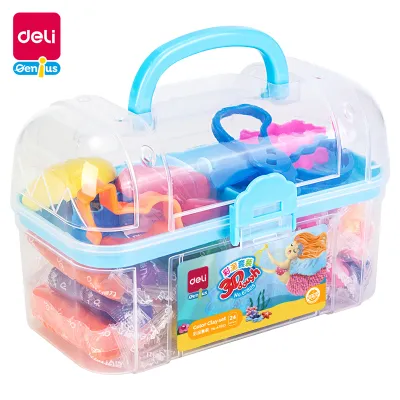
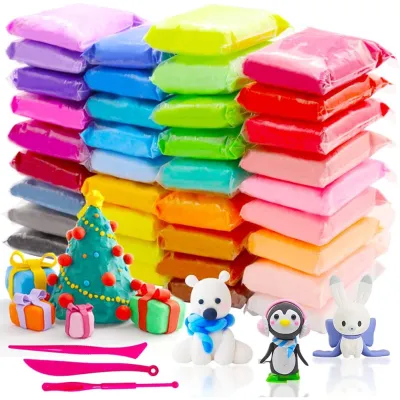
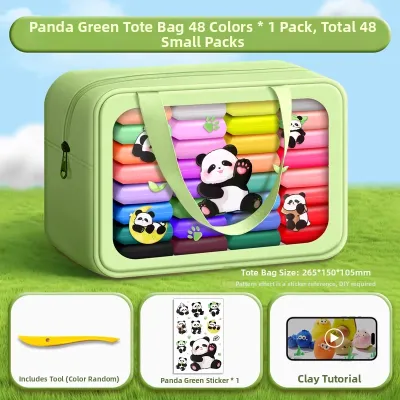
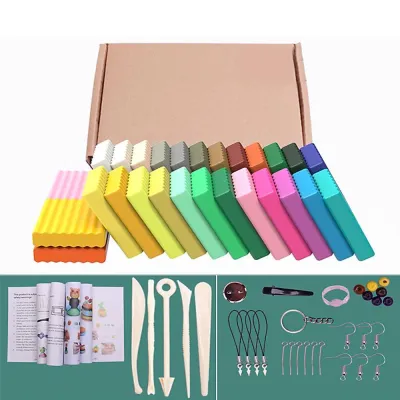
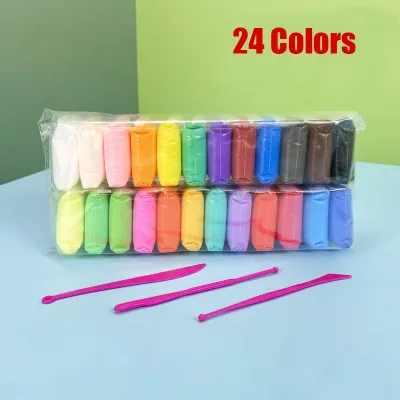
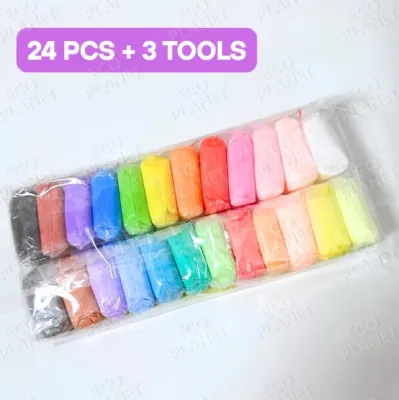
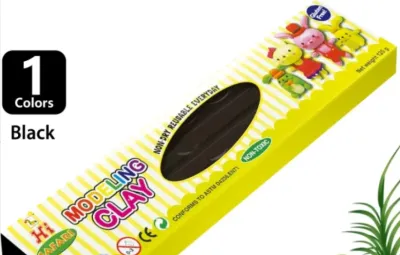
Prices are valid at publication and may change. Please refer to the product page for the latest price.
- Toddlers (Ages 1–3): Require ultra-soft, taste-safe wheat-based doughs or food-grade alternatives that minimize hand fatigue and prioritize ingestion safety.
- Preschoolers (Ages 4–5): Thrive with colorful, moldable doughs paired with blunt plastic tools, stamps, and simple extruders to encourage imaginative play.
- School-Age Kids (Ages 6+): Benefit from air-dry clay for permanent, paintable projects, or firm, non-hardening modeling clay for detailed sculpting and stop-motion animation.
Safety remains the absolute priority across all age brackets. Parents must verify that any selected clay set for kids carries recognized non-toxic certifications and features age-appropriate accessory sizes to prevent choking hazards.
What to Look for When Buying a Clay Set for Kids
Navigating the arts and crafts aisle requires an understanding of material compositions, safety labels, and physical performance. Before purchasing any clay set, evaluate these four critical dimensions to ensure the material matches your child’s environment and developmental stage.

Material Safety and Certifications
Always inspect the product packaging for recognized international safety standards. Look for the Art and Creative Materials Institute (ACMI) AP (Approved Product) seal, which certifies that the material is non-toxic and safe for children. European standards such as the CE mark and EN71 certification also indicate rigorous safety testing.
Understanding the base material is equally vital:
- Wheat-based doughs are highly pliable and non-toxic, but they present a risk for children with gluten sensitivities.
- Air-dry clays are typically water-based, lightweight, and cure without heat, making them excellent for older kids.
- Polymer clays require oven-baking to cure and contain plasticizers, meaning they should be reserved for older children under strict adult supervision.
- Plastilin or oil-based clays never dry out, allowing for infinite reuse, but they can leave a greasy residue on porous surfaces.
Texture and Hardness
Clay resistance must align with your child’s physical hand strength. If a clay is too firm, a toddler or young preschooler will quickly become frustrated and lose interest. You can perform a simple check: press your thumb into the clay sample. If it requires significant pressure to leave an indentation, the material is too dense for children under four. Conversely, older children need a firmer clay that holds its shape under its own weight, allowing them to build vertical structures without the material sagging or collapsing.
Tool Complexity and Choking Hazards
Assess the tools included in the clay set for kids. For children under three, tools must be large, single-piece designs with no small detachable parts that could pose a choking risk. Ensure plastic tools are free from sharp flashing—the thin, sharp plastic ridges left behind during the manufacturing molding process. For older children, check that mechanical tools like rolling pins and extruders have wide, ergonomic handles that do not pinch small fingers during operation.
Cleanliness and Climate Resilience
The tropical climate of the Philippines, characterized by high relative humidity and warm temperatures, directly impacts clay behavior. Water-based doughs can dry out rapidly when exposed to air-conditioned draft, yet they are highly susceptible to mold if stored in dark, humid cupboards while damp. Oil-based clays can become overly sticky, soft, or leave a heavy residue on hands and wooden tables when used in rooms without air conditioning. Look for modern synthetic formulations that advertise low-residue performance and high resistance to humidity-induced stickiness.
Best Clay Sets for Toddlers (Ages 1–3)
Toddlers interact with their environment through tactile and oral exploration. Clay sets for this age group must prioritize extreme softness, vibrant visual appeal, and strict non-toxicity to accommodate the common phase of mouthing objects.
Top Pick for Sensory Play: Wheat-Based Modeling Dough
Classic wheat-based modeling dough is the gold standard for early sensory play. Its ultra-soft texture requires minimal hand strength, allowing toddlers to squeeze, roll, and smash the material easily, which aids in developing intrinsic hand muscles. These doughs typically feature bright, appealing colors that stimulate visual tracking and color recognition. Cleanup is relatively straightforward, as the dough dissolves easily in water and can be wiped off skin and fabrics with a damp cloth.
However, wheat-based doughs have distinct physical limitations. If left uncapped in warm tropical environments, they dry out within hours, forming a hard, crusty shell. When played with on textured rugs or fabrics, the dough can crumble into tiny pieces that dry quickly and require thorough vacuuming.
Pre-purchase check: Always verify the allergen warnings on the manufacturer’s label. If your child has a known wheat or gluten allergy, avoid classic modeling doughs and opt for gluten-free alternatives.
Best Ultra-Safe Alternative: Edible-Grade or Homemade Clay Kits
For parents highly concerned about the mouthing phase, edible-grade clay kits offer peace of mind. These commercial sets or DIY-style kits are formulated entirely from food-grade ingredients, such as rice flour, tapioca starch, salt, cream of tartar, and natural food colorings. They provide a safe sensory experience where accidental ingestion poses no chemical risk to the child.
Despite their safety benefits, food-grade clays involve clear performance trade-offs:
- Shorter Shelf Life: Lacking synthetic preservatives, they can spoil, ferment, or develop mold within a few weeks.
- Subtle Coloration: Natural food dyes produce pastel shades rather than the neon colors of synthetic doughs.
- Stickier Texture: Tapioca and rice-based formulations can become sticky in high humidity, requiring a light dusting of cornstarch to remain workable.
Pre-purchase check: Inspect the packaging for an explicit expiration date and storage instructions. Many food-grade clays require refrigeration after opening to prevent microbial growth.
Best Clay Sets for Preschoolers (Ages 4–5)
Preschoolers are developing refined fine motor skills, hand-eye coordination, and a desire for imaginative play. They transition from simple sensory squeezing to creating recognizable shapes and figures.
Best for Imaginative Play: Dough Sets with Basic Molds and Extruders
At this stage, structured play sets that include themed molds and mechanical accessories are highly engaging. Look for kits that feature blunt plastic scissors, simple hand-crank or plunger extruders, and large stamping molds representing animals, vehicles, or food items. These tools help preschoolers practice bilateral integration—using both hands together—as they hold a mold steady with one hand while pressing clay into it with the other.
These activities introduce early engineering concepts, such as cause-and-effect, as children watch clay emerge from an extruder in long star or noodle shapes. The physical feedback of pushing a plunger also builds shoulder and forearm stability, which is essential for future writing skills.
Pre-purchase check: Test the extruder mechanism before giving it to your child. Ensure the plunger moves smoothly within the chamber and does not have tight gaps where small fingers could get pinched during heavy pressing.
Best for Early Sculpting: Reusable Soft Clay with Blunt Tools
For preschoolers ready to practice free-form sculpting, non-hardening, oil-based or synthetic soft clays are excellent. Unlike water-based doughs, these materials remain pliable indefinitely, allowing children to work on a sculpture over several days without the fear of it drying out. This encourages repetitive practice in rolling spheres, pinching edges, and coiling snakes, which are the foundational building blocks of three-dimensional art.
While highly reusable, these clays have specific drawbacks. They do not dry, meaning they cannot be painted or preserved as permanent keepsakes. Additionally, some oil-based formulations leave a greasy residue on hands and play surfaces, requiring immediate handwashing with soap and water after play.
Pre-purchase check: Check the recommended minimum age on the box. Some non-hardening modeling clays are rated for ages 3 or 4 and above because they contain synthetic binders that require proper hand hygiene after use.
Best Clay Sets for School-Age Kids (Ages 6+)
Older children have the manual dexterity to handle firmer materials, use delicate tools, and execute multi-step crafting projects. They often desire to preserve their creations or use them in active play.
Best Air-Dry Clay for Lasting Creations
Air-dry clay is an exceptional medium for children who want to paint, display, or gift their finished sculptures. This water-based clay is incredibly lightweight and smooth, offering a satisfying tactile experience. The typical workflow involves sculpting the wet clay, smoothing the surface with a wet fingertip, and letting it cure naturally at room temperature for 24 to 48 hours. Once dry, the clay becomes durable and highly receptive to acrylic paints, markers, and clear sealants.
Structurally, air-dry clay is strong enough to support internal armatures, such as aluminum wire or wooden dowels, allowing kids to build tall, complex figures without sagging. It is perfect for making school projects, miniature figurines, and handmade jewelry.
Pre-purchase check: Check the product specifications for the clay’s shrinkage rate. Water-based air-dry clays shrink slightly as they dry, which can cause cracking if the clay is wrapped too tightly around a rigid, non-yielding armature. Ensure you have a clean, dust-free shelf away from direct sunlight for the drying process.
Best Non-Hardening Modeling Clay for Detailed Sculpting
For school-age kids interested in stop-motion animation, character design, or intricate modeling, a firm, professional-grade non-hardening clay (often called plastilin) is the ideal choice. This wax- or oil-based clay holds extremely sharp details, does not crack, and can be blended smoothly to create custom gradients and color transitions. Because it never hardens, characters can be posed and re-posed hundreds of times in front of a camera without degrading.
This material requires a higher level of physical development. The clay is firm out of the package and must be kneaded and warmed in the hands for several minutes to reach its optimal pliability. This resistance is excellent for strengthening the hand muscles of older children but may frustrate younger siblings.
Pre-purchase check: Verify whether the clay is a wax-based plastilin (which remains permanently soft) or a polymer clay (which requires baking in a home oven to harden). Mixing up these two types can lead to ruined projects or safety hazards if unbaked polymer is treated as reusable clay.
Safety, Storage, and Cleanup Tips for Clay Play
To maximize the lifespan of your clay sets and protect your home surfaces, implement a structured routine for safety, storage, and cleanup that accounts for the local Philippine climate.
Choking and Supervision
Even with non-toxic labels, active adult supervision is essential for children under three. Regularly audit your child’s clay box for broken plastic tools, split containers, or degraded clay that has collected household dust and hair. Immediately discard any tools with sharp, broken edges or small parts that have snapped off during play.
Humidity and Storage
Managing moisture is the key to preserving clay in the Philippines:
- For Water-Based Doughs: Store them in their original airtight plastic canisters. If the dough feels slightly dry, add two to three drops of water to the container, seal it, and let it sit overnight to restore its moisture. Avoid adding too much water, as this can create a sticky, mold-prone paste.
- For Air-Dry Clays: Once a pack is opened, wrap the unused portion tightly in plastic cling wrap, squeeze out all excess air, and place it inside a high-quality zip-top bag. Store the bag in a cool, dark drawer.
- For Oil-Based Clays: Keep them in a plastic container away from direct sunlight or hot window sills, which can melt the wax binders and cause the colors to bleed or become excessively sticky.
Surface and Fabric Cleanup
Clay mishaps are inevitable, but they can be managed without harsh chemicals:
- On Wooden Tables and Hard Floors: Allow water-based dough to dry slightly, then scrape it up gently using a plastic scraper or an old credit card. Avoid metal knives, which will scratch wood finishes. Wipe the remaining residue with a microfiber cloth damp with warm, soapy water.
- On Clothing and Fabrics: Do not rub wet clay, as this pushes the pigments deeper into the fabric fibers. Allow the clay to dry completely, brush off the loose crust with a stiff bristle brush, and then wash the garment in cold water with standard laundry detergent.
- On Carpets: Let the clay dry completely. Use a blunt tool to break the dried clay into crumbs, vacuum the area thoroughly, and spot-clean any remaining pigment with a mixture of dish soap and warm water.
Frequently Asked Questions (FAQ)
Is polymer clay safe for young children?
While certified non-toxic polymer clays are safe when handled correctly, they are not recommended for young children or toddlers. Polymer clay is formulated with synthetic plasticizers and requires baking in a home oven at specific temperatures to cure. The baking process releases mild fumes that require good ventilation, and the raw clay can leave chemical residues on hands. Consequently, polymer clay should be reserved for children aged eight and older who can follow safety guidelines, wash their hands immediately after use, and work under close adult supervision during the baking phase.
How do I revive dried-out modeling clay?
Your method for reviving clay depends entirely on its chemical base. For water-based modeling doughs, wrap the dry dough in a damp paper towel, place it back inside its airtight container, and seal it for 24 hours before kneading it thoroughly. For oil- or wax-based clays that have stiffened, do not add water. Instead, warm the clay by kneading it between your palms, placing it in a sealed zip-top bag immersed in warm water for five minutes, or using a hair dryer on its lowest heat setting for a few seconds. This softens the wax binders and restores pliability.
Can air-dry clay be painted after it hardens?
Yes, fully cured air-dry clay is highly receptive to various coloring mediums. Once the clay has dried completely (usually after 24 to 48 hours, depending on the thickness of the sculpture and local humidity levels), you can apply acrylic paints, tempera, or even permanent markers. To protect the painted surface from chipping and to prevent the water-based clay from absorbing moisture from the humid Philippine air, apply a thin coat of clear, non-toxic acrylic sealant or craft varnish after the paint has dried completely.
Community discussion
Share your experience or ask a question. Comments are reviewed before publication.