
Choosing the right color painting set for kids entering elementary school art classes in the Philippines involves balancing creative freedom with practical classroom realities. In a typical school setting, students must manage limited desk space, rapid cleanup times, and the daily commute with packed school bags. For most young beginners, a high-quality, washable pan watercolor set is the most practical choice. It provides vibrant colors without the high risk of spills or permanent stains on school uniforms. As students progress to the upper grades, teachers often introduce opaque mediums like poster colors to teach advanced layering and color theory.
Key Criteria for Choosing Elementary School Painting Sets
Selecting the ideal color painting set for kids requires looking beyond bright packaging. Parents must evaluate how a set performs under classroom conditions, focusing on safety, maintenance, and school compatibility.
Safety and Certifications
Safety is the absolute priority when selecting school art supplies. Children frequently touch their faces, wipe their eyes, or accidentally ingest paint while working. Always look for internationally recognized safety seals on the packaging. The “AP Non-Toxic” seal from the Art and Creative Materials Institute (ACMI) or the European “CE” mark indicates that the product has been evaluated by toxicologists and contains no materials in sufficient quantities to be toxic or injurious to humans. In the local market, check for compliance with national safety regulations and clear age-grading labels to ensure the medium is appropriate for your child’s developmental stage.
Products mentioned in this guide
Prices are valid at publication and may change. Please refer to the product page for the latest price.
Washability and Cleanup
Art classes can get messy, and local school uniforms—often made of white or light-colored fabrics—are highly susceptible to stains. Washable formulas are specifically designed to release from fabrics and skin with simple soap and water. Opting for paints labeled “washable” ensures that accidental spills on uniforms, wooden classroom desks, or shared plastic chairs can be wiped away easily during the short cleanup period at the end of the class period. This saves parents from difficult laundry sessions and avoids damage to school property.
Portability and Weight
Philippine elementary students often carry heavy backpacks filled with textbooks, notebooks, and lunchboxes. Adding a bulky, heavy art kit can strain a child’s back. A compact color painting set for kids should be lightweight and space-saving. Pan watercolor sets are exceptionally portable because they contain dry cakes of paint that do not add unnecessary liquid weight to a child’s bag. They fit neatly into backpack side pockets or standard plastic school supply organizers.
School Supply List Compliance
Before purchasing any painting set, carefully review the art teacher’s official syllabus or supply list. Teachers often specify the exact medium required for the semester’s curriculum. Purchasing a high-end acrylic set when the teacher specifically requested water-soluble poster colors can lead to wasted money and a student who cannot participate fully in the scheduled classroom exercises. When in doubt, consult with other parents or message the teacher directly to clarify the preferred paint format.
Recommended Painting Set Types for Classroom Use
Different grade levels and art projects require different paint characteristics. Understanding the practical differences between watercolor, poster color, and mixed media kits helps parents choose the right tool for their child’s specific developmental stage.

Watercolor Sets (Pan and Tube)
Watercolors are the cornerstone of early childhood art education. They are highly responsive, easy to blend, and dry quickly on paper, making them highly practical for short class periods.
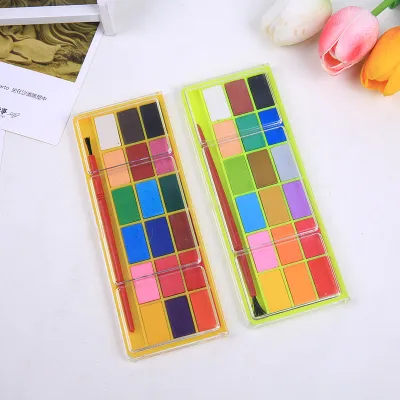
- Pan Watercolors: These sets consist of dry, compressed cakes of pigment housed in small plastic wells. To use them, a student simply dips a wet brush onto the cake. Pan sets are highly favored by teachers for grades 1 to 3 because they minimize liquid spills. There are no open tubes to squeeze excessively, and the paint dries back into a solid state after use, making packing up incredibly fast. Many modern pan sets feature integrated mixing lids and include refillable water brushes, which eliminate the need for open water cups on crowded classroom desks.
- Tube Watercolors: These sets contain moist, paste-like paint that must be squeezed onto a separate mixing palette. While they offer richer, more concentrated color saturation and are excellent for painting larger areas, they present several practical challenges in an elementary classroom. Younger students often struggle with portion control, squeezing out far more paint than necessary, which leads to waste. They also require more intensive cleanup, as the wet palette must be washed thoroughly before it can be packed away into a school bag.
For Philippine classrooms, reputable student-grade watercolor series like Pentel Watercolors (often available in 12-color tube sets) or Colleen Pan Watercolors provide an excellent balance of pigment quality and affordability. These brands are widely stocked in local stationery stores and major bookstores across the country. A 12 to 18-color pan set is generally the most practical configuration, providing a complete spectrum of mixable shades without adding unnecessary bulk to a child’s school bag.
Poster Color and Gouache Sets
As students transition to the upper elementary grades (grades 4 to 6), art projects become more complex. Teachers may introduce opaque painting mediums, with poster colors being the most common choice.
Poster colors are water-based, opaque paints that dry to a flat, matte finish. Unlike translucent watercolors, poster colors allow students to paint light colors directly over darker layers, making them ideal for school posters, cardboard crafts, and bold graphic designs. They are typically sold in small glass or plastic jars, or in larger squeeze tubes.
The primary drawback of poster colors in a school environment is their physical weight and the potential for mess. Carrying a set of six to twelve glass jars of poster color adds significant weight to a backpack, and there is always a risk of glass breakage if a bag is dropped during a jeepney or tricycle commute. Furthermore, poster colors require a dedicated mixing palette and a larger volume of water for rinsing brushes. When purchasing poster colors for school use, parents should look for “student-grade” or “washable poster paint” variants. Avoid professional-grade artist gouache, which contains highly concentrated pigments and permanent binders that can permanently stain clothing and classroom surfaces.
All-in-One Mixed Media Kits
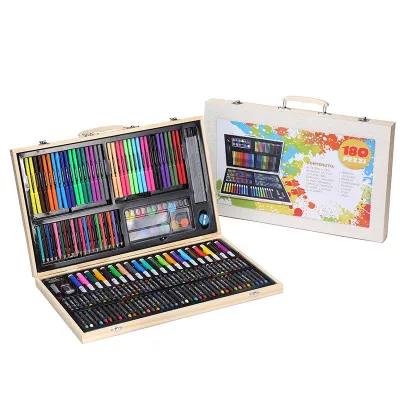
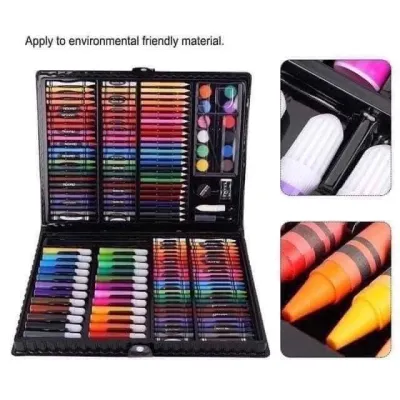
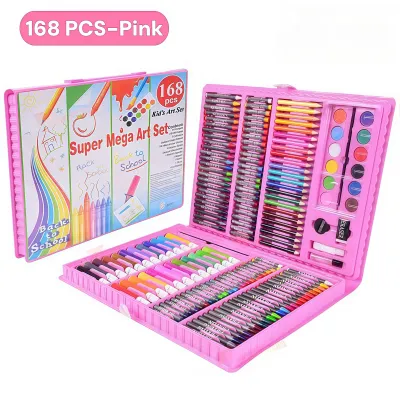
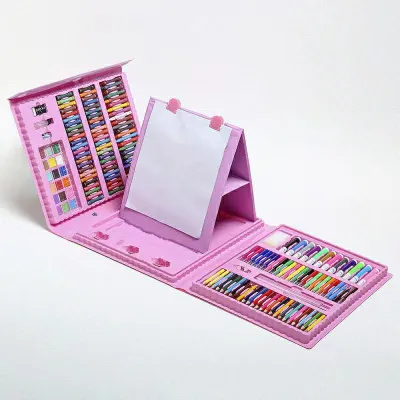
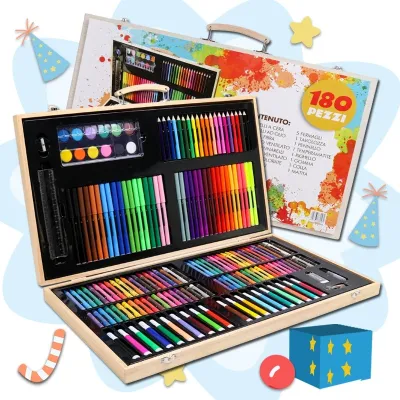
Mixed media kits are large, visually impressive cases—often made of plastic, wood, or aluminum—that contain a wide array of art supplies, including watercolor cakes, oil pastels, colored pencils, markers, and small tubes of paint.
While these kits make highly appealing gifts for birthdays or holidays, they are generally impractical for formal elementary school art classes. The large, suitcase-style packaging is far too bulky to fit inside a standard student backpack, forcing children to carry them separately. Additionally, the quality of the individual mediums inside these budget-friendly mixed-media kits is often lower than that of standalone, dedicated sets. Brushes may shed bristles rapidly, and the watercolor cakes may contain more chalky fillers than actual pigment, resulting in dull, frustrating results on paper. For structured school curriculums, it is always better to invest in a dedicated, high-quality color painting set for kids rather than a generic multi-tool art kit.
Practical Features to Check Before Buying
To ensure a paint set survives the school year and remains usable, parents should perform a physical check of the product’s components and consider how it will interact with the local environment.
- Brush and Palette Quality: A painting set is only as good as the tools that accompany it. When evaluating a set, inspect the quality of the included brushes. Look for synthetic round brushes (typically size 6 or 8), which are versatile enough for both broad strokes and fine lines. Gently tug on the bristles to ensure they are securely crimped to the ferrule; cheap brushes that shed hairs onto wet paintings can frustrate young artists. Additionally, examine the built-in palette. The mixing wells should be deep enough to prevent watery paint from overflowing into adjacent colors, and the plastic should be smooth and non-porous so it can be wiped clean easily with a damp cloth.
- Paper Compatibility: Painting with watercolors or poster colors requires thick, absorbent paper. Standard photocopy paper (70 to 80 gsm) will buckle, warp, and tear when wet. Instructors typically recommend using sketchpads or watercolor paper with a minimum weight of 200 gsm (grams per square meter). This ensures a smooth painting experience without bleed-through or paper disintegration.
- Climate Considerations: The tropical climate of the Philippines, characterized by high temperatures and high relative humidity, presents unique challenges for storing art supplies. Watercolor pan sets are susceptible to mold if they are packed away while still wet. The organic binders (such as gum arabic) used in watercolors can attract fungal growth in humid conditions. Advise your child to leave their watercolor set open to air-dry completely once they return home from school. For tube-based paints, ensure the caps have sturdy, airtight threads. Exposure to hot, humid air can cause poorly sealed tubes to dry out, turning the paint into a solid, unusable block inside the tube.
- Packaging Durability: School supplies endure a lot of wear and tear. A painting set's case must be durable enough to withstand being dropped, shoved into tight spaces, and exposed to moisture. Heavy-duty plastic cases with secure, mechanical snap locks are highly recommended. Avoid sets packaged in flimsy cardboard boxes, as these will quickly disintegrate when exposed to wet brushes or water spills. Metal tins are also durable but can rust over time if exposed to constant moisture in humid coastal regions.
- Label Verification: Do not rely solely on the marketing claims printed on the front of the packaging. Flip the box over and read the fine print. Verify that the product explicitly states it is "washable" and "non-toxic." Ensure that the age rating matches your child's age group (e.g., "Safe for children ages 3+"). Taking a moment to physically verify these labels protects your child's safety and your wallet.
Quick Comparison of Painting Mediums for Kids
The following table summarizes the key differences between the primary painting mediums used in elementary school art classes to help you make an informed decision based on your child’s grade level and classroom setup.
| Medium Type | Portability | Cleanup Ease | Best For (Grade Level / Project Type) | Typical Price Tier |
|---|---|---|---|---|
| Watercolor (Pan) | Excellent (Lightweight, dry cakes) | Very Easy (Wipes clean with a damp cloth) | Grades 1 to 3; quick classroom sketches | Budget to Mid-range (₱150 – ₱600) |
| Watercolor (Tube) | Moderate (Requires separate palette) | Moderate (Requires washing the palette) | Grades 3 to 6; vibrant washes, larger papers | Mid-range to Premium (₱250 – ₱800) |
| Poster Color | Low (Heavy jars or tubes, requires water) | Moderate to Difficult (Thick pigment) | Grades 4 to 6; opaque poster design, crafts | Mid-range (₱300 – ₱700) |
Frequently Asked Questions (FAQ)
Are acrylic paints suitable for elementary school art classes?
Acrylic paints are generally not recommended for younger elementary school students. Unlike watercolors or poster colors, acrylic paint contains a plastic polymer binder that dries quickly and becomes completely water-resistant. Once dry, acrylic paint is extremely difficult to remove from cotton school uniforms, wooden desks, and synthetic bristles, often causing permanent damage. Furthermore, washing large amounts of acrylic paint down standard school sinks can lead to clogged plumbing over time as the paint solidifies inside the pipes. Acrylics are typically reserved for high school students or highly supervised, specific art projects in the upper grades where protective aprons are worn.
How many colors should a beginner painting set have?
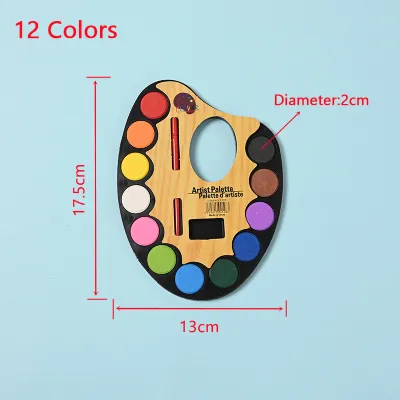
For elementary school students, a painting set with 12 to 24 colors is the ideal choice. A 12-color set contains all the essential primary and secondary colors, which encourages children to learn the fundamentals of color theory by mixing their own custom shades (such as combining blue and yellow to make green). Sets with more than 24 colors are often unnecessarily bulky, heavy to carry, and expensive. They can also overwhelm young beginners, who may rely on pre-mixed colors rather than developing their creative problem-solving and color-mixing skills.
Community discussion
Share your experience or ask a question. Comments are reviewed before publication.