
Selecting the right coloring books for a daycare setting involves balancing durability, child engagement, and classroom logistics. The most effective coloring book sets for multi-child environments feature thick, tear-resistant paper, flat-laying or easily detachable pages, and single-sided designs that prevent markers from bleeding through. Because daycare classrooms serve children with varying developmental needs, a successful art corner requires a mix of simple, bold-line illustrations for toddlers and more complex, educational layouts for preschoolers. By choosing robust materials and organizing them systematically, educators can minimize waste, keep activities running smoothly, and protect paper supplies from the challenging tropical humidity.
Key Physical Features for High-Traffic Daycare Use
High-traffic daycare classrooms put school supplies through rigorous daily wear. When multiple children share coloring materials, standard retail coloring books often fall apart quickly under the pressure of enthusiastic hands, heavy-handed coloring styles, and frequent transport between tables.
Paper weight is the first line of defense against damage. Standard coloring books often use thin, newsprint-grade paper (around 50 to 60 gsm), which easily tears when subjected to the forceful, unrefined grip of a toddler. For group settings, look for books with a paper weight of at least 100 gsm (grams per square meter). Thicker paper resists tearing when children press down hard with wax crayons or rub repeatedly over the same spot. To verify durability before purchasing a large batch, perform a simple tear test on a sample page: a high-quality sheet should resist immediate splitting when light tension is applied to the edge.
Products mentioned in this guide
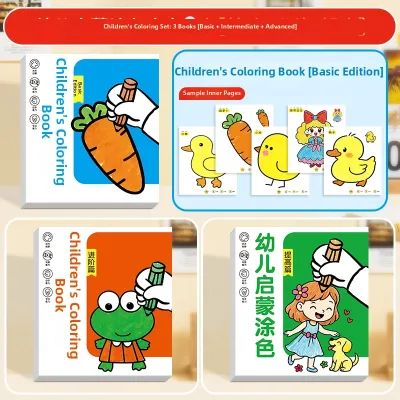
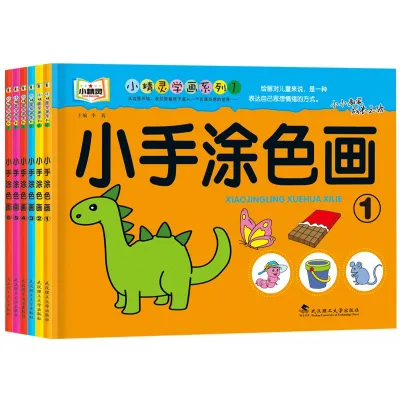
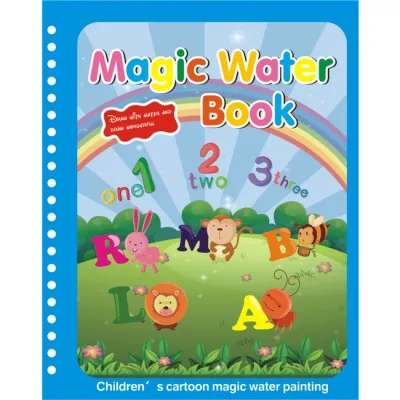
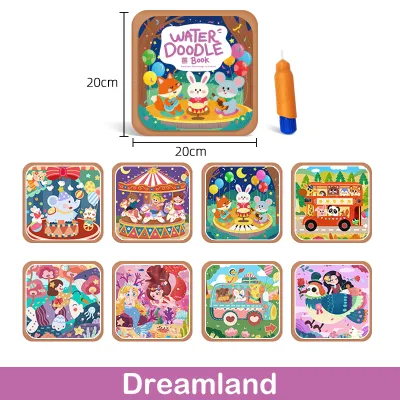
Prices are valid at publication and may change. Please refer to the product page for the latest price.
The binding of a coloring book dictates how easily children can use it on shared tables. Traditional tight glue-bound books do not lay flat naturally, forcing children to hold the pages down with one hand while coloring with the other. This often leads to frustration or torn spines as children try to force the book open. Spiral-bound books lay perfectly flat, providing an excellent coloring surface, but the metal or plastic coils can snag on clothing, bend out of shape, or scratch wooden tabletops. The most practical option for a busy classroom is a book with perforated or easily detachable glue-bound pages. This allows teachers to remove individual sheets effortlessly, distributing them across a table so multiple children can work simultaneously without crowding around a single book.
Single-sided printing is another critical feature for classroom efficiency. When illustrations are printed on both sides of a page, wet coloring mediums like water-based markers, gel pens, or dot markers will inevitably bleed through, ruining the drawing on the reverse side. This effectively cuts the usable pages of the book in half and can lead to classroom arguments when a child wants to color a picture that has already been spoiled from the back. Choosing books with single-sided prints ensures every illustration is fully usable, regardless of the coloring tool selected.
Finally, cover durability determines how well a book survives long-term storage and handling. In a daycare, sticky fingers, spilled water cups, and dust are constant challenges. Look for coloring books featuring laminated, heavy cardstock, or wipeable plastic covers. These protective layers allow teachers to clean the covers with a damp cloth between uses, preventing the growth of mold and maintaining a hygienic learning environment across multiple school terms.
Matching Book Designs to Daycare Age Groups
Children develop motor skills and cognitive abilities at vastly different rates during their early years. A coloring book that captivates a five-year-old will likely frustrate a two-year-old, while simple toddler designs may fail to engage older preschoolers. Providing age-appropriate designs ensures that every child remains focused and builds confidence.

Toddlers (Ages 1-3): Simple Outlines and Thick Lines
Toddlers are still developing basic hand-eye coordination and fine motor control. At this stage, their movements are broad and driven by the shoulder and elbow rather than the wrist and fingers. Consequently, books designed for toddlers must feature high-contrast, bold, and exceptionally thick outlines (at least 2 to 3 millimeters wide). These heavy borders provide a clear visual boundary that helps young children understand where to apply color, even if their strokes naturally spill over the edges.
The subject matter should focus on large, isolated, and easily recognizable shapes. Single-item pages featuring basic animals, familiar fruits, or simple vehicles are ideal because they do not overwhelm a toddler’s limited attention span. Complex background details should be avoided entirely.
These simple designs must also match the physical tools toddlers use. Younger children typically color with jumbo crayons, triangular crayons, or washable dot markers, which require spacious areas to apply color effectively. Before introducing a new book set, verify that the open spaces within the drawings are large enough to accommodate the broad tips of these toddler-friendly coloring tools without requiring precise finger movements.
Preschoolers (Ages 3-5): Themed Scenes and Skill Building
As children transition into the preschool years, their pencil grip matures from a palmar grasp to a more controlled tripod pinch. This physical milestone allows them to navigate smaller spaces and more intricate patterns. Preschoolers thrive on themed scenes that tell a story, such as vibrant coral reefs, outer space adventures, or community helpers at work. These detailed illustrations encourage imaginative play and can be used by educators as prompts for storytelling and vocabulary development.
In addition to creative expression, coloring books for this age group should integrate early learning concepts. Look for sets that incorporate educational elements like tracing dashed lines to form shapes, matching letters to corresponding objects, or coloring by numbers. These activities bridge the gap between freeform play and structured academic preparation, helping children develop the focus and hand strength required for kindergarten writing tasks.
To ensure the illustrations are developmentally appropriate, check that the line work is moderately detailed but not overly intricate. Pages with excessive tiny patterns can cause hand fatigue and cause children to lose interest before completing the activity. A balanced preschool coloring page should feature a clear central character surrounded by a few supporting background elements, allowing the child to practice both broad strokes and detailed coloring in a single session.
Managing Group Coloring Sessions and Supply Storage
Running a smooth coloring session with a dozen or more children requires practical classroom management strategies. Simply handing out intact coloring books to a group of children often leads to conflict over specific pages, messy tables, and damaged books.
To maintain order and ensure fairness, adopt a page-distribution system. Instead of placing entire books on the tables, pre-tear the pages before the activity begins. Organize the loose sheets into individual folders, color-coded trays, or shallow baskets. This allows you to present a curated selection of designs to the children, giving each child their own designated paper without the temptation to flip through and scribble on multiple pages of an intact book. This method also prevents children from fighting over the same book and makes it easier to clean up at the end of the session.
Setting up dedicated “coloring stations” is another highly effective strategy. Arrange a specific table with shared supply caddies in the center, containing a mix of crayons, colored pencils, and washable markers. This layout naturally encourages social interaction, sharing, and turn-taking as children ask their peers to pass specific colors. It also keeps the mess contained to a single area of the classroom, making daily sanitization much easier.
In the tropical, high-humidity climate of the Philippines, paper storage requires special attention. High relative humidity can cause paper to absorb moisture from the air, making the pages limp, wavy, and prone to tearing. Damp paper also causes water-based markers to feather and bleed excessively, ruining the clean lines of the illustrations. To protect your paper inventory, store all coloring books and loose pages in airtight plastic storage bins. Place several reusable silica gel desiccant packets inside each bin to absorb trapped moisture. Ensure these storage containers are kept on elevated shelves, away from damp concrete walls or floors where moisture tends to accumulate during the rainy season.
To minimize waste, establish a system for organizing leftover materials. Keep a dedicated scrap binder or clear plastic envelope for partially colored pages or clean sheets that were distributed but not used. These leftovers can be offered during free-play periods or rainy-day indoor recesses, ensuring that no paper is discarded unnecessarily.
Evaluating Bulk Sets vs. Themed Multipacks for Classroom Budgets
Daycare administrators must balance educational value with strict budget constraints. When sourcing coloring materials, the choice typically comes down to large bulk packs or curated themed multipacks.
Large bulk packs are highly cost-effective, often offering hundreds of pages at a very low cost per sheet, sometimes averaging under ₱1.00 to ₱2.00 per page. However, these budget-friendly sets often feature repetitive designs, lower-grade paper that tears easily, or double-sided printing that limits their usability. If the paper quality is poor, children may burn through pages quickly due to tearing, which ultimately drives up long-term costs.
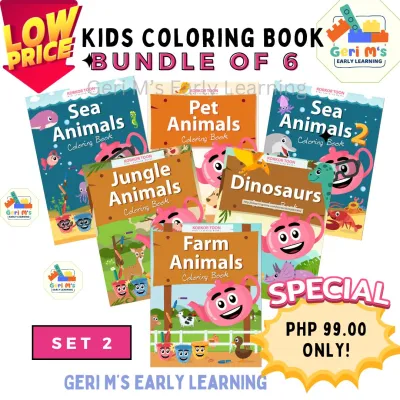
In contrast, themed multipacks contain a diverse assortment of books focused on different subjects, such as dinosaurs, fairy tales, and vehicles. While the initial cost per page may be slightly higher, these sets offer superior variety, keeping children engaged for longer periods. They also allow teachers to cater to the diverse personal interests of multiple children simultaneously, reducing the likelihood of a child rejecting a coloring activity.
To determine the best financial choice, calculate the true cost-per-page rather than relying solely on the retail price. Divide the total price of the set (in PHP) by the number of usable, single-sided pages. A slightly more expensive set with thick, single-sided, tear-out pages often represents better value than a cheap, double-sided book that suffers from severe marker bleed-through and tearing. To verify bleed resistance and drying speed on a new paper type, draw a heavy stroke with a water-based marker on a sample sheet; wait ten seconds to observe if the ink feathers, pools, or transfers to the surface underneath.
Safety must always be a primary consideration when purchasing classroom supplies. Before buying any coloring book set, carefully inspect the product labels for non-toxic certifications. Look for recognized safety standards such as the AP (Approved Product) seal from the Art and Creative Materials Institute (ACMI) or compliance with EN71 toy safety standards. This is especially critical for sets that include accompanying crayons or markers, as young children frequently touch their faces, mouths, and eyes during art activities. Ensure all materials are explicitly labeled as age-appropriate for your specific classroom demographic to maintain a safe, worry-free learning environment.
Frequently Asked Questions (FAQ)
How many coloring books should a daycare classroom have on hand?
To calculate your inventory needs, multiply the number of children in your classroom by the frequency of your coloring activities. For example, a classroom of 15 children coloring three times a week will use approximately 45 pages per week, or 180 pages per month. It is highly recommended to maintain a 20% to 30% buffer stock of loose pages to accommodate unexpected rainy-day activities, visiting children, or accidental tears. Keeping around 10 to 12 complete, high-quality coloring books (or the equivalent of 500 loose pages) in your moisture-proof storage bins ensures you will always have an adequate supply without cluttering your classroom shelves.
Are spiral-bound or glued-bound coloring books better for group use?
Spiral-bound coloring books are excellent for individual use because they lie completely flat on a table, but they are less practical for shared classroom settings because they cannot be easily divided among multiple children. Glued-bound books are generally more cost-effective and take up less storage space on shelves. For a daycare classroom, the ideal compromise is a glued-bound book designed with perforated, tear-out pages. This design allows teachers to easily pull out individual sheets for distribution across several tables while keeping the remaining pages bound together neatly for future use.
Community discussion
Share your experience or ask a question. Comments are reviewed before publication.