
Selecting the right coloring book set for elementary art class in the Philippines requires balancing educational value, paper quality, and daily durability. With art class integrated into the national MAPEH (Music, Arts, Physical Education, and Health) curriculum, students need materials that help them master fine motor skills or advanced shading techniques while surviving the country’s high humidity. By matching the book’s design and paper weight to your child’s specific grade level, you can ensure a frustration-free classroom experience that supports their creative growth.
Key Criteria for Choosing School-Ready Coloring Book Sets
Age and Grade Appropriateness
Selecting a coloring book is not a one-size-fits-all decision. For younger students in Grades 1 to 3, illustrations must feature thick, bold outlines and large, uncomplicated shapes to accommodate their developing hand-eye coordination. As students advance to Grades 4 to 6, their spatial awareness and fine motor control mature significantly. Older children require intricate patterns, multi-subject scenes, and realistic depictions that challenge their precision and keep them intellectually engaged during art class.
Curriculum Alignment
In Philippine elementary schools, art education is designed to foster cultural appreciation and environmental awareness alongside basic creative skills. The best coloring books for school use feature themes that complement these academic goals. Look for books illustrating local flora and fauna, traditional Filipino games, historical landmarks, or cultural festivals. These themes allow children to connect their coloring activities with lessons in social studies and science, transforming a simple coloring exercise into an active learning experience.
Products mentioned in this guide
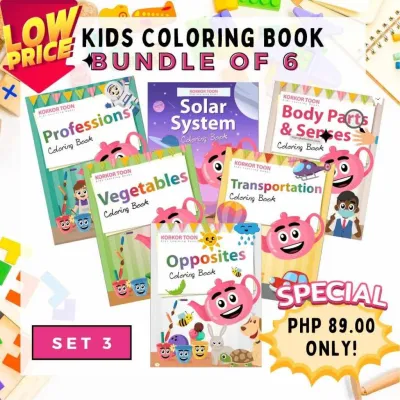
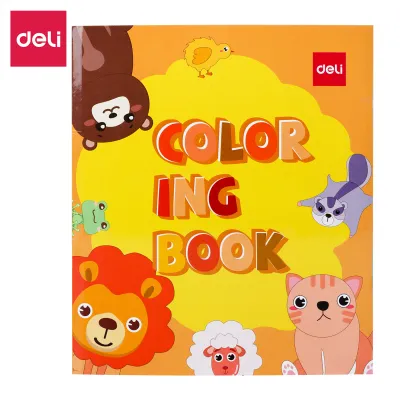
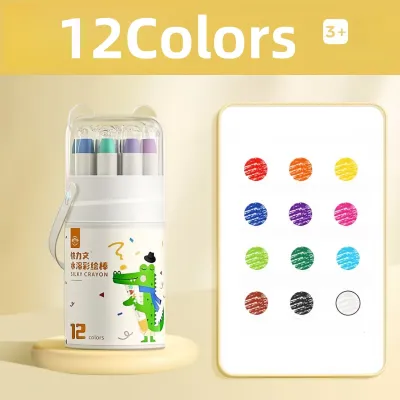
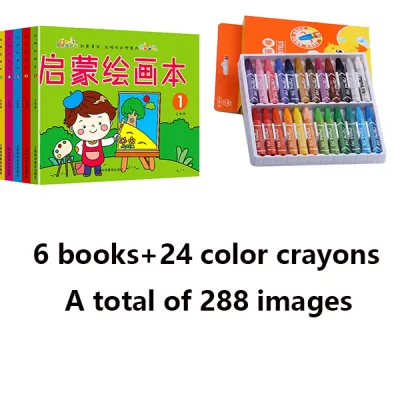
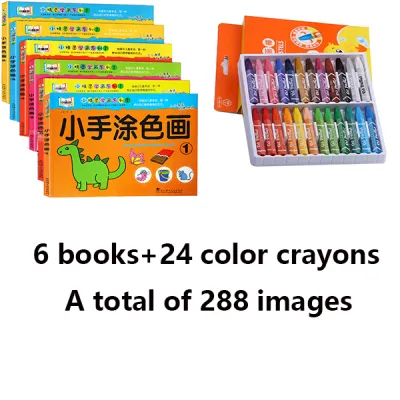
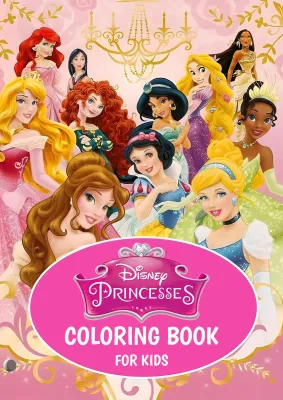
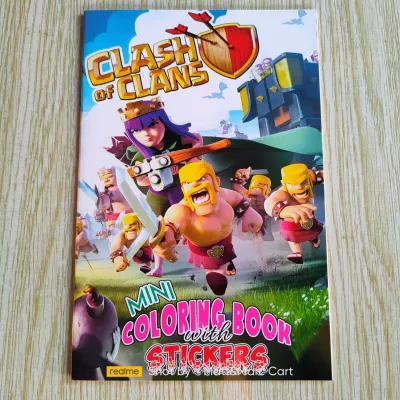
Prices are valid at publication and may change. Please refer to the product page for the latest price.
Physical Durability
The tropical climate in the Philippines presents unique challenges for paper-based school supplies. High humidity can soften cheap paper, making it highly susceptible to warping, tearing, and ink bleeding. Furthermore, school supplies must survive daily transport inside crowded backpacks, where they are often pressed against heavy textbooks and water bottles. Spiral-bound books are highly recommended because they allow pages to lay completely flat on small classroom desks, preventing the spine from cracking and pages from falling out over time.
Safety and Compliance
School safety policies strictly mandate that all classroom art supplies must be non-toxic and safe for children. When purchasing a coloring book set that includes coloring mediums like crayons or markers, always check the packaging for certified safety labels. Look for internationally recognized certifications such as ASTM D-4236 or EN71. These labels guarantee that the pigments, binders, and plastics used in the products have been rigorously tested and are free from harmful chemicals, ensuring peace of mind during long art sessions.
What to Look for in Coloring Book Sets by Grade Level
Developmental milestones dictate the ideal coloring book profile for elementary students. Because a child’s artistic needs change rapidly between early childhood and pre-adolescence, school art supplies are generally divided into lower and upper elementary brackets.

Lower Elementary (Grades 1-3): Building Fine Motor Skills
Design Features For children aged six to nine, coloring is primarily an exercise in building grip strength and spatial control. Look for books featuring heavy, solid black outlines that are at least two millimeters thick. These thick borders act as visual and physical barriers, helping young hands stay within the lines and building artistic confidence. Each page should focus on a single, prominent subject with a clean, uncluttered background to prevent the child from feeling overwhelmed.
Thematic Focus Select books that feature highly recognizable, everyday objects, basic geometric shapes, friendly animals, and simple local nature scenes. Familiar subjects like a local mango fruit, a jeepney, or a simple house allow children to make immediate real-world color associations. This familiarity helps them focus on the physical act of coloring rather than struggling to understand what the image represents.
Set Composition Lower elementary sets are most effective when paired with jumbo crayons, thick washable markers, or triangular colored pencils. Triangular barrels are particularly beneficial because they naturally guide small fingers into the correct tripod grip. This ergonomic design reduces hand fatigue and prevents the writing tool from rolling off sloped school desks during busy classroom activities.
Verification Checklist
- Single-Sided Printing: Verify that the illustrations are printed on only one side of the page to prevent wax or marker bleed-through from ruining the reverse image.
- Perforated Pages: Ensure the book has perforated edges so pages can be cleanly torn out for grading, classroom display, or drying.
- Line Quality: Check that the lines are solid black and free from pixelation, which can confuse young eyes.
Upper Elementary (Grades 4-6): Encouraging Detail and Creativity
Design Features Older elementary students have mastered basic motor skills and are ready to explore advanced artistic concepts like shading, depth, and color harmony. Look for books with intricate designs, geometric mandalas, detailed architectural drawings, and multi-layered landscapes. These complex scenes encourage patience, sustained focus, and the precise application of color in small, tight spaces.
Thematic Focus Choose educational themes that align with upper-grade subjects such as science, geography, and history. Illustrations depicting the solar system, anatomical diagrams, world landmarks, or Philippine historical events provide excellent context. Additionally, books that incorporate creative storytelling prompts or blank spaces for students to add their own drawings help foster independent creative expression.
Set Composition For this age bracket, look for coloring sets paired with standard-sized colored pencils (sets of 12 to 24 colors), fine-tip markers, or dual-tip brush pens. These mediums allow students to practice advanced techniques such as cross-hatching, stippling, and smooth color gradients, which are common requirements in upper-grade art rubrics.
Verification Checklist
- Paper Weight (GSM): Confirm that the paper is thick enough (ideally 100 GSM or higher) to support heavy layering of colored pencils and light marker blending.
- Surface Texture: Feel the paper to ensure it has a slight texture or "tooth" to grab pencil pigments; overly glossy paper will cause colors to look faint and uneven.
- Double-Sided Usability: If the paper is thick enough, double-sided printing is acceptable, though single-sided pages remain the safest choice for marker users.
Matching Paper Quality to Art Class Mediums
Understanding Paper Weight
Paper weight is measured in grams per square meter (GSM), which indicates the density and thickness of the paper. Most budget-friendly coloring books sold in local convenience stores use thin newsprint-grade paper, which typically ranges from 55 to 70 GSM. While economical, this paper is highly absorbent and fragile, making it unsuitable for anything other than light crayon use. For a successful school art class, matching the paper’s GSM to the required art medium is essential to prevent torn pages and ruined desks.
Medium Compatibility Matrix
| Paper Type | Typical GSM Range | Best Suited Mediums | Classroom Risks & Drawbacks |
|---|---|---|---|
| Thin Newsprint | 55 – 70 GSM | Dry wax crayons | High risk of tearing; markers bleed instantly; warps easily in humid air. |
| Standard Medium Paper | 80 – 100 GSM | Colored pencils, hard crayons | Moderate ghosting with markers; paper fibers may pill if erased heavily. |
| Heavyweight Drawing Paper | 100 – 140 GSM | Washable markers, colored pencils, gel pens | Heavy marker saturation may show minor ghosting; excellent for layering. |
| Mixed-Media / Watercolor Paper | 150 – 300 GSM | Watercolors, acrylics, dual-tip brush pens | Highly durable but bulky; more expensive; often overkill for daily dry coloring. |
Observable Testing Methods
Because many coloring book manufacturers do not print the exact GSM on their covers, parents can perform a simple, low-risk test at home before sending a new book to school. Open the book to the very last page or use an unprinted margin on the first page to conduct a “swatch test.” Have your child apply a heavy stroke of their school marker and a firmly layered scribble of colored pencil.
Wait sixty seconds, then inspect the reverse side of the page. “Ghosting” occurs when the color is visible through the paper but the ink has not physically broken the surface, which is generally acceptable for single-sided books. If the wet ink physically leaks through to the next page, the paper is too thin for markers. To test paper strength, rub a standard school eraser back and forth five times over a colored pencil mark; if the paper begins to pill or shed small, fuzzy paper clumps, the fibers are too weak for heavy classroom blending.
Binding and Layout
The physical construction of a coloring book directly impacts how comfortable it is to use on a small school desk. Spiral-bound books are the most practical option because they can fold back 360 degrees, saving precious desk space and allowing the child to color near the inner margins without fighting a springing cover. Lay-flat books, which use specialized thread-sewing, also provide a smooth, flat surface but are often more expensive. Standard perfect-bound (glued spine) books are common and affordable, but they tend to spring closed constantly. In humid tropical environments, cheap spine glue can dry out and crack, causing pages to detach prematurely.
Standalone Books vs. All-in-One Art Kits: Which to Buy?
All-in-One Kits
All-in-one art kits are highly appealing due to their convenience, often packaging a themed coloring book with crayons, markers, watercolors, and pencils in a single carrying case. However, parents should evaluate these kits carefully. The coloring mediums included in budget-friendly, all-in-one sets are frequently of lower quality than standalone brands. The crayons may contain more paraffin wax than pigment, resulting in faint, scratchy colors, and the markers may dry out quickly. Additionally, these bundled supplies may not meet the specific brand or quality requirements set by your child’s art teacher.
Standalone Books
Purchasing a high-quality standalone coloring book and pairing it with separate, teacher-approved coloring tools is often the most cost-effective approach. Brand-name colored pencils and markers purchased separately generally offer superior pigment, smoother application, and better durability. This method also allows parents to select a coloring book with the exact paper weight and theme required for the school curriculum, rather than being limited to the thin paper typically found inside pre-packaged kits.
Checking Labels and Specs
When shopping for any coloring set, look past the bright, cartoonish cover designs and turn the package over to read the manufacturer’s label. Verify that the markers are explicitly labeled as “washable,” which is essential for lower elementary students to prevent permanent stains on school uniforms. Ensure that the non-toxic certification is clearly printed, and avoid sets that lack clear brand information, manufacturer contact details, or safety labels, as these are often indicators of substandard manufacturing.
Storage and Portability
A massive, rigid plastic art case containing dozens of pieces might look impressive, but it can be highly impractical for school use. These bulky cases take up significant space in a child’s backpack and can easily pop open, spilling supplies across a busy classroom floor. For school art classes, compact, soft-sided zippered pouches or dedicated art portfolios are far more practical. Ensure that the coloring book itself fits comfortably inside a standard plastic school envelope (typically 10 by 13 inches) to protect the pages from crumpled corners and rainy-day moisture during the wet season.
Frequently Asked Questions (FAQ)
How many coloring books should I buy for a full school year?
For most elementary schools in the Philippines, art class is held once or twice a week as part of the MAPEH curriculum. If a student completes one coloring page per week, they will use approximately 40 pages over a ten-month school year. Purchasing one thick, high-quality coloring book containing 80 to 100 pages, or a multi-pack of two 40-page books, will easily cover the entire academic year. It is usually best to start the first semester with one durable book and reassess your child’s needs during the mid-year break.
Are watercolor coloring books suitable for regular art class assignments?
Standard coloring books are completely unsuitable for watercolors, as the wet paint will instantly warp, pill, and tear thin paper. Specialized watercolor coloring books—which feature pre-printed line art on thick, textured watercolor paper (usually 200 to 300 GSM)—are excellent but significantly more expensive. Unless the teacher’s syllabus explicitly calls for watercolor painting modules, stick to standard coloring books designed for dry mediums to save money and prevent unnecessary mess in the classroom.
Can I use regular printer paper if the coloring book runs out?
Standard printer paper (typically 70 to 80 GSM) is a poor substitute for school art assignments. It is designed for dry toner and quick ink absorption, meaning school markers will bleed through instantly, and colored pencils will struggle to layer due to the paper’s slick, toothless surface. If your child’s coloring book runs out mid-semester, do not rely on printer paper. Instead, purchase a dedicated pad of mixed-media paper or heavyweight drawing paper (at least 120 GSM) and let them draw or transfer their coloring assignments onto it.
Community discussion
Share your experience or ask a question. Comments are reviewed before publication.