
Selecting the perfect coloring books for kids set for a school art class in the Philippines requires balancing educational goals, student age, and the unique challenges of a tropical classroom environment. Art teachers and parents often face a wide array of options in online marketplaces and local stationary shops, ranging from thin, budget-friendly pamphlets to thick, premium activity books. The ideal choice must not only keep young learners engaged but also withstand the physical demands of daily classroom use, including high humidity levels and the enthusiastic application of various coloring media. By focusing on paper weight, binding style, and age-appropriate design complexity, educators can ensure that their students enjoy a smooth, frustration-free artistic experience that fosters creativity and motor skill development.
Using a dedicated coloring books for kids set in structured lessons provides a structured yet creative outlet for students. It allows teachers to introduce fundamental art concepts, such as color theory, spatial boundaries, and hand-eye coordination, within a manageable framework. However, because classroom budgets and student needs vary across different grade levels, understanding the technical specifications of these books is the first step toward making a sustainable and effective purchase.
What to Look for in a Classroom Coloring Books for Kids Set
When evaluating a coloring books for kids set for classroom use, several technical specifications dictate how well the books will perform during structured art lessons.
Products mentioned in this guide
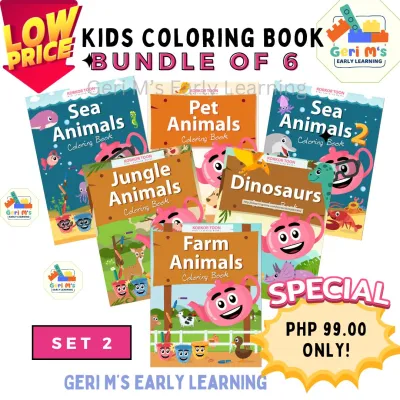
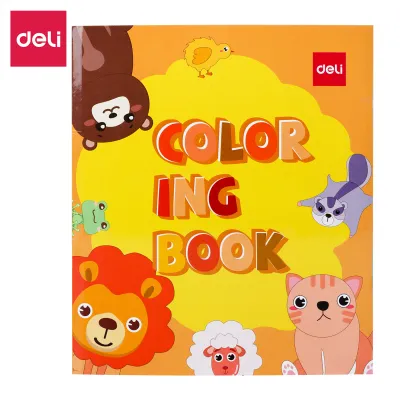
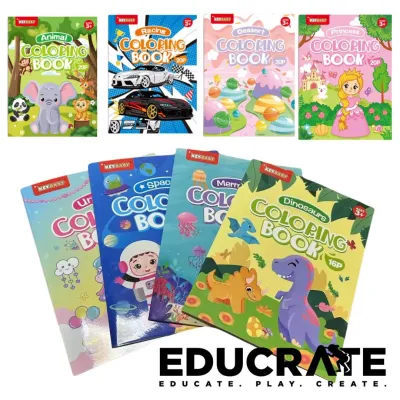
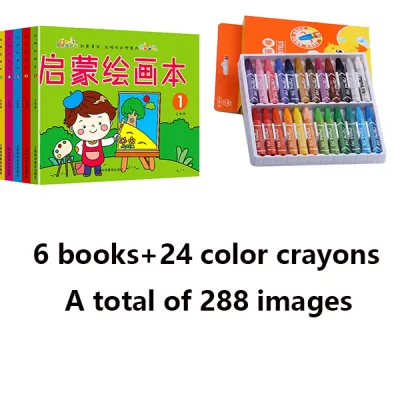
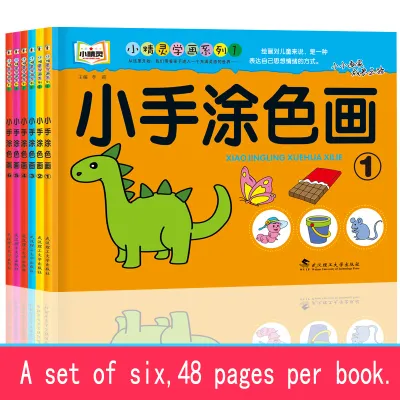
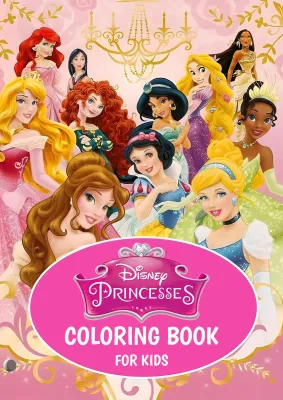
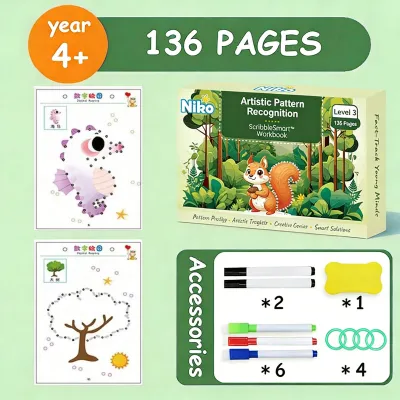
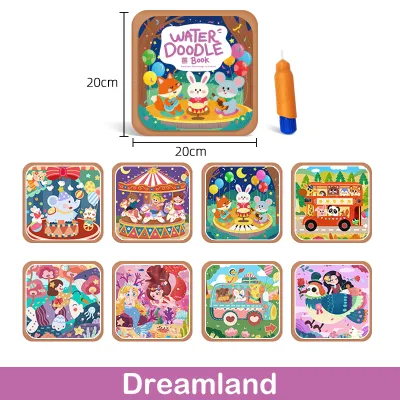
Prices are valid at publication and may change. Please refer to the product page for the latest price.
Paper Quality and Weight (GSM)
The thickness and texture of the paper are paramount, especially in the Philippines, where high relative humidity can soften paper fibers and make them more susceptible to tearing. Paper weight is measured in grams per square meter (GSM). Standard, low-cost coloring books often use paper between 60 to 70 GSM, which is highly prone to bleed-through and warping when used with water-based markers or gel pens. For a versatile classroom setting where students might use crayons, colored pencils, and markers, look for sets featuring paper of at least 100 to 120 GSM. This weight offers sufficient bleed resistance and prevents the pigment from seeping through to the design on the reverse side of the page.
Age Appropriateness and Line Complexity
The design layout of the coloring pages must align with the developmental stage of the students. Early elementary students require bold, thick outlines and large, uncomplicated coloring spaces that accommodate their developing fine motor skills. Conversely, older elementary students benefit from intricate patterns, detailed scenes, and smaller spaces that challenge their precision and encourage advanced techniques like shading, blending, and color layering. Matching the complexity of the book to the grade level prevents younger children from becoming frustrated and keeps older students intellectually engaged.
Binding Types for Classroom Practicality
The physical construction of the book determines how easily a child can use it on a standard school desk. Spiral-bound or wire-O books are highly recommended for classrooms because they can fold back a full 360 degrees, saving valuable desk space and allowing the page to lie completely flat. Saddle-stitch (stapled) bindings are also acceptable for thinner books, as they allow the pages to lie relatively flat without snapping shut. Perfect-bound (glued) books, while common and often less expensive, are difficult for young hands to keep open; students often end up cracking the spine, which leads to loose, scattered pages across the classroom floor.
Size and Format Considerations
Standard letter size (A4 or approximately 8.5 x 11 inches) is the most practical format for individual student desks and standard storage bins. While oversized or giant coloring books offer a novel, collaborative experience for group work on the floor or shared tables, they are often too large for single-student armchairs. Compact or travel-sized coloring books, on the other hand, may limit the scope of art class projects and prove difficult for younger children who still use broad, sweeping arm movements while coloring.
Top Picks for Lower Elementary Art Classes (Grades 1–3)
For students in Grades 1 through 3, art classes focus heavily on developing hand-eye coordination, spatial awareness, and color recognition. A suitable coloring books for kids set for this age group should prioritize simplicity, durability, and high-contrast designs. Younger children tend to apply significant physical pressure when using wax crayons or oil pastels, and they frequently saturate pages when using broad-tip water-based markers. Therefore, the physical resilience of the paper is just as important as the visual appeal of the illustrations.

At this developmental stage, children are highly motivated by recognizable characters, friendly animals, and basic everyday objects. Choosing books that balance fun illustrations with sturdy construction ensures that the materials remain intact even during energetic coloring sessions.
Large-Format Sets with Bold Outlines
Oversized coloring books featuring exceptionally thick, dark outlines are ideal for early elementary students who are still mastering their grip and boundaries. These bold lines provide a clear visual guide that helps children stay within the lines, reducing frustration and building artistic confidence. The larger format allows for broader, more natural arm movements rather than tight, precise wrist motions, which can quickly tire out young muscles.
When selecting these large-format sets, it is crucial to verify the manufacturer’s paper specifications to ensure the sheets are thick enough (at least 90 to 100 GSM) to withstand heavy crayon wax buildup and vigorous scrubbing motions without tearing or pilling. Look for non-toxic certifications on the packaging to ensure all materials are safe for prolonged skin contact.
Spiral-Bound Educational Theme Books
Spiral-bound sets are highly efficient tools for early childhood classrooms where desk space is at a premium. The ability to fold the unused half of the book completely underneath the active page ensures that the book fits comfortably on small classroom armchairs or shared tables.
Choosing sets with educational themes—such as alphabet tracing, basic numbers, simple geometric shapes, and local Philippine flora and fauna—allows art teachers to easily integrate their lessons with other subjects like science, reading, and mathematics. These books keep students engaged by combining the fun of coloring with foundational learning concepts, making them excellent resources for multi-disciplinary school activities.
Top Picks for Upper Elementary Art Classes (Grades 4–6)
Students in Grades 4 through 6 have developed refined fine motor skills and are capable of sustained focus on detailed projects. For these older children, coloring is no longer just about filling in shapes; it is an exploration of color theory, shading, gradients, and mixed-media experimentation. Coloring books for this demographic should offer sophisticated themes, intricate patterns, and high-grade paper that can support advanced coloring instruments like fine-line markers, gel pens, and artist-grade colored pencils.
At this level, students appreciate themes that feel more mature, such as detailed landscapes, geometric mandalas, historical scenes, and scientific diagrams. The paper must be of high enough quality to prevent the pilling and tearing that occurs when students layer multiple colors or use wet media.
Heavyweight Paper Sets for Mixed Media
To accommodate advanced coloring techniques, upper elementary art classes require coloring books with heavyweight paper, ideally between 120 and 150 GSM. Older students often experiment with layering multiple colors of colored pencils to create depth, or using water-based brush pens for blending. Standard coloring paper will quickly pill, tear, or warp under these conditions.
Look for sets explicitly labeled as “mixed media” or “heavyweight paper” with a slight “tooth” or texture. This textured surface grabs the pigment from colored pencils much better than smooth paper, allowing for richer color saturation and smoother blending transitions without smudging. It also provides an excellent surface for fine-liner pens and gel pens, ensuring the ink dries quickly and does not smear.
Perforated and Lay-Flat Nature Theme Books
For detailed and time-consuming art projects, perforated pages are an invaluable feature. They allow students to cleanly tear out their selected page before they begin coloring, providing a completely flat working surface free from the obstruction of a book spine. This also makes it incredibly easy for teachers to collect, grade, and display the finished artwork on classroom bulletin boards or take-home portfolios.
Detailed botanical illustrations, complex geometric patterns, and anatomical or scientific diagrams are highly appealing to older students, as they provide a sense of mature artistic accomplishment and align well with their intermediate science and math curricula. Lay-flat bindings further enhance this experience by ensuring that if a student chooses to keep the page in the book, they can color right up to the inner margin without struggling against a curved spine.
Comparing Paper Quality and Binding for Classroom Use
To assist educators and school administrators in making informed bulk purchases, it is helpful to compare how different binding types and paper formats perform under the rigorous conditions of a busy classroom. Selecting the wrong combination can lead to wasted materials, torn pages, and frustrated students.
The following table outlines the most common binding types found in coloring book sets, their ideal classroom applications, and their overall durability.
| Binding Type | Best Use Case | Lay-Flat Capability | Classroom Durability |
|---|---|---|---|
| Spiral / Wire-O | Individual desks, compact workspaces, daily art lessons | Excellent (360-degree fold, stays perfectly flat) | High (metal or plastic coils keep pages secure even with rough handling) |
| Saddle-Stitch (Stapled) | Budget-friendly units, short-term projects, light activity books | Good (lies flat when firmly pressed along the spine) | Medium (staples can rust over time in high-humidity tropical climates) |
| Perfect Bound (Glued) | Library storage, thick collections, individual home use | Poor (tends to spring closed; requires constant pressure to stay open) | Medium-Low (frequent forcing of the spine can cause pages to detach and fall out) |
| Perforated Pad (Glue-Top) | Single-sheet projects, classroom displays, collaborative activities | Excellent (sheets are designed to be detached and colored flat) | High (once sheets are removed, the remaining pad stays clean and intact) |
Online Shopping Checklist for Bulk Purchases
When purchasing a coloring books for kids set in bulk from online marketplaces, physical inspection is not possible beforehand. To avoid low-quality paper that bleeds or tears, use this verification checklist:
- Check the GSM Specification: Always look for the paper weight in the product description. If the listing does not state the GSM, ask the seller directly. Aim for a minimum of 100 GSM for general classroom use.
- Analyze User-Uploaded Photos: Do not rely solely on polished marketing images. Scroll down to the customer review section and look at real photos uploaded by buyers. Check if the paper looks semi-transparent or if marker ink is visible on the back of the pages in their photos.
- Search Reviews for Key Feedback: Use the search or filter function within the reviews to look for terms like "bleed," "bleed-through," "thin," "crayon," or "marker." If multiple reviews mention that markers bleed through to the next page, the set is likely unsuitable for anything other than crayons and colored pencils.
- Verify Bundle Packaging: Ensure that the "set" consists of individually bound books rather than a single giant volume that must be shared. Individually bound books are much easier to distribute to a large class of students.
How to Store and Maintain Coloring Books in the Classroom
In the warm, humid climate of the Philippines, paper products are highly susceptible to moisture absorption, warping, mold, and physical wear. Proper storage and maintenance are essential to extend the lifespan of your classroom coloring book sets and ensure they remain in usable condition throughout the school year.
Effective Storage Solutions
Coloring books should always be stored flat or vertically in sturdy, well-ventilated plastic bins or drawers. Storing books loosely in deep piles can cause the bottom books to warp or bend under the weight, especially when the air is humid. Keep storage bins elevated off the floor and away from windows or damp walls to prevent moisture damage.
Placing a few silica gel packets inside each storage bin is an inexpensive and highly effective way to absorb excess moisture and protect the paper from developing a musty smell or growing mold. If plastic bins are not available, sturdy cardboard magazine holders can keep the books upright and organized by grade level or theme.
Routine Maintenance and Simple Repairs
Establish a routine for checking the condition of the books at the end of each art class. Minor tears along the edges of pages or slightly loose bindings should be repaired immediately using standard clear school tape to prevent the damage from worsening.
If a perfect-bound book begins to lose pages, a thin line of clear craft glue applied carefully along the inner spine can temporarily re-secure the loose sheets. However, if a book suffers severe water damage, heavy mold growth, or has more than half of its pages already colored, it should be retired and recycled to maintain a clean, hygienic classroom environment.
Distribution and Collection Guidelines
To keep classroom activities organized and prevent books from being misplaced or damaged, establish clear distribution guidelines. Assign a unique number or color-code to each coloring book set and assign them to specific student groups or desks.
Before starting the activity, remind students to handle the books with clean, dry hands—especially after snack times. At the end of the lesson, appoint student “art helpers” to collect the books, verify that all pages are intact, and stack them neatly back into their designated storage bins. This structured approach teaches students responsibility and ensures that your art supplies remain complete and ready for the next class.
Frequently Asked Questions (FAQ)
Can regular printer paper coloring books handle water-based markers?
Standard printer paper, which typically ranges from 70 to 80 GSM, is generally not thick enough to handle water-based markers without significant bleeding and warping. The liquid ink quickly saturates the thin paper fibers, causing the colors to bleed through to the other side and potentially ruin the page underneath.
If you must use markers on lightweight paper, place a thick sheet of scratch paper or cardstock directly behind the page being colored to protect the rest of the book. For a hassle-free classroom experience, it is highly recommended to invest in coloring book sets specifically designed with heavyweight, bleed-resistant paper.
Are coloring book sets with pre-printed colors useful for art classes?
Color-by-number sets or books with pre-printed color guides can be highly beneficial for younger students in Grades 1 to 3. These books help teach basic instructions, fine motor control, and fundamental color matching. However, for older elementary students, pre-printed colors can severely limit creative expression and personal choice.
For intermediate art classes, blank outline coloring books are much more effective, as they challenge students to make their own decisions regarding color harmony, light sources, shading, and artistic interpretation.
How many coloring books should be in a set for a standard class?
When purchasing coloring books for a standard Philippine classroom, it is best to buy sets that match your maximum class size plus an additional 10% to 15% as spares. For a typical class of 30 to 40 students, purchasing a bulk set of 35 to 45 individual books is ideal.
This ensures that every child has their own book to work on, with a few extra copies available to replace any books that get damaged, lost, or completely filled during the school year. Always verify that the set contains separate, individually bound books rather than a single large volume.

Community discussion
Share your experience or ask a question. Comments are reviewed before publication.