
Choosing the right coloring book for an elementary school art class in the Philippines involves balancing paper weight, binding durability, and age-appropriate themes. In a tropical classroom environment where students use everything from wax crayons to watercolors, a standard retail coloring book often falls short. To ensure that art lessons run smoothly without torn pages or bleeding ink, parents and educators must look beyond bright covers and evaluate the technical specifications of the paper and the structural design of the book.
By matching the book’s physical characteristics to the specific art tools used in the curriculum, teachers can prevent student frustration and encourage creative expression. Whether sourcing materials for a small private class or bulk-purchasing for an entire grade level, understanding how paper weight, texture, and binding styles interact with different mediums is the key to a successful art program.
What Makes a Coloring Book Suitable for Elementary Art Classes?
When selecting a coloring book for classroom use, the physical construction of the book is just as important as the illustrations inside. Elementary art rooms are high-activity environments where books are subjected to constant handling, folding, and pressure. A book that falls apart mid-semester not only disrupts the lesson but can also discourage students who are proud of their ongoing work.
Products mentioned in this guide
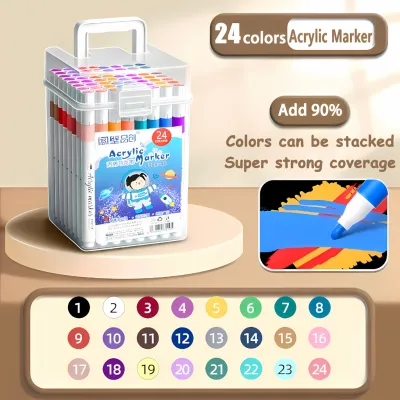
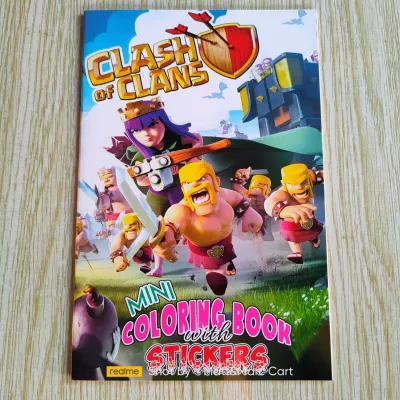
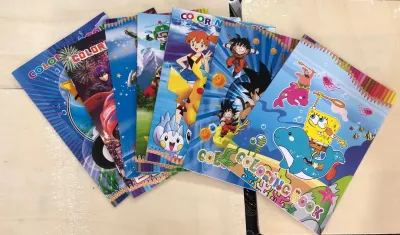
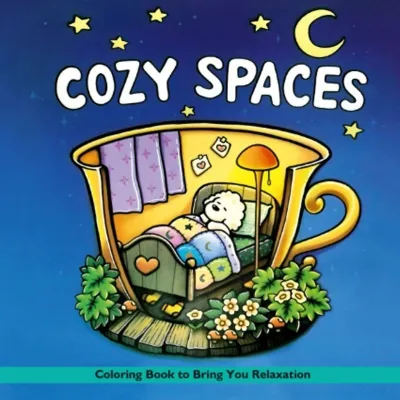
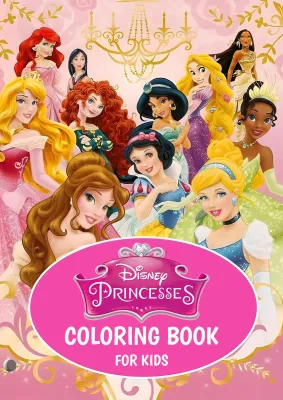
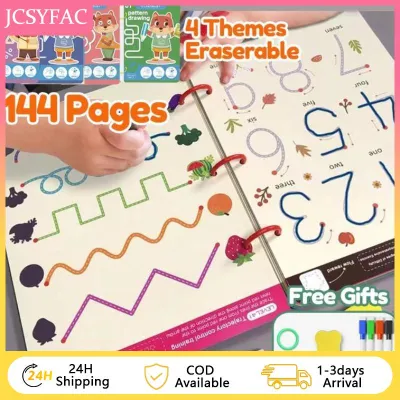
Prices are valid at publication and may change. Please refer to the product page for the latest price.
Binding Types and Classroom Usability
The binding of a coloring book determines how easily a student can access the entire page, especially the areas closest to the spine. Standard perfect-bound books, which use glue to hold the pages together, are notoriously difficult to keep flat. When forced open, the spine can crack, causing pages to fall out. For art classes, look for the following binding styles:
- Saddle-Stitch Binding: This method uses staples along the fold. It is highly durable, cost-effective, and allows the book to lie completely flat on a school desk, giving students full access to the margins.
- Spiral or Wire-O Binding: This style offers the best lay-flat performance. Students can fold the book back on itself, saving valuable desk space in crowded classrooms. It also minimizes the risk of pages tearing accidentally during active coloring.
- Sewn Binding: Often found in higher-end books, sewn bindings offer a balance of durability and lay-flat capability, ensuring the book survives the school year.
Evaluating Paper Thickness and Texture
Rather than relying on vague marketing terms like “premium quality” or “heavy-duty,” educators should check the actual paper specifications, specifically the GSM (grams per square meter) rating. Standard, low-cost coloring books often use thin newsprint or utility paper ranging from 55 to 70 GSM. This paper is highly translucent, prone to tearing under the heavy hand of a young child, and incapable of holding wet mediums. For general classroom use, a minimum of 100 GSM is recommended, while projects involving markers or light paint require paper that is 120 GSM or heavier.
The Utility of Perforated Edges
Perforated pages are a highly valuable feature for elementary art teachers. They allow students to cleanly tear out their finished work without ripping the edges or damaging the rest of the book. This makes it easy for teachers to collect drawings for grading, organize classroom gallery displays, or send completed artwork home with students. It also allows multiple students to work on different pages from the same book simultaneously, maximizing classroom resources.
Alignment with School Art Curricula
A suitable coloring book must align with the developmental stages outlined in the Department of Education (DepEd) K-12 Art curriculum. The curriculum focuses on progressive skill development, starting with basic shape and color recognition in early grades and moving toward spatial relationships, shading, and cultural appreciation in upper grades. The designs within the book should support these academic milestones rather than serving as mere time-fillers.
How to Match Paper Quality to Classroom Art Mediums
Different art tools place unique demands on paper. Using the wrong medium on unsuitable paper leads to tearing, bleeding, and warping, which can frustrate young artists. Understanding the relationship between the medium and the paper’s physical properties is essential for planning successful art lessons.

Crayons and Oil Pastels
Wax crayons and oil pastels require paper with a distinct texture, often referred to as “tooth.” If the paper is too smooth or glossy, the wax or oil cannot grip the surface, resulting in faint, uneven coloration and slippery strokes.
- Ideal Paper Type: Medium-weight paper (80 to 100 GSM) with a matte, slightly rough texture.
- What to Avoid: Highly calendered (smoothed) or coated papers, which cause the crayons to slide without depositing pigment.
Colored Pencils
Colored pencils require a balance of smoothness and durability. Because students often apply significant downward pressure to achieve vibrant colors, thin paper will easily puncture. Furthermore, advanced lessons in upper elementary grades involve blending and layering multiple colors, which requires paper that can withstand repeated friction.
- Ideal Paper Type: Smooth, medium-to-heavyweight paper (100 to 120 GSM).
- What to Avoid: Thin newsprint, which tears under sharp pencil tips, and highly textured watercolor paper, which can make fine detail work difficult for young hands.
Watercolors and Markers
Wet mediums are the most demanding materials used in elementary art classes. Watercolors introduce moisture that swells paper fibers, while markers contain solvents and dyes that easily penetrate thin sheets, bleeding through to the underlying pages.
- Ideal Paper Type: Heavyweight, sized paper (150 to 200+ GSM) explicitly labeled as "mixed media" or "watercolor." Sizing is a chemical treatment applied during paper manufacturing that resists water absorption, preventing the paper from turning back into pulp when wet.
- What to Avoid: Standard coloring book pages. Without a dedicated "mixed media" or "watercolor" label, standard pages will warp, buckle, and pill immediately upon contact with water.
Practical Verification Methods for Bulk Buyers
Before purchasing coloring books in bulk for a school or classroom, teachers and parents should perform a few simple physical tests on a sample copy to verify its suitability:
- The Light Test: Hold a page up to a bright light. If you can clearly see the outline of the drawing on the reverse side, the paper is likely too thin (under 80 GSM) and will suffer from severe marker bleed-through.
- The Texture Rub: Run a dry finger over the page. If it feels slick like printer paper, it may not hold crayons or oil pastels well. Look for a slight, velvety resistance.
- The Swatch Test: If a sample is available, apply a heavy stroke of a standard school marker and a wet brush stroke of watercolor to a back page. Observe how long it takes to dry, whether the paper buckles, and if the ink bleeds through to the back of the sheet.
Selecting Age-Appropriate Themes and Design Complexity
To keep students engaged, the illustrations in a coloring book must match their cognitive development and motor skills. A design that is too complex will overwhelm a young child, while a design that is too simple will fail to challenge an older student.
Lower Elementary (Grades 1-3)
Students in early elementary grades are still developing their fine motor skills and hand-eye coordination. They tend to use larger, sweeping arm movements rather than precise wrist motions.
- Design Characteristics: Large, simple shapes with thick, bold outlines. The drawings should have minimal internal detail and generous coloring spaces.
- Themes: Familiar, concrete objects from daily life, such as common animals, plants, family scenes, and basic geometric patterns. These themes build confidence and help children practice spatial boundaries without feeling overwhelmed.
Upper Elementary (Grades 4-6)
By the fourth grade, students have developed excellent fine motor control and are capable of sustained focus. They are ready to explore more sophisticated artistic concepts, such as color theory, shading, and perspective.
- Design Characteristics: Intricate patterns, detailed scenes, and drawings with varying line weights. The spaces to color should be smaller and more varied.
- Themes: Detailed landscapes, historical events, scientific diagrams, and narrative scenes that tell a story. These designs provide the perfect canvas for practicing advanced techniques like gradients, cross-hatching, and light-source shading.
Cultural and Local Themes in the Philippines
Incorporating local culture into art class is an excellent way to foster national pride and connect art with other subjects like social studies (Araling Panlipunan). Coloring books that feature Philippine-centric illustrations offer rich educational opportunities.
- Flora and Fauna: Endemic species like the Philippine eagle, the tamaraw, the tarsier, or the national flower, the sampaguita.
- Cultural Motifs: Traditional dwellings like the bahay kubo, local transport like the iconic jeepney or tricycle, and scenes depicting traditional community life (bayanihan) or local harvest festivals.
- Accuracy and Respect: When choosing books with cultural themes, ensure that representations of indigenous patterns, traditional clothing, and historical figures are accurate, respectful, and free from oversimplified stereotypes.
Top Coloring Book Categories for School Art Projects
To organize your curriculum effectively, it helps to categorize coloring books by their functional purpose in the classroom. This allows teachers to select the right tool for specific lesson plans.
Curriculum-Aligned and Educational Books
These books are designed to bridge the gap between creative art and academic subjects. By integrating coloring with science, history, or geography, teachers can reinforce classroom lessons through visual and tactile learning.
- Science Integration: Books featuring labeled diagrams of plant cells, the water cycle, or the anatomy of local marine life.
- History and Geography: Books containing historical maps, portraits of national heroes, or illustrations of heritage sites like the rice terraces of the Cordilleras or the historic streets of Vigan.
- Educational Value: Coloring these pages helps students internalize factual information, making abstract concepts more concrete and memorable.
Heavyweight Mixed-Media Books
For advanced art projects that go beyond crayons and colored pencils, heavyweight mixed-media books are essential. These books are engineered to handle wet and dry mediums simultaneously, allowing students to experiment with complex textures.
- Paper Specifications: Always verify that the cover or product label explicitly states a weight of 150 GSM or higher and includes the term "mixed media."
- Classroom Applications: These books are perfect for lessons that combine watercolor washes with fine-liner ink details, or projects utilizing heavy paint markers and gel pens. The thick pages resist buckling, ensuring that the student's finished piece remains flat and presentable.
Open-Ended and Creative Prompt Books
While traditional coloring books focus on staying within pre-drawn lines, open-ended prompt books encourage students to think outside the box. These books feature incomplete drawings or creative prompts that require the student to draw their own additions before coloring.
- Example Prompts: A drawing of an empty birdcage with the prompt "What kind of magical bird lives here?" or a blank ocean background with the prompt "Draw and color a hidden underwater city."
- Creative Benefits: These books foster problem-solving, imagination, and artistic agency. They prevent students from falling into a passive coloring routine and encourage them to view the page as a collaborative space for their own ideas.
Sourcing and Storing Coloring Books in the Philippines
Procuring and maintaining art supplies in the Philippines requires special consideration due to the tropical climate and local market availability. Proper purchasing habits and storage techniques will protect your investment and ensure materials remain in excellent condition throughout the school year.
Sourcing and Bulk Purchasing
When sourcing coloring books for school use, educators and parents have several reliable avenues. Local stationery suppliers, dedicated school supply depots, and reputable online marketplaces offer a wide variety of options. However, when buying in bulk, special care must be taken to verify the product quality:
- Request Samples: Whenever possible, ask the supplier for a sample copy to perform physical paper and binding checks before committing to a large order.
- Verify Specifications: Do not rely solely on online product titles, which may use misleading terms. Directly ask the seller to confirm the exact GSM, the binding style, and whether the illustrations are printed on both sides of the page.
- Prioritize Single-Sided Printing: For classroom use, always choose books with single-sided printing. This ensures that even if some bleed-through occurs, it will not ruin another illustration on the back of the page.
Storing Paper in Humid Environments
The tropical climate of the Philippines, characterized by high relative humidity and heavy rainfall during the monsoon season, poses a significant threat to paper products. Excess moisture in the air can cause paper fibers to swell, leading to warping, musty odors, and mold growth. To preserve your coloring books, implement the following storage protocols:
- Use Airtight Containers: Store unused coloring books in heavy-duty, airtight plastic storage bins. This creates a physical barrier against ambient humidity and dust.
- Incorporate Desiccants: Place several packets of silica gel or commercial moisture absorbers inside the storage bins to collect any trapped moisture. Replace or dry these desiccants periodically.
- Ensure Proper Ventilation: Keep storage cabinets away from damp concrete walls. If storing books on open shelves, ensure the room is well-ventilated and dry.
- Avoid Direct Sunlight: Store books away from windows. Prolonged exposure to direct sunlight degrades paper fibers, causing the pages to turn yellow and brittle, and can fade the pre-printed black outlines.
- Pest Prevention: High humidity attracts paper-eating pests like silverfish and booklice. Keeping books sealed in plastic bins and maintaining a clean, dry storage area is the most effective way to prevent infestations.
Frequently Asked Questions (FAQ)
Can regular printer paper be used instead of buying coloring books?
Regular printer paper, which typically ranges from 70 to 80 GSM, is designed for dry toner and ink-jet printing, not for heavy artistic mediums. It lacks the necessary thickness and surface texture (tooth) to handle wax crayons, oil pastels, or watercolors effectively. Under pressure from colored pencils or heavy marker strokes, printer paper easily tears or wrinkles. Dedicated coloring books feature heavier, textured paper specifically formulated to withstand the abrasive friction and moisture of art tools, ensuring a much better creative experience and durable results for student portfolios.
How do I prevent markers from bleeding through the pages?
To prevent marker ink from bleeding through and ruining subsequent pages, always place a thick sheet of blotter paper, heavy cardstock, or scrap cardboard directly behind the page being colored. This barrier absorbs any excess ink that penetrates the paper fibers. Additionally, prioritize buying coloring books that feature single-sided printing, which naturally eliminates the risk of ruining an illustration on the reverse side. Teaching students to use a light touch and avoid pooling ink in one spot also helps preserve the paper’s integrity.
Are digital coloring apps a good substitute for physical books in art class?
While digital coloring apps offer convenience and a mess-free environment, they cannot fully replicate the developmental benefits of physical coloring books. Physical coloring provides crucial tactile feedback that helps elementary students develop fine motor skills, hand strength, and proper pencil grip. The physical resistance of paper teaches children to regulate their hand pressure, a skill that does not translate to a smooth glass screen. Furthermore, traditional coloring encourages patience, spatial awareness, and a direct understanding of physical color mixing and medium limitations, which are essential foundations for visual arts education.
Community discussion
Share your experience or ask a question. Comments are reviewed before publication.