
Selecting the right coloring book for elementary art classes in the Philippines requires balancing educational value, paper durability, and regional classroom conditions. While standard retail options are widely available, structured art education demands materials that can withstand local high-humidity environments, match the developmental stages of young learners, and accommodate common classroom mediums like crayons, oil pastels, and markers. A well-chosen coloring book serves as more than a quiet-time activity; it functions as a foundational tool for fine motor development, spatial reasoning, and cultural appreciation.
To maximize the utility of these tools, educators and parents must evaluate physical specifications alongside thematic content. The ideal classroom book features paper sturdy enough to resist bleed-through, a binding that allows pages to lie flat on crowded school desks, and illustrations that align with the cognitive abilities of specific grade levels. By understanding these key parameters, teachers can select books that enhance learning outcomes while remaining within practical school budgets.
How to Evaluate Coloring Books for Art Classes
Evaluating a coloring book for a structured classroom environment requires a different set of criteria than choosing one for casual home use. Standard retail coloring books are often designed for quick entertainment, featuring thin paper and generic, repetitive designs that offer little educational value. In contrast, a classroom-ready book must support specific learning objectives, withstand energetic handling, and remain affordable when purchased in bulk for entire class sections.
Products mentioned in this guide
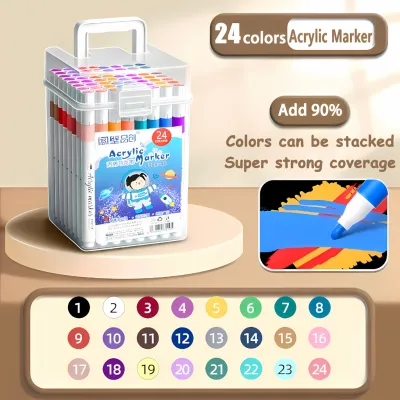
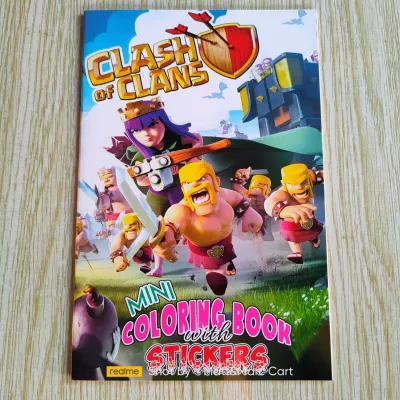
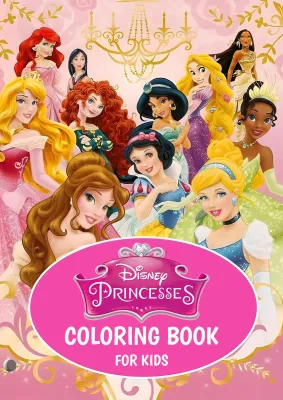
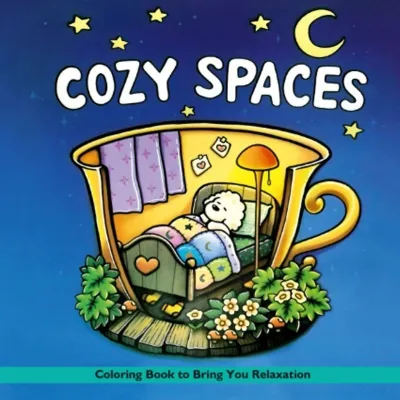
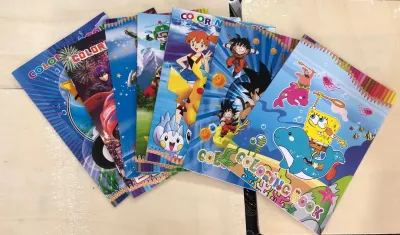
Prices are valid at publication and may change. Please refer to the product page for the latest price.
To establish a baseline standard, educators should focus on four core dimensions: age-appropriate complexity, educational alignment, physical durability, and bulk affordability. Complexity must match the students’ physical capabilities, ensuring that illustrations are neither too simplistic to challenge older children nor too intricate to frustrate younger ones. Educational alignment ensures that the illustrations reinforce other subjects, such as science, social studies, or local culture, turning the art period into a cross-curricular learning experience.
Physical durability is especially critical in tropical climates like the Philippines, where high ambient humidity can soften paper fibers and make low-grade pages highly susceptible to tearing. Books constructed with low-grade newsprint will quickly degrade under the friction of wax crayons or the moisture of water-based markers. Finally, bulk affordability ensures that schools or parents can procure uniform copies of the book without exceeding their educational supply budgets.
This systematic approach to selection relies on the concept of “scaffolding” in art education. Just as teachers scaffold reading or math skills, they must also scaffold visual-motor skills. A coloring book acts as a temporary support system, helping students master spatial boundaries, color relationships, and tool control before they transition to blank-canvas drawing. Matching the structural complexity of the book to the student’s developing fine motor skills ensures that this scaffolding remains effective and encouraging.
Best Coloring Book Themes by Elementary Grade Level
Cognitive development and motor skills shift dramatically between the early and late elementary years. A single, one-size-fits-all coloring book cannot meet the needs of an entire elementary school. Dividing selections by grade levels allows educators to target specific developmental milestones and keep students engaged.

Lower Elementary (Grades 1-3): Bold Lines and Foundational Concepts
Students in the lower elementary grades are still refining their hand-eye coordination, grip strength, and spatial awareness. During this stage, the small muscles in their hands and wrists are developing rapidly, transitioning from a primitive grasp to a mature tripod grip. To support this physical transition, coloring books for Grades 1 to 3 should feature large, simple shapes with thick, bold outlines measuring at least two to four millimeters in width.
These thick borders provide a clear physical and visual boundary, helping younger children build confidence as they practice staying within the lines. Complex patterns or tiny, detailed sections should be avoided here, as they can lead to hand fatigue and frustration. Instead, look for designs that focus on foundational concepts such as basic geometric shapes, letters, numbers, and simple everyday objects.
Integrating local context into these early illustrations significantly enhances engagement. Books featuring common Philippine flora and fauna—such as ripe mangoes, carabaos in rice fields, native maya birds, or the national flower, the sampaguita—help children connect their art activities with their immediate environment. This local representation reinforces lessons in Mother Tongue-Based Multilingual Education (MTB-MLE) and elementary science, making the coloring experience both familiar and educational.
Upper Elementary (Grades 4-6): Detailed Designs and Cultural Heritage
As students enter upper elementary school, their fine motor skills are highly developed, allowing them to control writing and coloring instruments with high precision. At this stage, children are ready for books that feature intricate patterns, smaller coloring spaces, and more realistic proportions. These detailed designs challenge their focus, encourage patience, and allow for more sophisticated exploration of color theory, shading, and blending.
For these older students, themes should move away from basic shapes and toward educational and cultural heritage topics. Coloring books that showcase traditional Philippine weaving patterns—such as the geometric Inabel of the Ilocos region, the intricate weaves of the Yakan people, or traditional banig mats—introduce students to indigenous art styles. Illustrations of historical landmarks, such as the Rizal Monument, Calle Crisologo in Vigan, or traditional bahay kubo structures, provide excellent visual aids for Araling Panlipunan (Social Studies) lessons.
Additionally, science and geography-themed books offer excellent dual-purpose learning opportunities. Coloring detailed diagrams of the solar system, the water cycle, human anatomy, or local topographic features like the Chocolate Hills of Bohol and Mount Mayon helps students visualize complex scientific concepts. The act of coloring these diagrams requires active decision-making regarding shading and labeling, which improves memory retention compared to passive reading.
Matching Paper Quality to Classroom Art Mediums
An art activity can quickly fail if the paper in a coloring book is incompatible with the coloring medium provided to the class. Different art supplies place distinct physical demands on paper, and understanding these interactions is essential for preventing torn pages and ruined designs.
- Standard Thin Paper (70 to 80 GSM): This weight is typical of budget-friendly coloring books and standard copy paper. It is highly suitable for dry mediums such as wax crayons, colored pencils, and hard oil pastels. However, this paper is highly susceptible to tearing under heavy pressure and will buckle or tear immediately if exposed to wet mediums like watercolors or heavy markers.
- Medium-Weight Paper (100 to 120 GSM): This is the ideal baseline for general classroom use. It is thick enough to handle soft oil pastels, heavy colored pencil shading, and light water-based markers without immediate tearing. While some ghosting (the shadow of the design showing through the back) may occur with dark markers, the paper fibers will generally hold their shape.
- Heavyweight Mixed-Media Paper (150 to 200+ GSM): Necessary for wet mediums, including school-grade watercolors, tempera paints, gel pens, and heavy alcohol-based markers. This paper resists warping when wet and prevents ink from bleeding through to the underlying pages.
Beyond weight, educators must consider paper “tooth,” which refers to the surface texture of the sheet. Smooth, glossy paper has very little tooth, meaning wax crayons and colored pencils will slide across the surface without depositing much pigment, resulting in faint, uneven coloring. Conversely, paper with a slight matte texture or cold-pressed finish provides excellent tooth, grabbing the pigment from crayons and pastels to produce vibrant, solid colors.
To ensure a successful lesson, teachers should perform a quick classroom verification check before purchasing books in bulk or starting a new project. Take a single copy of the book and conduct a “corner test” using the specific markers or paints the students will use. Apply a heavy layer of ink or water to an inconspicuous corner of a page and observe the results. If the ink spreads outward along the paper fibers (feathering), bleeds directly through to the next page (bleed-through), or causes the paper to warp severely, the paper is incompatible with that medium, and a drier medium should be substituted.
Choosing the Right Binding and Page Format
The physical construction of a coloring book determines how easily it can be managed on a small classroom desk. A book that constantly springs shut or requires students to fight the spine to color near the center can disrupt a lesson and lead to messy work.
Saddle-stitched (stapled) and spiral-bound coloring books are highly recommended for school environments because they lay completely flat when opened. This lay-flat capability is crucial for young students who may not yet have the bilateral coordination required to hold a book open with one hand while coloring with the other. Standard perfect-bound (glued spine) books tend to resist staying open, forcing students to press down hard on the spine, which often cracks the glue and causes pages to fall out.
Another critical structural feature is single-sided printing. In many commercial coloring books, designs are printed on both sides of each sheet to save paper. However, if a student uses standard school markers or gel pens, the ink will almost certainly bleed through or ghost onto the reverse design, rendering it unusable. Single-sided printing ensures that every illustration remains pristine, regardless of the medium used.
Finally, perforated pages are highly advantageous for classroom management. Perforated edges allow teachers to easily tear out individual pages before the lesson begins. Detached sheets lay perfectly flat on desks, are much easier for left-handed students to navigate, and can be easily rotated as the child colors. Furthermore, detaching the pages makes it simple for the teacher to collect, grade, and display the completed artwork on classroom bulletin boards without damaging the rest of the book.
Budgeting and Sourcing Coloring Books in the Philippines
Procuring coloring books for an entire class or grade level requires careful budget management. In the Philippines, classroom sizes can be large, making it essential to find cost-effective sourcing strategies that do not sacrifice paper quality.
To manage costs, schools and parent-teacher associations should look to buy in bulk directly from local educational suppliers, school bookstores, or direct from established local publishers. Purchasing in bulk (typically quantities of 20 or more) often qualifies for wholesale discounts ranging from 10% to 25% off the retail price. Sourcing directly from local publishers also ensures that the thematic content remains highly relevant to the local curriculum.
When evaluating choices, it helps to understand general price bands in Philippine Pesos (PHP) to balance quality and quantity:
- Budget Tier (₱20 to ₱50 per book): Usually features thin, newsprint-grade paper and simple designs. These are best suited for short, daily crayon exercises in kindergarten or Grade 1, where high-grade paper is not required.
- Mid-Range Tier (₱60 to ₱120 per book): Typically offers decent paper quality (around 100 GSM) with educational or local cultural themes. These are highly versatile and suitable for most standard elementary art classes using colored pencils or light markers.
- Premium Tier (₱130 to ₱250+ per book): Features heavyweight mixed-media paper, spiral bindings, or highly detailed, specialized educational content. These are best reserved for dedicated art portfolios or watercolor projects where paper performance is critical.
As a supplementary alternative to save on physical book costs, teachers can consider purchasing a single high-quality digital coloring book license or utilizing free, legally reproducible educational resources. Printing these specific, curated pages on school-purchased 100 GSM copy paper allows teachers to target highly specific lesson plans. This approach eliminates waste, ensures every student has the exact same design, and allows the school to control paper quality directly.
Frequently Asked Questions (FAQ)
Are coloring books beneficial for developing fine motor skills?
Yes, coloring books are highly beneficial tools for developing fine motor skills in young learners. Staying within the lines of a design requires precise hand-eye coordination, spatial awareness, and muscle control. The physical action of holding and manipulating crayons or colored pencils helps strengthen the small muscles of the hand and fingers, which directly supports the development of a proper tripod grip needed for writing.
However, while coloring books are excellent for motor control and color theory practice, they should not replace free-drawing activities. A balanced art curriculum should include both coloring books for structured motor practice and blank paper activities to encourage imagination and creative expression.
How can teachers prevent students from just scribbling outside the lines?
Preventing scribbling requires a combination of instructional guidance and physical modeling. Before starting, teachers should model proper pencil grip and coloring techniques, demonstrating how to color slowly near the borders using short, controlled strokes. Encouraging students to first trace the inside of the outline with their coloring tool before filling in the center can create a helpful visual guide.
It is also helpful to focus on the process rather than strict perfection. Using books with very thick borders for younger students naturally reduces errors. If a student begins to scribble out of frustration, it often indicates that the design is too complex for their current motor skills, and they should be transitioned to a simpler design with larger shapes.
Is it better to buy individual books or bulk packs for art class?
For structured classroom lessons, bulk packs of identical coloring books are generally superior. Uniform books ensure that all students work on the same design, allowing the teacher to give collective instructions regarding color blending, shading, or thematic concepts. Bulk purchasing is also significantly more cost-effective, reducing the per-unit cost in PHP.
Individual, varied coloring books are better suited for free-choice art periods, rainy-day recess, or reward activities. Allowing students to choose their own unique book during non-instructional time fosters personal expression and keeps them highly motivated.
Community discussion
Share your experience or ask a question. Comments are reviewed before publication.