
Selecting the right coloring books for kids is more than just finding an appealing cover featuring a favorite cartoon character. For elementary school students, coloring serves as a bridge between play and crucial academic skills, helping to refine pencil grip, spatial awareness, and sustained focus. In the Philippines, where art classes are a staple of the primary curriculum and rainy afternoons often keep children indoors, having the right creative tools is essential for a productive, frustration-free experience.
When a coloring book does not match a child’s physical and cognitive developmental stage, what should be a relaxing activity can quickly turn into a source of stress. A book with lines that are too thin or patterns that are too intricate can exhaust young hand muscles, while a book that is too simple will fail to engage an older child’s expanding mind. By understanding how fine motor skills and artistic interests evolve from ages 6 to 12, parents and educators can choose books that foster genuine creative growth and confidence.
How to Match Coloring Books for Kids to Your Child's Motor Skills and Focus
Between the ages of 6 and 12, children undergo rapid physical and cognitive changes that directly impact how they interact with stationery. At age 6, most children are transitioning from a transitional digital grasp to a mature dynamic tripod grasp on their writing utensils. Their hand muscles are still developing stamina, meaning that prolonged coloring in tight spaces can lead to cramping and physical fatigue. By the time they reach age 12, their finger dexterity is highly refined, allowing them to execute precise micro-movements and apply varying levels of pressure to achieve shading and gradient effects.
Products mentioned in this guide
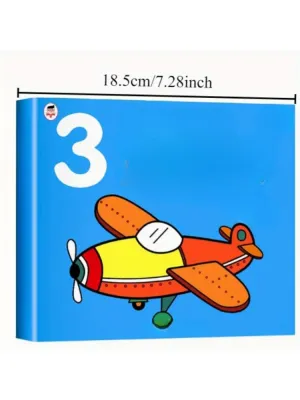
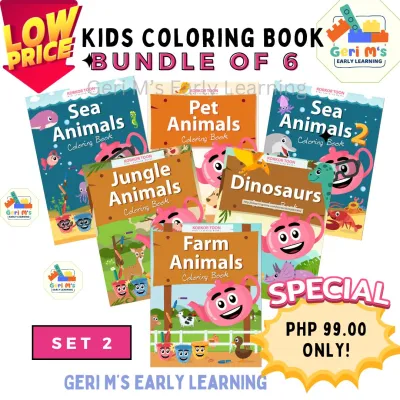
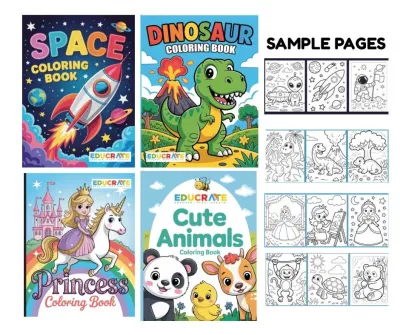
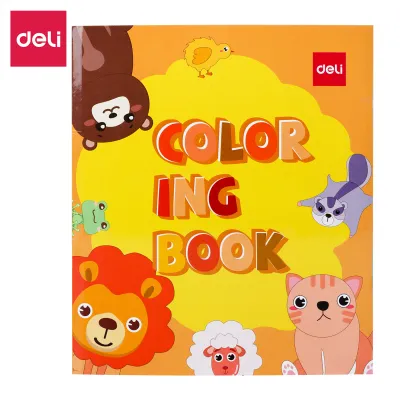
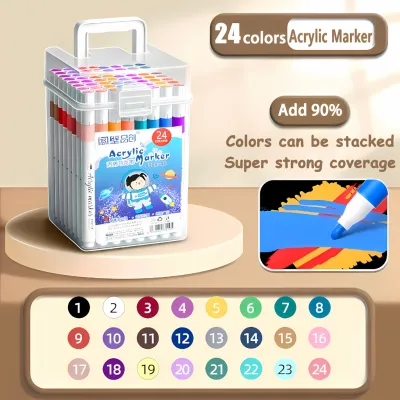
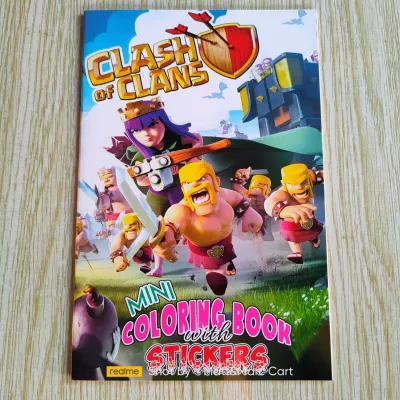
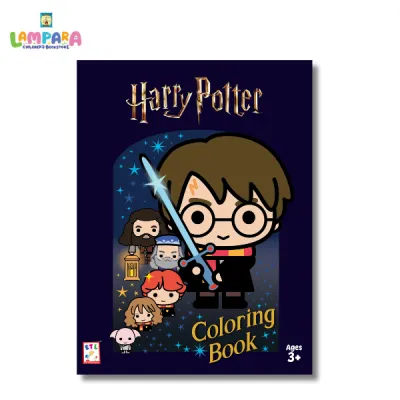
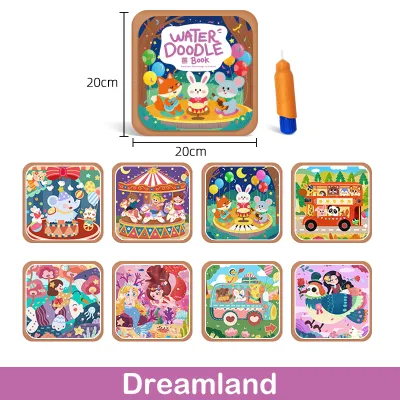
Prices are valid at publication and may change. Please refer to the product page for the latest price.
Cognitive development and attention spans scale alongside these physical milestones. A typical six-year-old operates best with immediate gratification, completing a single, bold illustration in a 15-to-20-minute session. In contrast, an eleven-year-old possesses the cognitive maturity to plan color schemes, work on a single page over multiple days, and appreciate complex spatial relationships. If the illustration complexity does not grow with their cognitive capacity, older children will quickly dismiss coloring as a childish activity.
To make an informed purchase, evaluate potential coloring books across four primary decision-making dimensions:
- Outline Boldness: The thickness and contrast of the printed lines. Thick, dark lines provide a clear visual boundary for younger kids, while thin, delicate lines are preferred by older students who want their colors, rather than the printed outlines, to dominate the finished piece.
- Page Layout: The density of the illustrations. This ranges from a single, centered subject with a blank background to dense, edge-to-edge patterns featuring multiple overlapping elements.
- Thematic Appropriateness: The intellectual engagement of the content. Younger children thrive on familiar, concrete concepts like animals and letters, while older kids require abstract patterns, narrative scenes, or educational subjects.
- Physical Book Format: The binding type and page layout. This determines how easily the book lays flat on a school desk and whether pages can be cleanly removed for display or sharing.
By matching these dimensions to your child’s current grade level, you can establish a quick-reference framework that ensures every book you buy is both engaging and physically comfortable to use.
Best Features in Coloring Books for Kids: Lower Elementary (Ages 6–8)
For children in grades 1 through 3, the primary goal of coloring is to build confidence, reinforce hand-eye coordination, and solidify basic pencil control. At this stage, children are learning to respect boundaries but still lack the fine muscle control to stay within narrow lines. The ideal coloring books for this age group feature bold, heavy black outlines—typically between 1.5mm and 3mm thick. These prominent borders act as physical and visual buffers, absorbing minor hand slips and keeping the finished page looking neat, which provides positive reinforcement to the young artist.

Page layouts for lower elementary students should focus on single-subject illustrations with clean, empty backgrounds. A single large sea turtle, a bold rocket ship, or a simple house allows the child to focus on color selection and consistent stroke application without feeling overwhelmed by surrounding details. Incorporating educational themes, such as pages that pair an animal illustration with its corresponding alphabet letter or simple spelling words, helps bridge the gap between art time and classroom learning.
Physical features play a massive role in usability for younger kids. Look for books with perforated pages and lay-flat bindings, such as simple staple-bound (saddle-stitched) booklets or softcovers with highly flexible spines. Standard perfect-bound books (which have glued spines) tend to spring shut automatically. A seven-year-old will struggle to hold a stiff book open with one hand while trying to color with the other, often resulting in torn pages, wrinkled paper, and physical frustration. Perforated pages also allow you to tear out a single sheet, making it easier to secure to a flat desk with masking tape during art class.
Avoid books that feature intricate background patterns, tiny geometric borders, or highly detailed scenery. If a page contains dozens of tiny, cramped spaces to color, a young child’s hand will tire rapidly, and they are likely to scribble over the details or abandon the book entirely. Keep the focus on large, friendly shapes that can be easily filled with standard wax crayons or thick, triangular colored pencils.
Ideal Coloring Book Styles for Middle Elementary (Ages 9–10)
As children enter grades 4 and 5, their spatial awareness and understanding of perspective expand significantly. They are no longer content with coloring isolated objects against a blank white canvas; they want to see relationships between subjects and their environments. Coloring books for middle elementary students should introduce moderate detail levels, incorporating secondary background elements like trees, clouds, underwater plants, or distant mountains. The outlines should be moderately thin (around 1mm), requiring more deliberate hand control and a slower, more focused coloring pace.
At this developmental stage, narrative-driven and interest-specific themes are highly effective at maintaining engagement. Look for books that tell a story across pages, or those focused on deep-dive topics such as marine biology, space exploration, historical scenes, or fantasy realms. Color-by-number books with multi-step color keys are also excellent for this age range. These books challenge children to read instructions, match color codes systematically, and practice patience as the final image slowly reveals itself.
Middle elementary is the perfect time to introduce basic skill-building concepts through coloring. Look for books that incorporate introductory color theory prompts, light gray shading guidelines, or interactive “finish the drawing” elements. These features encourage children to think about light sources, blending, and symmetry, transforming the passive act of coloring into an active lesson in drawing and composition.
Be highly cautious of cheap, licensed media tie-in coloring books commonly found in mass-market discount bins. These books are frequently produced using automated software that converts low-resolution cartoon screenshots into outlines. The resulting pages often feature broken lines, illogical shapes, and confusing overlapping details that offer very little artistic value. Instead, prioritize books illustrated by actual artists, where the lines are clean, continuous, and designed specifically for hand-coloring.
Advanced Coloring Book Picks for Upper Elementary (Ages 11–12)
By grade 6, students have developed excellent fine motor control and are capable of sustained focus for an hour or more. They often view simple coloring books as childish and seek out projects that feel sophisticated, mature, and worthy of display. The ideal designs for upper elementary students feature intricate patterns, geometric mandalas, detailed architectural landmarks, and highly realistic botanical or anatomical illustrations. The outlines in these books should be exceptionally thin and crisp, designed to be paired with fine-tip stationery tools.
Educational and scientific themes are particularly appealing to this age group. Books that depict detailed cross-sections of historical castles, labeled botanical diagrams, or realistic wildlife in their natural habitats satisfy their intellectual curiosity while they color. Additionally, mindfulness and art therapy coloring books are highly beneficial for pre-teens. The repetitive, rhythmic motion of coloring complex geometric patterns provides a constructive, screen-free way to decompress after a demanding school day.
Upper elementary students appreciate books that offer high levels of creative freedom. Seek out books that feature partial illustrations, asymmetrical designs that require the artist to complete the pattern, or pages with minimal prompts that encourage them to design their own detailed backgrounds. This age group loves to experiment with advanced techniques like cross-hatching, stippling, and smooth color gradients, so the illustrations must leave room for individual artistic interpretation.
However, do not assume that any “adult coloring book” is automatically suitable for an eleven- or twelve-year-old. Many books marketed for adults contain incredibly dense, microscopic patterns that require intense concentration and can cause rapid eye strain or neck fatigue. Furthermore, some adult books may feature thematic content that is inappropriate for school environments. Always preview the interior pages of advanced books to ensure the complexity challenges their skills without causing physical discomfort or containing mature themes.
Paper Weight and Tool Compatibility: What to Check Before Buying
The success of a coloring session depends heavily on matching the paper medium with the coloring tools your child intends to use. In the tropical, high-humidity climate of the Philippines, paper selection is even more critical. High relative humidity can cause thin, low-quality paper to absorb moisture from the air, making it soft, limp, and highly susceptible to tearing under the friction of colored pencils or the wet ink of school markers.
Understanding Paper Weight and Texture
Paper thickness is measured in grams per square meter (GSM), which indicates the weight and density of the sheet. Understanding these categories will help you match the book to your child’s favorite coloring tools:
- Lightweight Paper (70 to 90 GSM): This is the standard paper weight found in budget-friendly coloring books. It has a rough, highly textured surface (known as "tooth") that is excellent for grabbing the wax of crayons and the pigment of standard colored pencils. However, this paper is highly absorbent and thin; using water-based markers, gel pens, or liquid ink will cause the paper to buckle, pill, and tear.
- Medium-Weight Paper (100 to 120 GSM): A versatile, mid-range option. This paper is thick enough to withstand heavy colored pencil layering, firm erasure, and light applications of standard school markers without immediate warping. It offers a balanced compromise for general classroom use.
- Heavyweight Paper (140 GSM and above): Found in premium, artist-grade coloring books. This paper is dense, smooth, and highly resistant to moisture. It is the only paper weight that can comfortably handle wet media, including dual-tip brush pens, gel pens, and light watercolor washes, without warping or bleeding through.
Bleed-Through Prevention and Page Layout
If your child prefers using markers, highlighters, or gel pens, always verify that the coloring book features single-sided printing. When illustrations are printed on both sides of a page, any ink bleed-through from a marker will permanently ruin the design on the reverse side. Single-sided books ensure that every masterpiece can be colored with vibrant, wet media without sacrificing half the book’s content.
Binding Formats and Desk Usability
The physical construction of the book determines how comfortably your child can work, especially on small school desks. Consider these three common binding types:
- Spiral-Bound: The absolute best format for overall usability. The book can be folded completely back on itself, taking up half the desk space and laying perfectly flat. This allows left-handed and right-handed children alike to color near the inner margins without their hands bumping into the binding.
- Staple-Bound (Saddle-Stitched): Highly practical for younger children and thinner books. They lay relatively flat when opened to the center and add very little weight to a heavy school backpack.
- Perfect-Bound (Glued Spine): The most common format for thick, novel-style coloring books. While visually appealing on a bookshelf, they require constant pressure to stay open. Children often have to crack the spine to color near the inner margins, which can cause the glue to fail and pages to fall out prematurely.
Pre-Purchase Verification Test
Because paper manufacturing standards vary wildly, you cannot always rely solely on the cover claims. Before handing a new coloring book to your child, perform a quick, observable verification test to check the paper’s compatibility with their tools:
- The Margin Test: Locate a blank test page, the index page, or a small, hidden corner of the very last page in the book.
- Apply the Tools: Have your child draw a small color swatch using their heaviest marker and their sharpest colored pencil.
- Check for Bleed and Feathering: Wait 30 seconds. Observe whether the marker ink spreads outward along the paper fibers (feathering) or shows through on the back of the page (bleed-through).
- Check for Smoothness and Erasability: Rub a standard vinyl eraser over the colored pencil swatch. If the paper begins to pill (forming tiny rolls of paper fiber) or if the pigment refuses to lift without tearing the surface, the paper is too soft for heavy layering or erasing, and dry crayons should be used instead.
Frequently Asked Questions (FAQ)
Can regular printer paper be used for DIY coloring books?
Yes, standard printer paper can be used to print downloadable coloring sheets at home, but its utility is limited by its weight. Most everyday copy paper ranges from 70 to 80 GSM, which is perfectly adequate for dry media like wax crayons, hard pastels, and standard colored pencils. However, this paper has very little resistance to moisture. If your child attempts to use school markers, brush pens, or gel pens on standard printer paper, the ink will rapidly feather, warp the page, and bleed through to ruin the table surface underneath. If you want to print DIY coloring pages for marker use, feed heavy cardstock (160 GSM or higher) through your home printer, making sure to check your specific printer model’s manual to ensure it can handle thicker media weights without jamming.
How do I prevent markers from bleeding through coloring book pages?
To prevent marker ink from ruining subsequent designs in a coloring book, always place a physical barrier sheet directly behind the page your child is currently coloring. A sheet of heavy cardstock, a clean plastic sheet protector, or a piece of smooth chipboard works perfectly as a shield to catch any migrating ink. Additionally, encourage your child to use water-based, fine-tip school markers rather than highly saturated, alcohol-based art markers, as alcohol inks are designed to penetrate deeply and will bleed through almost all standard book paper. Teach your child to use light, sweeping strokes and to avoid holding the marker tip in one spot for too long, as pooling wet ink weakens the paper fibers and causes the surface to pill and tear.

Community discussion
Share your experience or ask a question. Comments are reviewed before publication.