
Selecting the right school supplies can be a balancing act for parents and teachers, especially when it comes to art class essentials. For most elementary art classes, the 24-count Crayola Original crayon set is the most practical choice for younger students in Kindergarten through Grade 2, while the 64-count set is the ideal option for upper elementary grades from Grade 3 to Grade 6. Choosing the correct size ensures students have the exact colors required by their curriculum without cluttering small school desks, adding unnecessary weight to schoolbags, or overspending on specialized shades that may go unused.
In tropical environments like the Philippines, physical storage conditions also play a critical role in this decision. High humidity and elevated ambient temperatures can cause wax-based art tools to soften, bloom, or stick together over time. Consequently, buying an oversized box of crayons that sits unused in a cubby for months can lead to deteriorated supplies, making a right-sized purchase even more essential for both performance and budget preservation.
Evaluating Crayon Set Sizes: Color Needs vs. Classroom Management
When deciding on a crayon set size, the first factor to consider is the actual color requirement of the school’s art curriculum. In early elementary grades, art lessons focus primarily on foundational skills such as color identification, basic shapes, and motor control. These activities rely almost entirely on primary and secondary colors, which are fully covered by smaller, standardized sets. Introducing too many color options too early can actually hinder a child’s progress, leading to decision fatigue where they spend more time selecting between similar shades than actual drawing.
Products mentioned in this guide
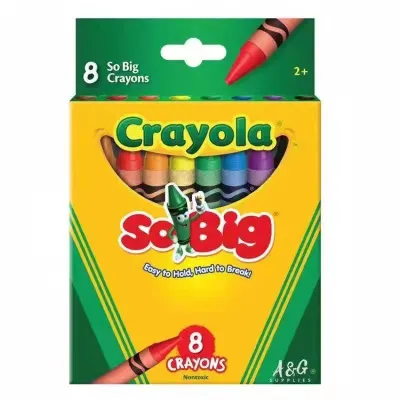
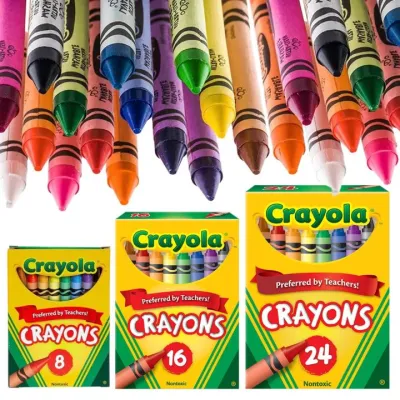
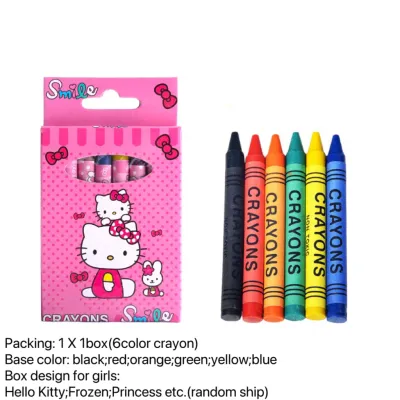
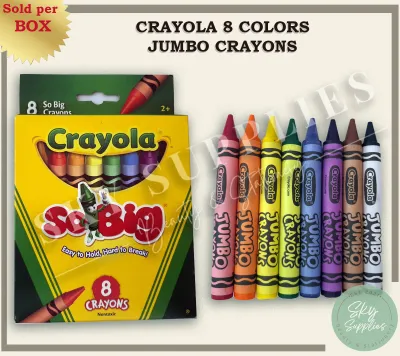
Prices are valid at publication and may change. Please refer to the product page for the latest price.
As students transition to upper elementary grades, their art projects become more complex. Lessons begin to cover advanced concepts like color theory, complementary color schemes, shading, gradients, and realistic rendering. To execute these projects successfully, students require a broader palette that includes intermediate tertiary colors, earth tones, and a wider selection of skin tones. A larger set becomes a functional necessity at this stage, allowing students to explore artistic expression with greater precision and realism.
Classroom management is another critical, yet often overlooked, factor in the decision-making process. Typical elementary school classrooms feature compact workspaces, such as shared tables or individual student armchairs with integrated writing tablets. A massive 96-count or 120-count crayon box has a substantial physical footprint that can easily monopolize a student’s entire desk space, leaving very little room for drawing paper, sketchbooks, or other materials. Furthermore, large boxes are top-heavy when opened, making them highly susceptible to being knocked onto the floor, which disrupts the class and leads to broken crayon cores.
Portability and daily transport must also be factored into the equation. Many elementary students carry heavy backpacks loaded with textbooks, notebooks, and water bottles. Adding a bulky, heavy crayon box increases physical strain and takes up valuable compartment space. Smaller sets fit neatly into standard pencil cases or backpack side pockets, making them much easier for young children to manage independently during their daily commute.
Finally, evaluating cost-effectiveness requires looking beyond the initial purchase price to consider the long-term cost per crayon and replacement frequency. While larger sets technically offer a lower cost per individual crayon, they are rarely the most economical choice for a classroom setting. In elementary school, crayons are frequently misplaced, broken, or shared. Replacing a lost, highly specific shade from a 120-count box is practically impossible without purchasing an entirely new set. In contrast, standard 24-count boxes are highly affordable, typically costing under ₱150, making them inexpensive to replace mid-year if the crayons become heavily worn or lost.
Top Crayola Original Set Sizes for Elementary Art Classes
To help narrow down the choices, we have analyzed the most common Crayola Original set sizes. Each size serves a specific developmental stage and classroom environment, balancing color variety against practical daily usability.

24-Count Set: The Practical Standard for Lower Elementary
The 24-count Crayola Original crayon set is widely considered the gold standard for students in Kindergarten, Grade 1, and Grade 2. This set contains the core primary and secondary colors, along with essential neutrals like black, white, brown, and gray. This curated selection is perfectly aligned with early childhood development goals, encouraging children to master basic coloring techniques and color recognition without becoming overwhelmed by minor shade variations.
The compact, classic tuck-box design of the 24-count set is exceptionally space-efficient. It stands upright on a small desk or lies flat without interfering with the student’s drawing area. Because there are only 24 items to track, cleanup at the end of a short 40-minute art class is incredibly fast and manageable for young children, helping teachers maintain a tight classroom schedule.
From a durability standpoint, this size minimizes the frustration associated with damaged art supplies. While Crayola crayons are double-wrapped in paper for structural strength, young children naturally apply heavy pressure as they develop their grip, which can lead to occasional breakage. If a crayon in a 24-count set breaks or goes missing, it is highly affordable for parents to replace the entire box, ensuring the student always has a complete set of functional tools for daily classroom activities.
64-Count Set: The Ideal Balance for Upper Elementary
For students in Grade 3 through Grade 6, the 64-count Crayola Original crayon set offers the ultimate balance of variety and utility. At this stage, art curricula regularly introduce sophisticated projects that require subtle shading, blending, and realistic depictions of landscapes and people. The 64-count set provides a rich assortment of secondary and tertiary shades, including metallic colors and a diverse range of skin tones, allowing older students to execute detailed assignments with high accuracy.
A standout feature of the 64-count box is its built-in sharpener, located conveniently on the back of the packaging. Keeping crayon tips pointed is essential for detailed illustration work, outlining, and fine-line drawing. This built-in tool empowers students to maintain their own supplies independently during class, eliminating the need to wait in line for a communal classroom sharpener.
Because the 64-count box is wider and deeper than smaller sets, it features tiered rows that display the crayons clearly. While this design requires a bit more desk space, upper elementary students have generally developed the organizational habits and fine motor control necessary to manage a larger box without tipping it over. It represents a mature step up for growing artists who are ready to take responsibility for a more extensive toolkit.
96-Count and 120-Count Sets: Best for Shared or Advanced Projects
The largest standard Crayola Original sets, containing 96 or 120 crayons, are generally not recommended for individual daily use in a typical elementary classroom. These boxes are heavy, bulky, and constructed from cardboard that can easily tear under the weight of so many crayons when handled daily by children. Carrying these oversized boxes in a schoolbag often leads to crushed packaging and scattered crayons.
In tropical climates, storing these massive sets presents unique preservation challenges. High humidity can cause wax crayons to undergo “wax blooming,” where a harmless white powdery residue forms on the surface of the wax. When 120 crayons are packed tightly together in a warm environment, they can also soften and stick to one another, making them difficult to extract from the box without snapping.
However, these large sets are highly valuable when utilized as shared classroom resources or for specialized art programs. Teachers can place these sets in centralized, sturdy plastic bins on a community table, allowing students to borrow rare or highly specific shades for color wheel lessons, advanced shading exercises, or after-school art club projects. This approach provides students access to an extensive color spectrum while keeping their individual desks clear and manageable.
Crayola Original Set Sizes at a Glance
To simplify your purchasing decision, the table below outlines the key characteristics, target audiences, and practical trade-offs of the most common Crayola Original crayon set sizes.
| Set Size | Recommended Grade Level | Key Features | Best Use Case | Main Limitation |
|---|---|---|---|---|
| 24-Count | Kindergarten to Grade 2 | Compact tuck-box, essential primary and secondary colors | Daily classroom coloring, quick art activities, early childhood development | Lacks intermediate shades and skin tone variety for advanced projects |
| 64-Count | Grade 3 to Grade 6 | Built-in sharpener, tiered storage box, diverse color palette | Detailed art lessons, color theory, shading and blending projects | Box is bulky for very small desks; built-in sharpener can clog if wax is warm |
| 96-Count | Advanced Art / Shared | Wide color spectrum, includes metallic and specialty shades | Classroom community bins, after-school art clubs, home art stations | Cardboard packaging is fragile; high risk of losing unique colors |
| 120-Count | Advanced Art / Shared | Maximum color variety, ultimate color spectrum | Specialized art studios, comprehensive home-based art projects | Too heavy and bulky for schoolbags; high storage space requirement |
Maximizing Crayon Lifespan and Classroom Organization
To get the most out of any crayon set, implementing smart organization and maintenance strategies is essential. Cardboard crayon packaging is highly susceptible to wear and tear, especially when exposed to humid air or the sweat from children’s hands. To prevent boxes from falling apart, consider transferring crayons into flat, heavy-duty plastic pencil cases or stackable utility caddies. For individual student organization, a heavy-duty, resealable plastic bag labeled with the student’s name using a permanent marker keeps the crayons secure, dry, and highly visible.
Teaching students proper crayon care can also significantly extend the lifespan of their supplies. Crayola crayons are double-wrapped with paper to provide structural reinforcement against snapping. Students should be encouraged not to peel the paper wrapping down prematurely. If a crayon tip becomes dull, using a dedicated crayon sharpener—or carefully peeling back only a small section of the paper wrapper at the tip—will maintain the crayon’s structural integrity.
Instead of discarding broken crayon stubs, collect them in a designated container. At the end of the school term, these broken pieces can be repurposed into new art tools. By peeling off the paper wraps, breaking the wax into small pieces, and melting them in silicone baking molds using a low-temperature oven (under strict adult supervision), you can create durable, multi-colored block crayons. These chunky, custom-shaped crayons are excellent for younger siblings or students who are still developing their grip.
For shared classroom environments, labeling is key to preventing loss. Applying a small strip of masking tape with the student’s name to the side of the crayon box helps identify lost items quickly. Teachers can also organize community supplies by color family in separate plastic cups (e.g., keeping warm colors in one cup and cool colors in another), which simplifies cleanup and ensures that students can find the exact shades they need without sorting through hundreds of loose crayons.
Frequently Asked Questions (FAQ)
Are Crayola Original crayons safe for elementary students?
Yes, standard Crayola Original crayons are certified non-toxic and safe for classroom use. They carry the AP (Approved Product) seal from the Art and Creative Materials Institute (ACMI), which indicates that the materials have been evaluated by a qualified toxicologist and contain no substances in sufficient quantities to be toxic or injurious to humans. While they are non-toxic, parents and teachers should always check the packaging for age-grading labels (typically ages 3 and up) and supervise younger children to ensure they do not ingest the crayons or choke on small broken pieces.
Is the built-in sharpener in the 64-count set durable enough for daily use?
The built-in sharpener on the 64-count box is highly convenient for quick, occasional touch-ups, but it has practical limitations. Because the sharpener is made of plastic, the blade can dull over time, and soft, warm crayon wax can easily clog the mechanism, especially in humid or non-air-conditioned classrooms. For heavy daily classroom use, it is highly recommended to use a standalone, dual-hole manual pencil sharpener designed specifically for crayons, or a heavy-duty sharpener managed by the teacher, to keep tips sharp without breaking the crayon cores.
What is the best way to store large crayon sets on a small school desk?
To maximize limited desk space, avoid keeping large, hinged crayon boxes open on the active workspace. Instead, transfer the crayons into a vertical, divided pencil cup or a flat, shallow plastic organizer that can sit neatly at the top edge of the desk. This vertical or compact arrangement prevents the bulky cardboard box from blocking the student’s view of the teacher, keeps the crayons organized by color family for quick access, and stops loose crayons from rolling off the desk onto the classroom floor.
Community discussion
Share your experience or ask a question. Comments are reviewed before publication.