
Selecting the right diamond painting design is the single most important factor in determining whether your first experience with this mosaic-like craft is a relaxing success or a stressful chore. Often described as a cross between paint-by-numbers and cross-stitch, diamond painting involves applying thousands of tiny, sparkling resin rhinestones—known as “drills”—onto a pre-printed, adhesive-coated canvas. It is an incredibly satisfying and meditative hobby, making it a perfect indoor activity to enjoy during a quiet weekend or a rainy afternoon. However, walking into the craft blind and choosing an overly complex design can quickly lead to eye strain, confusion, and unfinished projects.
For those who have never tried diamond painting before, the ideal starter kit is one that balances visual appeal with structural simplicity. The key is to look for designs that feature bold patterns, generous areas of single colors, highly legible symbols, and forgiving round drills on a compact canvas. By understanding how these design elements affect the crafting process, you can select a project that builds your confidence, refines your hand-eye coordination, and results in a beautiful piece of finished wall art. This guide breaks down the essential visual traits, design themes, and physical specifications to look for when choosing your very first diamond painting kit.
What Makes a Diamond Painting Design Easy for Beginners?
To understand what makes a design beginner-friendly, you must first look at how the canvas is organized visually. The entire canvas is divided into a grid of tiny squares, each containing a symbol that corresponds to a specific drill color. When a design features “confetti”—a term crafters use to describe areas where colors change rapidly from one pixel to the next—it requires you to constantly switch drill colors, open and close different storage bags, and search for scattered symbols. For a beginner, this constant switching can disrupt your rhythm and make the process feel tedious.
Products mentioned in this guide

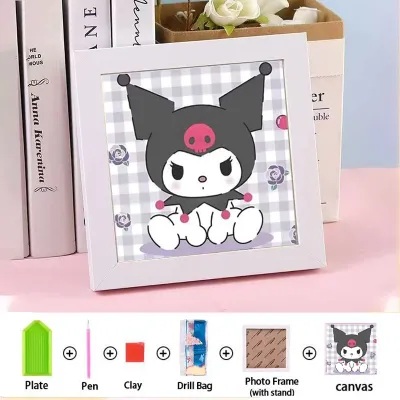
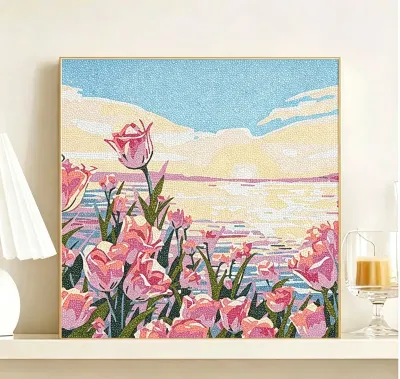

![[Manila]5D Diamond Painting Set Diamond Painting Full Drill Tools DIY 30*40CM Home Decoration](https://img.lazcdn.com/g/p/dddb5c193f72a1508798119b0641b089.jpg_400x400q80.jpg_.webp)


Prices are valid at publication and may change. Please refer to the product page for the latest price.
Instead, first-time crafters should look for designs dominated by “color blocking.” Color blocking refers to large, continuous sections of the canvas that use a single color. Working on a large color block allows you to load your sorting tray with one shade of drills and place them continuously using a multi-placer tool or a standard single-drill pen. This repetitive motion helps you build muscle memory, establish a steady pace, and experience the relaxing, flow-like state that makes diamond painting so popular.
Another critical factor is the choice between full drill and partial drill layouts. In a full drill kit, the entire surface of the canvas is covered in adhesive and must be filled with diamonds. In a partial drill kit, only specific elements of the design are covered in diamonds, while the background is pre-printed with standard ink. While partial drills might seem like the faster option, a full drill canvas with a simple, bold design is often easier for beginners to track. Full drill canvases provide a uniform, satisfying texture across the entire piece, and you do not have to worry about matching the printed background’s aesthetic with the placed drills.
Finally, pay close attention to symbol clarity and contrast on the canvas. A high-quality beginner kit will feature symbols that are sharp, distinct, and easy to differentiate at a glance. Avoid kits where highly similar symbols, such as the letter “B” and the number “8,” are printed next to each other in similar color tones. The legend, or color key, should be printed clearly on the margins of the canvas, mapping each symbol to its corresponding DMC color code. Clear contrast between the printed symbol and its background color prevents eye strain and minimizes the mistakes that can occur when you misidentify a color code.
Best Design Themes to Start With
When browsing online marketplaces for your first kit, the subject matter of the artwork plays a massive role in how easy the project will be to complete. Minimalist florals and botanical designs are among the absolute best choices for beginners. A single, bold sunflower, a minimalist monstera leaf, or a simple tulip silhouette naturally features clean lines and a limited color palette. These designs have distinct boundaries between colors, meaning you can easily focus on one section at a time without getting lost in intricate shading or complex color gradients.

Simple landscapes and seascapes are also highly recommended for first-time crafters. A design depicting a sunset over a calm ocean, a basic mountain range under a clear sky, or a desert scene with simple sand dunes naturally lends itself to horizontal bands of color. These broad, sweeping sections of sky, water, and earth are perfect examples of color blocking. They allow you to practice placing long rows of drills in straight lines, which is an excellent way to master your alignment technique before moving on to more detailed patterns.
If you prefer abstract art, geometric patterns and symmetrical mandalas are fantastic options. Because these designs rely on repetitive structures, they provide a highly predictable crafting experience. Once you complete one quadrant of a symmetrical mandala, you will already be familiar with the color layout and symbol placement for the remaining sections. This predictability allows you to relax your mind and focus entirely on the physical act of placing the drills neatly, helping you perfect your alignment and spacing.
Conversely, there are several design themes that beginners should actively avoid for their first project. Highly detailed portraits of people or pets are incredibly difficult because skin tones, hair, and animal fur require subtle blending, which translates to heavy confetti on the canvas. Complex fantasy scenes with dramatic lighting, dense forests with thousands of tiny leaves, and designs featuring small, intricate text should also be saved for when you have more experience. If a design has too many tiny details, those details will either look muddy on a small canvas or require a massive, advanced canvas to render clearly.
How to Choose the Right Canvas Size and Drill Shape
The physical specifications of your kit—specifically the canvas dimensions and the shape of the resin drills—will directly impact how long the project takes and how forgiving it is of minor mistakes. For your very first project, size matters immensely. It is highly recommended to start with a small canvas, such as 20×20 centimeters or 30×30 centimeters. Avoid purchasing anything larger than 30×40 centimeters for your first attempt, as massive canvases can take dozens of hours to complete and can easily overwhelm a novice crafter.
It is important to understand the relationship between canvas size and image resolution. Because each individual diamond drill is roughly 2.5 to 2.8 millimeters in size, a diamond painting canvas behaves like a low-resolution digital screen where each drill acts as a single pixel. A small canvas cannot render fine details or subtle color gradients; if you try to force a highly detailed image onto a small 20×20 centimeter canvas, the finished piece will look blurry and pixelated. Therefore, when choosing a small starter canvas, always pair it with an incredibly simple, bold design to ensure the finished artwork looks sharp and recognizable.
When it comes to drill shapes, you will choose between round drills and square drills. For beginners, round drills are the undisputed standard. Because round drills are circular, they do not need to be placed at a perfect angle to look neat on the canvas. If a round drill is slightly rotated or slightly off-center, the tiny gaps between the circles will naturally absorb the misalignment, and the overall design will still look beautifully organized. Round drills are also much easier to pick up with the applicator pen and place quickly, making the crafting process faster and more enjoyable.
Square drills, by contrast, require absolute precision. Because square drills fit flush against one another with no gaps, every single drill must be placed perfectly straight. If you place one square drill slightly crooked, it will push the neighboring drills out of alignment, creating a crooked line that can cause the canvas to buckle or leave unsightly gaps. While square drills offer a fuller, more solid mosaic look when completed, the high level of precision they demand can be frustrating for someone still learning how to steady their hand and use the applicator tool.
To set realistic expectations, always check the product details for the estimated completion time or total drill count. A standard 30×30 centimeter full-drill canvas contains approximately 14,400 individual drills. At an average beginner pace of 800 to 1,000 drills per hour, you can expect to spend roughly 14 to 18 hours to complete the project. Breaking this down into manageable sessions of one to two hours a day makes the project highly achievable and prevents physical fatigue, particularly in your neck, back, and hands.
Pre-Purchase Checklist for Your First Kit
Before you click buy on your chosen design, it is essential to verify that the kit is complete and manufactured to a standard that ensures a smooth crafting experience. A complete diamond painting kit should arrive with all the necessary tools so you do not have to purchase accessories separately. Check the product description to confirm that the kit includes a standard applicator pen, a small block of pink wax or clay, a grooved plastic sorting tray, and labeled bags of resin drills matching the design’s color palette.
One of the most critical quality checks involves the canvas adhesive. The canvas comes pre-applied with a sticky layer that holds the drills in place, protected by a clear plastic or opaque paper film. In warm, humid tropical climates like the Philippines, the type of adhesive used is incredibly important. Look for kits that specify the use of “poured glue” rather than “double-sided adhesive tape.” Poured glue is a thick, clear, high-quality adhesive layer that remains incredibly tacky even in warm weather, whereas double-sided tape can lift, bubble, or lose its stickiness if exposed to humidity or if the protective film is peeled back incorrectly.
To ensure you do not run into issues with illegible symbols, take a moment to read through customer reviews and look at uploaded photos of the unworked canvases. Verify that the printing is sharp, the symbols are dark and distinct, and the legend is printed clearly on at least one side of the canvas. Additionally, check how the kit is packaged for shipping. A high-quality manufacturer will roll the canvas around a firm foam cylinder to prevent creases, whereas cheaper kits may arrive folded, leaving deep creases in the canvas that can make it difficult to get the drills to lie flat.
Finally, consider how you will store your materials during the project. Because you will be working with thousands of tiny plastic drills, having a basic organization system is key. While many beginner kits come with small, resealable plastic baggies, you may want to look for kits that include small storage jars or a multi-compartment organizer box. Keeping your drills organized by their symbol or DMC color code prevents accidental spills and ensures that your crafting sessions remain organized, relaxing, and completely stress-free.
Frequently Asked Questions (FAQ)
Do I need to seal my first diamond painting?
Sealing your first diamond painting is entirely optional, but it is highly recommended if you plan to display the finished piece without a glass frame or if you live in a dusty or humid environment. A dedicated craft sealer locks the resin drills firmly onto the canvas, preventing them from popping off over time and protecting the adhesive layer from gathering dust. Before applying any sealer, always check the manufacturer’s instructions, as some specialty canvases may react differently to liquid sealants. If you do choose to seal your painting, apply a thin, even coat of a brush-on or spray-on gloss sealer specifically designed for acrylic crafts, ensuring it gets into the crevices between the drills without dulling their natural sparkle.
How long does a beginner diamond painting usually take?
The time it takes to complete your first diamond painting depends on the canvas size, the drill shape, and your personal crafting speed. For a standard beginner-sized canvas of 30×30 centimeters using round drills, most first-time crafters will spend between 10 and 15 hours in total. If you choose a smaller 20×20 centimeter canvas, you can easily complete it in 5 to 8 hours, making it an excellent weekend project. Working with square drills or choosing a design with a high amount of color changes (confetti) will naturally increase the completion time, as you will need to spend more time aligning the drills and switching colors.
What should I do if I run out of a specific drill color?
If you find yourself running out of a specific drill color before completing your design, the best course of action is to contact the kit’s manufacturer or seller directly. Most reputable brands will gladly send you replacement drills free of charge if you provide them with the specific DMC color code listed on your canvas legend. Avoid trying to guess or substitute the missing color with a similar shade from your leftover pile, as even a slight variation in tone can disrupt the visual consistency and ruin the clean lines of your finished artwork. While waiting for replacements, you can simply work on other sections of the canvas, keeping the unfinished area covered with its protective plastic film to prevent the adhesive from drying out.
Community discussion
Share your experience or ask a question. Comments are reviewed before publication.