
Sorting documents effectively is a cornerstone of productivity, yet a single misplaced paper can disrupt your entire workflow. When looking for the right organizer envelope, you will quickly discover that there is no one-size-fits-all solution. The best choice depends entirely on your specific document volume, the number of categories you need to maintain, and whether your files will remain on your desk or travel with you. In the Philippines, choosing the right organizer also means accounting for environmental factors like high humidity and sudden rain, which can easily damage unprotected paper. By matching your daily filing habits to the correct envelope design, you can establish a reliable system that keeps your records secure, dry, and instantly accessible.
Quick Guide: Matching Organizer Styles to Your Filing Needs
To build an efficient filing system, you must first evaluate how much paperwork you handle and how often you need to retrieve it. There is no single “best” organizer envelope; instead, the ideal choice depends on your specific volume of categories, document quantity, and portability needs. For high-volume sorting across dozens of separate categories, a desktop accordion folder is usually the most practical choice. If you need to transport active files between home, school, or the office, a lightweight expanding file envelope with a secure front flap is far more suitable. For maximum security during transit, especially when carrying loose items like receipts or USB drives alongside your documents, a zippered multi-pocket envelope is highly recommended. Finally, for long-term archiving where you stack documents in drawers or filing cabinets, flat, single-pocket envelopes offer a space-saving, stackable solution.
Before buying, take a moment to identify your primary filing pain point. If your desk is constantly cluttered with loose utility bills, school modules, or business receipts, you need high-capacity categorization. If you frequently find yourself searching for missing pages at the bottom of your bag, security and portability should be your top priorities. The following decision matrix provides a quick overview of how different organizer envelope styles align with common organizational challenges and storage environments:
Products mentioned in this guide
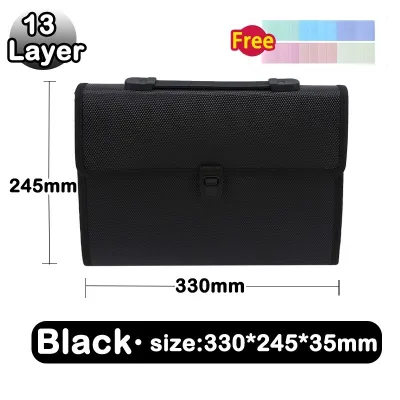
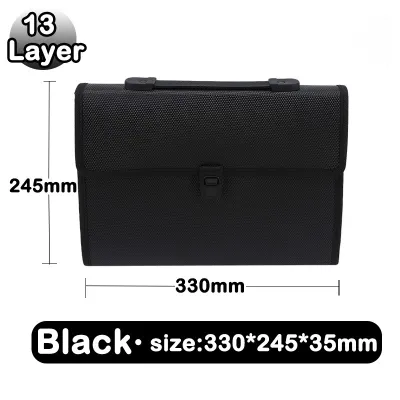
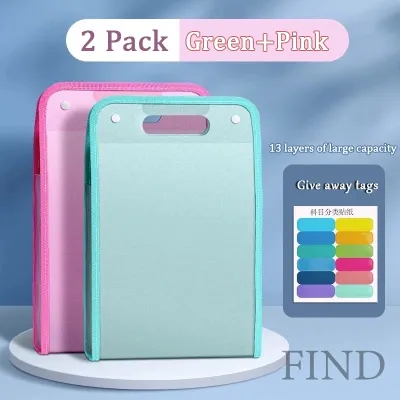
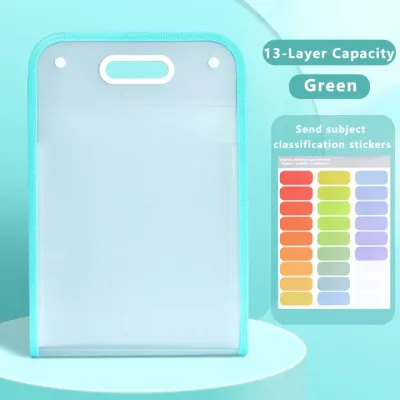
Prices are valid at publication and may change. Please refer to the product page for the latest price.
| Filing Pain Point | Primary Requirement | Recommended Organizer Style | Typical Capacity |
|---|---|---|---|
| Too many small categories (e.g., utility bills, receipts) | High-capacity desktop sorting and easy visual access | Accordion Folder | 13 to 24 pockets |
| Moving active files between home, school, or office | Lightweight portability with medium capacity and a secure cover | Expanding File Envelope | 5 to 12 pockets |
| High risk of losing small items, cards, or USB drives in transit | Maximum enclosure security and weather protection | Multi-Pocket Zipper Envelope | 1 to 5 pockets |
| Storing large, single-category archives in drawers or boxes | Space-saving, stackable storage for bulk documents | Flat or Single-Pocket Envelope | 1 pocket |
By identifying where your daily struggles lie, you can focus on the specific features that will resolve them. Whether you are managing a household budget, organizing school modules, or running a small business, selecting the right format ensures your papers remain intact and easy to find.
Critical Features to Check Before Buying
When shopping for an organizer envelope, verifying specific physical and functional details is essential to ensure the product fits your actual documents and withstands daily use.

First, check paper size compatibility. In the Philippines, document sizes are unique because standard US Letter (8.5 x 11 inches, or “short” bond paper) and US Legal (8.5 x 14 inches) are used alongside international A4 paper (8.27 x 11.69 inches). Many imported organizers are designed strictly for A4 paper, meaning standard US Legal or local “long” bond paper (8.5 x 13 inches) will stick out of the top, preventing the envelope from closing. If you store documents inside plastic sheet protectors, the overall dimensions will be even larger. Look for organizers labeled as “oversized” or explicitly compatible with Legal-size documents to ensure a proper fit.
Second, evaluate the closure mechanism. Snap buttons offer quick, one-handed access for active desk files, but plastic snaps can crack if overfilled. Zippers provide the highest security, completely sealing the edges, though they can snag if paper edges get caught. Velcro closures are highly adjustable for bulky files, but the hook-and-loop material tends to collect dust and lint over time, reducing its grip. Elastic cords provide flexible tension that allows the envelope to expand naturally, but they can gradually lose their elasticity in hot, humid tropical climates.
Third, inspect the material. Polypropylene (PP) plastic is highly popular because it is naturally water-resistant and easy to wipe clean, which is beneficial during the rainy season. However, check the specifications for thickness (in microns or millimeters) since thin plastic can split along the seams under tension. Oxford cloth offers a premium, professional appearance and excellent flexibility, but verify if it features a water-resistant inner lining to protect papers from accidental spills. Kraft paper is an eco-friendly, rigid alternative, but it is highly susceptible to moisture damage in humid environments unless treated with a protective coating.
Finally, consider the indexing and labeling systems. Clear plastic tabs that extend above the pockets allow you to insert paper labels for quick visual identification. Look for organizers that include pre-printed labels (like alphabetical or monthly categories) as well as blank inserts for customization. If the organizer has a solid, opaque cover, check if there is a clear window on the front where you can slide in an index card to identify the contents without opening the envelope.
Comparing Organizer Envelope Styles for Category Sorting
To choose the best organizer envelope for your workflow, it is helpful to understand how different styles function under real-world conditions. Each design offers a unique balance of storage capacity, physical security, and ease of access. In this section, we will compare the structural differences, capacity limits, and ideal use cases for the four primary styles: accordion folders, expanding file envelopes, multi-pocket zipper envelopes, and flat single-pocket envelopes.
Accordion Folders: Ideal for Detailed, High-Volume Categories
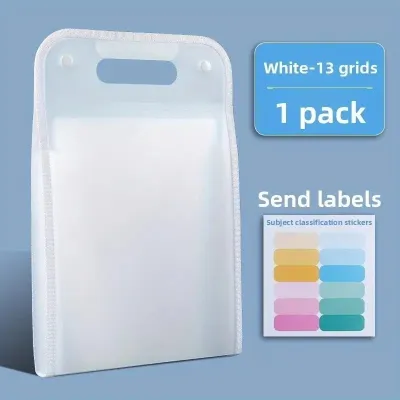
Accordion folders are designed for managing a large volume of documents across many specific categories. Structurally, these organizers feature interconnected, gusseted pockets—typically 13 to 24 compartments—that expand outward like an accordion. When fully opened, the folder stands upright on your desk, allowing you to drop papers into the correct sections with minimal effort. This open-top, multi-pocket design makes it easy to file papers away immediately, preventing clutter from building up on your workspace.
This style is well-suited for detailed chronological or thematic filing. For example, a 12-pocket or 13-pocket accordion folder is perfect for sorting monthly utility bills, rental receipts, or tax documents over a year. It is also an excellent tool for small business owners separating invoices, purchase orders, and expenses. Because the folder stands upright and keeps all tabs visible, you can locate specific documents in seconds without flipping through a stack of loose papers.
However, accordion folders have distinct portability limitations. When fully loaded, these folders become heavy, bulky, and structurally unstable. Because individual pockets rarely have separate closures, papers can easily slide out or get mixed together if the folder is tipped over or placed horizontally in a backpack. Carrying a fully expanded folder by its handle also places significant stress on the bottom seams, potentially causing them to split over time.
When buying, look for models with reinforced fabric edges or double-stitched seams to prevent the plastic from cracking along the sharp folds. Check the manufacturer’s specified maximum expansion width to ensure it meets your volume needs. If you plan to move the folder occasionally, prioritize models that include a secure outer flap with an elastic cord or buckle closure to keep the entire unit compressed during transport.
Expanding File Envelopes: Ideal for Portable, Medium-Volume Sorting
Expanding file envelopes offer a practical middle ground between high-capacity desktop storage and lightweight portability. These organizers typically feature 5 to 12 internal pockets covered by a single integrated front flap. The gusseted sides allow the envelope to expand to accommodate a moderate stack of papers, but the overall profile remains slim enough to slide easily into a backpack, briefcase, or tote bag.
This design is ideal for active, daily use where you need to carry categorized documents. Students find expanding envelopes invaluable for keeping coursework, worksheets, and syllabus guides separated by subject. Freelancers and consultants can use them to keep active client contracts, project briefs, and design drafts organized while traveling. The secure front flap ensures that even if the envelope is jostled inside a bag, your papers remain flat and securely contained.
The primary limitation of expanding file envelopes is their restricted capacity per pocket. Because the structure is designed to remain compact, overstuffing individual pockets can prevent the front flap from closing properly or damage the outer closure. Trying to force too many thick documents into a 5-pocket envelope can warp the expansion gussets, making it difficult to slide papers in and out smoothly.
When shopping, pay close attention to the closure mechanism and outer shell flexibility. A snap button closure is convenient for quick access but offers less flexibility if the envelope is packed to its limit. An elastic cord closure is often more forgiving, as it stretches to accommodate a thicker load. Additionally, verify that the internal dividers are made of flexible, tear-resistant polypropylene so they do not rip under pressure.
Multi-Pocket and Zipper Envelopes: Ideal for Secure Transport
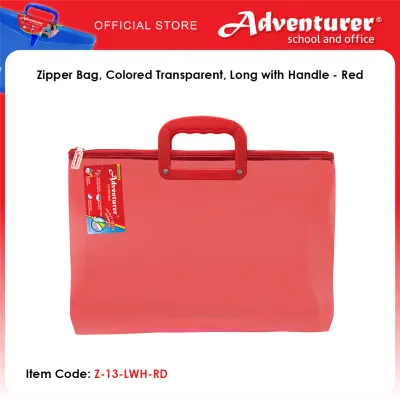
Multi-pocket zipper envelopes prioritize physical security and weather protection. Unlike traditional folders that rely on flaps, these organizers feature a zipper running along three sides, completely enclosing the internal compartments. Inside, you will often find a combination of full-sized document dividers, mesh slip pockets, and smaller slots designed to hold cards, pens, or small electronic accessories.
This style is exceptionally well-suited for professionals and students who commute regularly. If you travel by public transit or move between different locations, a zippered envelope protects your documents from wind, dust, and sudden tropical downpours. It is also the perfect solution for storing a mix of standard documents and small, loose items. You can keep official contracts in the main dividers while storing receipts, business cards, flash drives, and pens in the secure internal pockets.
However, the security of a zippered envelope comes with a trade-off in quick access. To retrieve or file a single sheet of paper, you must fully unzip the organizer, open it up, and navigate the internal pockets, which is less convenient for rapid desk filing. Additionally, zippers are mechanical points of failure; if the zipper teeth become misaligned or the fabric tape tears, the entire organizer loses its primary benefit.
When selecting a multi-pocket zipper envelope, prioritize zipper quality. Look for product descriptions that mention durable nylon or metal zippers with reinforced stitching. If you plan to use the envelope in wet weather, check if the outer material is made of water-resistant Oxford cloth or treated nylon, and verify if the zipper itself has a protective storm flap. Finally, review the internal pocket layout to ensure it matches your intended sorting strategy.
Flat and Single-Pocket Envelopes: Ideal for Broad Archiving and Stacking
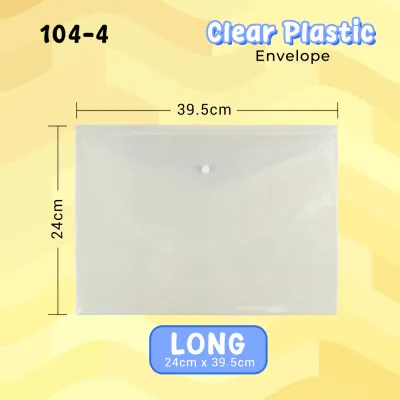
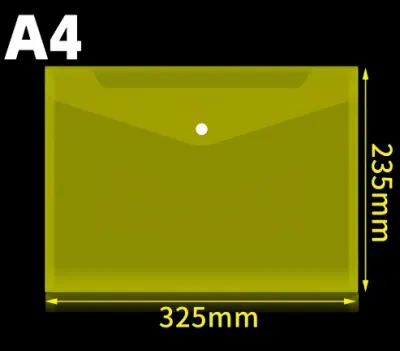
Flat and single-pocket envelopes represent the simplest, most space-saving design. These envelopes feature a single, large compartment with minimal expansion, typically sealing with a button-and-string tie, a plastic snap, or a hook-and-loop tab. Because they lack internal dividers, they are incredibly slim and lightweight, taking up minimal space when empty or filled to their modest capacity.
These envelopes are ideal for broad, single-category archiving where you do not need to separate individual pages. For example, you can use a single flat envelope to store all documents related to a major category, such as taxes, vehicle registration, or medical records. Because they are thin, you can stack multiple envelopes inside a drawer, arrange them vertically in a magazine holder, or file them in a larger box, building an organized archive without the bulk of multi-pocket folders.
The obvious limitation of flat envelopes is the complete lack of internal categorization. If you place fifty different bills, receipts, and letters into a single flat envelope, they will quickly become mixed together, requiring you to empty the entire contents and sort through them manually when retrieving a specific page. Therefore, flat envelopes are not recommended for active, daily filing where you need to track multiple sub-categories.
When purchasing flat envelopes, focus on material thickness and closure durability. Because these envelopes are often stacked on top of one another or slid in and out of tight spaces, they need to be made of heavy-duty, scratch-resistant plastic or thick, reinforced paper to prevent tearing. If you plan to store them vertically, look for models with a top-opening orientation, which allows you to slide papers out without removing the entire envelope from its slot.
Practical Tips for Setting Up Your Document Categories
Choosing the right organizer envelope is only the first step; establishing a logical and sustainable filing system is what keeps your paperwork organized over the long term. To make the most of your new organizer, you should design a categorization strategy that matches your actual workflow.
First, select a categorization logic that feels intuitive to you. There are three primary ways to organize your documents:
- Chronological Sorting: Best for documents that accumulate over time, such as utility bills, bank statements, or monthly receipts. You can assign one pocket to each month of the year.
- Thematic Sorting: Ideal for household or personal management. You can create categories based on topics, such as Medical, Insurance, Education, Housing, and Taxes.
- Project-Based Sorting: Perfect for students and professionals managing multiple active tasks. You can label pockets by subject name, client name, or specific project phases (like In Progress, Pending Review, or Completed).
Second, invest time in creating clear, readable labels. While handwriting on paper tabs is quick, printed labels offer a cleaner, more professional look that is easier to scan. If your organizer envelope features clear plastic tabs, write or print your category names on cardstock inserts so they slide in smoothly. You can also use color-coded stickers or tabs to group related categories visually—for example, using green labels for financial documents, blue for medical files, and yellow for school modules. This visual coding allows your brain to navigate the organizer much faster.
Third, establish a regular maintenance routine to prevent your organizer from becoming overstuffed. Overfilling places immense pressure on the seams, zippers, and gussets, which can lead to permanent warping or tearing. Schedule a quick review of your files once every few months—or at the end of every school semester—to purge documents you no longer need. Shred expired receipts, archive old project files into long-term storage boxes, and keep only active, essential papers in your portable organizers.
Finally, proper care and cleaning will extend the lifespan of your organizer envelope. For plastic or polypropylene organizers, you can easily wipe away dust or minor spills using a soft, slightly damp cloth. If you are using a fabric or Oxford cloth organizer, check the manufacturer’s care instructions, as some materials have water-resistant coatings that can be damaged by harsh detergents. If instructions conflict, the material is unidentified, or the recommended cleaning method is unclear, stop and consult the manufacturer or a qualified professional. Never expose your organizers to direct, intense sunlight for extended periods, as UV rays can degrade plastic, causing it to become brittle and crack, or fade fabric colors.
Frequently Asked Questions (FAQ)
Can I use an envelope organizer for small items like receipts and cards?
While you can use a standard document-sized organizer envelope for small items, doing so often leads to frustration. Because standard pockets are designed to hold full-sized A4 or Letter papers, small items like receipts, business cards, and tickets tend to slide to the very bottom of the pocket. This makes them difficult to see and retrieve, and they can easily slip under internal dividers, getting mixed up with other categories.
If you need to organize small items, look for organizer envelopes that feature specialized internal compartments. Many zippered organizers include built-in mesh pockets, card slots, or smaller zippered pouches designed specifically for these items. Alternatively, you can purchase smaller, dedicated receipt organizers, which are sized perfectly to keep small slips of paper flat, visible, and neatly categorized without the risk of them getting lost in a large pocket.
What is the main difference between an expanding file and an accordion folder?
The main differences between an expanding file and an accordion folder lie in their pocket capacity, structural stability, and portability. Accordion folders are designed primarily for stationary desktop use; they typically feature a large number of pockets (often 13 to 24), can stand upright on a flat surface when expanded, and frequently have an open-top design or a simple cover flap without a heavy-duty closure. This makes them excellent for high-volume, static categorization where you need to file and retrieve papers quickly at your desk.
In contrast, expanding files are built with portability and security in mind. They usually feature fewer pockets (typically 5 to 12) and are designed to compress flat when not fully loaded, making them easy to slide into a bag. They always feature a secure outer flap with a dedicated closure mechanism, such as a snap button, elastic cord, or buckle, which keeps the contents completely enclosed and protected during transit. If you need to move your files frequently, choose an expanding file; if your files stay in one place, an accordion folder is the better option.
Community discussion
Share your experience or ask a question. Comments are reviewed before publication.